Demis Hassabis and the Limits of Computational Ambition
As Google DeepMind pursues artificial general intelligence, its chief scientist argues that the humanities must choose which futures deserve to exist.
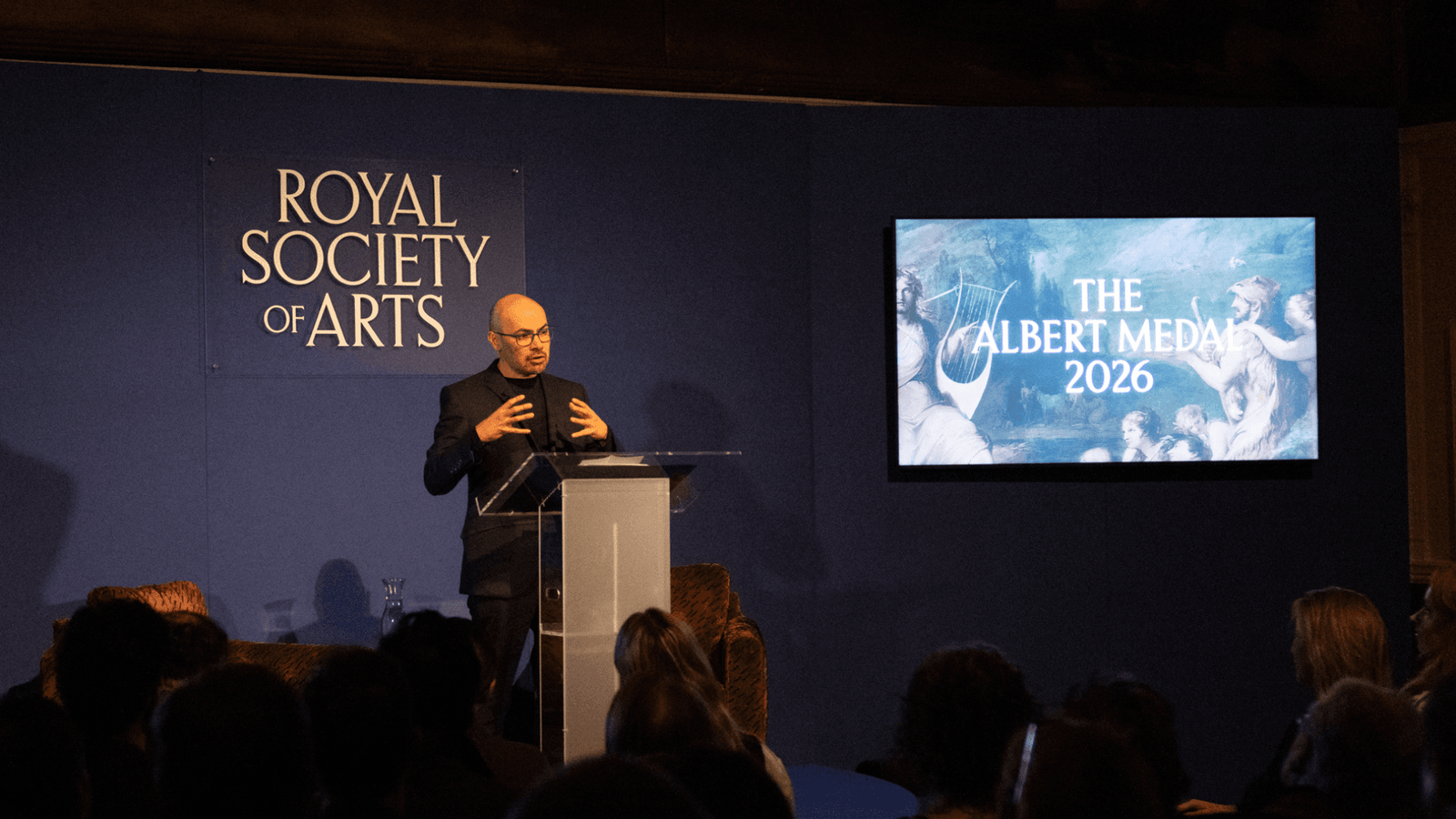
When Sir Demis Hassabis received the Albert Medal from the Royal Society of Arts in September 2026, he used the platform to present a boundary for the computational systems he oversees.12 Hassabis, the co-founder and chair of Google DeepMind and chief scientist at Alphabet, accepted the medal for advancing artificial intelligence in service of humanity.23 Speaking before the society, he argued that while science and technology generate vast technical capabilities, the decision of which paths society should take belongs to culture and philosophy rather than algorithms.12 The public question his career now poses is how an executive directing industrial efforts toward artificial general intelligence proposes to subordinate automated systems to human values that computation cannot measure.
Hassabis occupies an influential position across commercial computing and state policy. In addition to his leadership at Google DeepMind and Alphabet, he serves as chief executive officer of Isomorphic Labs and acts as an artificial intelligence adviser to the United Kingdom government.3 In 2024, Hassabis and John M. Jumper were jointly awarded the Nobel Prize in Chemistry for their research contributions to protein structure prediction using the AlphaFold system.3 DeepMind subsequently deployed AlphaFold 2 to predict the structures of 200 million proteins known to science, releasing the database openly in collaboration with the European Molecular Biology Laboratory European Bioinformatics Institute.3
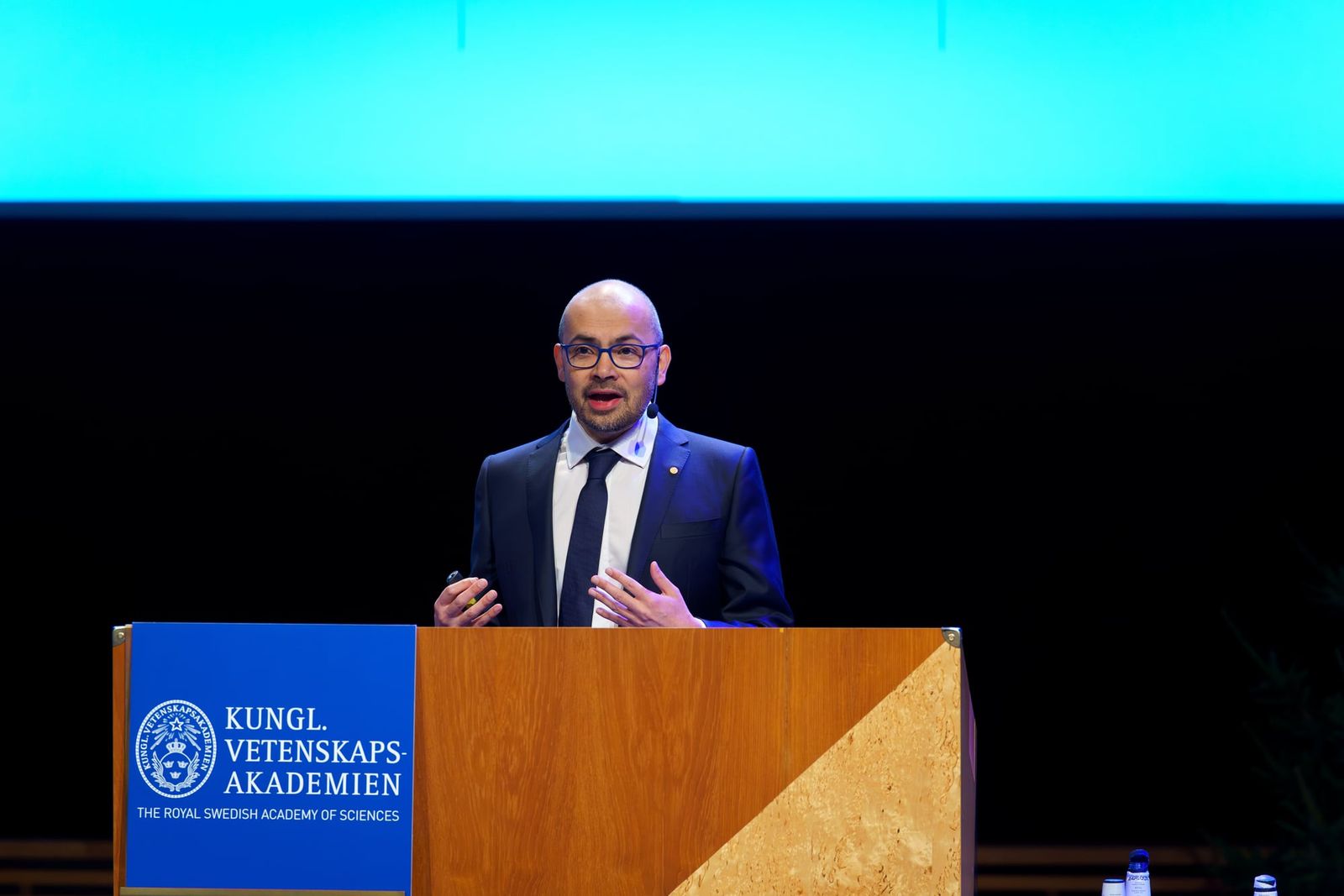
His technical career began inside game design and systems neuroscience before consolidating into modern machine learning. After reaching master standard in chess at the age of 13, Hassabis co-designed the simulation game Theme Park at Bullfrog Productions at 17, completed the Computer Science Tripos with a double first at Queens' College, Cambridge, and later founded Elixir Studios. Following the closure of Elixir, he earned a doctorate in cognitive neuroscience from University College London in 2009 under Eleanor Maguire, producing landmark research in the Proceedings of the National Academy of Sciences linking episodic memory recall to the constructive process of imagination. In 2010, Hassabis co-founded DeepMind with Shane Legg and Mustafa Suleyman, establishing an explicit institutional mission to solve intelligence and then use intelligence to solve everything else.
At the Royal Society of Arts, during a public conversation hosted by Professor Hannah Fry, Hassabis described artificial intelligence as potentially one of the most profound technologies humanity has ever developed, noting its capacity to accelerate medicine, scientific discovery, and human understanding.24 Yet he insisted that technical capacity does not carry an inherent social direction. “It’s not just about the technology. It’s also about what we do with it,” Hassabis said.2 “The technology just enables the opportunities, all these possibilities, all these paths. But it doesn’t define what we should do with it, what is beneficial for society. I think the answers need to come from the arts and the humanities.”52
In addressing the creative industries, Hassabis argued that machine generation should provoke closer cooperation between disciplines rather than cultural retreat. He stated that he has spent his career refusing to see boundaries between science and creativity, urging an intellectual alliance that he described as a new Renaissance. During the discussion, Hassabis argued that while a robotic system equipped with artificial intelligence could eventually produce a technically flawless painting in the style of Vincent van Gogh, such output might never achieve the intrinsic meaning of human art, pointing to elements of human consciousness that computers may never replicate.6 Commentator Alex Aguilar, responding to the exchange, noted that technical execution represents the simpler challenge, observing that human buyers and audiences ultimately look for the intent, taste, and personal accountability that only a human creator owns.6
How the public should read his synthesis remains unsettled. One interpretation sees Hassabis as an unusually reflective technologist who recognizes that automated models lack moral agency, seeking to protect human agency before autonomous systems outpace institutional oversight. A competing interpretation suggests that calling upon the humanities to guide artificial general intelligence transfers the burden of alignment away from the commercial labs that build the models, offering an optimistic cultural vocabulary while commercial platforms deploy automated reasoning across public life. Hassabis has previously acknowledged the systemic stakes, signing a 2023 statement ranking the risk of extinction from artificial intelligence alongside pandemics and nuclear conflict, while maintaining that a development moratorium cannot be enforced globally.3
This profile draws on published statements by Demis Hassabis, biographical records from the University of Cambridge and University College London, and official event documentation from the Royal Society of Arts. Hassabis has not been asked to respond to questions regarding this analysis. Primary has no commercial or institutional ties to Google DeepMind, Alphabet, or the Royal Society of Arts.
The record
15 sentences trace to 6 sources.
-
1
H
https://x.com/demishassabis Document · x.com · 16 Sep 2026 Demis Hassabis Receives RSA Albert Medal and Discusses Society’s AGI Future See the source
-
2
L
linkedin.com Third-party reporting · linkedin.com · 11 Sep 2026 Demis Hassabis Wins Royal Society of Arts Albert Medal for AI Contributions | Royal Society of Arts posted on the topic | LinkedIn See the source
-
3
E
en.wikipedia.org Third-party reporting · en.wikipedia.org Demis Hassabis - Wikipedia See the source
-
4
X
-
5
M
musicweek.com Third-party reporting · musicweek.com Google DeepMind See the source
-
6
X