Huawei accelerates Ascend 960 AI chip to early 2027
The company moved up delivery dates across its hardware roadmap while expanding cluster architectures to offset United States trade restrictions.
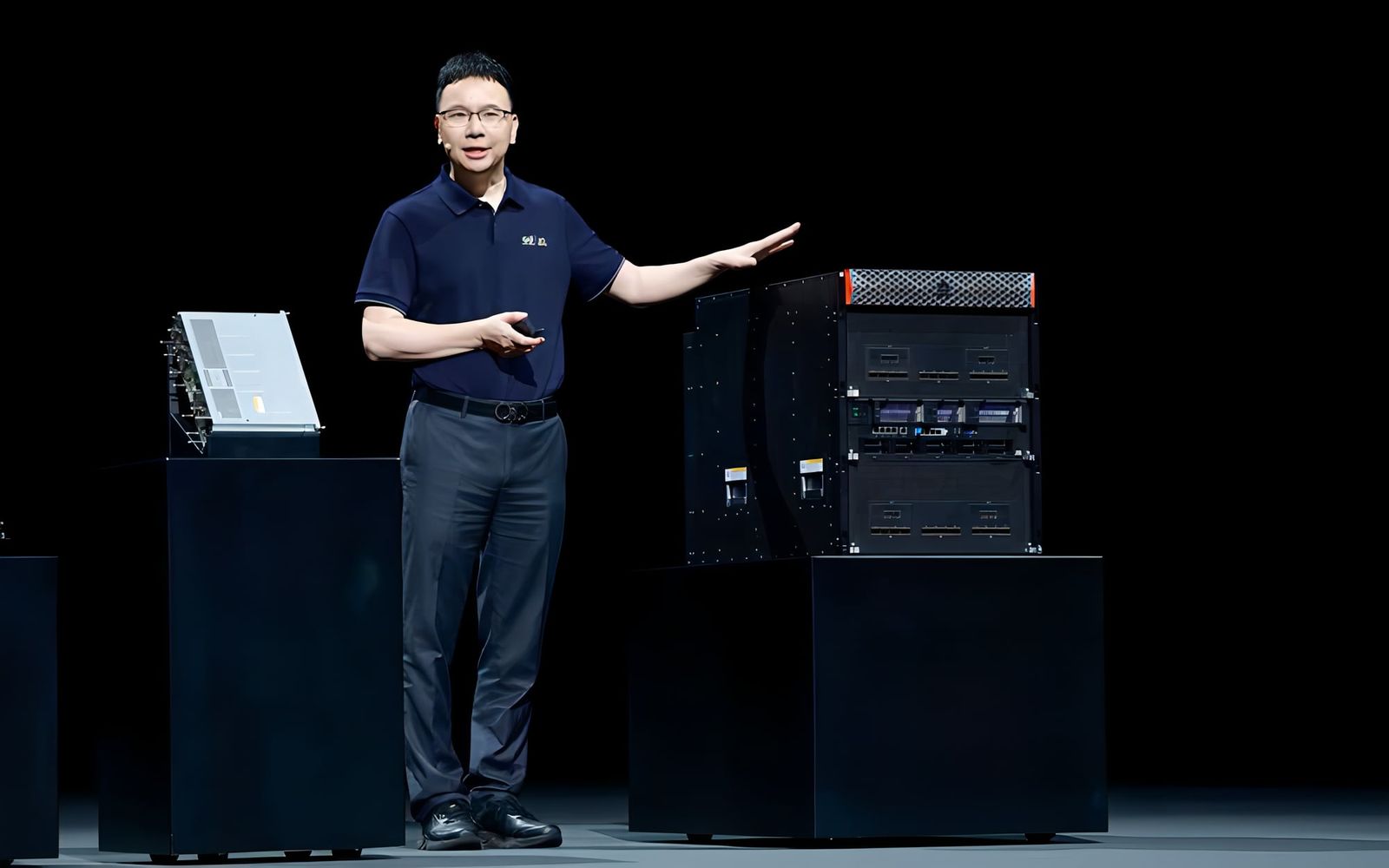
Huawei Technologies is moving up the rollout of its next-generation artificial intelligence silicon to the first quarter of 2027.12 The shift advances the commercial delivery of the flagship Ascend 960DT processor by several months from an initial target of late 2027, as the Shenzhen firm seeks to supply domestic data centres facing tighter access to American semiconductors.21
David Wang, Huawei’s rotating and acting chairman, detailed the updated schedule at the annual Huawei Connect gathering in Shanghai.12 The company plans to follow the initial launch with another variant, designated the 960PR, later that year.2 Successive generations are mapped through the end of the decade, with the Ascend 970 scheduled for 2028 and the Ascend 980 planned for 2029.23 Company executives said each release is designed to roughly double computing throughput over its direct predecessor.21
The scheduling change arrives alongside an engineering push to combine thousands of individual accelerators into single coherent compute systems. Huawei calls this approach its Peerium Computing Architecture, built on a proprietary interconnect protocol called UnifiedBus that ties processing cores directly to shared memory, storage, and optical network fabrics.12 Eric Xu, a rotating chairman at the company, said in a corporate statement that the architecture will support large-scale infrastructure tuned for both training models and running inference workloads.1
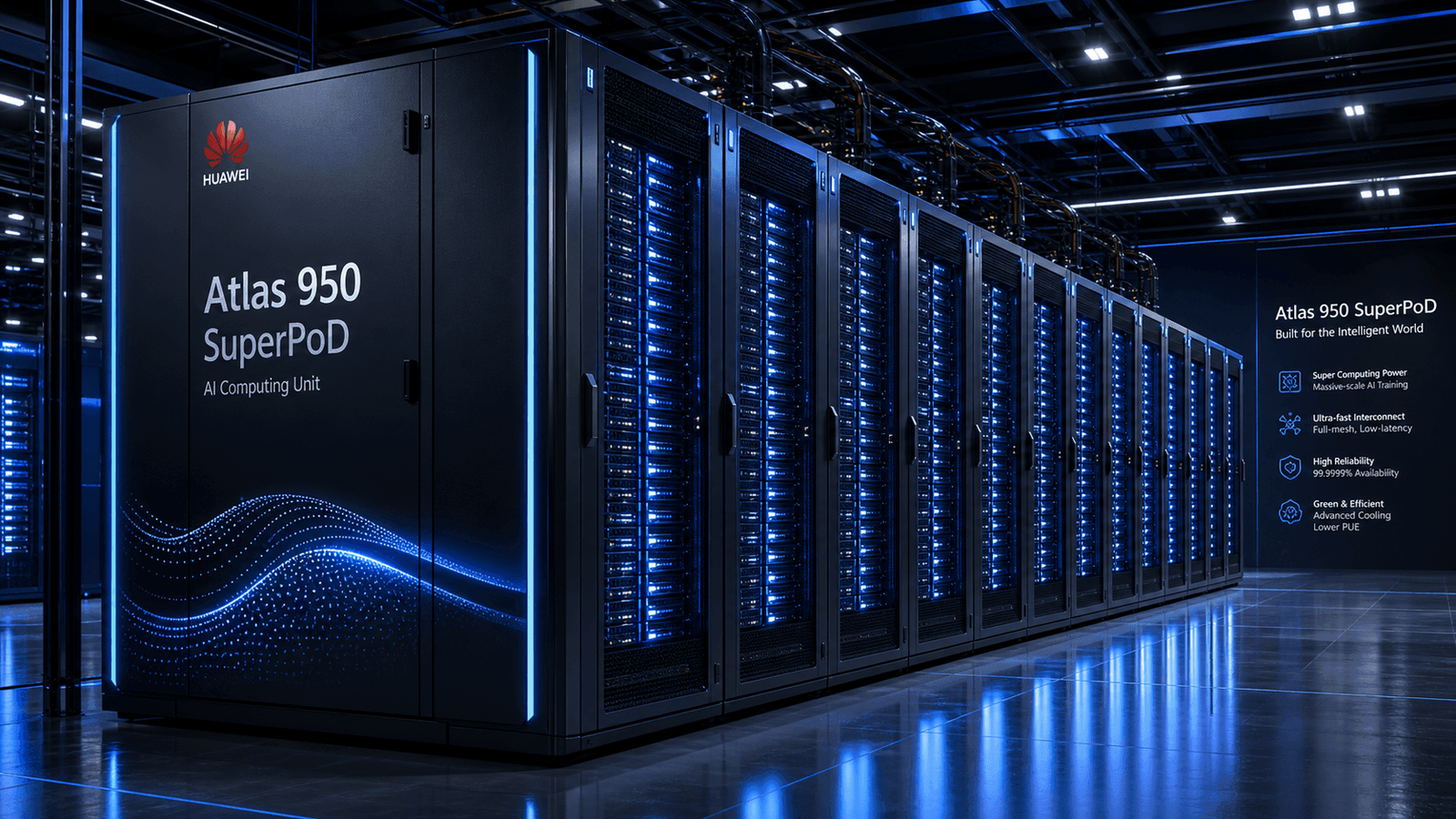
System interconnects have become central to Huawei’s product roadmap as trade barriers limit access to the most sophisticated contract manufacturing facilities. Under the Peerium framework, the company introduced the Atlas 950 SuperPoD and SuperCluster, reporting that a single SuperCluster can link up to 256,000 accelerator cards.1 At the Shanghai conference, Wang said new SuperPod deployments will soon scale to 100,000 chips in a single cluster, relying on high-bandwidth optical links to narrow performance differences with foreign silicon.2
To support that throughput, the company plans to ship its first near-packaged optics modules in upcoming quarters.24 Those optical components connect processors directly to network switches to accelerate data transfers and reduce transmission errors. Huawei has also deployed circuit techniques such as LogicFolding alongside custom memory silicon to maximize performance from available fabrication lines, after trade rules blocked access to advanced memory products from South Korea and the United States.
Domestic software developers have already begun deploying the current hardware generation at scale. Chinese artificial intelligence firm DeepSeek is installing at least 160,000 units of the Ascend 950DT chip at a new data facility in Inner Mongolia to run its operating models.2 Huawei has also begun testing sales channels in overseas markets, including Malaysia and Egypt, while expanding sales to Chinese cloud providers that cannot buy high-end foreign processors directly.2
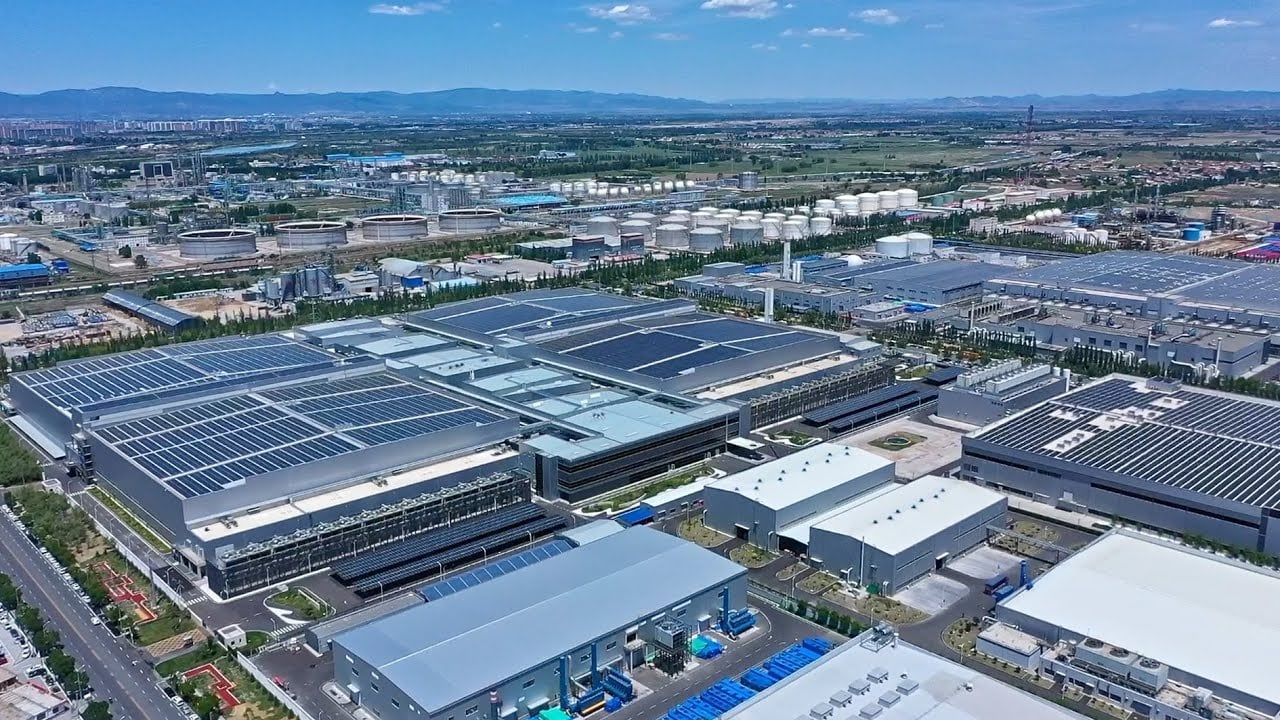
Persistent supply bottlenecks continue to constrain deployment schedules across the product family. Huawei recently raised the unit price of its Ascend 950DT accelerator by 60 percent, citing component shortages across its manufacturing chain.2 Investment analysts at Morgan Stanley estimated that China’s market for artificial intelligence computing power could reach 646 billion yuan by 2030, but noted that domestic training operations still depend partly on imported hardware.
Independent analysts also pointed out adjustments between Huawei’s previous system projections and its current production hardware. China technology analyst Rui Ma noted that earlier corporate roadmap documents outlined an Atlas 960 SuperPoD scaling to 15,488 chips, whereas the configuration presented in Shanghai accommodated 4,096 chips.1 While the silicon itself is arriving earlier than originally scheduled, the initial cluster package covers a smaller footprint than earlier targets suggested.
The revised timeline also carries political resonance, arriving a week before scheduled bilateral discussions between United States President Donald Trump and Chinese President Xi Jinping in Washington.13 George Chen, a partner and chair of digital practice at The Asia Group consultancy, said the accelerated schedule highlights Beijing’s urgency in building sovereign technology infrastructure under strict export controls.3
What this rests on
17 sentences trace to 4 sources.
-
1
T
techcrunch.com Third-party reporting · techcrunch.com · 17 Sep 2026 Huawei plans Q1 2027 launch of new AI chip as it takes on Nvidia | TechCrunch See the source
-
2
TS
The Straits Times Third-party reporting · straitstimes.com · 17 Sep 2026 Huawei speeds up launch of new AI chip to take on Nvidia See the source
-
3
AN
ABC News Third-party reporting · abcnews.com · 17 Sep 2026 Huawei unveils new chip technologies as Chinese firm steps up the AI race with Nvidia See the source
-
4
C
caixinglobal.com Third-party reporting · caixinglobal.com · 18 Sep 2026 Tech Brief (Sept. 18): Huawei Speeds Up AI Chip Roadmap See the source