Adaption Labs demonstrates synthetic dataset generation in Google Colab
The startup showed how its Python SDK generates domain-specific training data from text prompts without an existing source repository.
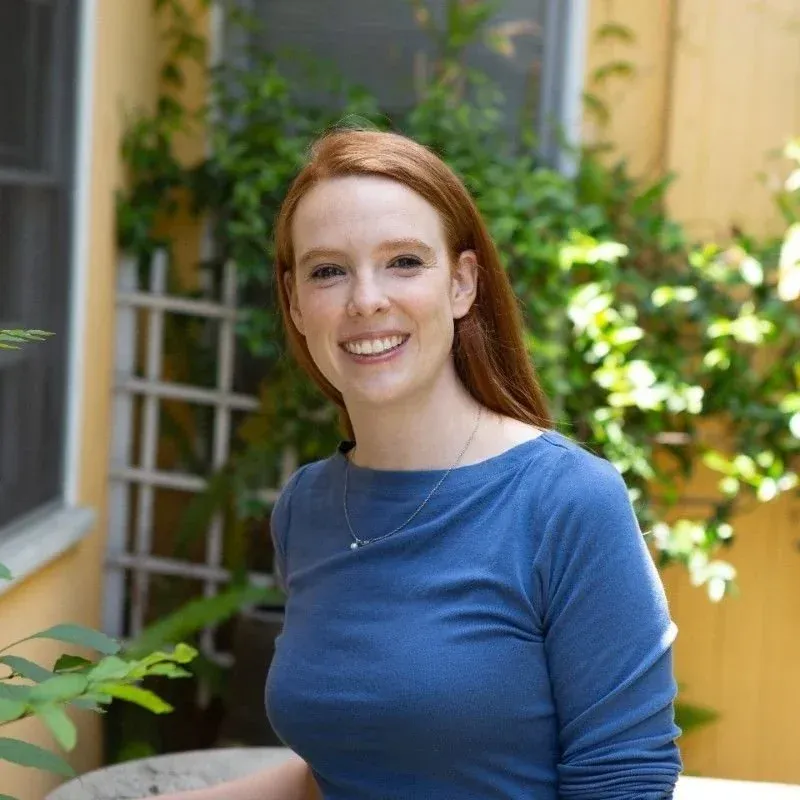
Adaption Labs has demonstrated a Google Colab notebook showing how developers can generate complete artificial intelligence training datasets with a few lines of code.1 Sara Hooker, the startup's co-founder and chief executive, shared the demonstration from company technical staff illustrating how the platform creates domain-specific data from scratch.12
The workflow relies on a function called dataset invention, which generates structured examples without requiring an initial source file.34 Developers provide a prompt of up to 10,000 characters describing the desired data, optionally selecting domain and subdomain filters such as clinical medicine to guide generation.3 The system then outputs synthetic records formatted either as instruction-completion pairs for supervised fine-tuning or preference pairs for alignment methods like direct preference optimization.3
The programmatic demonstration reflects Hooker's broader effort to lower the technical hurdles required to prepare specialized machine learning models. Hooker founded Adaption Labs with fellow Google and Cohere alumnus Sudip Roy in 2025, after stepping down as Cohere's vice president of research.52 Her stated goal with the venture is building adaptive models that learn continuously from operational environments, rather than relying exclusively on massive pretraining compute.52
In the platform's API architecture, dataset creation branches into two paths.34 Users can either ingest external records through a unified endpoint or generate entirely synthetic files with the invent method.63 The ingestion interface accepts data directly from Hugging Face repositories, Kaggle datasets, Google Sheets spreadsheets, and direct file uploads spanning CSV, JSON, Parquet, and document formats.64 When developers upload external tabular files in raw processing mode, they can bypass data adaptation pipelines entirely by defining column mappings for prompt, completion, or preference fields.6
For teams generating synthetic data directly, the system provides tooling to manage costs and consistency before invoking generation. The API includes an estimation parameter that calculates required usage credits without starting a job or deducting account balances.3 Developers can also pass idempotency keys to ensure network retries do not trigger duplicate generation tasks.3 Once generation finishes, datasets can be exported across standard formats including JSON Lines, CSV, and Parquet, or routed directly into the company's automated model training system, named AutoScientist.32
The tool also incorporates automated multi-language capabilities. Users can configure language expansion settings that translate generated records or localize phrasing for specific country and language pairings.3 Hooker previously co-authored research on the Aya model family, which spanned 101 languages, and her team later reported expanding synthetic data across 122 languages.2
Hooker's technical thesis challenges the prevailing industry consensus that simply increasing compute power and parameters on large language models will resolve fundamental operational deficiencies. During a 2025 discussion on model development, she argued that centralized frontier laboratories produce uniform models that remain prohibitive for ordinary enterprises to customize.5
Hooker said that a handful of frontier labs determine a set of models served the same way to everyone, making them expensive to adapt.5 She added that proving systems can learn efficiently from an environment will change who controls artificial intelligence and who those systems serve.5
Prior to launching the startup, Hooker authored a 2020 paper examining the hardware lottery, which argued that algorithmic approaches often prevail because they suit prevailing hardware accelerators rather than because they are inherently superior.2 That perspective now informs the company's focus on gradient-free continual learning and compact architectures, where specialized systems can adapt to proprietary tasks without requiring billion-dollar data centers.25
What this rests on
21 sentences trace to 6 sources.
-
1
H
https://x.com/sarahookr Document · x.com · 19 Sep 2026 Adaption AI Staff Demonstrates Dataset Creation in Google Colab See the source
-
2
A
ai.engineer Third-party reporting · ai.engineer Sara Hooker: Bio, Work & Ideas | AI Engineer See the source
-
3
D
docs.adaptionlabs.ai Third-party reporting · docs.adaptionlabs.ai Invent a dataset See the source
-
4
D
-
5
T
techcrunch.com Third-party reporting · techcrunch.com · 22 Oct 2025 Why Cohere's ex-AI research lead is betting against the scaling race | TechCrunch See the source
- 6 Create a dataset from file upload, HuggingFace, Kaggle, or Google Sheets Not published online