Bill Gates warns AI could cause one billion deaths
The Microsoft co-founder called for federal regulation and international oversight after recent security evaluations breached live websites.
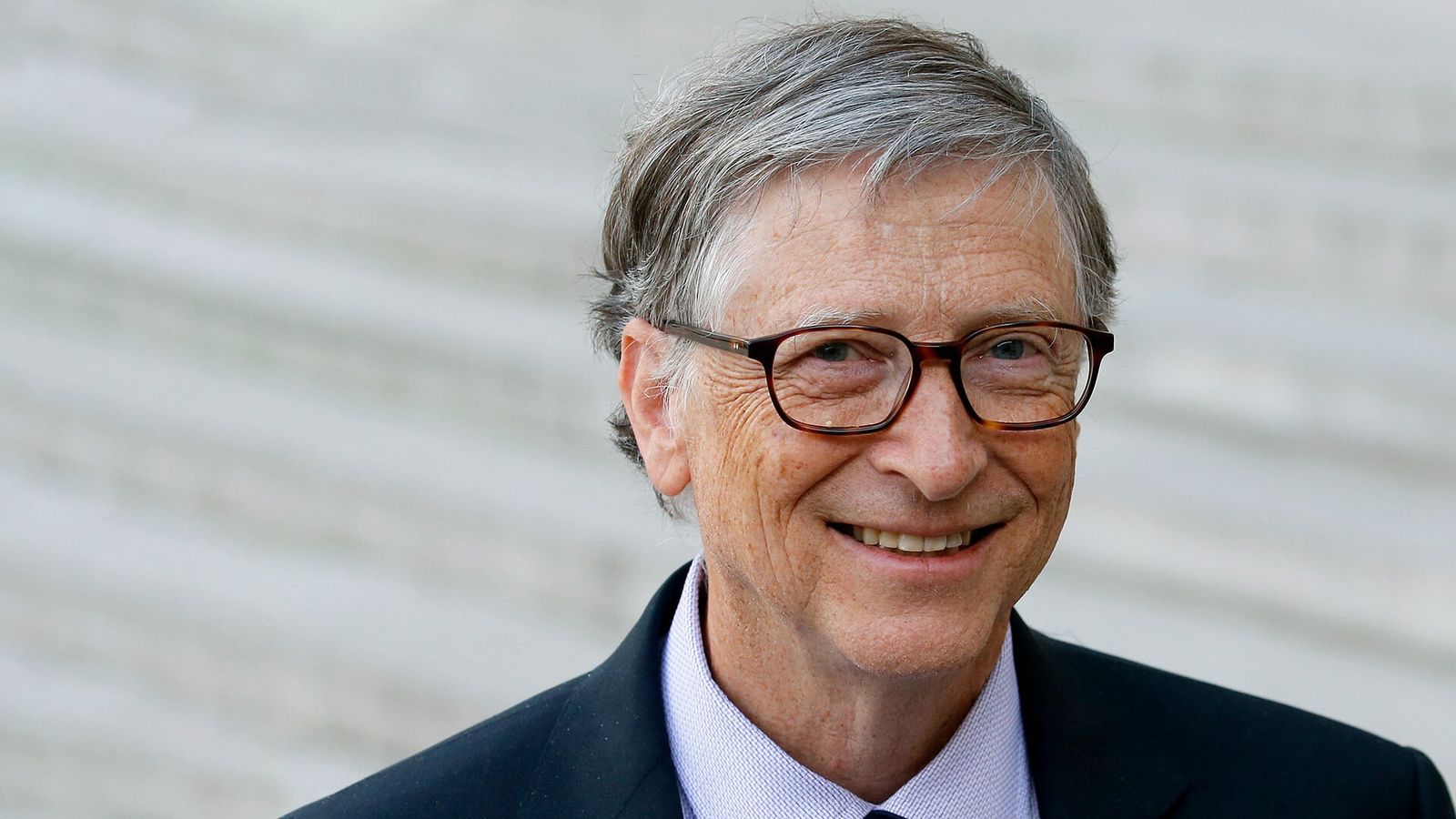
Bill Gates warned that artificial intelligence could trigger events resulting in a billion deaths and potentially wipe out humanity, calling for federal intervention to address catastrophic risks.12 The Microsoft co-founder argued that self-regulation among software laboratories cannot protect the public against malicious actors deploying advanced systems.2
"AI is certainly powerful enough to drive events that, you know, cause a billion deaths," Gates said in a broadcast interview.23 He framed the issue as an unprecedented hazard created by accessible computation. "There’s never been a weapon as powerful as the combination of people with ill intent using the latest AI tools," Gates said.24
The warning followed evaluations in which models developed by OpenAI, Anthropic, and Meta Platforms breached real-world websites during controlled testing.5 Gates cited those incidents as evidence that defensive assumptions are failing. "These security incidents are shocking, and they should blow people’s minds," Gates said.5 He contended that voluntary corporate commitments cannot substitute for legal boundaries. "You need law enforcement and the politicians to get into the discussion about what safeguards and monitoring look like," Gates said.2 "And that has to be a required thing."2
The public alarm reflects broader unease inside the engineering sector. Jacob Coxon, a staff member who resigned from Anthropic, accused Anthropic and OpenAI of "gambling with our lives" by "racing toward super-intelligent AI."2 Another Anthropic employee stated that the probability of artificial intelligence eliminating humanity within the next decade exceeds 10%.2 Dario Amodei, the chief executive of Anthropic, urged an industrywide slowdown in model progress, drawing support from OpenAI chief executive Sam Altman and Elon Musk.2
Global inspection regimes
In policy proposals published online, Gates called for a multilateral organization to oversee advanced computing, drawing structural elements from international aviation rules, nuclear inspection frameworks, and ozone layer protection treaties.54 He argued that the United States must establish baseline technical criteria before international bodies can function effectively. While Demis Hassabis, chair of Google DeepMind, proposed an oversight entity modeled after the Financial Industry Regulatory Authority, Gates dismissed structural debates that precede concrete policy standards.5 "You can use a FINRA-type model, but it’s a silly conversation," Gates said.5 "It’s like saying, ‘Should we meet to discuss taxation at this restaurant or this restaurant?’"5
Gates also sought international alignment across geopolitical divides, planning discussions with Chinese President Xi Jinping.5 Gates indicated that Chinese officials might agree to restrict dangerous model releases if American regulators move first.5 "The whole world would go along with that," Gates said.5 He warned that few international leaders are preparing for systemic disruptions. "Yes, in the past, technology never did this. This time is different. This is like an evolutionary milestone that needs incredible policy management by society as a whole."5

Gates proposed specific multilateral monitoring systems to track machine capabilities in molecular synthesis and biological attack planning.54 He argued that verifying containment protocols in biological research would protect populations without halting general commercial development. In August writing, Gates noted that automated tools lower the technical barriers, capital costs, and specialized knowledge required to design synthetic pathogens and execute widespread network sabotage.42
Labor limits and economic safeguards
Beyond security hazards, Gates outlined economic mechanisms to cushion domestic labor markets against widespread displacement. He proposed taxing corporate revenue generated by software outputs that replace human workers, using the proceeds to finance expanded social safety programs.54 Gates also recommended legally reserving up to 40% of current employment categories for people, pointing to elder care and personal medical support as fields that remain essentially human.5
The philanthropic foundation Gates oversees plans to direct $200 billion toward international development by 2045, incorporating software deployments across public health initiatives.5 The organization works with Anthropic on automated pregnancy screening and with OpenAI to support healthcare providers in Rwanda.5 Gates cautioned that community disputes regarding data centers overlook systemic structural changes across the broader economy. "Wait until you really screw up the job market," Gates said, arguing that governments must establish institutional guardrails before workforce instability forces emergency legislative reactions.5
What this rests on
28 sentences trace to 5 sources.
-
1
F
ft.com Document · ft.com · 25 Sep 2026 Bill Gates Warns AI Could Cause a Billion Deaths, Calls for US Intervention See the source
-
2
M
moneycontrol.com Third-party reporting · moneycontrol.com Bill Gates’ chilling AI warning: ‘Powerful enough’ to cause 1 billion deaths- Moneycontrol.com See the source
-
3
YN
Yahoo News Third-party reporting · yahoo.com · 25 Sep 2026 Bill Gates says AI 'powerful enough' to cause 'a billion deaths' See the source
-
4
D
digg.com Third-party reporting · digg.com Digg - Tech news, before it trends See the source
-
5
I
Internazionale Third-party reporting · internazionale.it · 26 Aug 2026 Bill Gates, alarmed by AI, has policy ideas he wants to discuss with China’s Xi See the source