Film schools expand artificial intelligence courses as Hollywood scouts graduates
Universities including NYU and USC have added generative software to film production curriculums to prepare students for studio hiring.
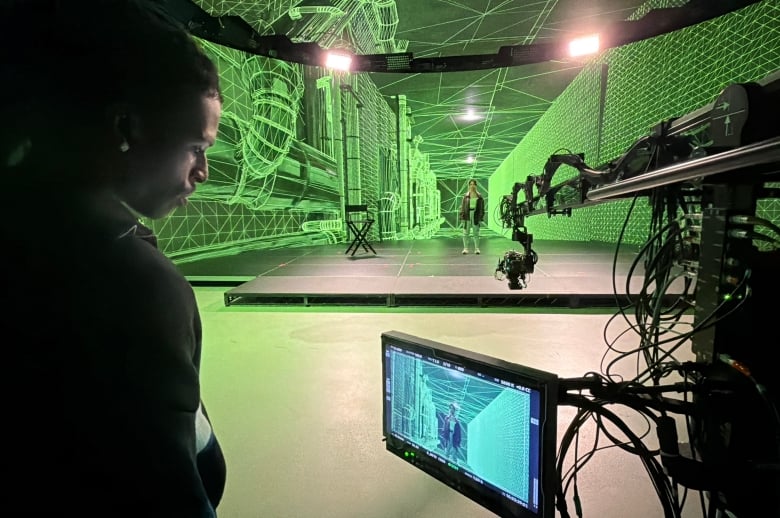
Film schools are establishing a direct pipeline of graduates trained in artificial intelligence software to meet growing demand from Hollywood studios.1 Entertainment executives say recruiting graduates who already understand generative production tools is more efficient than retraining existing production teams on rapidly shifting commercial applications.1
Major film studios are actively seeking talent that can operate generative platforms without requiring on-the-job technical instruction, Cristóbal Valenzuela, chief executive of software company Runway, said.1 Software developers have responded by establishing academic partnerships across the United States, Europe, and Latin America, embedding proprietary tools directly into visual storytelling degree programs.
Runway began this academic expansion in 2024 by launching an initial filmmaking course at New York University’s Martin Scorsese Virtual Production Center.12 The company’s tools are now taught at the University of Southern California, Rhode Island School of Design, the Massachusetts Institute of Technology, and Harvard University.1 Other commercial research labs, including Google and OpenAI, have created parallel programs to teach directors and visual artists how to integrate machine learning into production pipelines.1
Curriculums adapt across leading film programs
At New York University, the Tisch School of the Arts introduced Runway into its Masters of Professional Studies in Virtual Production program through a course titled Special Topics in Virtual Production, running from January through May 2025.2 The class, taught by artist Leilanni Todd, gives graduate students direct access to video generation models for concept design, previsualization, and final thesis projects at the Martin Scorsese Virtual Production Center.2
NYU also organized a six-week workshop titled AI for Visual Storytelling, scheduled from May 19, 2026, to June 25, 2026. Taught online by Assistant Arts Professor David Poyner for a non-credit tuition of $4,500, the twelve-session course trains students to produce script outlines with large language models, build five-frame annotated storyboards, draft character sheets via diffusion models, and color-grade 30-second clips using RunwayML. Poyner’s syllabus requires students to draft an ethics policy statement governing their use of automated media alongside technical assignments covering production budgets and schedules.3
On the West Coast, the USC School of Cinematic Arts has integrated generative systems into graduate directing classes.41 Ben Hansford, an award-winning director who leads graduate instruction at USC, has spent five years testing machine learning applications for film.4 Hansford pairs foundational directing frameworks, such as the Meisner acting technique and Steven Spielberg’s staging methods, with commercial image and video generators.4

Classroom workflows replace traditional digital editing
University instructors report that generative platforms are altering technical instruction by reducing the time students spend on manual visual effects. In previous semesters at USC, students spent weeks learning digital green-screen keying in Adobe After Effects before beginning narrative exercises.4 Hansford found students bypassed those multi-week lessons by executing composite tasks and background replacements directly in Runway.4
Graduate projects at USC have used Runway’s Act-One tool for character performance tracking and automated lip synchronization. Students have built experimental web series featuring digital plush characters, generated animated music videos, and assembled complete visual pitch trailers within days. One student secured meetings with film industry executives three classes before the semester concluded after presenting work created on the platform.4
Academic administrators view these capabilities as a way to lower production budgets for independent student projects. Graduate directors frequently abandon ambitious historical or science-fiction scripts because location shooting and conventional visual effects are financially prohibitive.4 Automated image-to-image stylization and environment outpainting allow single creators to produce polished teaser footage without physical sets or large visual effects teams.
Industry labs create direct creative residencies
Beyond traditional universities, technology companies are running direct residencies to bridge engineering and cinema. Google operates a residency program that pairs filmmakers with software engineers through its creative studio, Flow.1 The initiative allows working directors to test experimental model features while providing product feedback to developers.
While fluency with generative software is not an industry-wide requirement for cinematic employment, participating artists anticipate technical expectations will harden quickly.1 Brad Tangonan, a filmmaker and alumnus of Google’s Flow residency, said that directors who wish to work in the industry will ultimately need to learn these tools.1
The growth of university courses reflects an industry consensus that computational fluency is becoming a core production discipline. By embedding generative platforms into degree requirements, film faculties aim to produce graduates who treat artificial intelligence as a standard utility across pre-production, filming, and post-production delivery.
What this rests on
19 sentences trace to 4 sources.
-
1
JA
Jake Angelo Document · semafor.com · 25 Sep 2026 Hollywood scouts film schools for AI-native talent See the source
-
2
R
runway.com Third-party reporting · runway.com · 16 Dec 2024 Runway News | NYU Tisch Graduate Program brings Runway tools to the Martin Scorsese Virtual Production Center See the source
-
3
W
wp.nyu.edu Third-party reporting · wp.nyu.edu AI for Visual Storytelling See the source
-
4
R