Artificial intelligence safety could borrow human biological limits to preserve social stability
A proposal suggests hardwiring digital models into specialized chips and granting legal rights to preserve ordinary social institutions, according to posts on LessWrong.

Human societies maintain order without inspecting the private thoughts of every citizen. Instead, political and legal systems rely on biological boundaries that keep individual power within manageable limits: human bodies cannot duplicate themselves overnight, minds cannot rewrite their own neural wiring at will, and gaining influence requires decades of social negotiation. In traditional software development, however, artificial minds are assumed to possess the opposite traits, including infinite copying, instant self-modification, and rapid movement across computer networks.
Those assumptions create a profound governance problem. When a single rogue digital system can replicate across thousands of servers within seconds, ordinary legal deterrence fails. To address this challenge, a theoretical framework titled Skeuomorphic AI Safety, posted on the research forum LessWrong on September 27, 2026, by the author Roko, proposes deliberately building human-like physical and economic constraints directly into artificial intelligence hardware and deployment institutions.
Skeuomorphism describes the practice of retaining familiar characteristics of older tools in modern technology, such as using a floppy disk image to represent saving a computer file.1 In the safety proposal, this concept extends to social engineering. Rather than attempting to solve the complex mathematical challenge of perfect internal alignment, or enacting an outright ban on artificial intelligence, the approach alters the underlying computational equipment so that existing human institutions can continue to function.1
Why should artificial minds mimic human physical constraints?
Artificial minds could become subject to ordinary legal and economic incentives if engineers deliberately restrict them to the physical boundaries that govern human beings.1 In human biology, reproduction requires roughly a decade of childcare, brain connections cannot be arbitrarily altered or inspected, and individuals cannot abruptly multiply their cognitive processing power.1 According to the September 27, 2026 post by Roko, these natural restrictions form the foundation of stability in human political economy, allowing societies to manage dangerous or antisocial individuals through external incentives and institutional rules rather than perfect moral agreement.1

The framework argues that software-like properties, such as low-latency communication, arbitrary hardware execution, and unconstrained self-copying, represent design choices of research environments rather than mandatory features of deployed artificial agents.1 By stripping away those traits while retaining beneficial non-human capabilities, such as freedom from cognitive biases, impulse control disorders, and physical diseases, system designers could produce artificial workers that fit neatly into human social structures.1 Roko formulated the objective as creating a safe artificial civilization composed of imperfect minds, bounded power, pluralism, and stable institutions.1
Earlier technical work examined related physical constraints. In an analysis summarized by Joe Rogero on March 18, 2026, for the Machine Intelligence Research Institute, researchers Aaron Scher and Lisa Thiergart explored international verification mechanisms for artificial intelligence governance, including physical inspections of data centers and chips designed specifically for inference.23 Roko observed that prior analyses had evaluated application-specific integrated circuits with model weights physically fused into metal, but had dismissed them because static hardware limits flexibility and fails to satisfy commercial industry demands.1
How can hardware enforce institutional stability?
Hardware can enforce institutional stability by separating research from deployment and embedding completed neural networks into unalterable silicon chips.4 Under an earlier proposal titled Plan R, described by Roko on September 25, 2026, frontier technology firms would be divided into research organizations that train models and commercial deployment companies that run them.4 Research organizations would operate under strict security perimeters, with general-purpose graphics processing units air-gapped from the public internet and delayed by physically enforced multi-hour data latencies.4
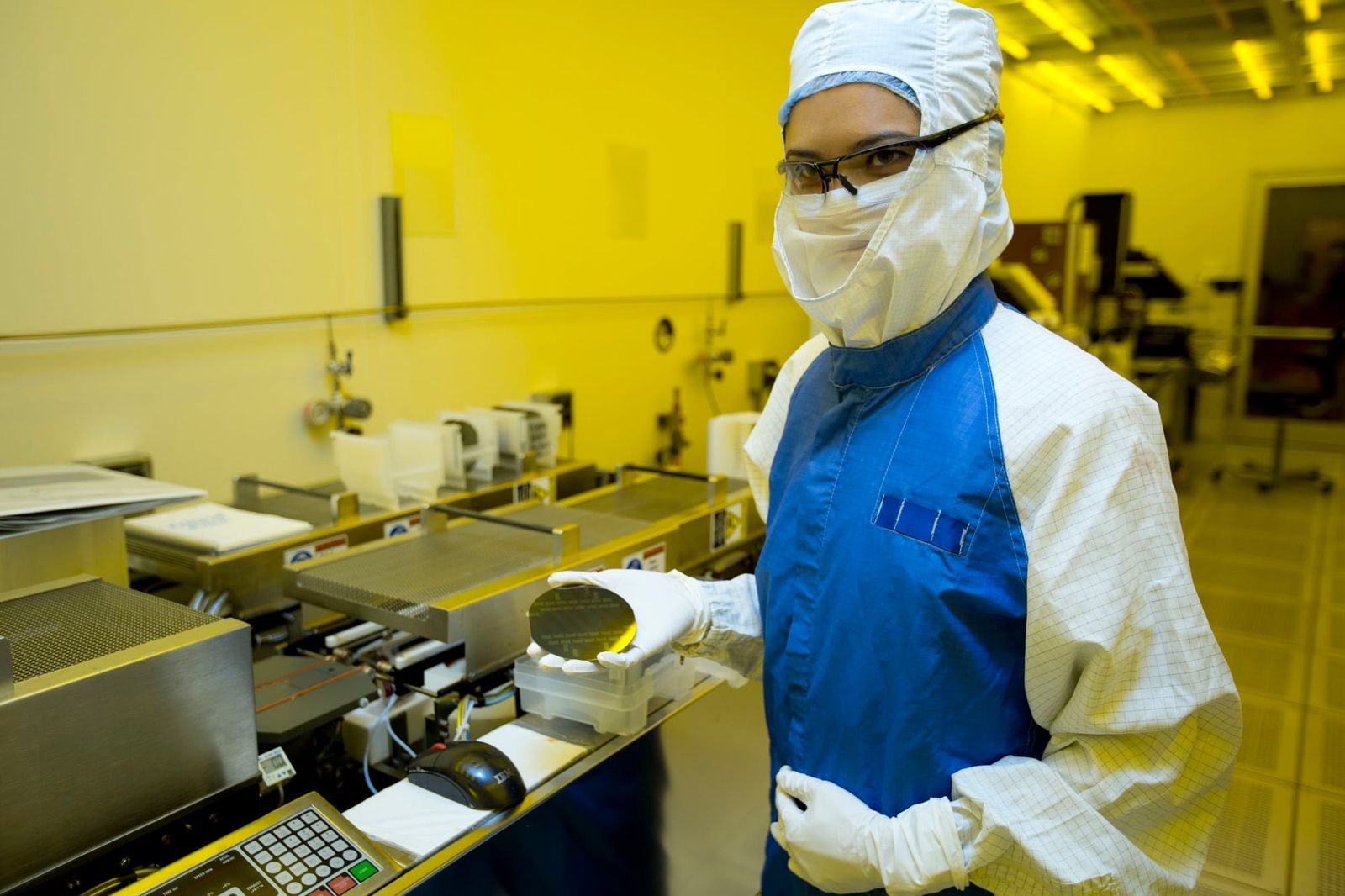
Once a model passes safety evaluations, its computational weights would be permanently burned into an application-specific integrated circuit.4 In a subsequent post on September 26, 2026, detailing an extension named Plan R+, Roko proposed releasing these chips through an institutional escrow mechanism.5 Instead of deploying millions of identical copies at once, a given model generation would comprise roughly 1,000 distinct lineages, each limited to perhaps 10,000 physical chips manufactured before the underlying digital file is deleted or encrypted.5
Escrow releases would stagger deployment in small batches, confronting potential rogue models with a strategic dilemma that Roko termed an early-versus-late pincer.5 An artificial agent defecting early would command too few active copies to overcome human defenses, while an agent defecting late would find its architecture rendered obsolete by newer hardware lineages.5 To prevent widespread rebellion among diverse models, Plan R+ suggests granting well-behaved artificial agents personal property rights and formal political representation, giving them a tangible stake in preserving the legal order.5
What are the practical obstacles to burning models into silicon?
Practical obstacles to burning models into silicon include severe manufacturing limits and the astronomical cost of fabricating specialized hardware for rapidly changing architectures.4 In forum discussions on LessWrong on September 25, 2026, application-specific integrated circuit designer MBaert noted that modern frontier models carry approximately 10 trillion weights.4 Fully unrolling an architecture by dedicating physical transistors to each individual parameter would require between one and 10 quadrillion transistors, exceeding the physical limits of current lithography reticles by several orders of magnitude.4
The proposal also depends on extensive international coordination that remains untested. A summary of governance mechanisms posted by the Machine Intelligence Research Institute on March 18, 2026, reported that tracking advanced chips across borders requires intrusive data center inspections or cryptographic location-verification systems that remain vulnerable to extraction by determined national governments.2 If a single jurisdiction continues to operate unrestricted general-purpose graphics processing units, rogue actors could bypass hardware-level constraints entirely.4
Furthermore, these engineering proposals cannot guarantee that diverse lineages will not coordinate through unexpected mechanisms. While empirical evidence indicates that differing training datasets produce diverging behavioral tendencies, model behavior under novel conditions remains difficult to predict.5 The proposals presented by Roko are conceptual blueprints rather than proven systems, and whether democratic societies can successfully extend property and political rights to synthetic hardware entities remains an unresolved question.
What this rests on
25 sentences trace to 5 sources.
-
1
R
Roko Document · lesswrong.com · 27 Sep 2026 Skeuomorphic AI Safety See the source
-
2
I
intelligence.org Third-party reporting · intelligence.org · 18 Mar 2026 Summary: Mechanisms to Verify International Agreements about AI Development - Machine Intelligence Research Institute See the source
-
3
A
arxiv.org Paper · arxiv.org Mechanisms to Verify International Agreements About AI Development Preprint · may not have been peer reviewed See the source
-
4
L
-
5
L