Autonomous software agents face new industry push for shared security guardrails
As autonomous systems gain the authority to execute commands and access sensitive corporate environments, establishing consistent operating boundaries has become essential to preventing unintended digital harm.

Software that can reason through multi-step problems and take real actions across digital infrastructure is transforming how organizations handle everyday operations. Unlike earlier conversational models that simply generated text on a screen, autonomous agents write scripts, query proprietary databases, and interact with external interfaces. When an automated program acts directly on computer systems, small errors or unintended instructions can propagate through live production networks without manual human intervention.
The risk compounds as autonomous software receives broader administrative privileges. A typical agentic workflow begins when a user specifies an objective. The system interprets that goal, formulates an execution plan, selects external computational tools, and issues commands to complete each task. If an agent misinterprets an instruction or encounters unexpected data during execution, it can execute harmful commands or access restricted directories. Preventing those failures requires protective boundaries that evaluate actions before an agent completes an external operation.
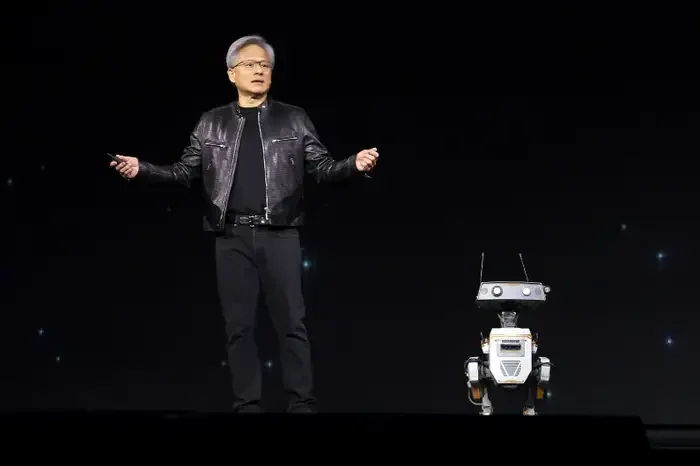
To address those operational risks, NVIDIA announced on September 28, 2026, that it is building the Open Agent Safety Platform alongside partners across the software industry.1 The company stated that the effort aims to help people deploy autonomous agents with greater confidence as the technology takes on more critical work.1 In a public announcement on September 28, 2026, Jensen Huang, the chief executive of NVIDIA, stated, "Today, with over 100 industry partners, we introduced the NVIDIA Open Agent Safety Platform, bringing together OpenShell and Sentry."1
Why do autonomous agents require distinct security boundaries?
Autonomous programs present unique hazards because they move beyond answering questions to independently calling external software tools, accessing databases, and executing commands across live computer networks. When an artificial intelligence model operates solely as a text generator, an error results in incorrect phrasing or inaccurate factual claims. In contrast, an agent tasked with managing cloud infrastructure or processing financial transactions can trigger unintended data deletions or initiate unauthorized transfers.
Because these programs chain decisions together dynamically, a single erroneous assumption early in an execution loop alters every subsequent action. Traditional firewalls and static access controls struggle to distinguish between legitimate instructions from an authorized agent and aberrant behavior caused by hallucinated logic. Establishing dedicated boundary layers around an agent's computational environment isolates the core model, restricting its ability to modify sensitive infrastructure without validation.
What does the new safety initiative bring together?
NVIDIA and more than 100 industry partners established the Open Agent Safety Platform to combine two protective frameworks named OpenShell and Sentry.1 The company reported that the project aims to help organizations put automated agents to work with greater confidence as those systems take on more critical responsibilities.1 Huang described artificial intelligence as an extraordinary technology that will advance discovery, productivity, security, health, and prosperity for future generations.1
The announcement positions OpenShell and Sentry as complementary mechanisms within a shared safety environment.1 While the company did not provide granular technical specifications in its initial disclosure, the pairing suggests a dual approach that addresses both isolated runtime environments and active behavioral monitoring. Creating an open standard across dozens of technology firms reflects an effort to prevent fragmented security protocols as autonomous tools proliferate.
How do safety boundaries operate in practice?
Protective digital guardrails prevent an automated system from exceeding its assigned permissions by intercepting commands before an external action occurs. In practical agent deployments, an isolation layer acts like a secure sandbox, giving the software an enclosed space where it can generate code, test calculations, and stage operations. If the program attempts to access network sockets or storage volumes outside its approved perimeter, the boundary layer blocks the command immediately.

Alongside isolation, continuous monitoring systems inspect the intent and trajectory of an agent's reasoning process. These inspectors scan the prompt instructions, intermediate planning steps, and outbound tool requests for signs of prompt injection or policy violations. When an anomalous pattern appears, the monitoring system can pause execution, request manual confirmation from a human supervisor, or terminate the task altogether.
What remains unknown about the platform?
Public disclosures for the initiative currently lack independent technical evaluations, deployment benchmarks, and detailed specifications explaining how the underlying software operates. NVIDIA announced the broad contours of the Open Agent Safety Platform in a brief public statement on September 28, 2026, without releasing source code, architectural schematics, or performance data.1 The announcement did not define how OpenShell isolates execution environments or how Sentry evaluates potential security breaches in live production systems.1 Furthermore, the company did not publish the complete registry of participating commercial partners or the specific governance standards that will guide the consortium.
As enterprises grant automated software deeper access to proprietary data and administrative workflows, the viability of autonomous agents depends heavily on verifiable security controls. A collaborative industry framework could prevent individual organizations from having to construct custom defensive layers from scratch.
The true measure of the platform will emerge once developers and security researchers can test its code against adversarial attacks and measure the computational overhead imposed by its protective boundaries.
What this rests on
9 sentences trace to 1 source.
-
1
H
https://x.com/nvidia Document · x.com · 28 Sep 2026 NVIDIA Builds Open Agent Safety Platform With Industry Partners See the source