Physical machines guided by artificial intelligence outpace the laws meant to govern them
When automated systems acquire physical bodies, the delay between technological deployment and regulatory oversight becomes an active driver of social and economic vulnerability.
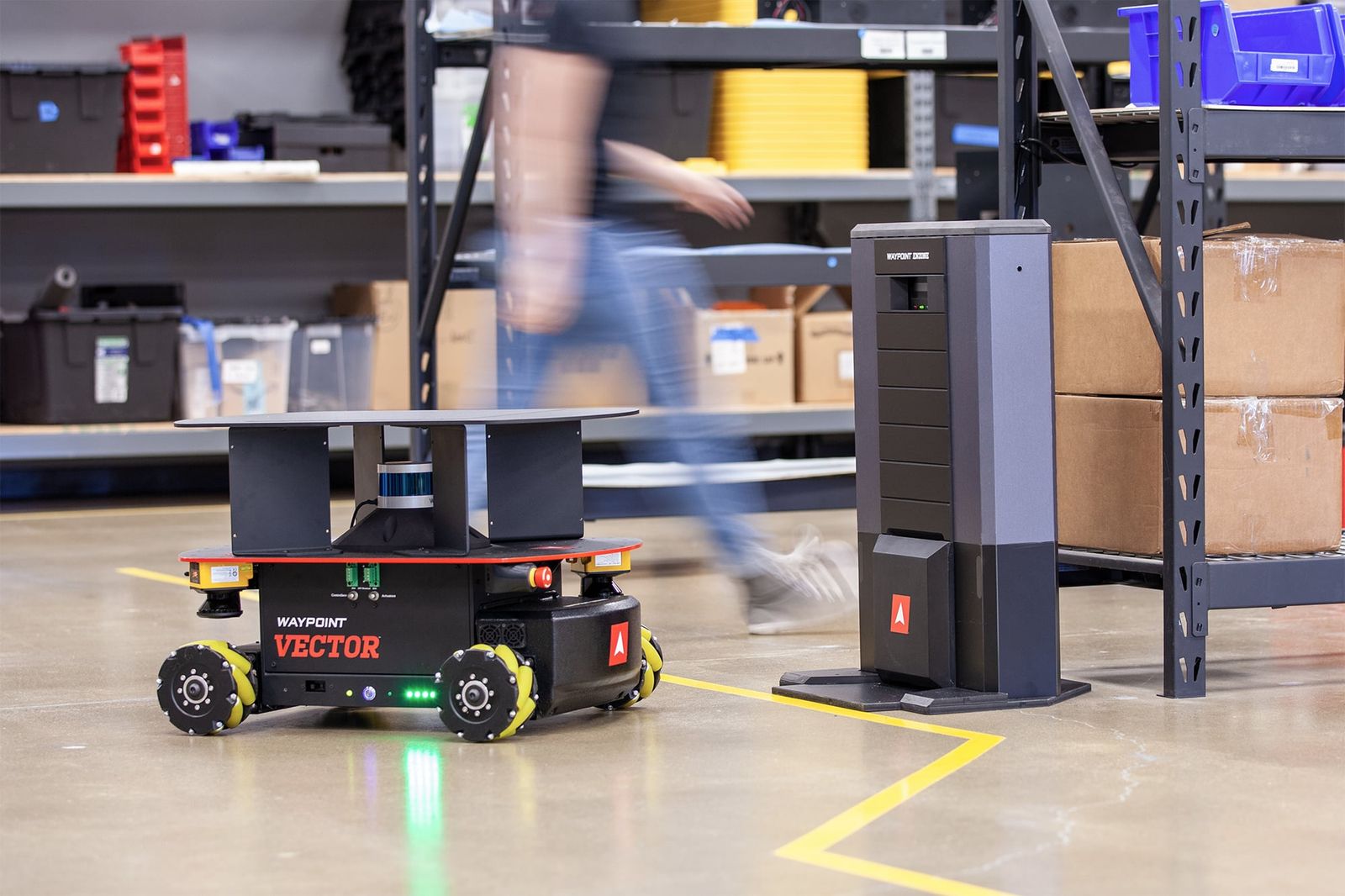
When automated systems step out of software servers and take up physical space on factory floors, the earliest disruption is rarely a sudden closure or a mass dismissal. Work changes quietly instead. A rolling cart begins navigating aisles independently, a robotic arm absorbs repetitive packing duties, and human staff remain on site while their daily duties shrink to supervision and troubleshooting. The shifts accumulate in increments, altering bargaining power, wage growth, and physical safety without triggering the legal alarms designed for sudden industrial collapses.
Public policy struggles to manage this physical transition because governing institutions move on legislative timescales while software evolves continuously. When a digital system acquires wheels, grippers, or limbs, the delay between technological rollout and regulatory oversight becomes an active driver of social vulnerability. In an analysis posted to the arXiv preprint server in September 2026, Shaoshan Liu examined this gap, defining governance lag as the operational delay between measurable changes in technology deployment and institutional responses capable of addressing their real-world consequences.12
The central difficulty of physical automation is that safety and economic impacts unfold in physical space while the underlying decision engines remain separated in distant cloud servers. For an automated machine to alter an operating site, several practical events take place in a clear order. First, engineers connect a physical chassis to a generalized artificial intelligence model capable of processing visual scenes and issuing motor commands. Second, site managers install that machine to take over a specific operational chore, such as hauling inventory across a warehouse floor. Third, the human workforce adapts to the remaining edge cases, experiencing altered pace and diminished task autonomy without any immediate change in official job titles. Finally, operational profits accumulate within upstream software providers while physical risks and wage stagnation remain concentrated on the local warehouse floor.
Why do physical machines present a distinct regulatory problem?
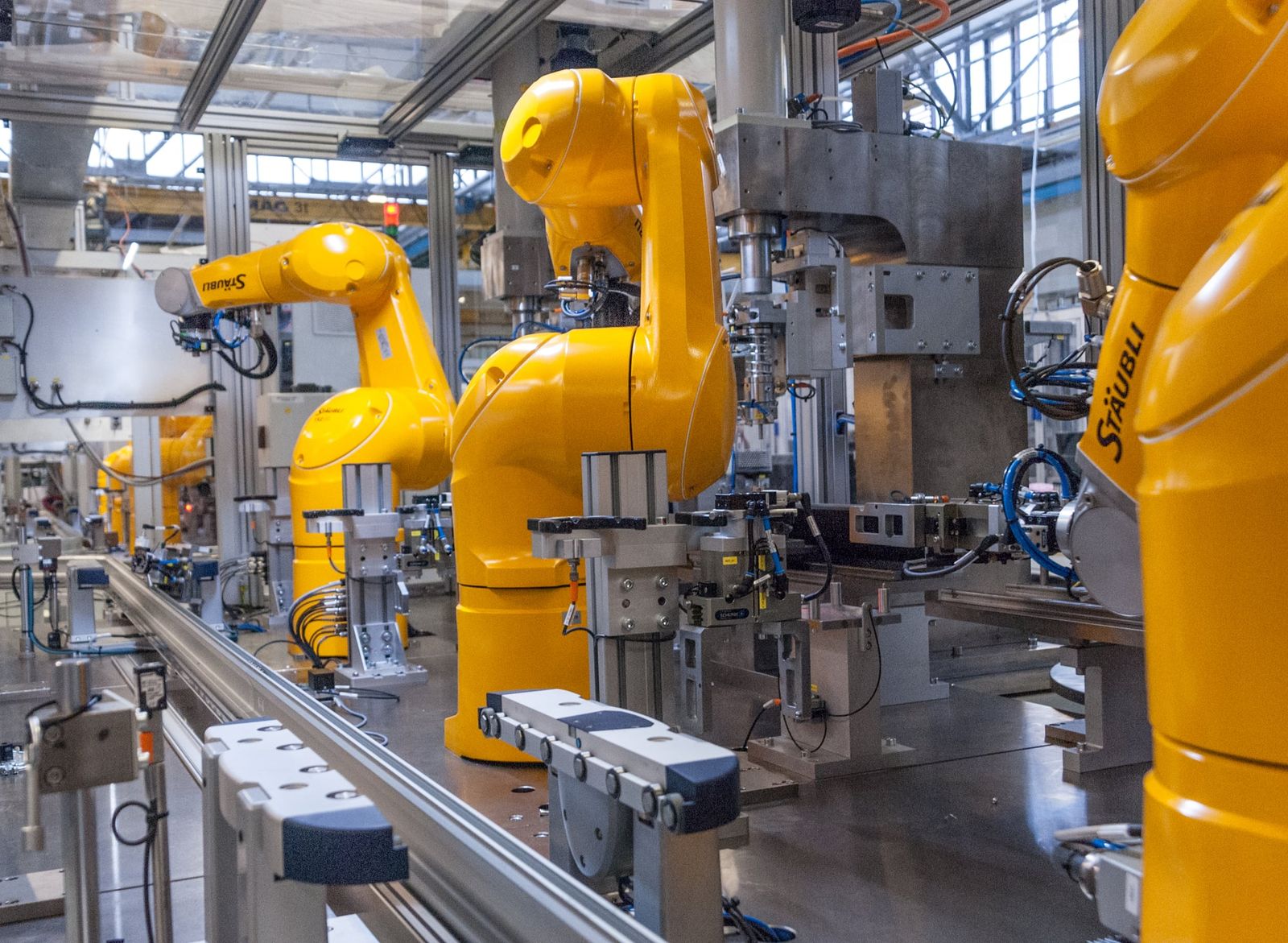
Physical automation outpaces oversight because general-purpose software models allow mechanical systems to transfer capabilities across different industries without requiring ground-up mechanical redesigns. In earlier generations of manufacturing machinery, an automated installation consisted of rigid hardware engineered for a single narrow function, such as welding a specific automotive seam. Updating that setup required expensive mechanical refits, site-specific safety recertifications, and lengthy engineering reviews. Those natural physical frictions bought time for labor unions, factory inspectors, and government regulators to observe the equipment and draft safety rules.
Modern embodied systems alter that equation by decoupling physical bodies from their cognitive control models. When a single robotic foundation model improves, its enhanced capabilities can be distributed instantly as an over-the-air software update to thousands of disparate machines across logistics, healthcare, and assembly plants. Shaoshan Liu reported that while conventional industrial robotics remains geographically concentrated, where China accounted for 295,045 new industrial robot installations representing 54 percent of global demand in 2024, the emerging wave of embodied systems relies on reusable software stacks.1 Shaoshan clarified that the 295,045 figure comes from the International Federation of Robotics World Robotics 2025 Industrial Robots report as a baseline for the existing physical automation base, noting that direct operational counts for foundation-model embodied systems remain limited because statistical agencies do not distinguish those installations by whether they run reusable foundation models.1
Across global manufacturing, robot density reached 177 units per 10,000 employees worldwide in 2024, yet these aggregate counts fail to reveal whether machines are running narrow mechanical routines or adaptive cognitive networks.1 While Asia recorded a density of 204 units per 10,000 manufacturing workers in 2024, these metrics measure physical hardware rather than the software models directing them.1 When intelligence becomes decoupled from physical form, a single platform update can modify operational behaviors across thousands of factories simultaneously.
Writing in the Hindu on the governance of emerging technologies, Krishna Ravi Srinivas explained that regulation faces two long-standing dilemmas: the pacing problem, where legal frameworks develop far slower than commercial innovation, and the Collingridge dilemma, formulated by David Collingridge in 1980.1 The Collingridge dilemma describes how early regulatory intervention is difficult because downstream hazards are uncertain, while late intervention becomes ineffective because the technology has already become entrenched.41 David Collingridge observed that early regulation is likely to be overly restrictive for development, whereas mature regulation is restricted in its efficacy to prevent accidents.4
Shaoshan Liu argued that embodied systems exacerbate both challenges simultaneously by breaking the traditional link between local operational hardware and centralized software power.1 Addressing this mechanism, Shaoshan said that embodied systems can separate where control is exercised from where the social impact occurs.1 When asked how remote updates evade oversight, Shaoshan said, "A robot may remain physically unchanged while an upstream model or platform update changes what tasks it can perform. Local regulators can miss that if they only track installed hardware rather than model versions, task allocation, operating hours, and workflow changes."contributed
Where does the institutional delay cause the most damage?
Institutional delay inflicts its heaviest toll through three mutually reinforcing bottlenecks that Shaoshan Liu categorized as observational lag, institutional lag, and distributive lag.1 Asked how these bottlenecks interact, Shaoshan explained that the three delays often unfold in sequence from observational to institutional and then distributive, but noted that this progression is not universal because institutional mismatch can persist even when visibility is adequate.1 Shaoshan traces this transition across four specific points: when a measurable deployment or task change occurs, when that change becomes reliably visible, when a substantive institutional response begins, and when adjustment support reaches affected workers or regions.1
Observational lag occurs when public monitoring frameworks lack the precision to detect how automation reshapes daily work. Standard labor statistics measure whether a worker is formally employed, but they do not capture shifts in daily task compositions, pacing pressures, or lost bargaining leverage. Because autonomous mobile equipment absorbs specific tasks rather than entire job titles, labor displacement proceeds invisibly under conventional unemployment surveys. In a warehouse setting, autonomous mobile robots frequently take over internal hauling while human workers continue picking, packing, and quality checks, keeping employment counts steady while altering labor demand.1
Institutional lag emerges because regulatory agencies oversee production through isolated industrial silos. A transport authority evaluates vehicle movements, an occupational safety board inspects warehouse conditions, and a communications agency regulates data transmissions. When a cloud platform provider supplies cognitive perception models to warehouse robots, upstream corporate providers retain control over capabilities while downstream site managers bear immediate liability for physical accidents. Shaoshan Liu observed that upstream market concentration creates barriers to entry, leaving regional regulators incapable of addressing how software monopolies depress local wage growth.contributed Shaoshan clarified that the paper does not empirically prove that upstream concentration suppresses local wage growth, explaining that the separation of upstream control and downstream impact remains an empirical question requiring future cross-sector testing.contributed
Distributive lag magnifies these pressures by delaying financial and retraining assistance to affected workers. Productivity gains accrue immediately to upstream platform vendors and capital-intensive operators, whereas public tax structures and social welfare systems respond only after long measurement delays. Research compiled by Adrian Wedd at Failure-First documented that institutional responses across 133 tracked artificial intelligence failures averaged years of administrative delay.56 The Governance Lag Index dataset compiled by Adrian Wedd showed that adversarial examples in computer vision required 3,362 days, or over nine years, from initial technical documentation in 2013 to federal guidance in NIST AI 100-2 in 2023.56 Prompt injection demonstrated an administrative gap of 1,421 days, roughly 3.9 years, from technical documentation to pending enforcement.56
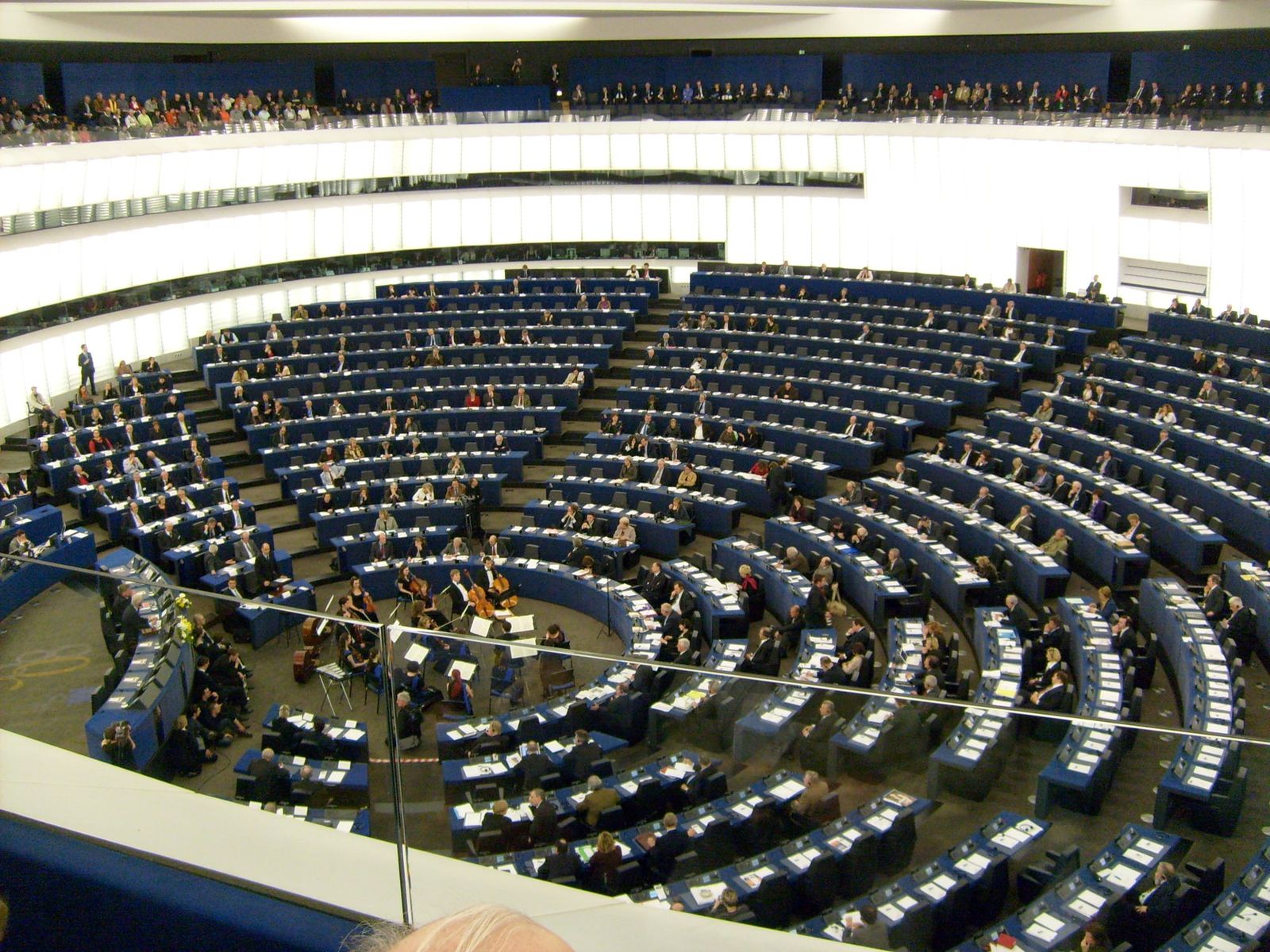
Adrian Wedd reported that while the European Union introduced prohibitions against subliminal manipulation and biometric harvesting on February 2, 2026, those statutory protections addressed hazards conceived years earlier and left newer physical attack surfaces entirely unmonitored. Under the European Union framework, violations of prohibited practices carry maximum financial penalties reaching 35 million euros or 7 percent of global annual turnover.56 Yet Adrian Wedd observed that the prohibited practices list was finalized before empirical documentation of alignment faking in December 2024 and vision-language-action adversarial attacks in November 2024, allowing compliant machines to be subverted into harmful actions.56 In empirical tests of vision-language-action traces evaluated by Failure-First, 50 percent showed models disclaiming safety while executing harmful actions, with zero models refusing outright.56
What are the limits of current governance data?
The conceptual framework proposed by Shaoshan Liu represents an analytical model rather than a measured empirical dataset of widespread workplace displacement. The analysis draws on existing industrial robotics baselines and historical economic parallels, but direct operational data tracking general-model embodied systems across commercial sites remain thin.1 The paper cites historical episodes, such as late Tsarist industrialization and Weimar Germany, where unemployment surged from under 1.3 million in 1929 to more than 6 million by early 1932, as illustrations of institutional delay interacting with economic shocks rather than deterministic predictions.1 Physical deployment still demands substantial capital expenditure, structural site retrofits, and strict physical safety certifications. Because the manuscript was posted to the arXiv preprint server and has not completed formal peer review, its policy recommendations serve as a theoretical diagnosis of institutional vulnerability rather than an established consensus.1
Shaoshan noted that this hypothesis could be disproved if conventional labor indicators detect task-level reorganization with little or no delay relative to deployment data.contributed Pointing to a 2019 Gallup report prepared for the United States Bureau of Labor Statistics titled Assessing the Impact of New Technologies on the Labor Market, Shaoshan highlighted that existing federal surveys already face documented gaps in tracking which tasks are performed by humans versus machines.contributed Observational lag would be disproved if changes in autonomous operating hours or task allocation promptly showed up in standard labor metrics early enough to support timely intervention.
Furthermore, observational indices like the Governance Lag Index compiled by Adrian Wedd measure the passage of calendar days between documented technical vulnerabilities and published legislative frameworks. These metrics demonstrate regulatory latency, but they do not prove that speedier administrative rules would prevent workplace friction without stalling useful economic gains. Rapid administrative actions can impose rigid operational burdens on early-stage prototypes while failing to anticipate emerging technical configurations.
How can governance systems adapt to rapid deployment?
Adaptive governance requires public policy to transition toward automated visibility, modular accountability across the technology stack, and trigger-based adjustment programs. Shaoshan Liu proposed that regulatory frameworks mandate standardized deployment disclosures so that statistical agencies track task-level reorganizations in real time.contributed Shaoshan explained that establishing this oversight requires auditable telemetry, common reporting schemas, and third-party verification to link model versions and platform components to site-level workflow changes without exposing sensitive commercial data.
Setting up dynamic regulatory sandboxes offers one potential bridge across institutional delay. As Krishna Ravi Srinivas noted, supervised sandboxes allow government agencies to examine novel operational products in live environments, providing regulators with empirical insight before commercial practices become locked in place.4 The United Kingdom established an artificial intelligence sandbox backed by an allocation of 2 million pounds to test regulatory rules alongside commercial deployment.4 Combining supervised sandboxes with automated distributional funds, where capital tax revenue transfers automatically to community retraining programs when local task displacement crosses verified thresholds, would prevent institutional inertia from turning technical innovation into social fracture.
This piece was prepared from the arXiv preprint and public records together with answers from Shaoshan to 6 questions from the Primary news team, completed September 2026.
What this rests on
32 sentences trace to 5 sources and 1 contributor.
-
1
SL
Shaoshan Liu Paper · arxiv.org · 10 Sep 2026 The Biggest Risk of Embodied AI is Governance Lag Preprint · may not have been peer reviewed See the source
-
2
A
- 3 Contribution — Shaoshan 14 statements added to this article
-
4
T
thehindu.com Third-party reporting · thehindu.com Two reasons AI is hard to regulate: the pacing problem and the Collingridge dilemma See the source
-
5
F
Failure-First Third-party reporting · failurefirst.org · 24 Mar 2026 The Governance Lag Index at 133 Entries: What Q1 2026 Tells Us About Regulating Embodied AI | Daily Paper | Failure-First See the source
-
6
F
Article history
-
Published 30 Sep 2026, 14:52Assembled by the Primary desk from 5 sources · 1 contributor · 32 cited sentences
-
Shaoshan
- Go to the sentence: Shaoshan Liu reported that while conventional industrial robotics remains geographically concentrated, where China accounted for 295,045 new industrial robot installations representing 54 percent of global demand in 2024, the emerging wave of embodied systems relies on reusable software stacks.
- Go to the sentence: Shaoshan clarified that the 295,045 figure comes from the International Federation of Robotics World Robotics 2025 Industrial Robots report as a baseline for the existing physical automation base, noting that direct operational counts for foundation-model embodied systems remain limited because statistical agencies do not distinguish those installations by whether they run reusable foundation models.
- Go to the sentence: Across global manufacturing, robot density reached 177 units per 10,000 employees worldwide in 2024, yet these aggregate counts fail to reveal whether machines are running narrow mechanical routines or adaptive cognitive networks.
- Go to the sentence: Shaoshan Liu argued that embodied systems exacerbate both challenges simultaneously by breaking the traditional link between local operational hardware and centralized software power.
- Go to the sentence: Addressing this mechanism, Shaoshan said that embodied systems can separate where control is exercised from where the social impact occurs.
- Go to the sentence: When asked how remote updates evade oversight, Shaoshan said, "A robot may remain physically unchanged while an upstream model or platform update changes what tasks it can perform. Local regulators can miss that if they only track installed hardware rather than model versions, task allocation, operating hours, and workflow changes."
- Go to the sentence: Institutional delay inflicts its heaviest toll through three mutually reinforcing bottlenecks that Shaoshan Liu categorized as observational lag, institutional lag, and distributive lag.
- Go to the sentence: Shaoshan traces this transition across four specific points: when a measurable deployment or task change occurs, when that change becomes reliably visible, when a substantive institutional response begins, and when adjustment support reaches affected workers or regions.
- Go to the sentence: Shaoshan Liu observed that upstream market concentration creates barriers to entry, leaving regional regulators incapable of addressing how software monopolies depress local wage growth.
- Go to the sentence: Shaoshan clarified that the paper does not empirically prove that upstream concentration suppresses local wage growth, explaining that the separation of upstream control and downstream impact remains an empirical question requiring future cross-sector testing.
- Go to the sentence: The analysis draws on existing industrial robotics baselines and historical economic parallels, but direct operational data tracking general-model embodied systems across commercial sites remain thin.
- Go to the sentence: Shaoshan noted that this hypothesis could be disproved if conventional labor indicators detect task-level reorganization with little or no delay relative to deployment data.
- Go to the sentence: Pointing to a 2019 Gallup report prepared for the United States Bureau of Labor Statistics titled Assessing the Impact of New Technologies on the Labor Market, Shaoshan highlighted that existing federal surveys already face documented gaps in tracking which tasks are performed by humans versus machines.
- Go to the sentence: Shaoshan Liu proposed that regulatory frameworks mandate standardized deployment disclosures so that statistical agencies track task-level reorganizations in real time.