Tailored memory sharing cuts the computing expense of autonomous software agents
Optimizing host hardware and sandbox isolation can allow developers to operate autonomous coding and browsing tools without paying standard cloud infrastructure rates.
Autonomous software agents that write code, browse the web, and operate computer interfaces require secure digital environments to run untrusted instructions. These isolated software environments, known as sandboxes, prevent automated programs from damaging underlying host computers or accessing private network resources. Yet maintaining these environments continuously inside conventional commercial cloud platforms creates an expensive operational burden. When an automated agent interacts with digital applications, its demand for computational power swings between heavy bursts and extended pauses, making standard cloud pricing models economically inefficient.
Every active agent session requires compute resources to start up tools, execute commands, and wait for human input or model responses. For independent software developers and small engineering teams, running dozens of continuous sessions on large commercial cloud platforms can generate unsustainable monthly invoices. If each automated assistant requires an isolated operating environment that charges flat hourly rates regardless of whether the agent is actively thinking or idling, widespread deployment becomes financially impractical.
For an automated assistant to carry out a job, a sequence of mechanical events must occur in order. The host machine must first spin up an isolated execution space so external code cannot breach the operating system. Next, the environment loads supporting applications, such as a headless web browser, a code interpreter, or a terminal shell. The processor then experiences a sudden spike of computational activity as these tools initialize and execute instructions. Once the initial computation finishes, the processor returns to a resting state while the system waits for network packets or new prompts. Memory, however, remains occupied by the open browser tabs, file buffers, and background libraries. Because processing power drops while memory remains in use, general-purpose servers that balance compute cores and memory equally end up wasting computational capacity.
An infrastructure startup named Agent37, founded by former Amazon software engineer Vishnu, designed an execution environment centered around these specific hardware dynamics. The project started in February as a wrapper for OpenClaw before expanding to support multiple agent frameworks, including Hermes and Claude Code. By restructuring host allocation around the irregular operational habits of agent harnesses, the platform reduced underlying infrastructure expenses. The platform reported that over 90% of its new user signups operate on an unbilled free tier, where underlying infrastructure expenses average between $0.05 and $0.10 per user per month.1 Across paid accounts, the company reported an average customer expenditure of $0.37 per month per sandbox.1
Why do conventional cloud servers inflate the expense of running automated agents?
Conventional cloud platforms impose substantial markups on virtual machines while forcing customers into rigid hardware configurations that do not reflect agent usage patterns. Vishnu, who previously built Amazon internal tools including the Diya artificial intelligence chatbot and the Ziya coding harness, reported that major cloud hyperscalers maintain margins between 80% and 90% on virtual machines. To reduce baseline hosting costs, Agent37 bypassed major cloud providers, renting underlying dedicated host servers from alternative infrastructure vendors such as Hetzner and OVH.1
How can host servers pack multiple agent environments onto shared memory?
Host servers can avoid reserving dedicated memory blocks for every individual workload by deploying lightweight kernel virtualization software. Agent37 implemented gVisor, an application kernel that creates secure application boundaries while allowing multiple sandboxes to share available host memory dynamically.1 Conventional virtual machines reserve an entire block of memory for each guest operating system, preventing other processes from using that memory even when the guest machine is idle. The gVisor software architecture allows the host to allocate memory dynamically across separate sandboxes as demands shift, shortening container startup times and improving overall memory density on the physical host.1
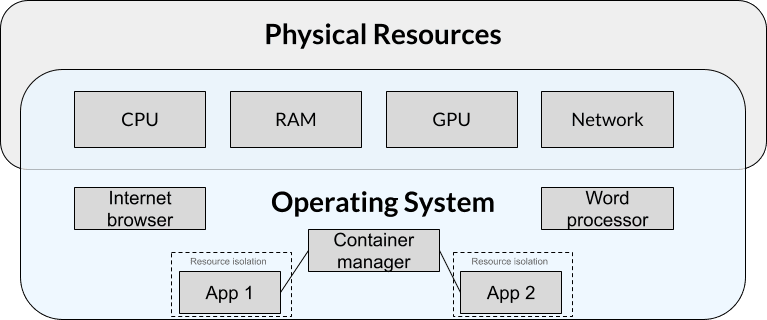
Physical server hardware must also align with the reality that memory capacity forms the primary operational bottleneck for agent workloads. Raw processing speed is rarely the limiting factor. Because web browser automation and user interface control require substantial amounts of random access memory while processor utilization remains episodic, purchasing servers with standard central processor ratios leaves unused computing capacity.1 The company configured its dedicated host purchases to pack larger quantities of random access memory onto each physical machine, matching the exact physical resource envelope that agent harnesses require.1
What workloads fail to run under lightweight isolation?
Lightweight isolation mechanisms cannot run software architectures that depend on direct control over kernel virtualization. The gVisor environment intercepts system calls through an emulation layer, which prevents it from supporting nested virtualization workloads such as running Docker containers inside the sandbox or operating Android mobile device emulators.1 To accommodate developers who require full system virtualization to run Docker, the company operates standard virtual machine sandboxes, which carry a higher infrastructure cost.1 These operational constraints demonstrate that lightweight sandboxes represent a specialized architectural tradeoff, functioning effectively for browser-driven tasks while offloading complex nested environments to heavier virtualization.
The long-term economic durability of specialized agent hosting depends on whether real-world development workflows remain aligned with these memory-heavy, bursty computing profiles. If autonomous agents evolve to run continuous local model inference or maintain constant high processor utilization, the cost advantages of asymmetric hardware allocation could narrow. For developers evaluating agent infrastructure, the operational economics will depend on whether shared-memory sandboxes can preserve isolation and stability as messaging agents and complex computer-use tools scale across broader production environments.1
The record
10 sentences trace to 1 source.
-
1
N
news.ycombinator.com Document · news.ycombinator.com Launch HN: Agent37 (YC F26) – Low-cost agent sandboxes for running agents See the source