Audio transcription on a laptop reaches nearly three hundred times real speed
A lightweight transcription tool turns speech into text in seconds by reading positions directly from a multimodal vector map on Apple Silicon.
Converting spoken audio into written words usually requires a computer to track acoustic patterns over time, predict syllables, and piece together candidate sentences step by step. When transcription models run on personal computers, this process frequently demands substantial processor time or dedicated cloud servers, forcing a choice between rapid results and local data privacy. Recent software demonstrates that speech can instead be deciphered almost instantaneously by looking up where sounds sit inside a geometric map of language.
Sound waves from human speech and written English vocabulary can be translated into points within a shared mathematical coordinate system, known as an embedding space.12 When two concepts match, their points sit close together within that space. Because the coordinates of spoken syllables naturally align near the coordinates of their corresponding written words, converting speech into text becomes a direct search for the closest vocabulary item rather than a protracted sequential calculation. By bypassing heavy iterative language generation, an hour of continuous speech can be translated into readable text in roughly a dozen seconds on a portable personal computer.
How can an embedding map decode spoken words?
Audio transcription operates as a direct vector lookup by treating spoken phrases as points in a multi-dimensional language space. In this approach, recorded sound enters an audio encoder that translates acoustic vibrations into spatial coordinates.1 A compact reader component then positions each brief slice of audio inside the text domain of the same coordinate space.1 The system evaluates the location of the slice against a library of approximately 229,000 candidate English words and selects whichever term sits closest.1 Once those raw word matches form an initial transcript, an auxiliary miniature model assigns capitalization and punctuation marks to produce complete sentences.1
The underlying language coordinates originate from Google's EmbeddingGemma architecture. Researchers led by Henrique Schechter Vera at Google designed EmbeddingGemma as a lightweight model derived from Gemma 3, training the system to project semantically related material into compact geometric vectors. Developers behind the macOS project, designated Embedding Gemma Transcribe, adapted that multimodal structure for speech recognition without retraining the original audio encoder.1 The developers trained only the reading mechanism that bridges the sound and text coordinates, completing the training in under two hours using eight Nvidia H100 graphics processors on openly licensed English speech data.1
How fast does the lookup run on personal computers?
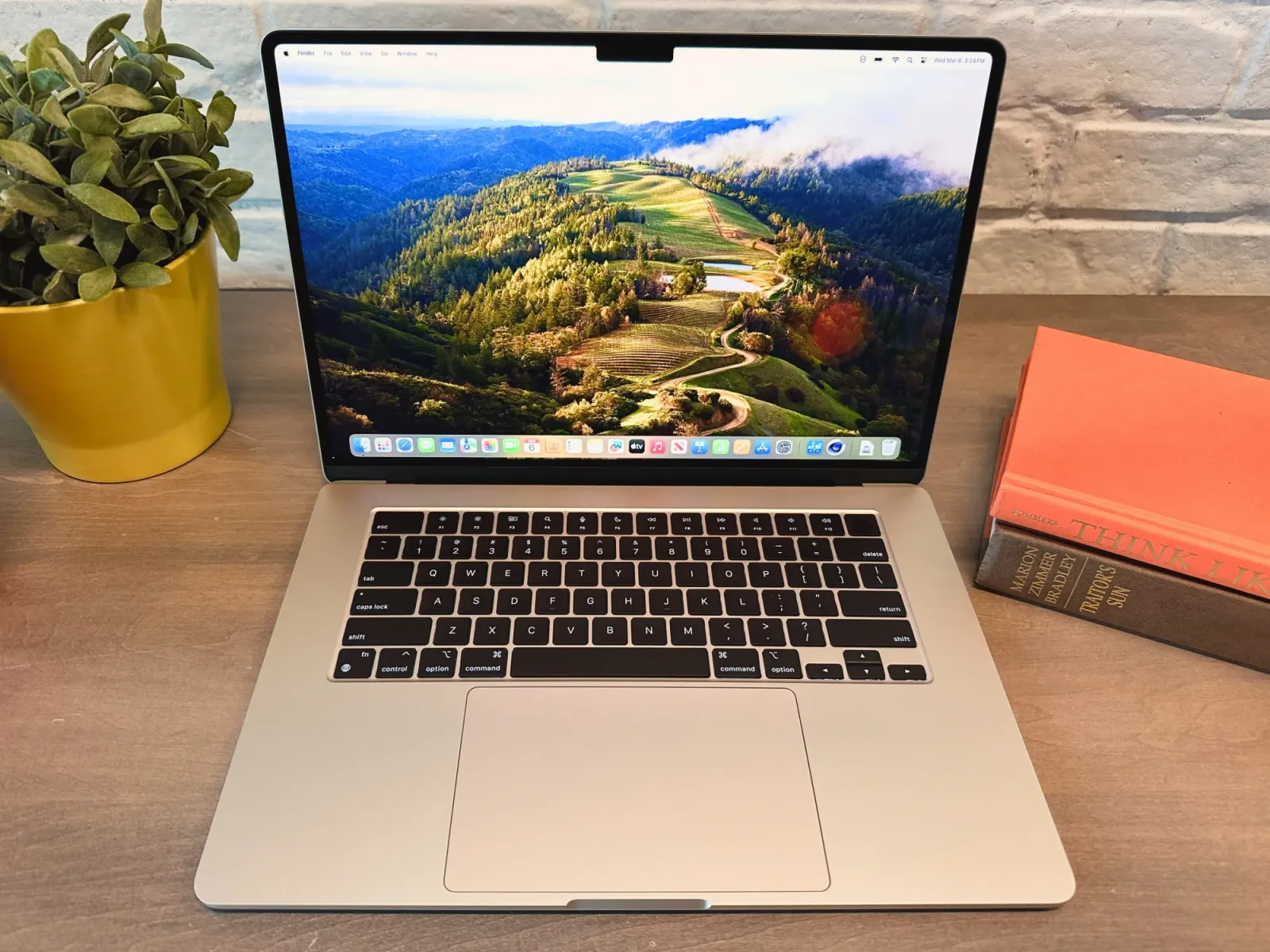
Processing speech directly on hardware accelerators yields speeds far beyond traditional real-time listening. On a baseline Apple M3 MacBook Air equipped with 8 gigabytes of memory, Embedding Gemma Transcribe version 1.6 processes an hour of recorded audio in 12.6 seconds, running entirely on the computer's integrated Neural Engine. That benchmark translates to a throughput of 288 times real-time speed, allowing an entire lecture or meeting to be indexed in the time it takes to brew a cup of tea. Because the calculations run entirely on the laptop, recorded audio remains on the local device rather than travelling across the internet.1
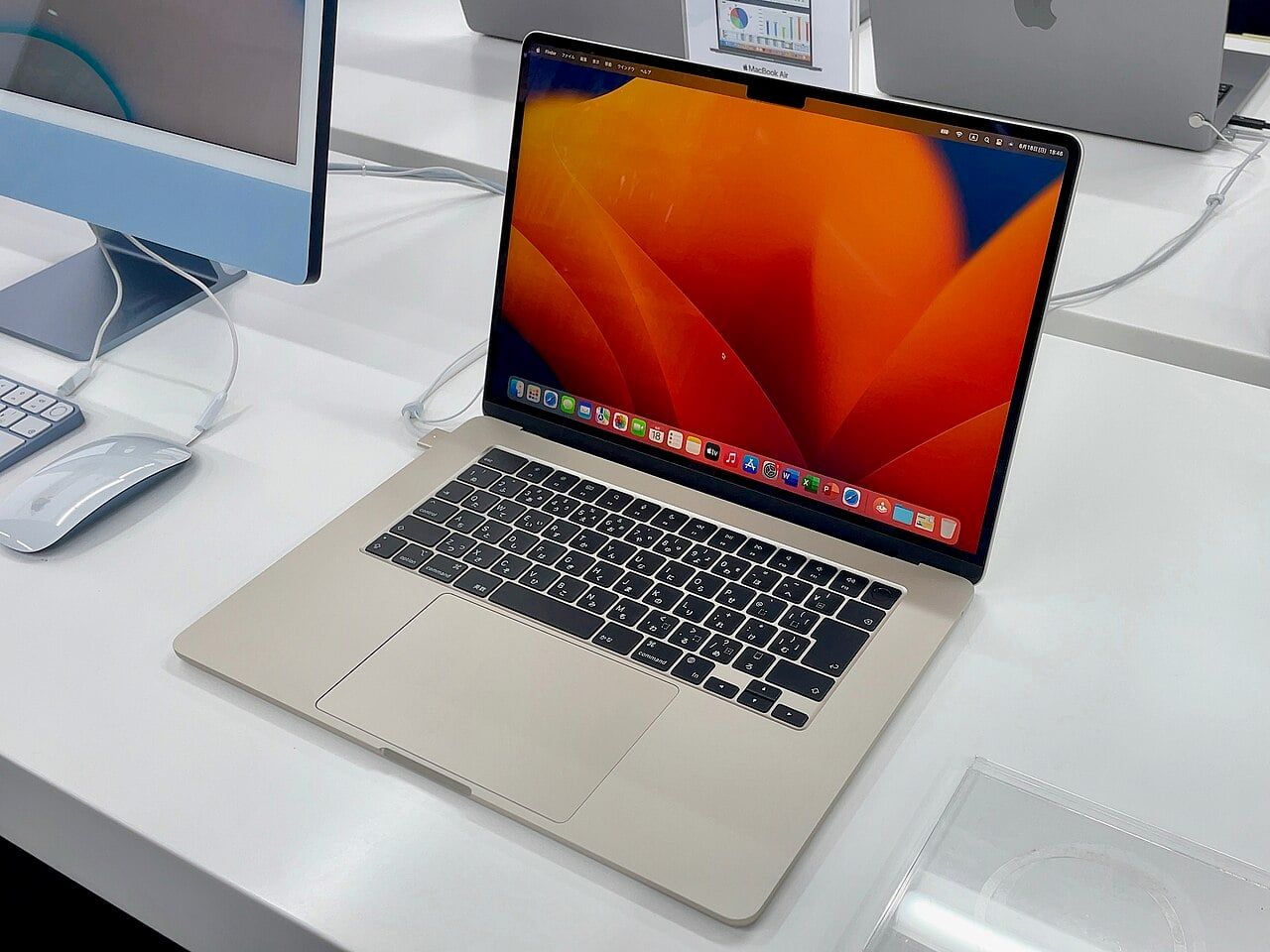
The developers evaluated the system against other local speech architectures on the same baseline M3 MacBook Air. IBM Granite Speech 5.0 Turbo CTC, running on the graphics processor through Apple's MLX framework, transcribed an hour of audio in 25.7 seconds, reaching approximately 150 times real time. Published benchmarks from FluidAudio indicate that Nvidia Parakeet TDT 0.6B version 3 achieves 156 times real time on an M4 Pro processor and 335 times real time on an M5 Pro chip, while Phonon-2 reaches 480 times real time on an M5 Pro. The project developers note that the external FluidAudio figures reflect different audio test sets and larger processors, making them a general point of comparison rather than an identical head-to-head measurement.1
What are the trade-offs of geometric transcription?
The speed advantage of mapping speech geometrically comes with a measurable loss in transcription accuracy. The current implementation of Embedding Gemma Transcribe posts a word error rate of approximately 5%, measured as the proportion of words misidentified, omitted, or inserted.1 Leading dedicated speech recognition models, by comparison, typically achieve word error rates between 2% and 3% on standard benchmarks.1 Because the underlying model was never designed specifically for speech-to-text duties, it occasionally misidentifies ambiguous phonemes that a more complex sequential decoder would successfully resolve from broader conversational context.
These figures represent the initial iteration of an unconventional architecture rather than a mature commercial engine. The developers state that training a more capable reader component on expanded datasets represents the primary pathway to closing the accuracy gap with specialized transcription engines.1 The application runs on macOS 14 or later and requires an initial 715-megabyte model download on first launch.1 For everyday dictation and offline search indexing, the tradeoff between rapid lookup and slight transcription error offers a working model of how multimodal coordinate spaces can handle tasks far outside their original design.
The record
13 sentences trace to 2 sources.
-
1
E
eg2.haku.sh Document · eg2.haku.sh · 13 Oct 2026 An hour of audio transcribed in about 13s on MacBook Air See the source
-
2
A
arxiv.org Paper · arxiv.org EmbeddingGemma: Powerful and Lightweight Text Representations Preprint · may not have been peer reviewed See the source