Europe accelerates 348 satellites to counter Starlink reliance
With the first IRIS² launches scheduled for 2029, European governments and regional satellite operators are funding orbital alternatives.
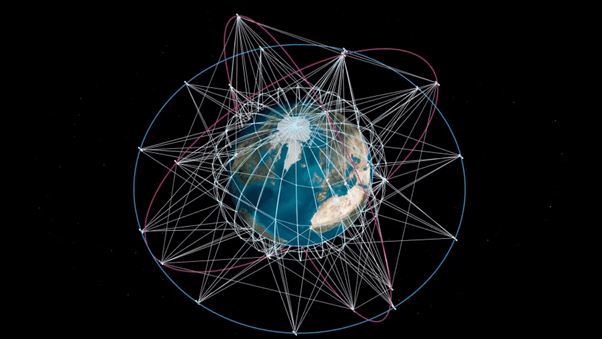
A growing dispute between the United States and Ukraine over Starlink has exposed European reliance on commercial satellite networks controlled by Elon Musk.1 Ukraine’s leadership stated that SpaceX throttled satellite speeds in what it called a "planned operation," an assertion that the White House rejected.1 The friction points to the strategic vulnerability of allied governments that depend on private American orbital infrastructure for defense and communication capabilities during wartime.
United States officials have cautioned the European Union against moves to curtail the market access of SpaceX.1 Outside Europe, the controversy has prompted other governments to examine their technical dependencies.1 In Canada, government leadership confirmed that Ottawa has started exploring alternatives to Starlink, reflecting broader international interest in avoiding sole reliance on a single commercial constellation.1
The sovereign orbital gap
European policymakers have sought to address that exposure, yet sovereign technical replacements remain years away from entering service.12 On August 7, 2026, the European Commission and the SpaceRISE consortium concluded negotiations that began in January 2026, signing an implementation agreement to deploy the Infrastructure for Resilience, Interconnectivity and Security by Satellite, known as IRIS².23 The revised timetable schedules the first satellite launches for 2029, leaving European governments dependent on external systems through the late 2020s.21
The commercial timeline stretches even further into the next decade. Under the implementation agreement, full operation for the commercial low Earth orbit constellation is not scheduled until mid-2032.4 While the European Union intends for IRIS² to guarantee strategic communications autonomy, defense forces and public agencies have few immediate substitutes for existing American commercial infrastructure.15

A reinforced constellation architecture
To respond to shifting security requirements, European authorities expanded the baseline satellite program.23 The Directorate-General for Defence Industry and Space stated that the final agreement expands the primary constellation to 348 satellites.23 That total combines 330 satellites in low Earth orbit with 18 satellites stationed in medium Earth orbit, alongside optional components that can deploy for specialized operational missions.23
The Directorate-General for Defence Industry and Space reported that the revised architecture incorporates 66 dedicated satellites in low Earth orbit designed for defense, security, and emergency services.23 That addition increases secure governmental capacity by 60 percent within the European Union and 54 percent worldwide.23 The system incorporates quantum cryptography through the European Quantum Communication Infrastructure, while inter-satellite optical links and beamforming antennas enable dynamic routing of capacity across Europe and Africa.54
European officials have characterized the reinforced system as essential for strategic autonomy.34 "Today we are taking a decisive step forward for Europe’s security and digital sovereignty," said Andrius Kubilius, the European Commissioner for Defence and Space, upon concluding the August negotiations.3 Kubilius stated that the accelerated delivery schedule and reinforced architecture would provide member states and emergency responders with autonomous communications during crises.3
Public and private industrial commitments
Delivering the constellation requires a multi-billion-euro industrial pact between public institutions and European aerospace contractors.43 The SpaceRISE consortium unites satellite operators SES, Eutelsat, and Hispasat, working alongside manufacturers Airbus Defence and Space, Thales Alenia Space, OHB, and Aerospacelab.34 The industrial contract follows a 12-year concession model originally signed in December 2024.34

Eutelsat holds responsibility for leading the low Earth orbit segment, covering the design, deployment, and operation of 264 dual-frequency satellites and the 66 dedicated security spacecraft.4 Jean-François Fallacher, the chief executive officer of Eutelsat, said that the agreement marked a transition "from planning to execution" focused on delivering sovereign and resilient connectivity infrastructure.4 Eutelsat agreed to invest €2.23 billion in the shared infrastructure of the program, alongside €1.16 billion directed toward commercial infrastructure between 2027 and 2034.4
National governments are providing direct capital to support the expanded defense specifications.3 Spain announced planned investments between €1.6 billion and €2 billion, while Poland committed €656 million and Hungary committed €500 million.3 Additional public financing will come from European Union budget allocations spanning 2028 to 2034, supplemented by potential commitments from third countries including Norway and Iceland.
Bridging the operational gap until 2029 requires stopgap commercial measures.4 To maintain connectivity for existing clients before the new constellation enters service, Eutelsat plans an investment of about €1 billion to deploy 229 additional satellites for its OneWeb fleet through 2034, building on 440 first-generation satellites already procured.4
Service oversight falls to the EU Agency for the Space Programme, which manages governmental security accreditation and operational requirements.53 Rodrigo da Costa, the executive director of the agency, said that the implementation phase represents a significant step forward while ensuring that governmental user needs remain central to service development.3 Until the first satellites reach orbit at the end of the decade, European leaders remain reliant on the private orbital capacity they are spending billions to replace.2
The record
32 sentences trace to 5 sources.
-
1
BR
Brendan Ruberry Document · semafor.com · 18 Oct 2026 Europe vulnerable as US, Ukraine clash over Starlink See the source
-
2
D
defence-industry-space.ec.europa.eu Third-party reporting · defence-industry-space.ec.europa.eu · 7 Aug 2026 European Union is accelerating and reinforcing IRIS² See the source
-
3
E
euspa.europa.eu Third-party reporting · euspa.europa.eu Commission accelerates IRIS² deployment with enhanced security and expanded satellites network See the source
-
4
E
Eutelsat Third-party reporting · eutelsat.com Eutelsat to play central role in delivering the next phase of Europe’s sovereign IRIS² connectivity infrastructure | Eutelsat See the source
-
5
E