Survey finds 30% of Americans consult astrology each year
A commentary argues machine learning fuels occult revival while Stanford researchers track rising global anxiety about automation.
Cultural anxiety surrounding machine learning has revived a recurring historical debate over science, control, and occult belief. An analysis published by Science 2.0 contends that the spread of large language models is driving modern users toward astrology, witchcraft, and folk mysticism to fill a perceived spiritual void.1 That thesis draws a direct line between contemporary software friction and previous backlashes against technological transformation, suggesting that sudden industrial leaps routinely push populations into historical folklore.
The argument maintains that modern computing systems strip people of their personal agency. In response, individuals seek out non-traditional rituals to regain subjective meaning. The Science 2.0 commentary observes that when individuals perceive science as corporate or opaque, they view automation with suspicion and turn toward practices such as tarot readings, druidic nature veneration, and crystal divination.1 The text identifies these movements as expressions of autonomy in a secular era where institutional religion has receded.
Historical precedents for technological backlash
Historical resistance to novel engineering offers clear parallels for today's disputes. During the 1970s, two distinct developments prompted significant public resistance: genetically modified insulin and the Concorde supersonic jet.1 Environmental and consumer organizers mounted fierce opposition to both initiatives. Critics claimed that supersonic aircraft would expand stratospheric water levels by 100 percent, while researchers at the Massachusetts Institute of Technology produced atmospheric modeling indicating potential damage to the ozone layer.1
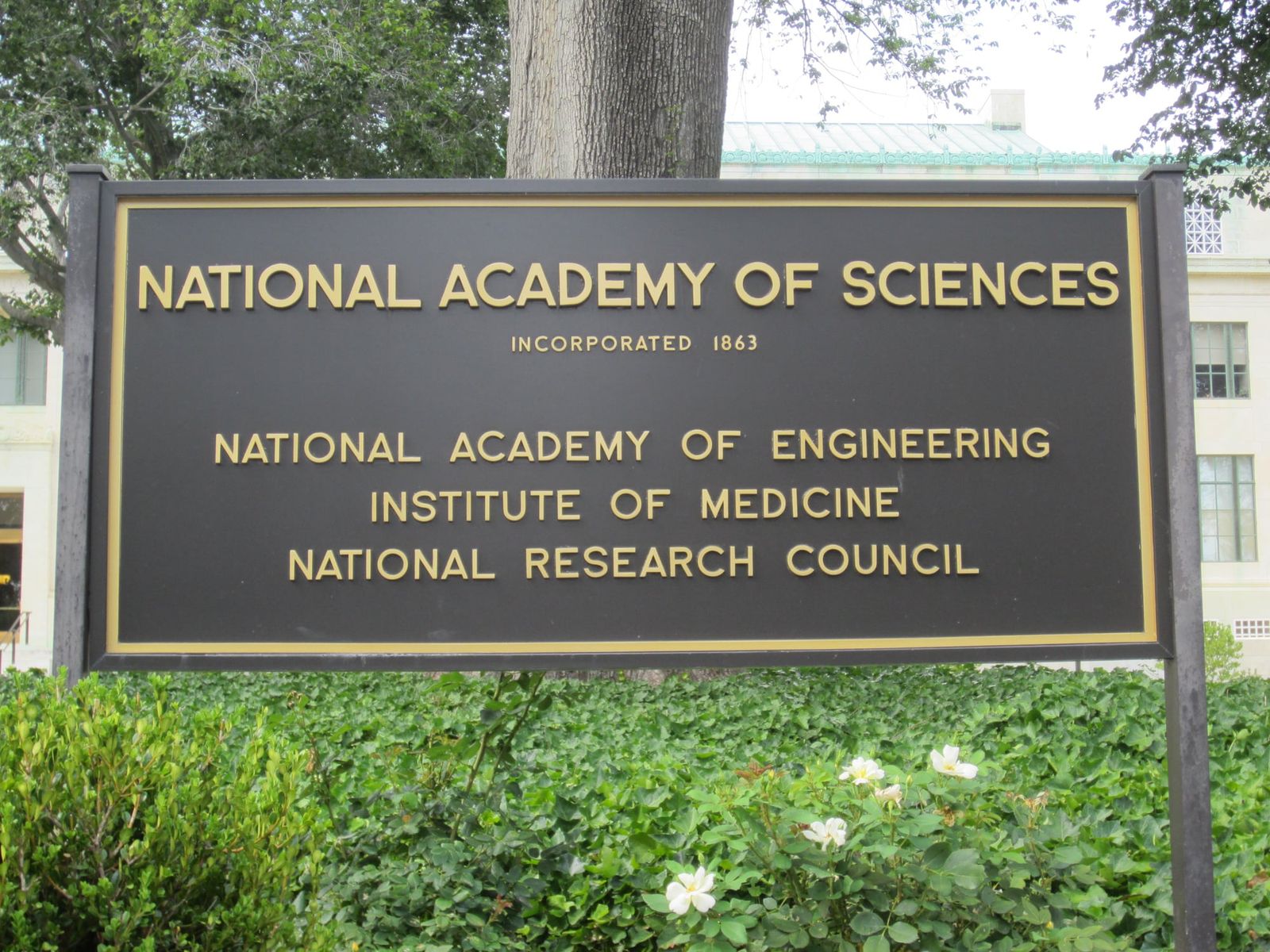
Opposition to biological synthesis proved equally contentious. Democratic Senator Ted Kennedy labeled genetically modified insulin a threat to public health and warned that federally funded scientists who broke rank faced the cancellation of their research grants.1 Meanwhile, activist Jeremy Rifkin led demonstrator disruptions at the National Academy of Sciences during an official forum on recombinant DNA, chanting slogans against genetic manipulation.1 The Science 2.0 analysis notes that this exact era coincided with a visible resurgence in public fascination with ghosts, witchcraft, and magic.1
Similar patterns accompanied the Industrial Revolution. Urban migration and factory mechanization triggered literary crazes for vampires, monsters, and gothic hauntings.1 Even the emergence of the commercial internet in the late 1990s corresponded with an expansion of paranormal cable television programming.1 In each instance, commentators argue, communities confronted by dizzying technical transitions reached toward mystical frameworks to impose human scale on rapid change.
Measuring modern apprehension
Current empirical measurements confirm that public discomfort with artificial intelligence is climbing alongside technical deployment. The 2026 AI Index Report from Stanford University indicates that 52 percent of respondents globally say AI products make them nervous, even as 59 percent acknowledge their practical advantages.2 The report noted that India recorded the steepest increase in public concern, marking a 14 percentage point jump between 2024 and 2025.2
Economic expectations reinforce this unease. According to the Stanford findings, 64 percent of Americans believe automation will reduce the total volume of domestic jobs over the coming two decades, whereas just 5 percent anticipate employment expansion.2 Furthermore, 41 percent of domestic respondents stated that federal oversight of artificial intelligence remains insufficient.2
Generational research paints a similarly cautious picture among the technology's most frequent consumers. Survey findings compiled by Megan Brenan show that 51 percent of Generation Z members utilize generative software at least weekly.3 Yet positive sentiment within that demographic has eroded sharply over a twelve-month span. Measured agreement with feeling excited about the software dropped 14 percentage points to 22 percent, while hopefulness declined nine points to 18 percent.3 Anger toward automated systems increased nine points to 31 percent, and general anxiety held steady at 42 percent.3
Workplace perceptions among younger employees reflect substantial caution. The polling shows that 48 percent of employed Generation Z adults believe the professional hazards of automation outweigh its advantages, compared with 15 percent who view the benefits as greater.3 When assessing workplace production, 69 percent of employed respondents in that cohort place their trust in human labor conducted without automated assistance, compared to 28 percent who trust assisted output.3
Verification struggles and occult alternatives
Part of this broader apprehension stems from the operational unreliability of commercial software. A technical survey on model verification by Patrick Gage Kelley and co-authors found that 70 percent of adult respondents recognize that generative models produce mistakes.4 The study recorded that 75 percent of users make active efforts to cross-check model answers against independent online records, driven by concerns over factual inaccuracies, invented citations, and poor instruction adherence.4

As confidence in technological infallibility wavers, interest in alternative spiritual practices occupies substantial cultural territory. A demographic study conducted by Chip Rotolo established that 27 percent of adults hold an active belief in astrology, defined as the conviction that astronomical positions influence human affairs.5 An identical share of religiously affiliated and unaffiliated citizens express faith in planetary effects, registering at 27 percent and 28 percent respectively.5
Rotolo documented that 30 percent of the public consults horoscopes, tarot cards, or fortune tellers at least annually.5 Among lesbian, gay, bisexual, and transgender adults, engagement proves notably elevated: 54 percent read horoscopes yearly, and 33 percent consult tarot cards. However, the study discovered that 20 percent of participants pursue these traditions strictly for recreational amusement, with only 10 percent seeking actionable personal insight.5 A modest 1 percent reported basing major life choices heavily on occult consultations.5
The financial scale of this ecosystem has expanded into major commerce. An investigation published by the University of the Poor, authored under the byline admin, observed that the metaphysical and New Age marketplace exceeds 10 billion dollars annually.6 The analysis noted that neopagan literature and divination merchandise have become staple offerings across mainstream commercial book retailers, transforming countercultural spiritual seeking into an established consumer industry.6
The enduring pursuit of control
The convergence of algorithmic anxiety and folk belief highlights an enduring psychological instinct. When institutional structures shift rapidly, whether through nineteenth-century steam power or twenty-first-century language models, individuals seek personal agency. While technical users treat software as a functional text engine, broader social adoption consistently revives ancient habits of meaning-making.
Whether through horoscopes, historical protests, or careful manual verification of automated text, communities repeatedly construct buffers against alienating advances. Science and superstition continue their long historical dialogue, each cresting when technological power appears to outstrip human comprehension.
The record
27 sentences trace to 6 sources.
-
1
S2
Science 2.0 Document · science20.com · 20 Oct 2026 Faith Vacuums And AI Have Led To A Paranormal Resurgence See the source
-
2
H
hai.stanford.edu Third-party reporting · hai.stanford.edu Public Opinion | The 2026 AI Index Report | Stanford HAI See the source
-
3
G
Gallup Third-party reporting · news.gallup.com · 8 Apr 2026 Gen Z's AI Adoption Steady, but Skepticism Climbs See the source
-
4
A
arxiv.org Paper · arxiv.org Why and How People Check Generative AI Output for Mistakes Preprint · may not have been peer reviewed See the source
-
5
PR
Pew Research Center Third-party reporting · pewresearch.org · 21 May 2025 30% of Americans Consult Astrology, Tarot Cards or Fortune Tellers See the source
-
6
U
universityofthepoor.org Third-party reporting · universityofthepoor.org · 3 May 2020 Spirituality in a Movement to Unite the Poor - University of the Poor See the source