Jump Trading buys Ito Markets to trade compute capacity
Brokers and financial exchanges are introducing swaps and futures contracts as global spending on processing power reaches hundreds of billions of dollars.
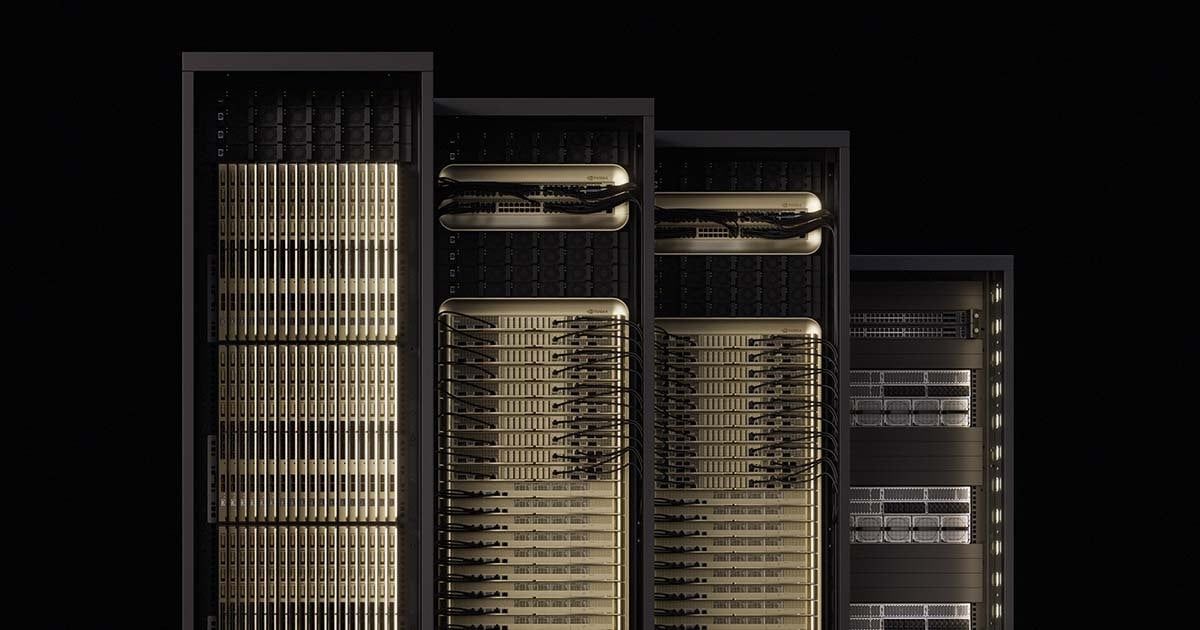
Financial firms build trading pipes for processors
Annual spending on artificial intelligence processing power reached about $360 billion globally last year, according to figures from Boston Consulting Group.1 That total exceeded worldwide spending on copper by about 50%, reflecting an intensive race among technology developers to secure access to advanced semiconductors.1 By 2030, Boston Consulting Group expects annual transactions across the sector to reach $2.3 trillion, an amount roughly equal to the current scale of the global trade in crude oil.1
The supply chain feeding this demand remains fragmented and volatile. Semiconductor designers such as Nvidia and AMD sell advanced processors to equipment manufacturers including Dell and Hewlett Packard Enterprise, which assemble the silicon into server racks.1 Data centre operators then purchase the equipment to rent out machine capacity.1 Alongside tech giants like Amazon, Google, and Microsoft, independent neocloud operators including CoreWeave and Nebius lease large clusters for multi-year durations.1 Thousands of smaller enterprises cannot secure direct long-term allocations from hyperscalers, leaving them dependent on volatile secondary transactions.1
Fragmentation and secondary capacity
Much of that secondary trade operates without standard exchange rules. Capacity is inherently heterogeneous, varying across chip generations, server rack configurations, physical data centre locations, and contract durations.12 To secure needed processors, companies frequently rely on informal brokers who arrange transactions through messaging applications such as WhatsApp and Telegram.1 Lenders struggle to evaluate the credit risk of smaller operators that buy and lease hardware, pushing interest rates on equipment financing into double digits.1 Meanwhile, surging yields on debt issued by CoreWeave reflect broader uncertainty over whether operators and their customers will survive long enough to satisfy multi-year commitments.1
To replace informal networks, specialist trading platforms and established derivatives bourses are designing formal market structures. CME Group and Intercontinental Exchange have partnered with index providers such as Silicon Data to prepare futures contracts pegged to chip rental benchmarks, pending regulatory approval.1 Specialist exchanges like Compute Exchange have emerged to list graphics processing units by location, rental duration, price, and operational availability.1
Bespoke swaps and offshore futures
While American futures exchanges await regulatory clearance, startups have introduced over-the-counter contracts.1 In March, startup Anera Labs arranged a six-figure pilot transaction settled in June with cryptocurrency broker FalconX, pegged to future rental rates for Nvidia H100 chips.1 Anera co-founder Vishwa Naik, who previously worked as an oil trader at Indian conglomerate Reliance Industries, compared current compute trading to the mid-twentieth-century petroleum trade before open commodity markets took hold.1
Another startup, Luxor, developed swap-like derivative agreements designed to guarantee fixed hourly cash flows for server operators.1 Under these arrangements, operators receive payments when prevailing spot prices fall below an agreed benchmark and pay the difference when market rates rise.1 Ethan Vera, a co-founder of Luxor, explained that such payouts can be structured through revenue-sharing agreements.1 Offshore venues have moved ahead with exchange-traded products. In Bermuda, Architect Financial Technologies, founded in 2023 by former FTX US president Brett Harrison, established futures contracts tied to the value of processors operating in the United States.1 Architect also introduced a trading platform for artificial intelligence inference, where developers submit bids for model output rather than raw chip time.1
Market-makers position for expansion
Major proprietary trading firms are allocating balance-sheet capital to establish liquidity in the emerging asset class. Both DRW and Jump Trading invested in Silicon Data to support benchmark development.1 Jump Trading also acquired compute-trading startup Ito Markets, placing its founders in charge of an initiative to trade hardware capacity directly.1 David Olsen, chief investment officer at Jump Trading, pointed out that sustainable market expansion will require institutional structures such as clearing houses to manage counterparty settlement risks.1 "We're a long way from that," Olsen said, while emphasizing that the firm wanted to participate in early market design.1
Commercial research indicates that structured trading venues will expand rapidly as hardware shortages persist. A market study by Isha Paliwal for Kaiso Research and Consulting valued the global artificial intelligence compute exchange market at $2.65 billion in 2025, projecting expansion to $62.18 billion by 2035 at a compound annual rate of 37.1%.2 The study found that spot compute exchanges accounted for 36% of exchange activity, while graphics processing units represented 72% of traded resources.2 Paliwal noted that foundation model training represented 38% of demand, while expanding enterprise inference workloads are driving additional spot and forward transaction volumes across regional hubs.2
The record
28 sentences trace to 2 sources.
-
1
HT
Hindustan Times Third-party reporting · hindustantimes.com · 23 Oct 2026 AI compute is the new oil—and needs a new market See the source
-
2
KR
Kaiso Research and Consulting Third-party reporting · kaisoresearch.com · 14 Jul 2026 AI Compute Exchange Market Size, Growth Industry Report, 2026 - 2035 See the source