Anthropic warns natural gas shortages threaten data center buildout
The artificial intelligence developer told regulators that surging competition for private fuel pipelines could force it to abandon planned computing facilities.
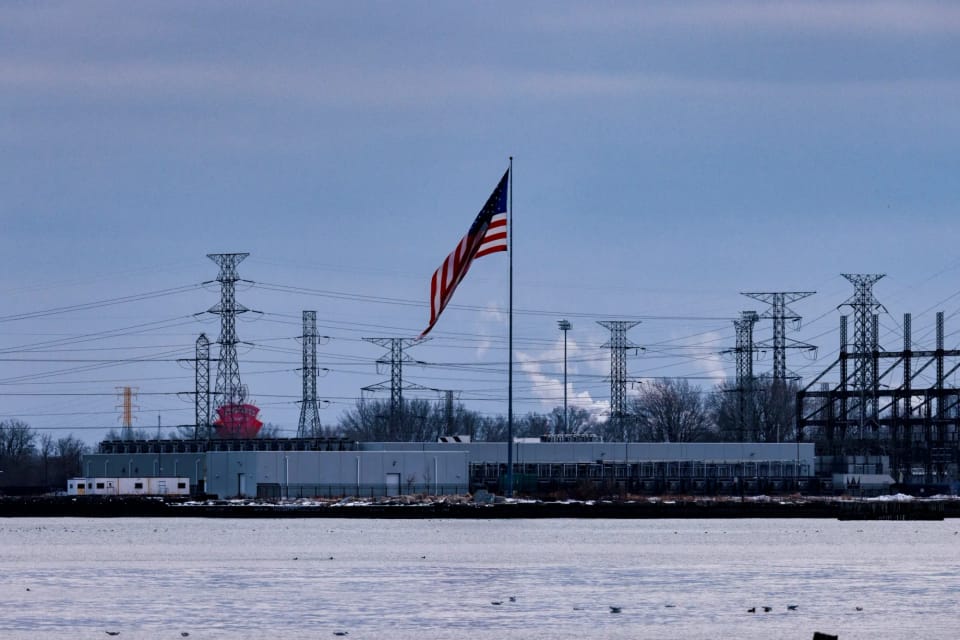
Anthropic warned federal securities regulators that rising competition for natural gas supplies and pipeline access threatens to inflate its operating expenses and disrupt its data center expansion.12 The artificial intelligence developer outlined the fuel constraints in its Form S-1 registration statement filed with the Securities and Exchange Commission on Oct. 26, 2026, pointing to a widening scramble among technology companies building private, gas-fired generation plants to bypass years of regional electrical grid delays.213
The company noted in the filing that several of its planned computing facilities will rely directly on on-site gas-fired generators.23 Because behind-the-meter generation is legally feasible only in certain jurisdictions, Anthropic expects concentrated clusters of data centers to compete for identical regional gas reserves and pipeline laterals.21 In its regulatory prospectus, the firm disclosed that fuel costs at those facilities are paid on a pass-through basis without cost caps, leaving its operational budget directly exposed to wholesale market spikes.2
Anthropic stated in the filing that intensified competition among commercial users could raise regional fuel prices and impair its ability to secure firm delivery contracts.12 The developer cautioned investors that failure to obtain pipeline capacity during construction could force it to delay or abandon planned data center sites entirely.23 The company previously submitted a confidential draft of the prospectus on June 1, 2026, which cited fuel volatility without mentioning commercial rivalry.2 A revised draft submitted on Sept. 4, 2026, incorporated the explicit warning about competing data center operators bidding up supplies.2
Technology companies have pivoted heavily toward dedicated gas generation as grid operators report multi-year backlogs for high-voltage utility connections. Energy analyst firm Cleanview calculated that developers had 110 gigawatts of behind-the-meter gas projects underway by October 2026, climbing from 20 gigawatts tracked in July 2025.1 Across the country, industrial buyers are already encountering physical transportation limits on major pipelines during periods of high throughput.
Paul Cicio, president and chief executive of the Industrial Energy Consumers of America, said natural gas pipeline operators have increasingly restricted volume to industrial facilities.2 Across the country, despite warm weather, natural gas pipelines are issuing operational flow orders that restrict the ability of manufacturers to receive higher rates of fuel, Cicio said, noting that the bottlenecks limit commercial production across consumer and defense industries.2
The surging electrical demand comes as domestic natural gas production reaches unprecedented volumes. The Energy Information Administration projected that American dry natural gas output will expand to 112.2 billion cubic feet per day in 2026, up from 107.6 billion cubic feet daily in 2025, before climbing to 116.1 billion cubic feet per day in 2027.4 Total domestic consumption is expected to reach 120 billion cubic feet daily in 2026, bolstered by a 17 percent jump in liquefied natural gas export volumes.4
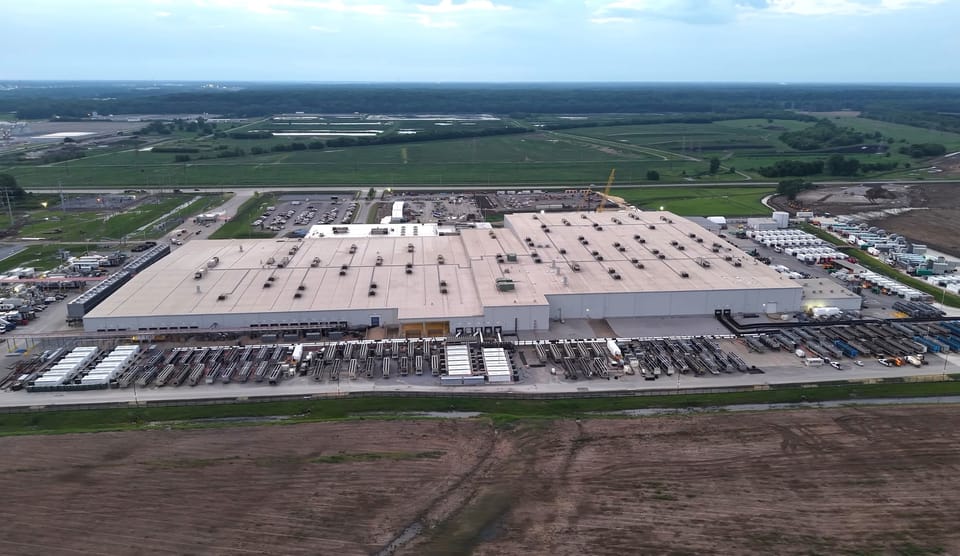
Energy producers have accelerated corporate consolidation to manage production across core shale formations. EQT agreed to acquire Range Resources in a $13 billion all-stock transaction to establish net output exceeding 9 billion cubic feet equivalent per day.4 Expand Energy, the largest domestic producer, announced plans to invest between $2.75 billion and $2.95 billion in 2026 to yield up to 7.6 billion cubic feet equivalent daily, maintaining steady capital expenditures while expanding production volumes.4
Despite rising upstream production, market analysts expect computing facilities to consume a growing share of the nation's energy supply. Commodity strategist Christopher Louney at RBC Capital Markets estimated that data center gas consumption will reach approximately 6.1 billion cubic feet per day by 2030, with a probable range of 6 billion to 7 billion cubic feet daily by the close of the decade.2 Energy research firm BloombergNEF estimated that grid-connected data centers alone will demand an additional 15 billion cubic feet daily by 2035, representing a 15 percent increase in total domestic gas requirements, with on-site generation adding roughly 3 billion cubic feet per day.1
Anthropic has historically secured computational capacity from external cloud providers, naming Amazon, Google, Microsoft, and SpaceX in its registration statement.13 The company leases servers at SpaceX's Colossus facility in Memphis, Tennessee, where local community groups filed suit over the deployment of unpermitted gas turbines.1 To diminish its operational reliance on third-party cloud infrastructure, Anthropic entered a $50 billion development partnership with Fluidstack in 2025, announcing dedicated computing campuses in Texas and New York.13
The developer has also explored on-site gas power installations across Texas, Louisiana, and West Virginia.1 In West Virginia, computing infrastructure developer Nscale reported in its own public offering filing that an associated facility could rank among the largest private gas plants constructed in the United States.1 Enrique Gonzalez, head of gas research for the Americas at BloombergNEF, said gas costs could rise in Louisiana and Texas as computing developers compete directly with export terminals along the Gulf Coast.1
While technological peers have promoted clean energy procurement, Anthropic dismissed alternative power sources as unviable for its immediate deployment schedule. Newer generation sources including solar, wind, battery storage, nuclear, and geothermal energy may not be available in the quantities or on the schedules the company requires, Anthropic wrote in the prospectus, adding that low-carbon alternatives often carry higher procurement costs.1 Gas turbines also face severe manufacturing backlogs, prompting some facility builders to install less efficient gas engines.3
The rapid expansion of private energy facilities has triggered federal legislative friction over utility costs. Anthropic highlighted in its filing that it publicly pledged to absorb electricity cost increases imposed on household ratepayers by its computing centers, including local delivery infrastructure.2 The prospectus contained no corresponding commitment to reimburse consumers for localized natural gas price increases driven by its pipeline procurement.2
In Congress, lawmakers introduced the Ratepayer Protection Act to mandate that state utility commissions examine standards forcing large computing developers to pay for generation upgrades.2 The legislation passed the House of Representatives by a 417-3 margin in September 2026 before stalling three votes short of advancement in the Senate.2 Without statutory backstops or expanded transmission lines, the competition between computing facilities and regional utility customers will hinge on pipeline access across concentrated fuel basins.
The record
30 sentences trace to 4 sources.
-
1
W
 WIRED
Document
· wired.com · 27 Oct 2026
Anthropic Flags Gas Supply as One of Its Biggest Near-Term Risks
See the source
-
2
TD
 The Daily Caller
Third-party reporting
· dailycaller.com · 27 Oct 2026
AI Giant Warns Data Center Rush Could Inflate Local Natural Gas Prices
See the source
-
3
TV
 The Verge
Third-party reporting
· theverge.com · 26 Oct 2026
Anthropic is burning gas to feed the AI boom
See the source
- 4 U.S. natural gas production on track for second straight record See the source