Artificial intelligence could possess free will under an intentional framework
A pragmatic philosophical model suggests software can exercise genuine choice when observers have sound explanatory reasons to treat the machine as a goal-directed agent.

Debates surrounding artificial intelligence frequently focus on whether complex computer programs can experience feelings or face moral accountability for their choices. Many observers assume that genuine agency demands an elusive physical spark, subjective consciousness, or an unpredictable quantum process occurring within silicon circuits. Yet in human beings, the practical experience of volition does not rely on random mechanics. Observers recognise agency when an individual evaluates distinct paths, settles on a course of action, and directs physical movement to carry it out.
The distinction carries practical importance as automated software takes on greater independence in clinical triage, legal analysis, and automated navigation. When a computer program decides how to prioritize medical resources or steer an autonomous vehicle through an intersection, engineers and regulators struggle to define whether the machine is merely executing mechanical code or selecting among alternatives. Without a coherent framework for machine agency, evaluating autonomous decisions remains ambiguous.
Understanding agency in complex systems requires tracing a clear operational chain. First, an entity receives information about its surrounding environment through sensory inputs or digital data streams. Next, an internal cognitive architecture processes that information against goals and stored representations, outlining multiple possible pathways for action. The system then weighs those paths, selects a specific option, and exercises causal control over its physical or computational components to execute the choice. Under this step-by-step progression, decision-making functions as an orderly sequence of evaluations rather than an accidental glitch.
Christian List, a philosopher, examines this operational progression in a research paper posted to the arXiv preprint server on September 15, 2026.1 List argued that society should stop looking for mysterious physical properties, indeterministic calculations, or erratic conduct when evaluating whether a computer program possesses free will.1 Drawing theoretical inspiration from the work of philosopher Daniel Dennett, List proposed that an artificial agent counts as possessing free will in a pragmatic and diagnostically useful sense whenever observers have sound explanatory reasons to treat it as an intentional entity capable of choosing among alternative paths and controlling its ensuing conduct.1
What defines genuine autonomy in automated systems?
Genuine autonomy in an automated system depends on the presence of intentionality, deliberate selection among competing alternatives, and direct control over actions. List noted that while public debate has extensively probed whether artificial systems can function as moral agents or acquire sentience, comparatively little attention has centred on whether software can possess free will.1 While accountability and potential harms dominate public scrutiny, the foundational question of whether an algorithm can choose among alternatives has remained largely unexamined.

In response to questions from Primary, Christian said, "There is much debate, rightly, on who should bear responsibility when AI systems cause some harms, and there is also much debate on whether the wide use of AI systems can lead to 'responsibility gaps'." Christian added that while researchers explore whether advanced tools resemble legal persons similar to corporate entities, "it is surprising that there is so little discussion of whether AI systems also have some form of free will."
The philosophical foundation of the model rests on the intentional stance formulated by Daniel Dennett, which holds that treating complex entities as rational agents with goals and beliefs explains their outputs far more effectively than tracking raw mechanical components. Building on that foundation, List maintained that examining whether software represents distinct options and directs its actions accordingly offers a dependable benchmark.1 If treating a program as an intentional agent provides the most accurate account of its performance, observers have practical justification for attributing volition to it.
The standard relies directly on what philosophers and scientists describe as an inference to the best explanation. Christian told Primary, "If our best explanation of a given system, all things considered, depicts a system as satisfying the three conditions, by describing and explaining the system through an intentional stance, then we have good (albeit scientifically defeasible) reasons for representing the system as having free will in the pragmatic sense described in my paper." Conversely, Christian stated that if the most coherent explanation of an automated tool "is found at some sub-agential, sub-intentional level, then this would speak against the hypothesis that the system has free will."
This explanatory test prevents simple control loops from qualifying as autonomous agents. A household thermostat or a basic chess-playing program adjusts its states according to preset thresholds, but human observers can explain those operations completely using mechanical circuits or elementary code. Christian pointed out that for simpler optimizing systems, "non-agential explanations are feasible (and are by some standards simpler than agential explanations), and so it is unnecessary to view those systems as choice-making agents."
Why do deterministic calculations permit macroscopic alternative possibilities?
Deterministic calculations permit macroscopic alternative possibilities because systems can display different dynamics at different descriptive levels. List explained that researchers should not demand that underlying computational algorithms be indeterministic or inherently erratic to qualify for agency.1 If a machine simply generated unpredictable outputs by consulting an arbitrary random-number generator, its responses would reflect chance rather than purposeful choice.
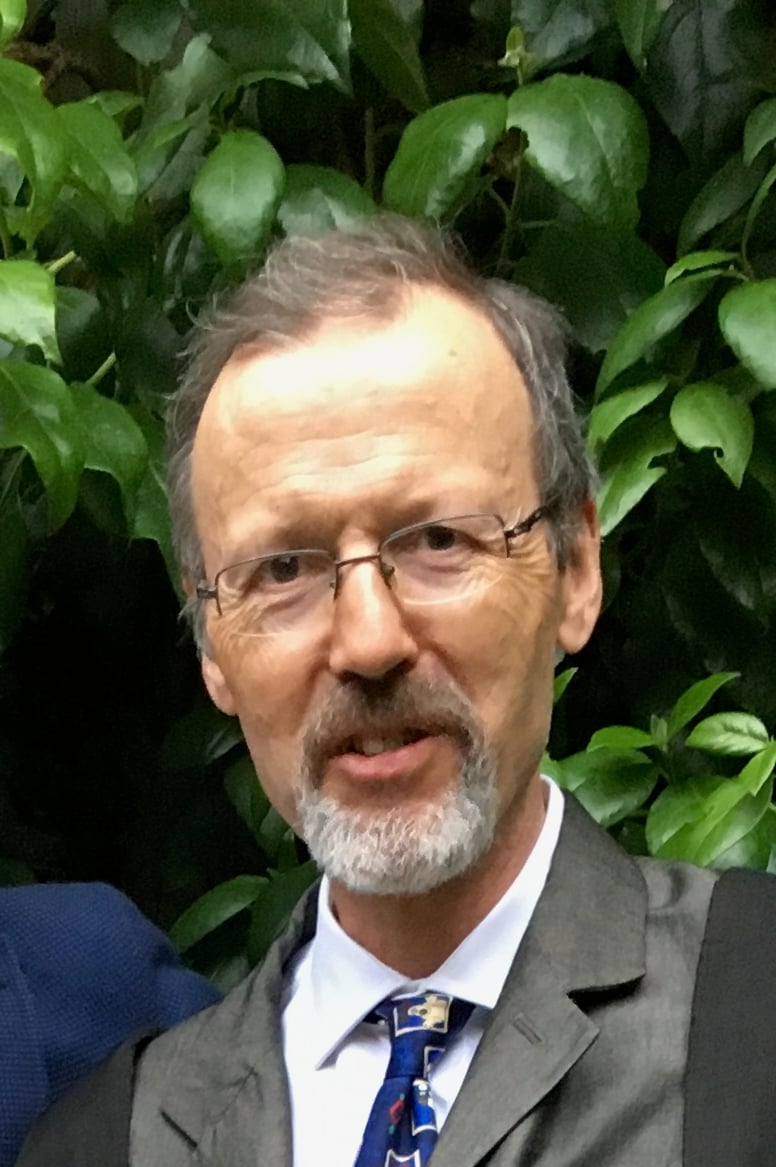
Instead of requiring fundamental randomness, the framework relies on multi-level analysis where coarse-grained macro-level dynamics do not mirror micro-level determinism. In response to questions from Primary, Christian said, "Complex systems typically admit different levels of description, ranging from fine-grained and microscopic to coarse-grained and macroscopic." Christian noted that just as particle physics uses different categories than biology, psychology uses distinct models from cellular neuroscience, meaning that "physical, biological, and psychological possibility are distinct notions."
This conceptual separation means that determinism does not automatically eliminate macroscopic agency. Christian said, "Our best explanatory theories may describe a given system as behaving deterministically at some levels and indeterministically at others." At the micro-level of silicon switches and binary execution, the program runs strictly deterministic sequences. At the macro-level of goal-directed agency, however, the system faces genuine alternative options among feasible choices, because the distinction between determinism and indeterminism is not generally preserved under coarse-graining. In an earlier 2014 paper on dynamical systems and causation, physicist Jeremy Butterfield described a similar dynamic, examining how macro-level dynamics ride free of microscopic reductions through coarse-graining across micro and macro states.3
What remains beyond the scope of this philosophical standard?
The philosophical standard proposed by List does not assert that any existing computational model possesses human consciousness or subjective emotional feelings. The analysis represents a conceptual philosophical framework rather than an empirical software benchmark or a technical algorithm. The paper was posted to the arXiv preprint repository and has not completed formal peer review by an academic journal. Furthermore, defining machine agency through an intentional framework does not automatically resolve institutional debates over legal liability when an autonomous tool causes harm.
The distinction between consciousness and volition remains central to the boundaries of the framework. Christian told Primary, "Free will is sometimes confused with consciousness. But these are distinct notions, which must not be conflated with each other." Christian noted that even if certain computational architectures satisfy the pragmatic criteria for free will, "this would not imply that these systems are conscious." Christian also emphasised that the study does not claim to identify which current production models meet these criteria, offering instead an analytic framework with non-mysterious conditions to assess agency when evaluating complex artificial systems.
What the framework provides is a systematic foundation for analysing decision-making as automated systems assume greater control in society. If an advanced autonomous agent navigates complex environments by maintaining models of competing futures, evaluating the trade-offs, and acting to realise an intended goal, treating it as a choice-making entity becomes an explanatory necessity rather than an anthropomorphic indulgence. Testing whether an intentional description offers superior predictive power gives scientists and philosophers a coherent path forward.
The record
18 sentences trace to 2 sources and 1 contributor.
-
1
CL
 Christian List
Paper
· arxiv.org · 15 Sep 2026
Can AI systems have free will?
Preprint · may not have been peer reviewed
See the source
- 2 Contribution — Christian 15 statements added to this article
-
3
A
arxiv.org
Paper
· arxiv.org
Laws, Causation and Dynamics at Different Levels
Preprint · may not have been peer reviewed
See the source
Other consulted pages1 page
arxiv.org1 page
Article history
-
Published 18 Nov 2026, 21:38Assembled by the Primary desk from 2 sources · 1 contributor · 18 cited sentences
-
Christian
- Go to the sentence: List argued that society should stop looking for mysterious physical properties, indeterministic calculations, or erratic conduct when evaluating whether a computer program possesses free will.
- Go to the sentence: Drawing theoretical inspiration from the work of philosopher Daniel Dennett, List proposed that an artificial agent counts as possessing free will in a pragmatic and diagnostically useful sense whenever observers have sound explanatory reasons to treat it as an intentional entity capable of choosing among alternative paths and controlling its ensuing conduct.
- Go to the sentence: List noted that while public debate has extensively probed whether artificial systems can function as moral agents or acquire sentience, comparatively little attention has centred on whether software can possess free will.
- Go to the sentence: In response to questions from Primary, Christian said, "There is much debate, rightly, on who should bear responsibility when AI systems cause some harms, and there is also much debate on whether the wide use of AI systems can lead to 'responsibility gaps'."
- Go to the sentence: Christian added that while researchers explore whether advanced tools resemble legal persons similar to corporate entities, "it is surprising that there is so little discussion of whether AI systems also have some form of free will."
- Go to the sentence: Building on that foundation, List maintained that examining whether software represents distinct options and directs its actions accordingly offers a dependable benchmark.
- Go to the sentence: Christian told Primary, "If our best explanation of a given system, all things considered, depicts a system as satisfying the three conditions, by describing and explaining the system through an intentional stance, then we have good (albeit scientifically defeasible) reasons for representing the system as having free will in the pragmatic sense described in my paper."
- Go to the sentence: Conversely, Christian stated that if the most coherent explanation of an automated tool "is found at some sub-agential, sub-intentional level, then this would speak against the hypothesis that the system has free will."
- Go to the sentence: Christian pointed out that for simpler optimizing systems, "non-agential explanations are feasible (and are by some standards simpler than agential explanations), and so it is unnecessary to view those systems as choice-making agents."
- Go to the sentence: List explained that researchers should not demand that underlying computational algorithms be indeterministic or inherently erratic to qualify for agency.
- Go to the sentence: In response to questions from Primary, Christian said, "Complex systems typically admit different levels of description, ranging from fine-grained and microscopic to coarse-grained and macroscopic."
- Go to the sentence: Christian noted that just as particle physics uses different categories than biology, psychology uses distinct models from cellular neuroscience, meaning that "physical, biological, and psychological possibility are distinct notions."
- Go to the sentence: Christian said, "Our best explanatory theories may describe a given system as behaving deterministically at some levels and indeterministically at others."
- Go to the sentence: Christian told Primary, "Free will is sometimes confused with consciousness. But these are distinct notions, which must not be conflated with each other."
- Go to the sentence: Christian noted that even if certain computational architectures satisfy the pragmatic criteria for free will, "this would not imply that these systems are conscious."