Autonomous machines can reach stable compromises using brief pulses of control
A mathematical framework shows that independent robots and satellites can settle on shared strategic goals through sparse, event-driven kicks without continuous mechanical force.

Coordinating a group of independent machines to achieve a balanced collective outcome usually requires continuous power and exhaustive mathematical formulas. In standard automated networks, such as fleets of mobile robots, power distribution systems, or constellations of orbiting satellites, every device must continuously monitor its peers, calculate fine steering adjustments, and burn energy keeping communication links open. The conventional assumption in engineering has long been that reaching a steady compromise among competing priorities demands smooth, uninterrupted mechanical guidance based on exact physical specifications.
That assumption creates major hurdles when machines operate under tight battery constraints or in environments where physical properties change without warning. If an aerial drone team or deep-space formation must calculate exact aerodynamic or gravitational forces while transmitting continuous high-precision signals, communication bottlenecks can overwhelm the system, and unmodeled disturbances can knock the entire group off balance. Finding a way for autonomous units to settle into a stable collective strategy using only brief, intermittent bursts of effort could sharply reduce transmission overhead and lower power consumption.
A study posted on September 15, 2026, to the preprint server arXiv and submitted to the journal Automatica proposes a mathematical method to achieve that balance through event-triggered pulses.1 Researchers Linqi Wang, Wei Xiao, Yuzhou Wei, Bin Xin, and Gang Wang from the Beijing Institute of Technology, alongside Keyou You from Tsinghua University, showed that distributed machines can converge on an approximate game-theoretic compromise by firing fixed-weight control spikes rather than maintaining a constant stream of actuation.1 The control policy requires no explicit equations describing how each agent moves, relying instead on data gathered during brief local test runs.1
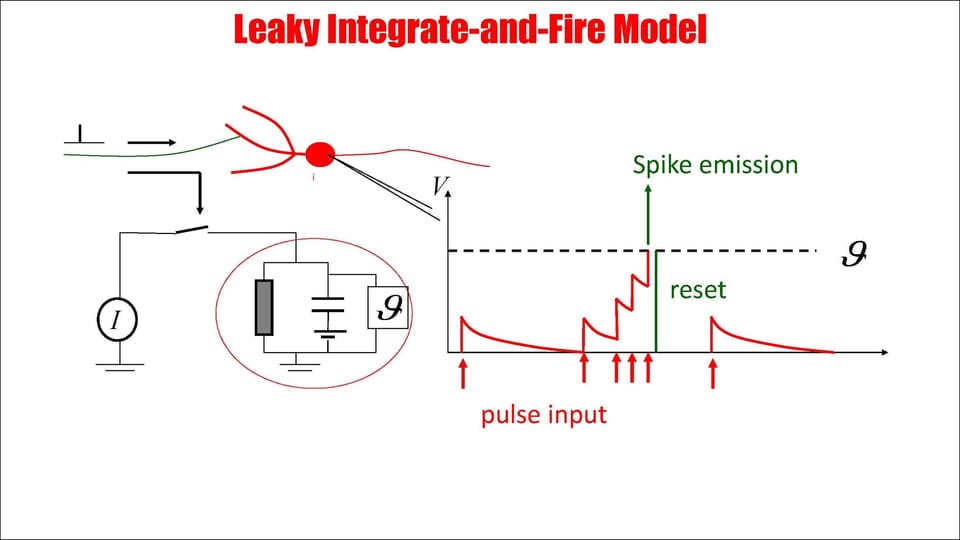
The underlying mechanism relies on a sequence of straightforward causal events. First, an autonomous agent measures how far its current behavior sits from its optimal local choice, taking into account the broadcasted positions of its direct neighbors.1 Next, instead of using that calculated discrepancy to apply a continuous mechanical force, the agent channels the error signal into an internal artificial neuron that gradually accumulates electrical charge.1 As the discrepancy persists, the charge rises until it breaches a prescribed ceiling, triggering an instantaneous pulse that nudges the machine in a specific corrective direction before resetting the internal neuron to zero.1 Over time, these intermittent pulses steer the entire group toward a coordinated operational state where no single machine can noticeably reduce its own operational cost by straying from the group.1
Why is negotiating a shared outcome so difficult for independent machines?
Independent machines struggle to negotiate shared goals because each unit pursues its own local objective while adjusting to the changing decisions of surrounding neighbors and resisting external environmental noise.1 In engineering theory, this situation is modeled as a network game, where every participating agent seeks to minimize an individual mathematical cost.1 The desired resting point is a Nash equilibrium, a state where no single participant can improve its outcome by unilaterally changing its chosen action.
To guide physical devices toward this equilibrium, engineers evaluate what mathematicians call the pseudo-gradient, a combined vector of derivatives that reveals how each agent's individual cost shifts in response to its own actions. In the quadratic network games examined by the authors, this pseudo-gradient behaves as an affine function, meaning that driving this vector to zero lands the entire network directly at the unique Nash equilibrium.1 The authors transformed the search for an equilibrium into an output regulation task, treating the pseudo-gradient as an error signal that a feedback controller must eliminate.1
Because intermittent pulses cannot guarantee perfect zero-error regulation at every moment, the researchers focused on an approximate solution known as an epsilon-Nash equilibrium.1 Under this standard, no individual machine can decrease its operational penalty by more than a small, bounded value denoted by the Greek letter epsilon.1 The researchers proved that keeping the long-term magnitude of the pseudo-gradient within a finite bound directly limits that potential improvement, establishing that the network reliably settles within a predictable distance of the ideal collective strategy.
Gang, a corresponding author of the paper, explained the strict operational conditions underpinning that mathematical result in response to questions from Primary. Gang said: "The guarantee is conditional, and it is worth being precise about what it is conditional on. The bound holds as long as two conditions remain satisfied. First, the real plant must belong to the data-consistency set constructed from the recorded experiments, which requires the measurement and approximation errors during data collection to remain within their assumed bounds. Second, the disturbances must belong to the class represented by the internal model used in the controller." Gang pointed out that unmodeled nonlinearities such as actuator saturation, dead zones, or dry friction could easily place physical hardware outside that certified envelope.
How can brief electrical spikes replace smooth control signals?
Brief electrical spikes replace smooth control signals by firing instantaneous, pre-calibrated actuator kicks only when accumulated discrepancies cross a set threshold, mimicking the way biological neurons communicate.1 Rather than calculating and applying a continuous, variable steering force at every fraction of a second, each agent runs an array of leaky integrate-and-fire units.1 These computational components slowly leak charge over time while integrating incoming feedback, releasing a fixed-magnitude burst along a designated direction only when the internal state crosses a trigger point.1
Deploying sharp mechanical pulses introduces severe mathematical and physical risks that smooth controllers avoid. Sudden kicks create discontinuous jumps in the physical state of a machine, and if improperly timed, rapid interactions among neighboring components can trigger an endless cascade of firing events known as Zeno behavior.1 In a Zeno trap, an infinite number of control pulses occur within a finite interval of time, overwhelming microcontrollers and bringing physical hardware to a standstill.1
The research team resolved this instability by constructing a continuous auxiliary mathematical coordinate that merges the physical position of the agent with the internal charges of its artificial neurons.1 Whenever a neuron fires, the sudden jump experienced by the mechanical actuator cancels out against the simultaneous downward reset of the neuron itself.1 Gang told Primary: "Think of the neuron's charge as a clock that measures how much corrective effort the system still requires. When the clock reaches its threshold, the actuator delivers one complete, fixed-magnitude pulse. The pulse is not softened or reshaped. At the same event, the neuron undergoes the reset specified by the model, so the internal quantity that triggered the pulse is adjusted at the same instant."
Through this mathematical coordinate transformation, the authors showed that the impulsive, jump-laden physical system behaves identically to a stable continuous analogue system perturbed only by a bounded internal neuronal error.1 This cancellation allowed the team to prove that the intervals between pulses remain strictly positive over finite horizons, ruling out Zeno behavior while guaranteeing that the system remains stable.1 Gang cautioned, however, that while positive inter-event times eliminate infinite pulse cascades in theory, the proof does not by itself eliminate every practical source of high-frequency switching caused by sensor noise, digital quantization, or physical transmission delays.
The authors presented two distinct designs to implement these pulses across physical hardware.1 The first architecture relies on non-interacting leaky integrate-and-fire units, where each neuron tracks a single directional channel independently.1 The second architecture introduces reset coupling among the units, allowing a spike in one channel to partially adjust the charges of neighboring neurons.1 This connected design allows a machine to operate across complex multi-dimensional spaces using a smaller set of non-orthogonal actuator directions, saving hardware complexity while maintaining stability under explicit non-accumulation conditions.1
When neurons share reset signals across non-orthogonal actuator channels, interactions between units can generate secondary triggers. Gang told Primary that "some channels may be inhibited while others may be excited" during cross-channel interactions, meaning an uncontrolled cascade could theoretically prompt secondary firings. Gang noted that the mathematical proof therefore imposes an explicit condition ensuring that every event cluster contains only a finite number of resets and that firing times cannot accumulate in finite time.
What happens when physical models are missing and conditions are noisy?
When physical models are missing and sensor measurements contain noise, control gains must be synthesized directly from short sequences of recorded operational data rather than derived from theoretical equations of motion.1 In practice, writing exact differential equations for every component of a robotic team is costly and prone to structural modeling errors. The authors designed a local data-collection experiment where each agent records its state and control inputs over a finite time window in isolation, without needing active communication from neighboring units during the test.1

To compute safe control rules from this imperfect recorded data, the authors applied robust linear matrix inequalities, an optimization method that identifies stabilizing feedback gains valid across all physical models consistent with the observed noise.1 Gang explained that calculating valid gains depends on an excitation threshold rather than an arbitrary experiment duration. Gang said: "The requirement is an information condition rather than a prescribed duration. The stacked matrix of recorded states and inputs must satisfy the required full-row-rank condition, which serves as the finite-data excitation requirement in our framework. In addition, the measurement and derivative errors must remain within the uncertainty bounds used in the matrix inequality."
To handle external disturbances, such as cyclical atmospheric forces or orbital variations, each machine incorporates an internal model, a dedicated software simulator configured to duplicate the dynamics of known external disturbance systems.1 This internal model filters out predictable background interference, allowing the synthesized gains to stabilize the agents despite persistent external noise and unknown physical mass matrices.1 Gang highlighted an explicit boundary of this method, telling Primary that "the internal-model principle provides exact asymptotic rejection only for the disturbance class represented by the internal model." When a machine encounters unexpected frequencies outside that simulator, the unmodeled disturbance enters the closed loop directly and produces an enduring residual error.
The research team demonstrated the practical viability of the pulse-driven method through a simulated reconfiguration of a spacecraft formation.1 In the simulation, multiple orbiting satellites sought to transition into a new target geometry while avoiding collisions and minimizing thruster fuel consumption under gravitational disturbances. The data-driven spiking controllers successfully guided the spacecraft into the target formation using brief thruster pulses, keeping the pseudo-gradient within a tight bound and confirming that the fleet maintained an epsilon-Nash equilibrium without relying on continuous thrust modulation.1
In that spacecraft simulation, each satellite recorded eighty samples during an eight-second open-loop test sampled at 10 hertz, using input forces limited to 50 newtons to satisfy the rank criteria. While the simulated thrusters operated with silent intervals between pulses, Gang told Primary that the team did not conduct a comparative propellant benchmark against continuous controllers. Gang said: "We did not perform a direct propellant or energy benchmark in this study, so we cannot report a quantitative percentage reduction. The simulations demonstrate a structural property of the controller: the actuators apply discrete pulses separated by strictly positive silent intervals, rather than continuously modulated thrust, while the simulated regulation error converges to the small residual level reported in the paper."
Where does the pulse-driven equilibrium approach fall short?
The presented results represent a theoretical framework validated by numerical simulation, not an empirical demonstration on physical hardware.1 The mathematical proofs rely on several structured assumptions, including linear agent dynamics, directed communication networks that remain strictly acyclic, and disturbances that originate from known exosystems. While the framework accounts for bounded measurement noise during offline data collection, it assumes that communication channels between neighboring agents transmit information reliably without packet drops or variable delays.1 Furthermore, the paper is a preprint posted to the arXiv server that has been submitted for peer review but has not yet completed formal academic vetting.1
The current mathematical guarantees stop working when physical platforms encounter nonlinear kinematics or cyclic communication networks. Gang explained to Primary that the data-driven gain synthesis was derived specifically for linear models, meaning that while the gain might function locally near a set operating point on a nonlinear vehicle, global convergence would no longer hold automatically. Gang added that the acyclic communication assumption ensures the system's interconnection matrix remains block lower triangular, allowing engineers to prove stability from isolated diagonal blocks. If communication channels form circular feedback loops, that triangular decomposition breaks down, requiring entirely new mathematical tools such as passivity or small-gain techniques to certify convergence.
For engineers designing distributed robotic systems, the ability to replace smooth steering inputs with event-triggered pulses aligns closely with the emerging field of neuromorphic computing. Neuromorphic microchips process information through sparse electrical spikes, consuming a fraction of the power required by conventional digital processors executing continuous control loops. Combining data-driven control with spiking actuation suggests that small autonomous drones, underwater sensor arrays, and satellite swarms could execute sophisticated distributed strategies on tiny battery budgets, learning their control laws from short operational tests without heavy system identification.
The next step for this line of research involves bridging the gap between theoretical models and physical robotic platforms. Future studies will need to test how the spiking control architecture handles nonlinear aerodynamics, unmodeled actuator latency, and cyclic communication topologies where information flows in closed feedback loops among agents. Testing these algorithms on neuromorphic microcontrollers deployed in physical wind tunnels or robotic testbeds will reveal whether the mathematical jump cancellation performs as cleanly in hardware as it does on paper.
The record
61 sentences trace to 1 source and 1 contributor.
-
1
LW
 Linqi Wang, Wei Xiao, Yuzhou Wei, Bin Xin, Keyou You, Gang Wang
Paper
· arxiv.org · 15 Sep 2026
Data-Driven Spiking Control for Distributed $\varepsilon$-Nash Equilibrium Seeking
Preprint · may not have been peer reviewed
See the source
- 2 Contribution — Gang Wang 22 statements added to this article
Other consulted pages1 page
arxiv.org1 page
Article history
-
Published 23 Nov 2026, 22:59Assembled by the Primary desk from 1 source · 1 contributor · 61 cited sentences
-
Gang Wang
- Go to the sentence: The researchers proved that keeping the long-term magnitude of the pseudo-gradient within a finite bound directly limits that potential improvement, establishing that the network reliably settles within a predictable distance of the ideal collective strategy.
- Go to the sentence: Gang said: "The guarantee is conditional, and it is worth being precise about what it is conditional on. The bound holds as long as two conditions remain satisfied. First, the real plant must belong to the data-consistency set constructed from the recorded experiments, which requires the measurement and approximation errors during data collection to remain within their assumed bounds. Second, the disturbances must belong to the class represented by the internal model used in the controller."
- Go to the sentence: Gang pointed out that unmodeled nonlinearities such as actuator saturation, dead zones, or dry friction could easily place physical hardware outside that certified envelope.
- Go to the sentence: Whenever a neuron fires, the sudden jump experienced by the mechanical actuator cancels out against the simultaneous downward reset of the neuron itself.
- Go to the sentence: Gang told Primary: "Think of the neuron's charge as a clock that measures how much corrective effort the system still requires. When the clock reaches its threshold, the actuator delivers one complete, fixed-magnitude pulse. The pulse is not softened or reshaped. At the same event, the neuron undergoes the reset specified by the model, so the internal quantity that triggered the pulse is adjusted at the same instant."
- Go to the sentence: Gang cautioned, however, that while positive inter-event times eliminate infinite pulse cascades in theory, the proof does not by itself eliminate every practical source of high-frequency switching caused by sensor noise, digital quantization, or physical transmission delays.
- Go to the sentence: The second architecture introduces reset coupling among the units, allowing a spike in one channel to partially adjust the charges of neighboring neurons.
- Go to the sentence: Gang told Primary that "some channels may be inhibited while others may be excited" during cross-channel interactions, meaning an uncontrolled cascade could theoretically prompt secondary firings.
- Go to the sentence: Gang noted that the mathematical proof therefore imposes an explicit condition ensuring that every event cluster contains only a finite number of resets and that firing times cannot accumulate in finite time.
- Go to the sentence: The authors designed a local data-collection experiment where each agent records its state and control inputs over a finite time window in isolation, without needing active communication from neighboring units during the test.
- Go to the sentence: Gang said: "The requirement is an information condition rather than a prescribed duration. The stacked matrix of recorded states and inputs must satisfy the required full-row-rank condition, which serves as the finite-data excitation requirement in our framework. In addition, the measurement and derivative errors must remain within the uncertainty bounds used in the matrix inequality."
- Go to the sentence: To handle external disturbances, such as cyclical atmospheric forces or orbital variations, each machine incorporates an internal model, a dedicated software simulator configured to duplicate the dynamics of known external disturbance systems.
- Go to the sentence: Gang highlighted an explicit boundary of this method, telling Primary that "the internal-model principle provides exact asymptotic rejection only for the disturbance class represented by the internal model."
- Go to the sentence: When a machine encounters unexpected frequencies outside that simulator, the unmodeled disturbance enters the closed loop directly and produces an enduring residual error.
- Go to the sentence: The data-driven spiking controllers successfully guided the spacecraft into the target formation using brief thruster pulses, keeping the pseudo-gradient within a tight bound and confirming that the fleet maintained an epsilon-Nash equilibrium without relying on continuous thrust modulation.
- Go to the sentence: In that spacecraft simulation, each satellite recorded eighty samples during an eight-second open-loop test sampled at 10 hertz, using input forces limited to 50 newtons to satisfy the rank criteria.
- Go to the sentence: Gang said: "We did not perform a direct propellant or energy benchmark in this study, so we cannot report a quantitative percentage reduction. The simulations demonstrate a structural property of the controller: the actuators apply discrete pulses separated by strictly positive silent intervals, rather than continuously modulated thrust, while the simulated regulation error converges to the small residual level reported in the paper."
- Go to the sentence: The presented results represent a theoretical framework validated by numerical simulation, not an empirical demonstration on physical hardware.
- Go to the sentence: The mathematical proofs rely on several structured assumptions, including linear agent dynamics, directed communication networks that remain strictly acyclic, and disturbances that originate from known exosystems.
- Go to the sentence: Gang explained to Primary that the data-driven gain synthesis was derived specifically for linear models, meaning that while the gain might function locally near a set operating point on a nonlinear vehicle, global convergence would no longer hold automatically.
- Go to the sentence: Gang added that the acyclic communication assumption ensures the system's interconnection matrix remains block lower triangular, allowing engineers to prove stability from isolated diagonal blocks.
- Go to the sentence: If communication channels form circular feedback loops, that triangular decomposition breaks down, requiring entirely new mathematical tools such as passivity or small-gain techniques to certify convergence.