Leash Life coordinates multi-species care routines across households and providers
A newly launched application centralizes daily pet schedules, lost animal alerts, and role-based medical permissions for homes and independent caregivers.
A typical multi-person home often stumbles on a basic question every morning: whether anyone remembered to feed the animals.12 Household members duplicate meals, guess when a dog last went outside, or fail to track medication schedules accurately when daily routines cross multiple schedules.12
Leash Life officially launched this week to consolidate those disjointed routines into a single live record.13 The software connects family members, dog walkers, pet sitters, and veterinary clinics to a shared activity feed that logs care milestones the moment they happen.13
"Existing pet apps track one pet for one person; the household — the kids, the co-owners, the grandparents, the dog walker — has been left off the leash," said Michael P. Ryan, co-founder of Leash Life.1
"We built Leash Life because our own house couldn't answer a simple question: did anyone feed the dog?" added Ryan.1 "Now the whole family sees every walk, meal and med the moment it happens."1
Shared feeds and household chore tracking
The application coordinates care for 12 distinct species, including dogs, cats, rabbits, birds, fish, hamsters, guinea pigs, ferrets, reptiles, chickens, horses and goats. Each animal profile supports species-specific routines, vaccination schedules, grooming appointments, and weight tracking.12 When medication is due, the platform assigns that requirement as a distinct task directly on the animal's daily schedule.1

In response to questions from Primary about schedule mechanics, Paul, a contributor to the platform, explained how doses are organized across the family. "Owners set a care schedule for meds, vaccines or flea/tick, with presets like monthly heartworm," Paul said. "Each dose shows up as a task on that pet's day, and everyone in the household gets a push notification when it's due or overdue." Marking the item completed logs the dose for all connected users, while "skipping a dose moves the schedule forward without logging anything, because a skipped dose never happened."
Activity tracking incorporates one-tap logging for walks and rides with integrated GPS route mapping.13 A breed-aware walk planner evaluates local conditions to generate heat and weather warnings.12 For families managing chores among children, the system includes a pet chore board that awards points and tracks streaks for finished tasks.12 Older tablets and idle screens can run dedicated kitchen display or screen-saver views to function as permanent household information boards.12
Lost pet alerts and digital collar tags
Beyond routine feeding and exercise, the system provides recovery tools for emergencies.12 The company developed broadcast alerts designed to notify nearby community members when an animal goes missing.1 These broadcasts feature automated expiration windows alongside emergency recovery guidance tailored across 124 breed-specific scenarios.1
Paul told Primary that community broadcasts require explicit verification before dispatching. "An owner marks the pet missing, then confirms with a PIN so it can't go off by accident," Paul said. "Leash Life sends a push alert to nearby households that have opted in, within about 15 km, and the alert shows on their map and home screen." If someone subsequently scans the collar tag, the family receives an instant notification.
The alert cycle is also regulated by strict time boundaries to prevent outdated notices from circulating indefinitely. "An alert lasts 24 hours," Paul said. "Every 12 hours the owner is asked to confirm the pet is still missing, and each confirmation extends it." If an owner fails to confirm the status, the notice quietly winds down. The platform maintains distinct recovery guidance, Paul noted, "because a scared husky and a scared chihuahua need different handling."
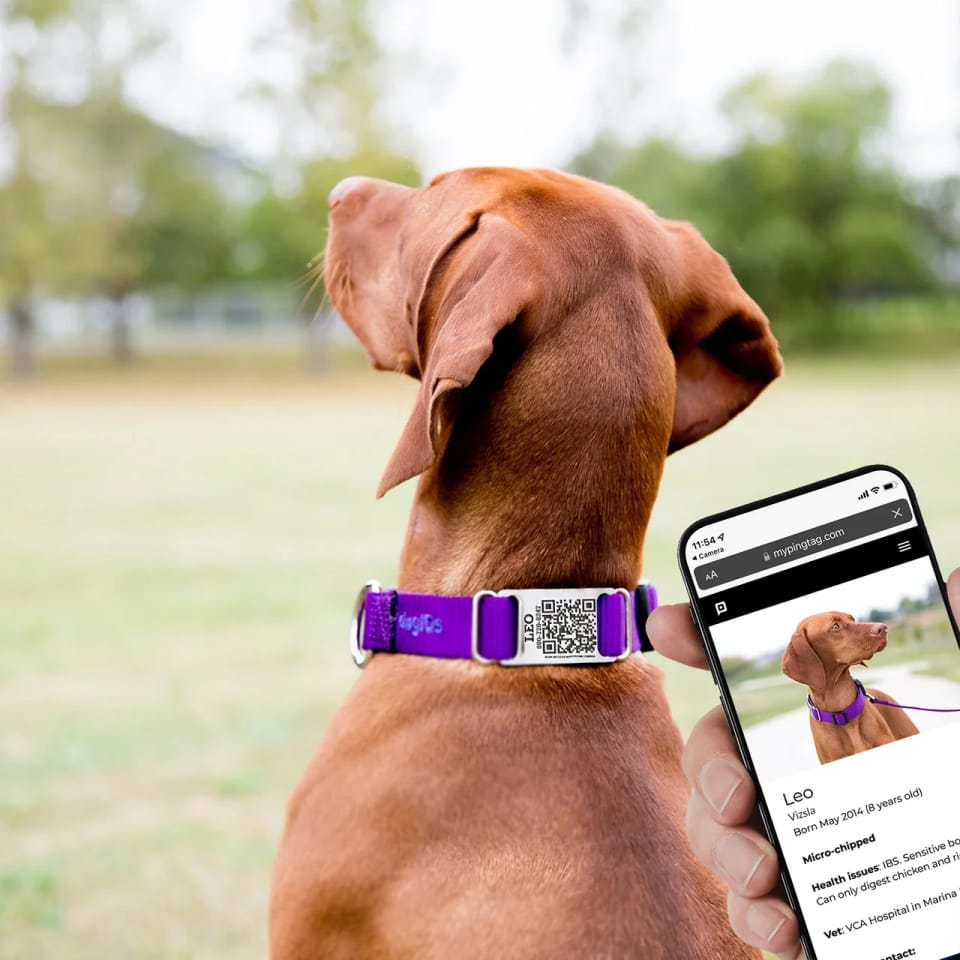
Physical collar tags equipped with quick-response codes and near-field communication chips pair with the app.12 When a stranger scans a tag on a lost animal, the interface displays an active recovery page with photographs, tap-to-call functionality, and guidance on how to approach the pet safely.12 To protect owner privacy, the scanned profile conceals the family's surname and street address, and internal database roles restrict what information outside contacts can access.1

The system also generates printable documentation for emergencies.12 Users can export wallet pet cards, printable rescue notices, tear-off flyers, and structured instruction packets intended for temporary pet sitters.1 Paul said the physical printables include a wallet card featuring an active code, fridge rescue notices, collar tag inserts, and a flyer with tear-off phone numbers. The accompanying caregiver handoff packet covers feeding schedules, medications, behavioral quirks, allergies, and veterinary contacts, accompanied by an exportable link valid for 30 days.
For walks away from cellular coverage, the application provides offline access to basic first-aid protocols and community hazard notifications.1 Addressing network limits, Paul told Primary that first-aid materials remain stored directly on the handset to ensure availability without reception. Data recorded offline enters a local queue and synchronizes upon reconnecting, though real-time community hazard notices require an active data link.
Professional permissions and credential checks
To integrate outside service providers, the platform includes dedicated workflows for independent walkers, boarders, and veterinary practices.1 A professional walker account enables a single caregiver to toggle between several client households while viewing only the specific instructions permitted for each animal.1 Through a dedicated professional mode, Paul said, independent sitters and walkers receive "one login for every family they serve." Each household remains partitioned so outside handlers inspect only the schedules and directions shared by that specific client, completely blocking access to private medical records.
Temporary access relies on six-digit care codes generated by owners.1 Service providers enter these numerical codes to view scoped segments of an animal's medical file without opening an account of their own.1 An owner determines whether a code remains valid for a day, a week, or an entire year. External contractors scan the tag and submit the code without registering personal credentials. Owners retain the ability to revoke permissions with a single tap, while repeated incorrect code submissions trigger an automatic lockout. Every entry submitted by an outside contractor logs alongside their specific role to maintain a permanent record of who completed each task.
Under these access rules, groomers cannot inspect prescription records, and only veterinary providers can access weight logs.1 Paul explained that these restrictions operate at the server level rather than simply hiding visual fields on the screen. Role assignments determine which data queries succeed, ensuring that groomers never receive medication records while restricting weight tracking to licensed veterinary clinics. Contact listings display first names exclusively, preventing client surnames from appearing on external screens.
Owners can also generate time-limited, revocable links to transfer medical histories directly to veterinary clinics during consultations.12 While digital logging platforms help coordinate communication across multiple caregivers, administrative consolidation does not eliminate the need for owners to verify external service providers independently.3 Digital logs document walk completion and feeding times, but owners must continue to confirm that independent care providers maintain valid business licenses, commercial liability insurance, and reliable protocols for medical emergencies.3
The record
55 sentences trace to 3 sources and 1 contributor.
-
1
EP
 EIN Presswire
Press release
· einpresswire.com · 21 Sep 2026
Leash Life Launches to Bring the Whole Household, and the Whole Pet Industry, Onto One Leash
See the source
- 2 Leash Life — every pet’s day, handled together See the source
- 3 Leash Life App Consolidates Pet Care and Caregiver Records See the source
- 4 Contribution — Paul Fitzgerald 34 statements added to this article
Other consulted pages1 page
einpresswire.com1 page
leashlifepetcare.com1 page
natlawreview.com1 page
theleashlife.net1 page
Article history
-
Published 23 Nov 2026, 16:43Assembled by the Primary desk from 3 sources · 1 contributor · 55 cited sentences
-
Paul Fitzgerald
- Go to the sentence: When medication is due, the platform assigns that requirement as a distinct task directly on the animal's daily schedule.
- Go to the sentence: In response to questions from Primary about schedule mechanics, Paul, a contributor to the platform, explained how doses are organized across the family.
- Go to the sentence: "Each dose shows up as a task on that pet's day, and everyone in the household gets a push notification when it's due or overdue."
- Go to the sentence: Marking the item completed logs the dose for all connected users, while "skipping a dose moves the schedule forward without logging anything, because a skipped dose never happened."
- Go to the sentence: The company developed broadcast alerts designed to notify nearby community members when an animal goes missing.
- Go to the sentence: These broadcasts feature automated expiration windows alongside emergency recovery guidance tailored across 124 breed-specific scenarios.
- Go to the sentence: Paul told Primary that community broadcasts require explicit verification before dispatching.
- Go to the sentence: "An owner marks the pet missing, then confirms with a PIN so it can't go off by accident," Paul said.
- Go to the sentence: "Leash Life sends a push alert to nearby households that have opted in, within about 15 km, and the alert shows on their map and home screen."
- Go to the sentence: If someone subsequently scans the collar tag, the family receives an instant notification.
- Go to the sentence: The alert cycle is also regulated by strict time boundaries to prevent outdated notices from circulating indefinitely.
- Go to the sentence: "An alert lasts 24 hours," Paul said.
- Go to the sentence: "Every 12 hours the owner is asked to confirm the pet is still missing, and each confirmation extends it."
- Go to the sentence: If an owner fails to confirm the status, the notice quietly winds down.
- Go to the sentence: To protect owner privacy, the scanned profile conceals the family's surname and street address, and internal database roles restrict what information outside contacts can access.
- Go to the sentence: Users can export wallet pet cards, printable rescue notices, tear-off flyers, and structured instruction packets intended for temporary pet sitters.
- Go to the sentence: Paul said the physical printables include a wallet card featuring an active code, fridge rescue notices, collar tag inserts, and a flyer with tear-off phone numbers.
- Go to the sentence: The accompanying caregiver handoff packet covers feeding schedules, medications, behavioral quirks, allergies, and veterinary contacts, accompanied by an exportable link valid for 30 days.
- Go to the sentence: For walks away from cellular coverage, the application provides offline access to basic first-aid protocols and community hazard notifications.
- Go to the sentence: Addressing network limits, Paul told Primary that first-aid materials remain stored directly on the handset to ensure availability without reception.
- Go to the sentence: Data recorded offline enters a local queue and synchronizes upon reconnecting, though real-time community hazard notices require an active data link.
- Go to the sentence: A professional walker account enables a single caregiver to toggle between several client households while viewing only the specific instructions permitted for each animal.
- Go to the sentence: Through a dedicated professional mode, Paul said, independent sitters and walkers receive "one login for every family they serve."
- Go to the sentence: Each household remains partitioned so outside handlers inspect only the schedules and directions shared by that specific client, completely blocking access to private medical records.
- Go to the sentence: Temporary access relies on six-digit care codes generated by owners.
- Go to the sentence: Service providers enter these numerical codes to view scoped segments of an animal's medical file without opening an account of their own.
- Go to the sentence: An owner determines whether a code remains valid for a day, a week, or an entire year.
- Go to the sentence: External contractors scan the tag and submit the code without registering personal credentials.
- Go to the sentence: Owners retain the ability to revoke permissions with a single tap, while repeated incorrect code submissions trigger an automatic lockout.
- Go to the sentence: Every entry submitted by an outside contractor logs alongside their specific role to maintain a permanent record of who completed each task.
- Go to the sentence: Under these access rules, groomers cannot inspect prescription records, and only veterinary providers can access weight logs.
- Go to the sentence: Paul explained that these restrictions operate at the server level rather than simply hiding visual fields on the screen.
- Go to the sentence: Role assignments determine which data queries succeed, ensuring that groomers never receive medication records while restricting weight tracking to licensed veterinary clinics.
- Go to the sentence: Contact listings display first names exclusively, preventing client surnames from appearing on external screens.