Microsoft targets one-hour fixes after 24-hour cloud disruption
Internal memos describe chaotic communications across 11 chat channels as engineers struggled to restore Exchange Online.
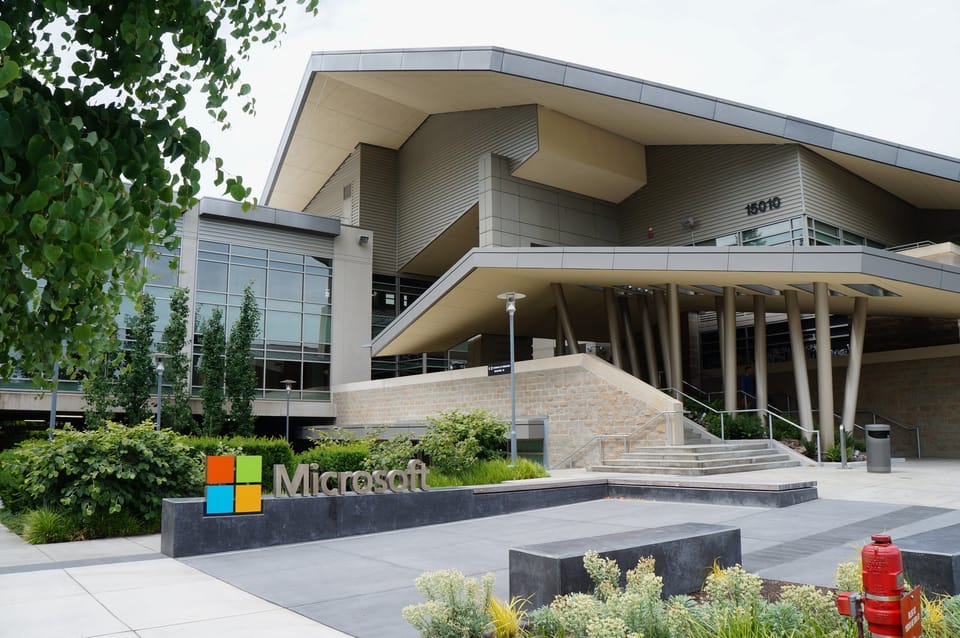
Microsoft declared a high-priority internal mobilization called Code Red after a global cloud outage knocked core productivity services offline for roughly 24 hours on November 12, 2026.12 The disruption disabled access to Exchange Online, Outlook, Teams, and Copilot for enterprise customers, government agencies, and healthcare providers worldwide.34
In an internal memo sent to staff following the incident, Jason Henderson, the president of Microsoft 365 Core, described the disruption as the most customer-impacting event in the history of Exchange Online.12 Henderson wrote that Code Red represented the highest-priority work for the engineering division, ordering immediate overhauls of how the company tracks operational risk and deploys emergency software corrections.53
The technical cascade
Microsoft traced the failure to an undetected Windows scalability defect introduced in July 2026 on networking gateway servers.14 The dormant flaw caused severe lock contention inside gateway processes under specific operational loads, causing servers to stop handling traffic requests.16
The problem escalated because routine maintenance had already reduced fleet capacity by taking nearly 14 percent of networking gateway servers offline.14 When a Teams traffic failover routed additional operational demand onto the remaining machines, the stressed infrastructure could not absorb the volume.16 At the height of the outage, more than 80 percent of the servers hosting the networking gateway service became unresponsive.4

The company confirmed that automated rollback mechanisms could not mitigate the primary defect because the underlying code change had been deployed months earlier in July.4 Standard isolation boundaries also failed.4 An abstraction layer intended to separate regional infrastructure did not contain the issue, allowing the disruption to cascade across global regions.4
Communications during the crisis
The internal response struggled with significant organizational friction as engineers attempted to diagnose the root cause.13 In an internal memo, Amanda Silver, a corporate vice president overseeing Microsoft 365 Core and Work IQ, wrote that responders had to contend with a "fog of war" as the incident unfolded.12
Silver noted that responding technical staff exchanged more than 11,000 messages across 11 separate Microsoft Teams chats.15 Critical diagnostic information was scattered across fragmented internal tracking systems, preventing engineering leaders from establishing a unified view of competing hypotheses, decisions, and recovery steps.35 In the same review, Charles Lamanna, an executive vice president overseeing Copilot, Agents and Platform, said the failed component had accumulated "roughly ten years' worth of acceptable failures."12
The incident created immediate operational consequences across several continents.43 Government agencies in Australia, Japan, Singapore, and the United States reported service interruptions.42 In the United Kingdom, the National Health Service experienced widespread disruption across hundreds of hospitals and general practitioner clinics, forcing medical staff to cancel selected operations, resort to paper records, and delay urgent patient referrals.4 Financial firms delayed regulatory filings, and court administrative systems faced backlogs.4

Overhauling engineering response
Microsoft publicly stated that the disruption did not involve a cyberattack or malicious activity, and confirmed that artificial intelligence tooling did not generate the underlying defects.13 Chief executive Satya Nadella issued a public apology for the downtime.35
Under the Code Red initiative, Microsoft established five distinct engineering workstreams.15 These tracks focus on improving automated load shedding, partitioning network traffic geographically to prevent cross-region contagion, and creating faster service recovery mechanisms.17 The company also announced plans to deploy internal artificial intelligence agents to assist human engineers in evaluating diagnostic telemetry during major system incidents.37
A primary objective of the program is contracting the timeline required to deploy critical software patches.32 In a previous internal memo, Henderson acknowledged that an urgent production fix in an earlier incident required five to six days to reach worldwide saturation.12 Microsoft established a formal benchmark to move from detection to safe worldwide deployment within one hour for its most urgent security and operational fixes.13
Henderson noted in his memo that the company remains far from achieving that velocity.12 To enforce accountability across the engineering teams, Henderson instituted daily review meetings with the Substrate leadership team responsible for core Microsoft 365 services, alongside weekly operational reviews.13
The record
31 sentences trace to 7 sources.
-
1
NI
 Nick Indge
Document
· arstechnica.com · 24 Nov 2026
Microsoft's historic cloud outage exposed an engineering “fog of war”
See the source
- 2 Microsoft declares Code Red after 24-hour Microsoft 365 outage See the source
- 3 Microsoft launches 'Code Red' to fix engineering failures after historic outage, targets one-hour recovery See the source
-
4
WF
 Wikimedia Foundation, Inc.
Third-party reporting
· en.wikipedia.org · 13 Nov 2026
2026 Microsoft outage - Wikipedia
See the source
- 5 Microsoft launches Code Red after historic cloud services outage See the source
- 6 Microsoft "Code Red": Outage Cause, Fixes and One-Hour Goal See the source
- 7 Microsoft Declares Code Red After 24-Hour Global Outage See the source