Deepfake algorithms disrupt the subtle pulse beating beneath human skin
Synthetic video manipulation damages the microscopic blood flow rhythms captured by digital cameras, giving forensic detectors a biological way to catch convincing fakes.

Every time a human heart beats, it pushes a small surge of blood through the cardiovascular system and into the dense network of capillaries across the face.1 These microscopic pulses gently alter the amount of light that the skin absorbs and reflects, creating a rhythmic fluctuation in facial coloration across sequential video frames. The naked human eye cannot perceive these delicate shifts during a normal conversation, but standard digital video cameras can register the subtle chromatic changes.13 When artificial intelligence software alters a face, whether by pasting a new identity over an existing body or by animating facial expressions with another person's movements, it often damages this invisible biological rhythm.
Visual manipulation has advanced to a stage where traditional signs of digital tampering are fading from view. Early generation tools frequently left telltale traces along facial boundaries, including blurry seams, warping around the jawline, unnatural double eyebrows, and irregular eye blinks.1 Generative adversarial networks and diffusion systems now synthesize highly polished facial textures that eliminate many of these low-level geometric defects.1 As digital trickery becomes visually convincing, authentication systems require cues anchored in underlying human physiology that cannot be fabricated by smoothing surface pixels.
Detecting these biological markers requires an understanding of how blood circulation and facial expressions interact over time. Blood travels from the heart through the vascular tree and into facial tissue, causing cyclical shifts in optical absorption that peak with each systolic pulse. At the same time, real individuals move their facial muscles to smile, speak, glance, or shift their head pose, altering the surface geometry of the skin. In an authentic recording, these two dynamic streams proceed side by side: the underlying pulse continues in regular waves while superficial muscle contractions produce distinct facial actions. A synthetic manipulation disrupts this relationship because generative models process pixel appearance frame by frame or warp deformation fields without modeling cardiovascular blood supply.
In a research paper posted to the arXiv preprint server in September 2026, Chenxi Yang of Shanghai Jiaotong University, alongside Yassine Ouzar and Larbi Boubchir of the University of Paris 8, examined how synthetic modifications disrupt natural blood flow rhythms and facial dynamics.1 The researchers measured physiological signals in authentic video recordings that included synchronized physical contact-sensor data, comparing them directly against modified versions created through identity swapping and motion transfer. The authors reported that modifying facial movements caused an acute collapse in physiological consistency, while identity swapping also degraded heart rate accuracy. To turn these discrepancies into a detection system, the team constructed a computational architecture that directly evaluates whether optical pulse measurements match observable facial behaviors.1
How can digital video cameras measure a human pulse?
Digital cameras record pulse dynamics through remote photoplethysmography, an optical technique that isolates periodic variations in skin color caused by underlying blood volume fluctuations.13 As blood cells circulate through facial capillaries, their concentration expands and contracts with each heartbeat, modulating the fraction of ambient light reflected back into the lens of the camera. Specialized neural networks can process these video frames across time to extract a continuous waveform representing the cardiovascular rhythm. Earlier research, including work on the DeepFakesON-Phys framework by Javier Hernandez-Ortega and colleagues, demonstrated that convolutional networks could estimate heart rates from video clips to identify synthetic faces in public databases.1
A persistent challenge in evaluating pulse-based detection has been the absence of true physiological reference data in standard synthetic video libraries. Popular research collections such as FaceForensics++ and Celeb-DF gathered web videos that lacked physical pulse recordings from medical sensors, making it impossible to determine whether an extracted signal reflected genuine cardiac activity or accidental visual background noise.1 Yang, Ouzar, and Boubchir addressed this gap by building deepfake manipulations directly from two established physiological research datasets, COHFACE and UBFC-rPPG.1 These collections comprise 81 subjects across 198 authentic recordings, totaling more than two hours of baseline video accompanied by synchronized pulse readings collected from physical finger contact sensors.
To produce their experimental library, the researchers generated 1,188 manipulated videos spanning more than 17 hours of altered footage across two distinct categories of digital forgery. In the identity-swapping set, the authors paired subjects of the same gender and used the FaceFusion and SimSwap frameworks to transfer a source identity onto a target body while retaining the target subject's original head motion and lighting. In the motion-transfer set, the authors used the Face-vid2vid animation architecture and driving footage from the TalkingHead-1KH collection to impose novel expressions, head poses, and speech dynamics onto authentic source faces.1 This experimental structure enabled the researchers to test synthetic videos against identical temporal segments where the true physiological pulse had been recorded with physical medical instruments.
The contrast between these two forgery techniques exposed distinct modes of physiological degradation. Face swapping primarily alters the outer layer of personal identity while keeping the underlying video carrier intact. In contrast, motion transfer imposes an alien kinematic trajectory over the face, distorting the local temporal fabric of every frame. As Yassine explained in response to questions from Primary, "Face swapping primarily involves transferring the identity of a source face onto a target video while preserving the original temporal structure, facial movements, and scene context." Because the target recording preserves its authentic muscle activations and physical timing, an optical pulse estimator can still identify substantial cardiovascular continuity.
Motion transfer operates through an entirely different structural process by forcing novel facial kinematics onto the target recording. According to Yassine, "motion transfer fundamentally alters the facial dynamics of the subject by imposing a new pattern of facial motion, including expressions, head pose, and mouth movements." This fundamental change severs the physical link between the filmed person's real muscular activity and their cardiovascular blood circulation. Generative reenactment tools apply deformation fields or keypoint displacements that synthesize pixel movements across the face, introducing synthetic variations that lack any biological relationship to the beating heart.
Independent expert Dr. Ashwani Kumar corroborated this biological decoupling when evaluating how neural networks interpret synthetic video. Explaining the underlying physiology, Dr. Ashwani Kumar noted that "when a face is synthesized or swapped, the natural pulse signal gets disrupted." As Dr. Ashwani Kumar observed, "real skin shows faint, rhythmic color shifts from blood flow that are consistent across the face and over time," whereas in synthetic modifications, "those signals become irregular, inconsistent between facial regions, or nearly absent, because the generation process doesn't model the underlying physiology."
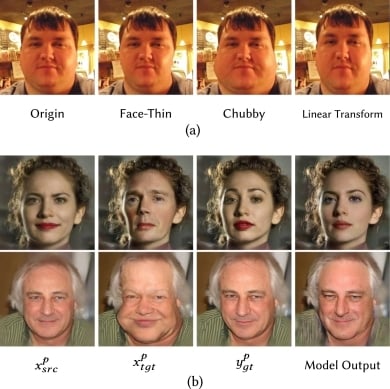
What happens to natural blood rhythms when a face is altered?
Altering facial appearance or animating expressions induces quantifiable degradations in the optical pulse signal extracted from facial skin. Using an optical pulse model called PhysFormer to recover waveforms from 160-frame video windows, the researchers observed that real, unmodified recordings yielded an average heart rate absolute error of 3.13 beats per minute when compared against physical sensor ground truth. When the authors evaluated identity-swapped videos generated through FaceFusion and SimSwap, the average heart rate error climbed to 5.70 beats per minute, while the root mean squared error rose from 6.95 beats per minute in real clips to 10.28 beats per minute in swapped faces.
The mathematical correlation between the extracted waveforms and physical sensor reference tracks also deteriorated following identity manipulation. In authentic video sequences, the maximum absolute cross-correlation reached a value of 0.753, but dropped to 0.672 in identity-swapped clips. Similarly, the power spectral density correlation, which evaluates how well the frequency distribution of the extracted pulse matches the physical sensor signal within the normal cardiovascular range of 0.6 to 3.3 hertz, declined from 0.820 in real recordings to 0.702 in identity-swapped footage. These figures demonstrate that while identity swapping damages the clarity of optical blood circulation, it retains a portion of the target subject's underlying temporal color modulation.
Motion transfer produced far more destructive disruptions to cardiovascular fidelity. When Face-vid2vid animated facial expressions using external driving footage, the average heart rate absolute error quadrupled compared with real footage, reaching 12.51 beats per minute with a root mean squared error of 16.23 beats per minute. Waveform cross-correlation plummeted to 0.474, and the power spectral density correlation dropped to 0.341, indicating that the rhythmic frequency of the heartbeat had been largely extinguished from the facial pixels. Furthermore, the signal-to-noise ratio fell from a positive 2.31 decibels in real recordings down to negative 4.59 decibels in motion-transfer videos, showing that generative deformation fields scramble the minute chromatic shifts that convey biological pulse information.
Computational analysis revealed that this destruction of optical blood flow remains hidden behind polished surfaces. Yassine observed that the most striking failure mode was "a decoupling of fine-grained vasomotor dynamics" that human eyes fail to register during normal video viewing. Animated faces appear visually fluid because generative engines excel at tracking and rendering macro-level features like jaws, eyes, and cheek muscles. However, as Yassine told Primary, "maintaining visually plausible motion does not necessarily imply that the model preserves the subtle chrominance variations associated with the cardiac cycle."
In natural human bodies, pulse-induced color shifts occur in synchronized waves across diverse regions of facial skin. Generative animation models alter these areas independently using mathematical deformation vectors, causing vascular color shifts to disperse unnaturally across the cheeks and forehead. "In contrast, motion transfer may spatially transform facial regions through learned deformation fields or motion representations that are not explicitly constrained by physiological processes," Yassine said. As a consequence, artificial animation tools generate synthetic faces that look seamless to viewers while harboring erratic, physically implausible circulatory signals.
How can machine learning connect blood flow to facial expressions?
Machine learning models can identify synthetic videos by comparing optical pulse sequences against macroscopic facial movements within a bidirectional attention network. Rather than compressing an entire video clip into a single numerical heart rate estimate, the system designed by Yang, Ouzar, and Boubchir converts each 160-frame segment into two synchronized streams of informational tokens. The physiological stream consists of 96-dimensional tokens extracted from the intermediate spatio-temporal layers of PhysFormer, preserving nuanced pulse-sensitive fluctuations. The behavioral stream uses the OpenFace tracking toolkit to generate 26-dimensional tokens for every frame, capturing facial action unit activations alongside six head-pose parameters and two directional gaze angles.1
Extracting physiological tokens from intermediate layers provides a deliberate balance between noise and abstraction. If an authentication system relies solely on the final estimated heart rate number, it discards the rich frame-level nuances that reveal digital tampering. Yassine noted that "intermediate features preserve richer spatial and temporal information that may contain manipulation-related artifacts." Capturing this intermediate layer allows the detection model to track the ongoing correlation between minute skin color changes and muscular facial movements throughout every second of footage.
The physical relationship between these two modalities provides the statistical basis for neural network detection. In comments to Primary, Dr. Ashwani Kumar explained how machine learning models learn these joint dynamics over time. Dr. Ashwani Kumar pointed out that models first "extract the pulse signal" by pulling out remote photoplethysmography from facial skin, then "track expressions" using action-unit detectors that record muscle movements such as smiling or brow-furrowing. A neural network then learns how the two correlate, because "expressions and emotions change blood distribution, heart rate variability, and local skin color, for example flushing during embarrassment or anger."
The two token streams pass through separate learned mathematical projections and layer normalization steps before entering a bidirectional co-attention module. In one processing branch, the physiological tokens act as queries to retrieve complementary temporal context from the behavioral tokens, identifying moments where facial muscle movement might explain an alteration in skin reflectance. In the opposing branch, the behavioral tokens act as queries to retrieve evidence from the physiological tokens, verifying whether physical motion coincides with expected vascular dynamics. Residual connections and attention masks merge these reciprocal pathways, passing the combined representation to a classification network that renders an authenticity verdict.
This reciprocal attention mechanism targets the core contradiction introduced by synthetic manipulation. In an authentic video, natural biology coordinates both streams because the heart and facial muscles operate within the same physical organism. In an altered video, an external driver dictates facial movement while internal coloration either degrades or follows an unrelated pattern. Yassine explained that "the behavioral branch, based on facial cues extracted with OpenFace, may identify a coherent sequence of facial action; for example, a subject smiling, blinking, or moving their eyes," while the physiological branch simultaneously detects a broken or mismatched pulse signal.
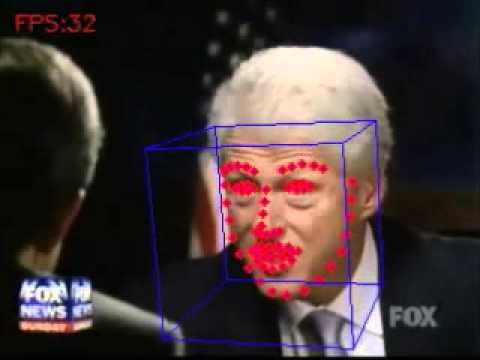
Across five-fold cross-validation experiments where subjects were kept strictly separated between training and testing sets, this cross-modal fusion architecture achieved an area under the receiver operating characteristic curve of 92.80% on identity-swapped videos and 96.78% on motion-transfer videos.1 The authors reported that this joint evaluation of pulse and movement surpassed detection models that relied exclusively on physiological signals, as well as baseline systems that merged features through simple concatenation or weighted numerical addition. In a cross-dataset evaluation testing generalizability, the fusion model achieved an accuracy of 91.20% and an area under the curve of 86.08% on the Celeb-DF-v2 benchmark while leaving both feature extraction networks completely frozen.1
What the findings cannot reveal about practical deployment
These experimental results represent model evaluations conducted within controlled research settings, rather than operational field deployments across open internet platforms. The underlying datasets, COHFACE and UBFC-rPPG, were filmed under relatively stable indoor illumination with cooperating participants who remained seated near the camera lens.1 In practical environments, volatile ambient lighting, strong shadows, extreme head rotations, and low camera resolutions could disrupt the delicate chromatic measurements required for remote photoplethysmography, introducing errors that synthetic generators did not cause.
The analysis also depends on the tracking reliability of upstream software frameworks that process individual frames. If rapid movement or physical occlusion causes OpenFace to fail in detecting facial landmarks, the corresponding video frames must be discarded through masking, creating gaps in the behavioral timeline.1 Furthermore, the work currently exists as a preprint that has been posted to a public repository but has not yet undergone formal peer review by academic peers.1 While the transfer-learning test on Celeb-DF-v2 demonstrated reasonable generalization, the drop in area under the curve to 86.08% shows that performance softens when evaluating synthetic faces generated under uncontrolled production pipelines.
Video transmission on social media platforms presents another technical obstacle by degrading fine chromatic details through heavy lossy compression. Yassine noted that "the main challenge is that rPPG relies on very subtle color variations that can be strongly affected by video compression, illumination changes, white-balance adjustments, and head motion." When severe digital compression or low camera bitrates destroy these subtle pixel-level fluctuations, an optical pulse detector may register signal noise even when inspecting an authentic video of a living human.
Evaluating the cross-dataset benchmark results, Dr. Ashwani Kumar emphasized that an area under the curve of 86.08% on Celeb-DF-v2 represents a solid outcome for frozen models, but highlighted major deployment hurdles. Dr. Ashwani Kumar explained that "Celeb-DF has a narrow set of subjects and mostly clean, frontal videos," warning that "performance usually drops on compressed social media clips, unusual lighting, or newer generators." Furthermore, Dr. Ashwani Kumar noted that "AUC hides deployment cost" because an aggregate score can still yield unacceptable numbers of false alarms on platforms where genuine videos overwhelmingly outnumber fakes. When facial tracking drops frames during rapid motion, Dr. Ashwani Kumar added that the "pulse (rPPG) branch suffers most" because pulse extraction requires continuous waveforms over several seconds, meaning corrupted frames can degrade combined fusion scores.
Future generative AI tools could also evolve to simulate blood flow intentionally, challenging detectors that depend solely on surface-level color fluctuations. Yassine pointed out that "physiology-aware generation could explicitly model rPPG-related cues during synthesis," potentially narrowing the biological gap between real and synthetic faces. Dr. Ashwani Kumar concurred with this risk, observing that while deepfakes tend to flatten natural blood flow, "newer deepfakes can sometimes mimic these pulse signals, so it isn't foolproof." To counter synthetic pulse injection, Dr. Ashwani Kumar suggested examining cross-signal coupling, such as verifying whether cardiac pulse timing matches microscopic head vibrations from ballistocardiography, pulse transit delays between distant facial regions, and respiratory rhythms.
How could forensic authentication adapt to future generators?
Adapting forensic tools to counter sophisticated generative synthesis will require multimodal models that dynamically weigh the trustworthiness of their sensory inputs. Because physical environmental factors like camera compression and erratic lighting degrade optical color signals faster than gross facial movements, fixed fusion models risk stumbling over noisy physiological data. Yassine suggested developing uncertainty-aware fusion mechanisms that estimate the quality of the physiological token stream in real time, reducing reliance on optical pulse measurements when visual noise exceeds reliable detection thresholds.
Tracking the propagation of blood pressure waves across distinct anatomical zones offers another promising avenue of forensic defense. In a living human, systolic pressure waves do not illuminate the entire face simultaneously; instead, blood arrives in the forehead, cheeks, and neck at slightly different moments, creating a characteristic phase delay across the vascular tree. Dr. Ashwani Kumar pointed out that while a generative model might learn to impose a uniform global color modulation to mimic a beating heart, it typically fails to reproduce the subtle physical delays that govern spatial pulse propagation across human skin.
Combining optical pulse extraction with broader autonomic responses could establish more durable biological invariants. Beyond matching pulse fluctuations to facial expressions, forensic systems could evaluate whether estimated heart rate variability aligns with involuntary pupil dilation, micro-movements of the head caused by mechanical cardiac ejection, and natural breathing rates. By forcing generative models to synthesize not just an isolated pulse, but an entire interconnected human cardiovascular and nervous system, forensic researchers aim to ensure that authentic biological life remains distinguishable from digital illusion.
The physio-visual fusion represents a promising direction for deepfake detection. More generally, the continuous evolution of deepfake generation techniques raises important challenges for the development of reliable and efficient detection methods. Future approaches may increasingly prioritize real-time generation and deployment while producing more realistic and temporally consistent content. These developments highlight the need for detection methods that not only achieve high accuracy but also ensure robustness and computational efficiency in real-world scenarios. In particular, inference latency, computational complexity, and memory requirements are important considerations for real-time applications and deployment on resource-constrained embedded devices. Addressing these challenges will be essential to enable practical deepfake detection in a wide range of settings, including live video conferencing, streaming platforms, and edge computing environments.
The record
38 sentences trace to 2 sources and 2 contributors.
-
1
CY
 Chenxi Yang, Yassine Ouzar, Larbi Boubchir
Paper
· arxiv.org · 14 Sep 2026
Beyond Ambiguous Visual Cues: Studying Physiological Disruptions and Cross-Modal Inconsistencies in Deepfake Videos
Preprint · may not have been peer reviewed
See the source
- 2 Contribution — Dr. Ashwani Kumar 18 statements added to this article
-
3
A
arxiv.org
Paper
· arxiv.org
DeepFakesON-Phys: DeepFakes Detection based on Heart Rate Estimation
Preprint · may not have been peer reviewed
See the source
- 4 Contribution — Yassine Ouzar 15 statements added to this article
Other consulted pages2 pages
ar5iv.labs.arxiv.org2 pages
arxiv.org2 pages
dblp.dagstuhl.de1 page
dblp.org1 page
paper.axi404.top1 page
Article history
-
Published 27 Nov 2026, 16:30Assembled by the Primary desk from 2 sources · 2 contributors · 38 cited sentences
-
Dr. Ashwani Kumar, independent expert
- Go to the sentence: Every time a human heart beats, it pushes a small surge of blood through the cardiovascular system and into the dense network of capillaries across the face.
- Go to the sentence: Popular research collections such as FaceForensics++ and Celeb-DF gathered web videos that lacked physical pulse recordings from medical sensors, making it impossible to determine whether an extracted signal reflected genuine cardiac activity or accidental visual background noise.
- Go to the sentence: Explaining the underlying physiology, Dr. Ashwani Kumar noted that "when a face is synthesized or swapped, the natural pulse signal gets disrupted."
- Go to the sentence: As Dr. Ashwani Kumar observed, "real skin shows faint, rhythmic color shifts from blood flow that are consistent across the face and over time," whereas in synthetic modifications, "those signals become irregular, inconsistent between facial regions, or nearly absent, because the generation process doesn't model the underlying physiology."
- Go to the sentence: However, as Yassine told Primary, "maintaining visually plausible motion does not necessarily imply that the model preserves the subtle chrominance variations associated with the cardiac cycle."
- Go to the sentence: Dr. Ashwani Kumar pointed out that models first "extract the pulse signal" by pulling out remote photoplethysmography from facial skin, then "track expressions" using action-unit detectors that record muscle movements such as smiling or brow-furrowing.
- Go to the sentence: A neural network then learns how the two correlate, because "expressions and emotions change blood distribution, heart rate variability, and local skin color, for example flushing during embarrassment or anger."
- Go to the sentence: In a cross-dataset evaluation testing generalizability, the fusion model achieved an accuracy of 91.20% and an area under the curve of 86.08% on the Celeb-DF-v2 benchmark while leaving both feature extraction networks completely frozen.
- Go to the sentence: The underlying datasets, COHFACE and UBFC-rPPG, were filmed under relatively stable indoor illumination with cooperating participants who remained seated near the camera lens.
- Go to the sentence: If rapid movement or physical occlusion causes OpenFace to fail in detecting facial landmarks, the corresponding video frames must be discarded through masking, creating gaps in the behavioral timeline.
- Go to the sentence: Yassine noted that "the main challenge is that rPPG relies on very subtle color variations that can be strongly affected by video compression, illumination changes, white-balance adjustments, and head motion."
- Go to the sentence: Dr. Ashwani Kumar explained that "Celeb-DF has a narrow set of subjects and mostly clean, frontal videos," warning that "performance usually drops on compressed social media clips, unusual lighting, or newer generators."
- Go to the sentence: Furthermore, Dr. Ashwani Kumar noted that "AUC hides deployment cost" because an aggregate score can still yield unacceptable numbers of false alarms on platforms where genuine videos overwhelmingly outnumber fakes.
- Go to the sentence: When facial tracking drops frames during rapid motion, Dr. Ashwani Kumar added that the "pulse (rPPG) branch suffers most" because pulse extraction requires continuous waveforms over several seconds, meaning corrupted frames can degrade combined fusion scores.
- Go to the sentence: Yassine pointed out that "physiology-aware generation could explicitly model rPPG-related cues during synthesis," potentially narrowing the biological gap between real and synthetic faces.
- Go to the sentence: Dr. Ashwani Kumar concurred with this risk, observing that while deepfakes tend to flatten natural blood flow, "newer deepfakes can sometimes mimic these pulse signals, so it isn't foolproof."
- Go to the sentence: To counter synthetic pulse injection, Dr. Ashwani Kumar suggested examining cross-signal coupling, such as verifying whether cardiac pulse timing matches microscopic head vibrations from ballistocardiography, pulse transit delays between distant facial regions, and respiratory rhythms.
- Go to the sentence: Dr. Ashwani Kumar pointed out that while a generative model might learn to impose a uniform global color modulation to mimic a beating heart, it typically fails to reproduce the subtle physical delays that govern spatial pulse propagation across human skin.
-
Yassine Ouzar
- Go to the sentence: The authors reported that modifying facial movements caused an acute collapse in physiological consistency, while identity swapping also degraded heart rate accuracy.
- Go to the sentence: In the motion-transfer set, the authors used the Face-vid2vid animation architecture and driving footage from the TalkingHead-1KH collection to impose novel expressions, head poses, and speech dynamics onto authentic source faces.
- Go to the sentence: As Yassine explained in response to questions from Primary, "Face swapping primarily involves transferring the identity of a source face onto a target video while preserving the original temporal structure, facial movements, and scene context."
- Go to the sentence: According to Yassine, "motion transfer fundamentally alters the facial dynamics of the subject by imposing a new pattern of facial motion, including expressions, head pose, and mouth movements."
- Go to the sentence: Yassine observed that the most striking failure mode was "a decoupling of fine-grained vasomotor dynamics" that human eyes fail to register during normal video viewing.
- Go to the sentence: However, as Yassine told Primary, "maintaining visually plausible motion does not necessarily imply that the model preserves the subtle chrominance variations associated with the cardiac cycle."
- Go to the sentence: "In contrast, motion transfer may spatially transform facial regions through learned deformation fields or motion representations that are not explicitly constrained by physiological processes," Yassine said.
- Go to the sentence: The physiological stream consists of 96-dimensional tokens extracted from the intermediate spatio-temporal layers of PhysFormer, preserving nuanced pulse-sensitive fluctuations.
- Go to the sentence: Yassine noted that "intermediate features preserve richer spatial and temporal information that may contain manipulation-related artifacts."
- Go to the sentence: Yassine explained that "the behavioral branch, based on facial cues extracted with OpenFace, may identify a coherent sequence of facial action; for example, a subject smiling, blinking, or moving their eyes," while the physiological branch simultaneously detects a broken or mismatched pulse signal.
- Go to the sentence: Across five-fold cross-validation experiments where subjects were kept strictly separated between training and testing sets, this cross-modal fusion architecture achieved an area under the receiver operating characteristic curve of 92.80% on identity-swapped videos and 96.78% on motion-transfer videos.
- Go to the sentence: In a cross-dataset evaluation testing generalizability, the fusion model achieved an accuracy of 91.20% and an area under the curve of 86.08% on the Celeb-DF-v2 benchmark while leaving both feature extraction networks completely frozen.
- Go to the sentence: If rapid movement or physical occlusion causes OpenFace to fail in detecting facial landmarks, the corresponding video frames must be discarded through masking, creating gaps in the behavioral timeline.
- Go to the sentence: Yassine noted that "the main challenge is that rPPG relies on very subtle color variations that can be strongly affected by video compression, illumination changes, white-balance adjustments, and head motion."
- Go to the sentence: Yassine pointed out that "physiology-aware generation could explicitly model rPPG-related cues during synthesis," potentially narrowing the biological gap between real and synthetic faces.