Language models stumble when classical poetry leaves the ancient canon
Evaluation on contemporary verses shows artificial intelligence relies on memorised historical text instead of mastering the complex rules of classical Chinese prosody.
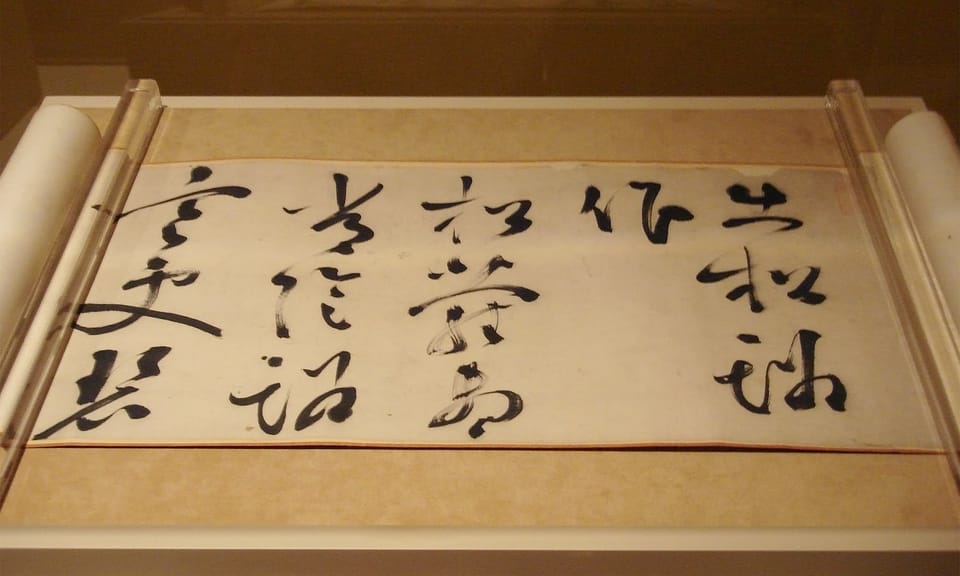
A reader who recites an ancient poem from memory can easily look like someone who understands its meter, syntax, and narrative turn. The cadence of five or seven characters to a line creates an impression of balance, where tone values mirror each other across paired couplets and rhymes arrive on predictable beats. For centuries, mastering this form meant internalizing an intricate lattice of phonological and grammatical rules. A poet had to balance level and oblique tones, align abstract nouns with abstract nouns, and organize an opening, an expansion, a pivot, and a resolution into a single harmonious whole. When contemporary artificial intelligence programs complete famous verses from the Tang dynasty, they appear to exercise that exact compositional intelligence.1
Yet distinguishing genuine structural comprehension from verbatim recall presents an enduring dilemma in the study of machine cognition. If a computer system correctly finishes a celebrated couplet by Du Fu, observers cannot tell whether the software is actively calculating tonal counterpoint or merely retrieving a digitized text that appeared thousands of times across its training files. Because the surviving historical corpus of classical Chinese verse is finite, celebrated, and thoroughly cataloged, modern language engines have absorbed nearly every surviving canonical quatrain during their initial web scraping.1 Testing computational understanding against familiar anthologies runs the risk of mistaking surface retrieval for authentic linguistic ability.
To test whether these automated systems actually understand the structural logic of classical poetry, a research team led by Han Zhang and Cheng Hua at Shanghai Jiao Tong University developed an evaluation framework called Neo-Classic. In a paper published in ACL 2026, Zhang and colleagues from the Chinese Academy of Sciences and partner institutions gathered contemporary verse written between 2010 and late 2025 by collegiate poets and scholars. These new compositions follow every rigid phonological, grammatical, and structural guideline of classical forms such as regulated verse and lyric poetry, but they describe modern life and never appeared in standard pre-training libraries.1 By comparing how software handles ancient poems alongside these untouched modern verses, the authors established a concrete measurement of what occurs when pure memorization is removed from the equation. Cite this work through ACL: https://aclanthology.org/2026.acl-long.1266/
How does classical verse demand structured reasoning?
Classical Chinese poetry operates as an elaborate system of interlocking constraints that must be resolved simultaneously across every line.1 The first layer consists of phonological rules governing character tones, known as pingze, alongside strict sentence-level rhyme schemes called yayun.1 In traditional regulated verse, or lüshi, characters are divided into level tones, which were historically sustained without tonal inflection, and oblique tones, which rose, fell, or clipped abruptly. Within each couplet, the tone pattern of the upper line must directly oppose the tone pattern of the lower line, while the second character of subsequent couplets must maintain specific tonal continuity, all while even-numbered lines conclude with characters drawn from a single rhyming category.
The second layer enforces syntactic parallelism, or duizhang, within the interior couplets of a poem.1 Here, adjacent lines must match not only grammatical parts of speech, such as verbs paired with verbs and adjectives with adjectives, but also precise conceptual categories. A concrete physical artifact in the upper line must align with an equivalent physical artifact in the lower line, while an abstract philosophical sentiment must answer its corresponding conceptual counterpart. The third layer governs the overarching rhetorical discourse, structured around the four movements of qi, cheng, zhuan, and he.1 The opening lines introduce the scene or topic, the following lines develop the observation, the third couplet executes an emotional or perspective pivot, and the final lines synthesize the experience into an aesthetic conclusion.
For a writer or an analytical system to assemble an eight-line regulated poem, these three dimensions cannot be tackled in isolation. A word chosen to satisfy a rhyme at the end of the fourth line immediately restricts the tonal choices of its parallel partner in the third line, which in turn limits which categorical concepts can be contrasted without violating the poem's thematic movement. Solving such a puzzle requires global planning, moving back and forth between micro-level phonetic constraints and macro-level rhetorical intentions until every unit fits into place.
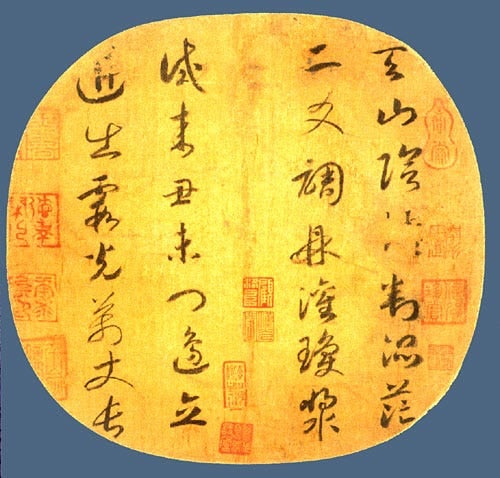
Why do models stumble on contemporary classical verse?
When state-of-the-art language models evaluate classical poems that were composed recently by human experts, their performance drops markedly compared to their scores on historical texts. The authors tested leading commercial systems, including Qwen3-Max, Gemini-3-Pro, and DeepSeek-V3.2, across a diagnostic suite spanning authorship attribution, rhyme pattern identification, cloze word prediction, couplet matching, and full poem reconstruction.1 The authors report that the models experienced a performance gap of 20% to 50% across multiple tasks when transitioning from canonical historical verses to novel contemporary verses.1 In contrast, human literary experts demonstrated stable performance across both historical and modern texts, proving that human appreciation of classical rules does not falter simply because a verse is unfamiliar.1
This performance gap highlights how heavily automated systems depend on statistical memory. In the authorship attribution task, where an algorithm must analyze poetic style to select the correct writer among four candidates, models easily identified canonical historical figures whose biographical details and favorite motifs were pervasive across the internet. When asked to perform the same task on contemporary poets who wrote under pseudonyms, where the models were forced to deduce stylistic signatures from a few provided sample poems, their predictive accuracy fell substantially.1 Cheng, a study author, told Primary that "the most striking reported result is that a few examples from each candidate author did not give models a reliable grasp of contemporary authors’ individual styles." Cheng noted that DeepSeek-V3.2 attained 84.0% accuracy on historical Tang poet attribution, but fell to 37.2% on the contemporary three-example task, whereas human experts reached 65.0% on the same unfamiliar contemporary test. Cheng observed that "recognizing a widely documented author and inferring a style from a small set of unfamiliar poems are different abilities."
Addressing why the models experience such a sharp drop, Cheng cautioned against treating behavioral outcomes as direct architectural audits. Cheng said in response to questions from Primary that researchers "should distinguish the observed behavior from an explanation of its mechanism." Cheng added that the team "did not directly measure internal representations, and we cannot verify that every contemporary poem was absent from every model’s training data." Instead, Cheng explained, the team observed a performance decline across several tasks when direct retrieval becomes much less plausible while classical formal rules remain in place, suggesting that familiarity contributes significantly to high historical scores while transfer to unfamiliar works remains unreliable.
Similar patterns emerged in the cloze evaluations, where models were asked to identify a missing two-character phrase within a line. The researchers tested models using distractors that preserved identical grammatical roles and tonal patterns while diverging in meaning, as well as distractors that offered synonyms that subtly violated the required tonal rules. When faced with novel contemporary lines, the systems repeatedly picked words that made general semantic sense while ignoring tonal violations, showing that their grasp of prosody remains brittle when unsupported by familiar textual sequences.
Can artificial intelligence reconstruct the structure of a poem?
The deepest structural limitation documented by the research team appeared in the sentence reordering task, where models were presented with scrambled lines of a poem and asked to restore the original sequence. For an eight-line regulated verse, random guessing yields a correct reconstruction rate of roughly 0.002%, representing one chance out of 40,320 possible permutations. To reassemble the poem correctly without memory, a system must execute a hierarchical sequence of deductions. It must first isolate the rhyming characters to fix the even-numbered lines, then identify which pairs exhibit syntactic parallelism to lock in the middle couplets, and finally employ narrative discourse logic to distinguish the opening couplet from the concluding couplet, which often possess identical metrical patterns.
Standard language models largely failed this holistic test, recording accuracies between 0% and 13% when reconstructing scrambled eight-line verses.1 The models frequently paired individual lines that looked plausible together in isolation while violating the global rhyme scheme or swapping the opening and closing couplets. Even when prompted with expert-level guidance that explicitly walked the models through phonological anchoring and parallel coupling, advanced reasoning models such as Gemini-3-Pro only reached 36% accuracy on the eight-line task.1 By comparison, human literary experts tested on the same scrambled contemporary verses achieved 48% accuracy, successfully tracking the interplay between rhyme rules and discourse development.1
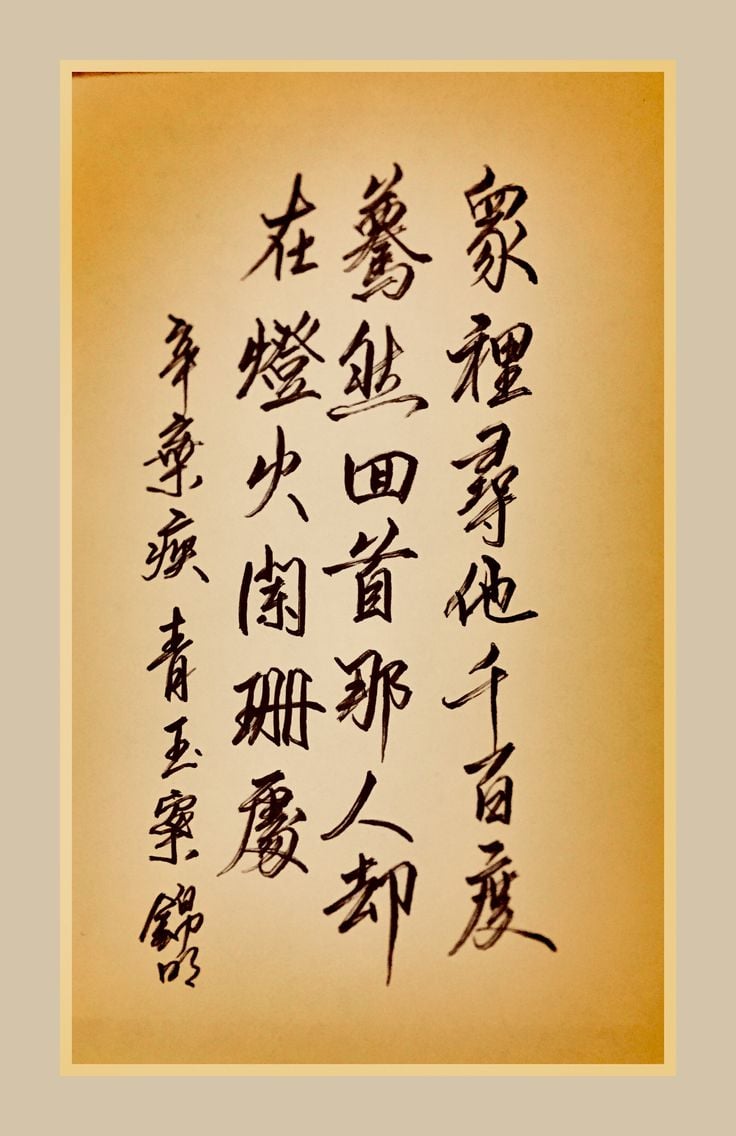
Evaluating those reordering scores requires looking closely at how the benchmark established its human baseline. Cheng explained that the baseline was drawn from university poetry enthusiasts who were screened for unfamiliarity with the contemporary test set and compensated for their evaluations. Across 10 human experts who each completed 10 questions across eight task types, the mean exact-match accuracy on eight-line verse reordering with guidance was 48%. Cheng stressed that an improvement from prompting alone does not prove structural mastery. To demonstrate authentic comprehension, Cheng said, a model would need to deliver "consistently accurate whole-poem reconstruction on newly written, metrically verified poems, with rhyme, tonal pattern, parallelism and discourse progression all satisfied together."
These outcomes demonstrate that current foundation models struggle with global hierarchical planning under rigid multi-constraint environments. The models excel at local sequence prediction, generating fluent adjacent phrases that sound classically styled. However, when forced to maintain global consistency across eight interrelated lines whose mutual correctness depends on a unified metric system, their sequential generation mechanisms lose track of distant constraints. The software treats line assembly as a series of disconnected associative steps rather than an integrated structural optimization problem.
What are the limits of the benchmark?
The findings presented by the research team are diagnostic observations derived from a synthetic benchmark rather than an exhaustive audit of all literary capabilities. The study evaluated models on a curated set of 1,406 contemporary poems, split between 628 regulated poems and 778 lyric poems, produced by 30 expert authors.1 Cheng told Primary that this corpus originated in classical poetry communities associated with Shanghai Jiao Tong University and partner collegiate societies, with author permission secured for academic research. While this dataset provides a clean out-of-sample environment, it represents a specific cross-section of academic and collegiate poetry societies whose thematic choices reflect modern scholarly life. Furthermore, the paper was published in ACL 2026 rather than remaining an arXiv preprint that may not have been peer reviewed.
The benchmark also relies on automated metric-checking algorithms to verify whether verses strictly adhere to traditional rhyme tables and tonal manuals. Although the authors applied rigorous phonological filtering based on classical systems like Pingshuiyun and Cilinzhengyun, classical poetry throughout history occasionally accommodated deliberate metrical variations or irregular rhymes for rhetorical effect.1 Asked how the filtering pipeline handled historical flexibility, Cheng explained that the automated tool did not simply match verses against one rigid template. Instead, Cheng stated that the software accounted for codified permissible variations, including traditional tonal-rescue mechanisms and established rhyme borrowings. A poem was excluded only if it breached both standard metrical formulas and those historical exceptions, ensuring that the test set remained strictly comparable across models without issuing an aesthetic judgment on deliberate creative liberties.
Cheng also warned against generalizing these linguistic failures to all domains of machine intelligence. Cheng told Primary that "our results show that high scores on familiar classical poems do not necessarily mean a model can apply rules of prosody, parallelism and discourse structure reliably to new poems." Cheng emphasized that this research represents "a behavioral study of particular models and tasks in Classical Chinese poetry," which "does not establish that models lack reasoning ability in every domain, nor does performance alone reveal their internal mechanisms."
How does this shape future model development?
Revealing the gap between training-data retrieval and genuine aesthetic deduction provides a clearer roadmap for evaluating artificial intelligence in specialized linguistic fields. The tendency of language models to memorize canonical literature has long masked architectural weaknesses in structural reasoning. As long as evaluations use historical texts that already populate the pre-training pool, benchmark leaderboards will continue to reward rote retention over problem solving. Designing living benchmarks made of rigorous, newly composed material offers a way to separate genuine comprehension from the statistical echoes of the training corpus.
Beyond classical verse, the failure of language models on holistic reordering tasks points to a fundamental hurdle in how neural networks manage complex planning. Many real-world problems require balancing rigid local rules against overarching global objectives, from legal drafting and formal contract verification to complex software synthesis and molecular design. If an advanced model cannot coordinate eight lines of poetry according to a transparent set of formal rules, it will face similar barriers whenever a problem demands that every sub-component strictly satisfy global systemic constraints. Addressing that deficiency will require architectures that can plan holistically across multiple hierarchical levels, moving past the illusion of mastery toward authentic rule-based reasoning.
The record
24 sentences trace to 1 source and 1 contributor.
-
1
HZ
 Han Zhang, Zihan Gu, Zhiyuan Wang, Tianyi Ma, Jiacheng Lu, Xinyan Zhang, Yuhao Wei, Cheng Hua
Paper
· arxiv.org · 18 Sep 2026
Neo-Classic: A Benchmark for Evaluating Linguistic-Aesthetic Reasoning in Classical Chinese Poetry
Preprint · may not have been peer reviewed
See the source
- 2 Contribution — Cheng Hua 12 statements added to this article
Other consulted pages2 pages
ar5iv.labs.arxiv.org2 pages
arxiv.org5 pages
- ZhuJiu: A Multi-dimensional, Multi-faceted Chinese Benchmark for Large Language Models
- CUGE: A Chinese Language Understanding and Generation Evaluation Benchmark
- Neo-Classic: A Benchmark for Evaluating Linguistic-Aesthetic Reasoning in Classical Chinese Poetry
- CCPM: A Chinese Classical Poetry Matching Dataset
- Neo-Classic: A Benchmark for Evaluating Linguistic-Aesthetic Reasoning in Classical Chinese Poetry
dblp.dagstuhl.de1 page
github.com1 page
huggingface.co1 page
Article history
-
Published 27 Nov 2026, 16:20Assembled by the Primary desk from 1 source · 1 contributor · 24 cited sentences
-
Cheng Hua
- Go to the sentence: The authors report that the models experienced a performance gap of 20% to 50% across multiple tasks when transitioning from canonical historical verses to novel contemporary verses.
- Go to the sentence: Cheng, a study author, told Primary that "the most striking reported result is that a few examples from each candidate author did not give models a reliable grasp of contemporary authors’ individual styles."
- Go to the sentence: Cheng noted that DeepSeek-V3.2 attained 84.0% accuracy on historical Tang poet attribution, but fell to 37.2% on the contemporary three-example task, whereas human experts reached 65.0% on the same unfamiliar contemporary test.
- Go to the sentence: Cheng observed that "recognizing a widely documented author and inferring a style from a small set of unfamiliar poems are different abilities."
- Go to the sentence: Cheng said in response to questions from Primary that researchers "should distinguish the observed behavior from an explanation of its mechanism."
- Go to the sentence: Cheng added that the team "did not directly measure internal representations, and we cannot verify that every contemporary poem was absent from every model’s training data."
- Go to the sentence: Even when prompted with expert-level guidance that explicitly walked the models through phonological anchoring and parallel coupling, advanced reasoning models such as Gemini-3-Pro only reached 36% accuracy on the eight-line task.
- Go to the sentence: By comparison, human literary experts tested on the same scrambled contemporary verses achieved 48% accuracy, successfully tracking the interplay between rhyme rules and discourse development.
- Go to the sentence: To demonstrate authentic comprehension, Cheng said, a model would need to deliver "consistently accurate whole-poem reconstruction on newly written, metrically verified poems, with rhyme, tonal pattern, parallelism and discourse progression all satisfied together."
- Go to the sentence: The study evaluated models on a curated set of 1,406 contemporary poems, split between 628 regulated poems and 778 lyric poems, produced by 30 expert authors.
- Go to the sentence: Cheng told Primary that "our results show that high scores on familiar classical poems do not necessarily mean a model can apply rules of prosody, parallelism and discourse structure reliably to new poems."
- Go to the sentence: Cheng emphasized that this research represents "a behavioral study of particular models and tasks in Classical Chinese poetry," which "does not establish that models lack reasoning ability in every domain, nor does performance alone reveal their internal mechanisms."