CATL reports limited impact from China's 2% battery tax
The battery manufacturer adjusted energy storage pricing after Beijing reinstated consumption levies on lithium cells while exempting emerging sodium and solid-state chemistries.
China's largest battery manufacturer experienced brief volatility in domestic purchase volumes following the return of a national consumption tax on lithium-ion cells, though an executive stated that the broader financial consequences for the company remained contained.1 The policy change took effect on September 1, 2026, when the Ministry of Finance, the General Administration of Customs, and the State Taxation Administration ended an 11-year exemption that had shielded the sector since early 2015.23
Under the revised tax schedule, domestic transactions involving lithium-ion cells and packs carry an initial levy of 2%, which is scheduled to climb to the statutory rate of 4% on September 1, 2027.23 The reinstated levy also applies to nickel-metal hydride, lithium primary, mercury-free primary, and vanadium flow batteries.23 Fully integrated battery energy storage systems that incorporate power controls, electrical equipment, fire suppression, and thermal management remain classified as complete power machinery, leaving those turnkey enclosures outside the scope of the tax.2
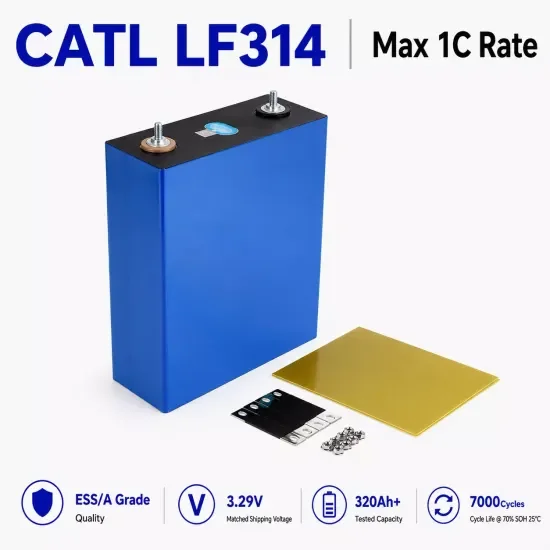
To absorb the domestic levy, manufacturers began passing cost increases through to industrial clients ahead of the autumn deadline. Contemporary Amperex Technology Co. Limited, known as CATL, raised the price of its 314-ampere-hour energy storage cells from 0.414 yuan to 0.423 yuan per watt-hour on August 1.24 Peer manufacturers followed similar pricing trajectories. EVE Energy applied an explicit 2% tax surcharge across its domestic product catalog from September 1, and Lishen Battery notified industrial customers that baseline quotes would increase to account for the consumption tax alongside municipal construction and education surcharges.42
The price adjustments reflect how narrow the direct cost exposure remains for cell producers operating in high-volume segments. Market estimates from Shanghai Metals Market pegged the 2% tax burden at approximately 0.00648 yuan per watt-hour at the cell level, which equates to roughly $0.96 per kilowatt-hour on a baseline cell price of 0.324 yuan per watt-hour.2 In energy storage configurations, an analysis from Huatai Securities projected an addition of roughly 0.008 yuan per watt-hour under the 2% rate and 0.016 yuan under the upcoming 4% rate, describing the net operational burden as manageable for well-capitalized producers.2
Direct export shipments remain completely exempt from the domestic consumption tax.24 Chinese battery manufacturers selling directly to overseas buyers face no levy at the border and retain the ability to claim tax refunds on eligible domestic inputs used to assemble export merchandise.2 However, trade dynamics face separate friction from the scheduled phaseout of China's value-added tax export rebate for batteries, which fell from 9% to 6% in April 2026 and will drop to zero on January 1, 2027.2
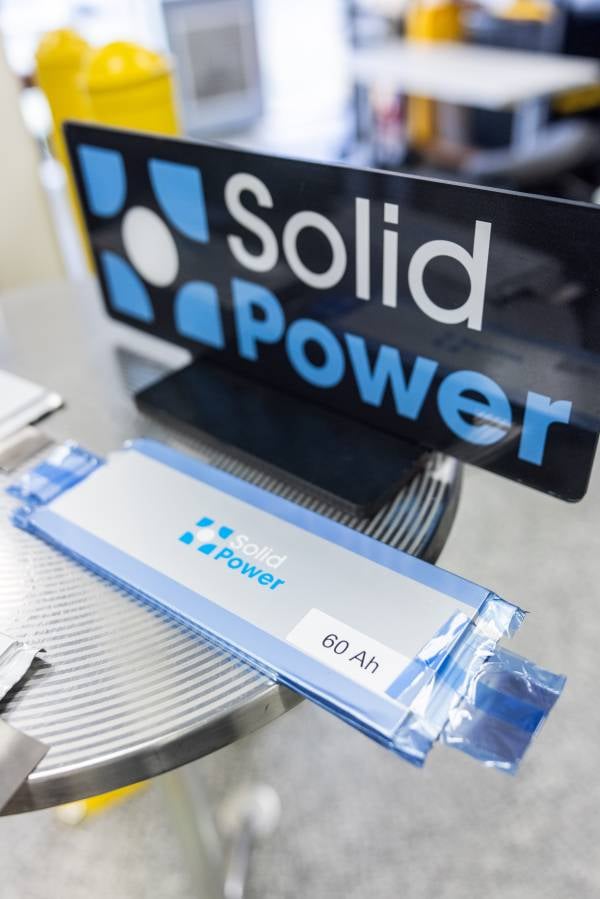
The tax adjustment functions as a regulatory signal directing industrial capital toward emerging battery designs. While mature lithium-ion products lost their decade-long exemption, government authorities granted a temporary tax reprieve through December 31, 2028, to sodium-ion batteries, solid-state cells, and fuel cells.325 Intermediate configurations such as semi-solid batteries failed to qualify for the exclusion.2 The selective grace period provides a cost advantage to next-generation technologies as producers race toward commercial viability, with major domestic manufacturers aiming for small-batch solid-state installations in vehicles around 2027.35
The regulatory shift arrived while automotive manufacturers accelerated efforts to diversify their battery vendor rosters. Although CATL recorded a gross margin of 23.93% in the first half of 2026, generating 276.9 billion yuan in revenue and 43.28 billion yuan in net profit, several prominent electric vehicle brands broadened their supplier bases to include second-tier manufacturers such as Sunwoda and CALB.6 Automotive brands that manufacture their own battery packs directly can avoid or deduct portions of the consumption levy, creating fresh incentives for vehicle assemblers to bring pack production in-house.6
Even with shifting client allocations, CATL maintained a commanding domestic lead. Data from the China Automotive Battery Innovation Alliance showed the company registered 32.54 gigawatt-hours of domestic power battery installations in August 2026, capturing a 41.45% market share as total nationwide installations reached 79.0 gigawatt-hours.6
What this rests on
19 sentences trace to 6 sources.
-
1
B
bloomberg.com Document · bloomberg.com · 21 Sep 2026 CATL Sees Limited Impact From China’s New Battery Tax on Orders See the source
-
2
EM
EnergiTech Media Third-party reporting · energitechmedia.com · 1 Sep 2026 China reinstates 2% consumption tax on lithium-ion batteries, rising to 4% in 2027 See the source
-
3
C
cnevpost.com Third-party reporting · cnevpost.com · 17 Jul 2026 China to impose consumption tax on lithium batteries, exempting sodium-ion and solid-state cells See the source
-
4
E
exliporcpower.com Third-party reporting · exliporcpower.com · 9 Sep 2026 Giá pin Trung Quốc tăng: Thuế lưu trữ 2%, chì CATL & EVE See the source
-
5
T
thelithiumceo.com Third-party reporting · thelithiumceo.com · 29 Jul 2026 China Brings Back the Battery Tax - Lithium News & Industry Insights | The Lithium CEO See the source
-
6
C