Deutsche Bank analysts project faster global rate increases
Investors price three European Central Bank increases as commodity shocks and technology spending reinforce stubborn price pressures across international markets

Financial markets risk underestimating how high interest rates will climb as monetary authorities confront persistent price pressures across major economies.1 An intensifying collision between elevated commodity costs and heavy technology investment is challenging earlier investor assumptions that central bank tightening had neared its ceiling. Analysts at Deutsche Bank wrote that the world economy is entering a "globally synchronised rate hiking cycle," warning that "recent trends in commodity prices will push inflation higher still."1 Having faced criticism for moving too slowly during the initial post-pandemic price surge, policy officials are maintaining a more aggressive stance that signals benchmark borrowing costs could rise faster and more frequently than earlier expected.1
The policy reassessment follows concrete shifts in monetary decisions across Europe. The European Central Bank raised its three key interest rates by 25 basis points on 11 June 2026, lifting its deposit facility rate to 2.25%, its main refinancing operations rate to 2.40%, and its marginal lending facility rate to 2.65%.23 Christine Lagarde, president of the European Central Bank, said the decision reflected mounting price pressures originating from regional conflict.32 European Central Bank staff projections released in June raised their baseline inflation outlook for 2026 and 2027, citing a higher trajectory for energy prices that was expected to spill into food, goods, and service charges across the euro area.32
Market participants initially anticipated a faster conclusion to the tightening cycle, but pricing has steadily adjusted to higher rates. Euro area financial markets have contended with two competing forces throughout 2026, balancing conflict-driven energy disruption against a global surge in artificial intelligence investment.4 In account records from its June meeting, the European Central Bank observed that financial markets were pricing in a total of three rate hikes during 2026.4 That market pricing exceeded the median expectation in the central bank's own survey of monetary analysts, which had anticipated only two increases before the end of the year.4
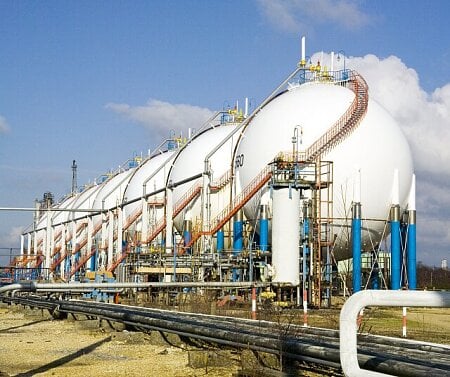
Energy markets have remained a primary driver of the renewed inflationary impulse. While spot crude oil prices retreated from an April 2026 peak of $118 per barrel to hover near $94 per barrel, longer-dated energy futures have stayed well above pre-conflict benchmarks.4 Refined fuel costs experienced even steeper escalation. Wholesale prices for petrol, diesel, and jet fuel climbed between 40% and 45% following the outbreak of conflict in the Middle East, while natural gas traded roughly 50% above earlier levels.4 Surging costs for chemical feedstocks, agricultural fertilizers, and plastics have added further upward pressure along wholesale production chains.4
Underlying economic momentum has simultaneously cushioned corporate balance sheets and complicated central bank objectives. Equity indices on both sides of the Atlantic recovered from spring declines, bolstered by upward revisions in corporate earnings expectations linked to artificial intelligence deployments.4 Euro area staff accounts noted that corporate credit spreads remained tight as investors viewed technology capital expenditures as an offset to higher energy input costs.4 That durable commercial activity has prevented a sharp economic contraction but has also kept medium-term inflation expectations elevated above target levels.
Central bankers responded with further tightening late in the summer. The European Central Bank implemented a second 25 basis point rate increase on 10 September 2026, stating that headline inflation had accelerated to 3.3% in August.5 Energy price inflation reached 14.3% in August, driven by wide refining margins on liquid fuels and firm international commodity prices.5 In updated staff economic projections prepared for the September gathering, baseline headline inflation was revised upward to 2.5% for 2027 and 2.1% for 2028, remaining above the official 2.0% target.5
A broader economic transformation underpins this synchronized tightening phase. Persistent disruptions to shipping and energy corridors, combined with expansive capital allocations toward digital infrastructure and national defense, have altered baseline price dynamics across industrial economies. One economist noted that the ongoing expansion, paired with supply shocks and stubborn inflation, demonstrates a "structural transformation of the economy" that is driving a lasting regime shift in international borrowing costs.1
What this rests on
18 sentences trace to 5 sources.
-
1
BR
Brendan Ruberry Document · semafor.com · 21 Sep 2026 Markets risk underpricing the scale of rate hikes, analysts say See the source
-
2
E
ecb.europa.eu Press release · ecb.europa.eu Monetary policy decisions See the source
-
3
E
-
4
E
-
5
E