Treasury 10-year yield tops 5.1% after manufacturing surge
Strong factory activity and rising fuel costs lifted expectations for Federal Reserve rate hikes, pushing borrowing costs to levels unseen since 2007.
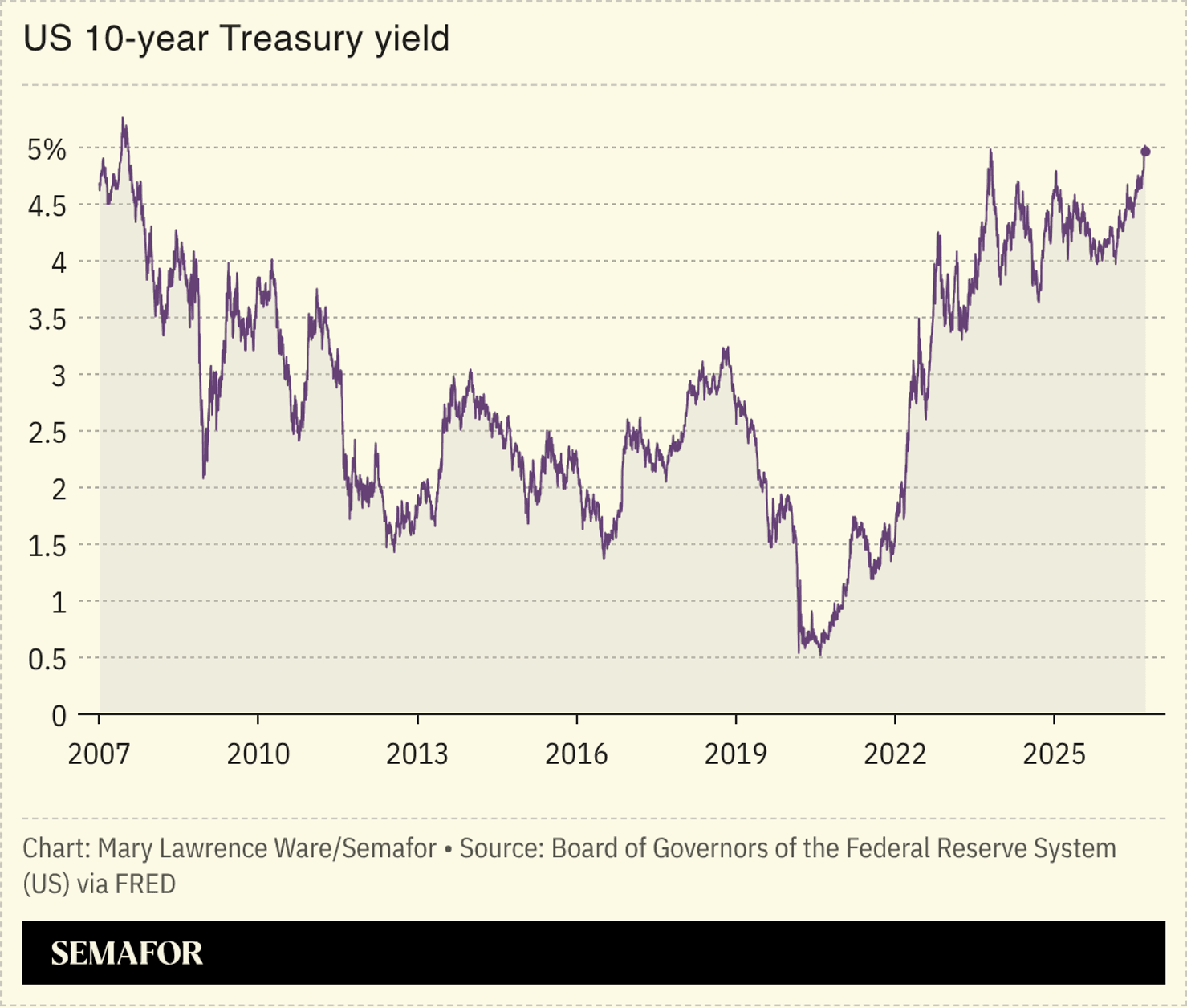
Borrowing costs across the United States economy jumped on Wednesday as the benchmark 10-year Treasury yield climbed above 5.1% to touch its highest level since July 2007.12 The move followed survey data showing American factory activity expanding at its sharpest pace in more than four years, renewing expectations that the Federal Reserve will raise short-term interest rates again before the end of the year.13
Yields on two-year Treasury notes, which track expectations for central bank policy, rose more than 11 basis points to reach 4.889%.1 Longer-dated debt experienced similar selling pressure, with the 30-year Treasury yield climbing past 5.39% to its highest point since June 2007.1 Equity benchmarks retreated across the board as the rise in yields rippled through financial markets, leaving the S&P 500 down 0.53% and the Nasdaq Composite lower by 1.05%.4
Factory activity and input prices
The market repricing was touched off by preliminary September survey data from S&P Global showing widespread acceleration across the private sector.12 The group's flash manufacturing purchasing managers index advanced to 56.7, reaching its highest level in more than four years.1 Activity in the services sector expanded simultaneously, with its reading climbing to 58.7 from 56.5 in August.1
Combined, the figures lifted the flash composite output index to 58.4, marking the fastest rate of private-sector expansion since July 2021.4 Survey participants reported a notable jump in new orders and a pickup in manufacturing hiring, which grew at the fastest pace recorded since February 2021.4
Accelerating output coincided with a renewed surge in corporate expenses. S&P Global Market Intelligence chief business economist Chris Williamson said in a statement that, excluding the post-lockdown reopening rebound, “the latest improvement in business activity is the greatest recorded since early 2015.”13 Williamson added that “input costs have meanwhile jumped in September at the steepest rate for four years, with fuel and transport costs spiking higher thanks to the rise in oil prices.”13
Federal Reserve policy path
The acceleration in economic activity arrived one week after the Federal Reserve lifted its target policy rate by 25 basis points to a range between 3.75% and 4.00%, marking the central bank's first interest rate increase since 2023.12 Projections released alongside that decision had pointed to the potential for another rate increase before the end of 2026.1
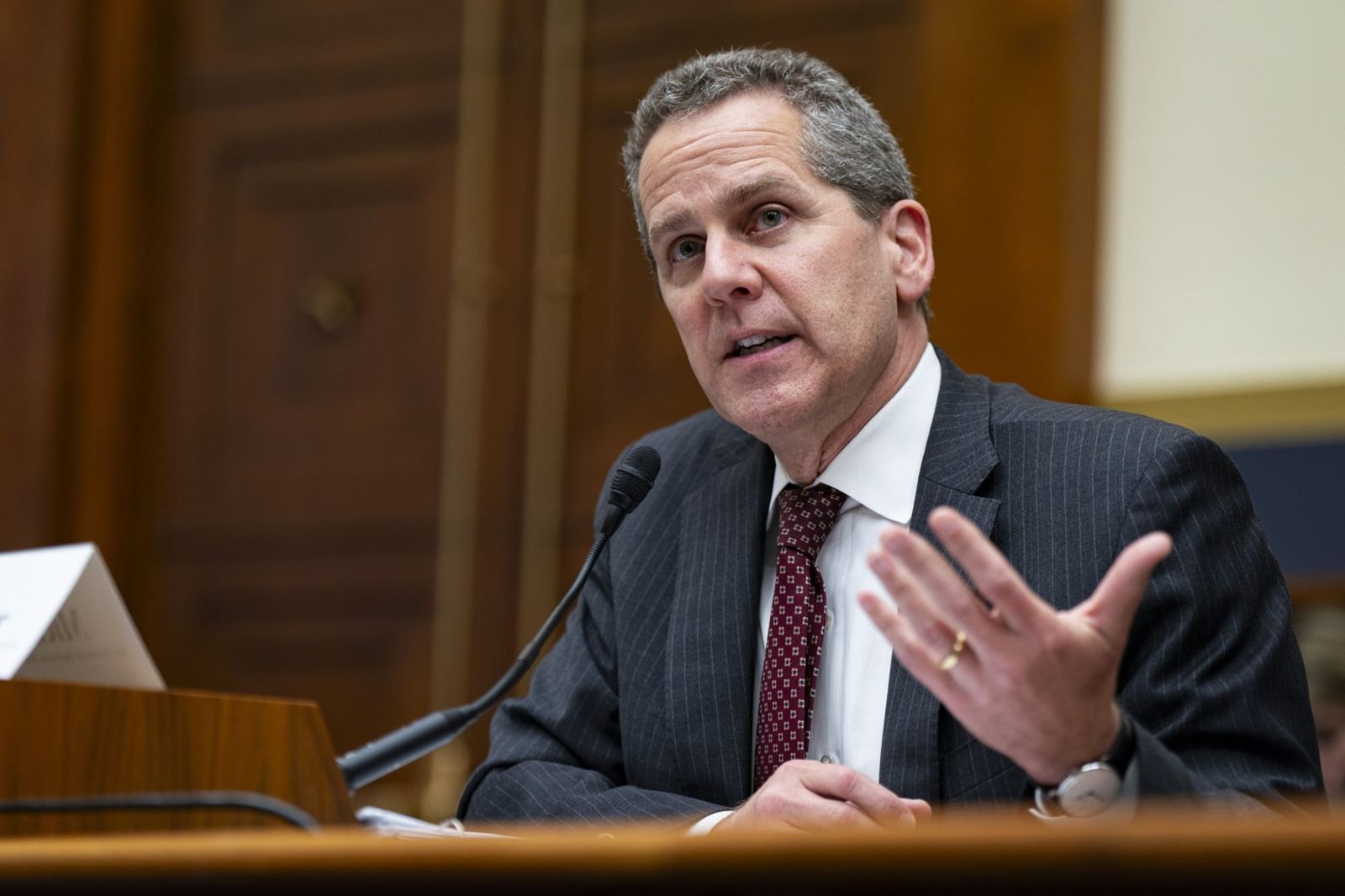
Remarks from monetary policymakers on Wednesday reinforced the prospect of additional credit tightening. Federal Reserve Governor Michael Barr said in public remarks that “in my base case, further policy adjustments are likely to be needed to ensure inflation comes down to target in a timely fashion.”1 Barr stated that the central bank took a step the previous week to recalibrate borrowing costs and added that price stability remains necessary to sustain durable economic expansion.41
Pricing in interest-rate futures adjusted rapidly to the comments and the economic data. According to the CME Group FedWatch tracker, the implied probability of an additional quarter-point rate increase at the Fed's October meeting climbed to approximately 66% on Wednesday, up from 55% a day earlier and under 10% a month prior.1
Energy costs and debt supply
Pressures on the bond market were compounded by higher energy prices and heavy sovereign debt issuance. West Texas Intermediate crude futures gained 1.81% to settle at $92.16 a barrel, while Brent crude rose 3.86% to finish at $103.08 a barrel.1 Oil markets have remained elevated following an address by Iranian President Masoud Pezeshkian at the United Nations General Assembly in which he stated that Iran will not surrender, dampening hopes for an immediate diplomatic resolution to the conflict.43
Treasury debt sales also met with soft investor appetite on Wednesday afternoon. A $70 billion auction of five-year Treasury notes cleared at a yield of 5.033%, well above the recent six-auction average of 4.186%.12 Indirect bidders, a group that includes foreign central banks and institutional reserve managers, took down 54% of the offering compared to a customary average near 65%, forcing primary dealers to absorb a larger share of the new paper.12
What this rests on
21 sentences trace to 4 sources.
-
1
C
CNBC Third-party reporting · cnbc.com · 23 Sep 2026 10-year Treasury yield rockets to 19-year high. Here's what's driving the spike See the source
-
2
TE
TRADING ECONOMICS Third-party reporting · tradingeconomics.com · 22 Sep 2026 Treasury Yields Move Lower See the source
-
3
BR
Brendan Ruberry Document · semafor.com · 23 Sep 2026 US 10-year Treasury yield hits 19-year high on strong manufacturing data See the source
-
4
IB
Idaho Business Review Third-party reporting · idahobusinessreview.com · 23 Sep 2026 US stocks fall as 10-year treasury yield hits highest since 2007 See the source