Saudi Arabia projects budget deficit widening to 4.9%
Higher regional defense outlays and supply corridor investments will push government debt toward its 40% economic ceiling.
Saudi Arabia is preparing for several years of wider fiscal deficits as regional military friction pushes state expenditure ahead of oil revenue.1 The kingdom now expects its central government budget deficit to reach 4.9% of gross domestic product this year, revising upward an earlier forecast of 3.3% published late last year.12 Although elevated crude prices lifted state receipts above initial prewar estimates, accelerated government spending on security and trade infrastructure has outpaced the gains.1
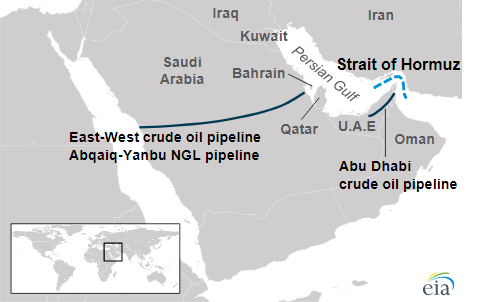
The revised fiscal projections highlight the economic pressures confronting Riyadh as conflict across the Middle East disrupts regional shipping lanes. Military hostility around the Strait of Hormuz has forced the Saudi government to invest heavily in alternative logistical corridors, including pipelines directing crude exports toward terminals on the Red Sea.1 Despite repeated threats to maritime passage, state energy planners have managed to keep crude exports near prewar volumes by rerouting oil overland and continuing tanker transit through Hormuz.1
Maintaining those supply corridors and bolstering national defenses requires sustained borrowing that threatens to alter the kingdom's balance sheet. Under preliminary budget planning documents for next year, sovereign borrowing is projected to push total public debt beyond the government's ceiling of 40% of gross domestic product before 2030 unless broader economic expansion accelerates.1 While officials have initiated administrative curbs on non-essential public spending, core commitments to territorial defense and strategic supply lines remain fully funded.1
The kingdom's broader macroeconomic performance reflects the immediate shock to petroleum extraction. The Saudi economy is projected to contract 3.6% this year because of steep reductions in crude output, according to government projections.1 State forecasters anticipate real gross domestic product could rebound by nearly 13% in 2027 if crude production and export flows normalize.1 In the interim, domestic employment and non-oil commerce have provided the sole momentum, driving recorded expansion across the first half of the year.1
Fiscal planning for 2026
The revised outlook builds on baseline parameters set in the state budget statement for fiscal year 2026 released by the Ministry of Finance.2 That statement projected total annual government expenditure of 1,313 billion riyals against expected total revenue of 1,147 billion riyals.2 The resulting baseline shortfall of 165 billion riyals was initially estimated at roughly 3.3% of national gross domestic product before worsening regional conditions compelled broader revisions.21
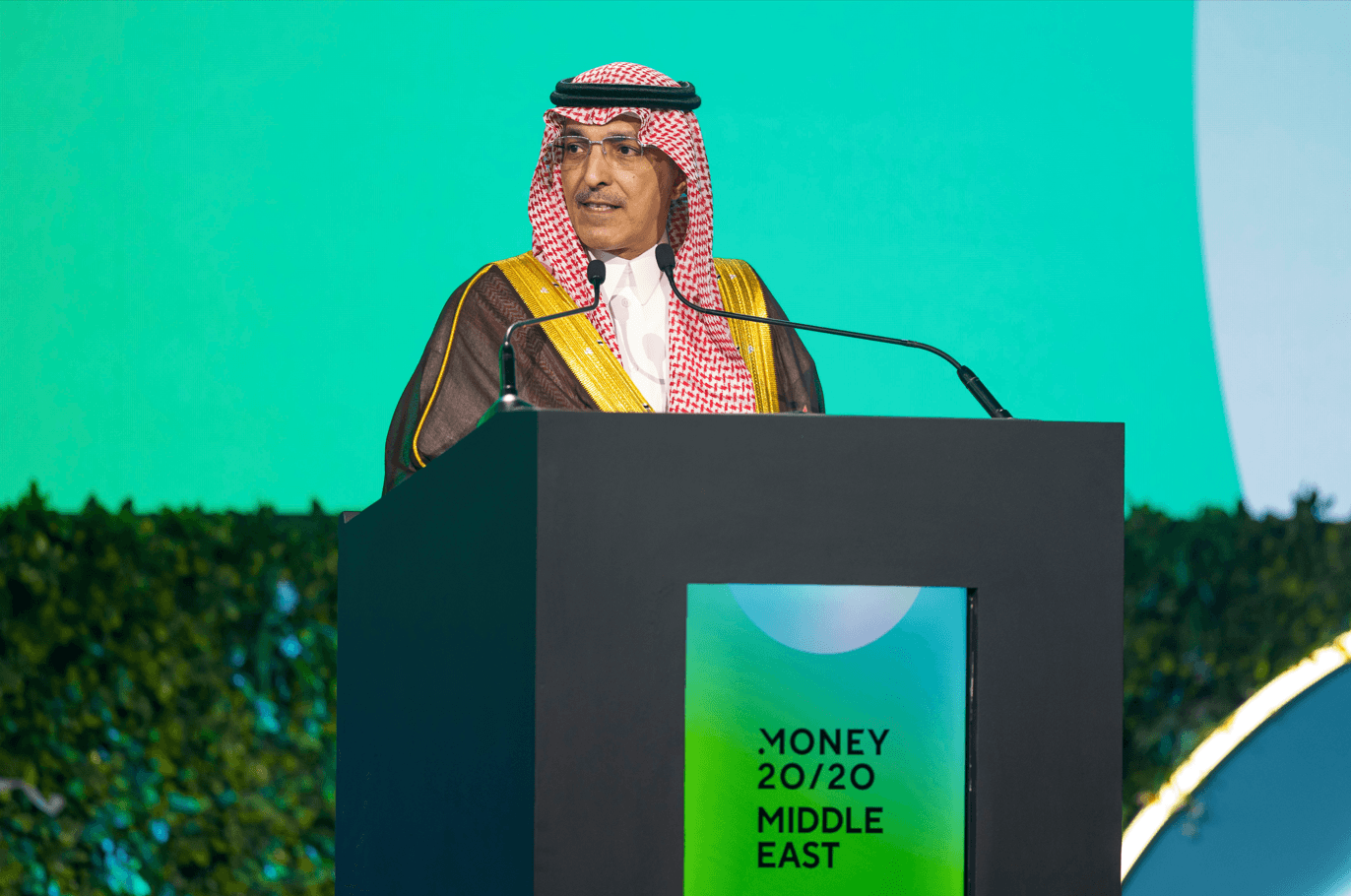
Saudi Finance Minister Mohammed Aljadaan stated that public debt management remains focused on fiscal sustainability while funding critical capital programs.2 In the budget statement, the Ministry of Finance projected outstanding public debt would reach 1,457 billion riyals in 2025, or 31.7% of gross domestic product, before climbing to 1,622 billion riyals in 2026, representing 32.7% of economic output.2 Aljadaan argued that these leverage levels remain sustainable under international standards, noting that sovereign financing plans rely on both domestic and international debt sales alongside alternative financing structures.2
To protect state finances against external volatility, the Ministry of Finance has committed to preserving substantial cash cushions. Government reserves deposited with the Saudi Central Bank are projected to remain steady at approximately 390 billion riyals through the end of 2026, matching reserve levels maintained through 2025.2 These reserves provide liquidity while state planners finance infrastructure and economic diversification targets outlined under Vision 2030.2
Non-oil expansion and global headwinds
State economic planners are counting on non-oil industries to buffer sovereign finances during the downturn in crude operations. Ministry of Finance estimates indicate non-oil gross domestic product expanded by 5.0% in 2025, propelled by private consumption and capital investment across newly prioritized sectors.2 For 2026, the ministry projected real economic growth of 4.6%, identifying non-oil commercial activities as the primary engine of national expansion.2
That domestic transition faces compounding friction from international markets. Aljadaan warned in the budget review that global economic growth remains sluggish, depressed by escalating geopolitical confrontation and expanding trade restrictions, including unilateral import tariffs.2 While international central banks have begun easing monetary policy as global inflation subsides, Aljadaan noted that rising worldwide sovereign debt burdens continue to threaten financial stability across emerging economies.2
For Saudi authorities, balancing these global constraints against acute domestic defense requirements has narrowed the margin for fiscal error. Project spending across secondary public sectors has already been trimmed to absorb non-recurring expenses and account for completed building programs.2 As regional security risks persist, the government is leaning on its central bank reserves and sovereign bond sales to bridge deficits until petroleum exports fully recover.
What this rests on
23 sentences trace to 2 sources.
-
1
MM
Matthew Martin Document · semafor.com · 1 Oct 2026 Saudi Arabia sees deeper budget deficits ahead See the source
-
2
M
mof.gov.sa Official record · mof.gov.sa Saudi Ministry of Finance Announces Budget Statement for FY2026 with Expenditures Estimated at SAR 1,313 billion, and Revenues at SAR 1,147 billion See the source