Exxon documents reveal internal pushback on climate targets
Court filings in Massachusetts expose scientist warnings over algae biofuels and carbon capture while fossil fuel investments expanded.

Early corporate warnings on climate policy
In November 1988, five months after climate scientist James Hansen told Congress that fossil fuel pollution was warming the planet, Frank Sprow drafted a private warning to his colleagues at Exxon.12 Sprow, an executive in the company's corporate research department, cautioned that if a worldwide consensus formed around mitigating greenhouse gas effects, the company could face substantial commercial fallout.12 The draft memo outlined two foundational objectives for Exxon research: protecting the financial value of oil, gas, and coal assets, and preserving long-term corporate options.12 To accomplish that, Sprow urged Exxon to establish a role in scientific modeling by placing personnel at elite external research institutions such as Princeton University, while tracking alternative technologies including solar power, nuclear energy, and biofuels.12 Sprow later acknowledged that corporate leadership adopted the strategic recommendations set forth in his memorandum.12
The memorandum forms part of a collection of historical and contemporary corporate records unsealed in Massachusetts state court.12 The filings arise from an enforcement action initiated in 2019 by the Massachusetts attorney general, which alleges ExxonMobil engaged in deceptive practices under the state consumer protection statute.31 Rather than focusing exclusively on historical denialism, the Commonwealth's complaint asserts that the company misled investors and retail customers across Massachusetts by exaggerating the viability of lower-carbon technologies in high-profile marketing campaigns.13 The state is pursuing civil monetary penalties and an injunction against promotional efforts it describes as corporate greenwashing.13 ExxonMobil has consistently maintained that its external communications were lawful, arguing in annual securities filings that municipal and state climate cases represent an inappropriate attempt to distort the judicial system to dictate energy policy.12
Internal scientists challenged algae fuel claims
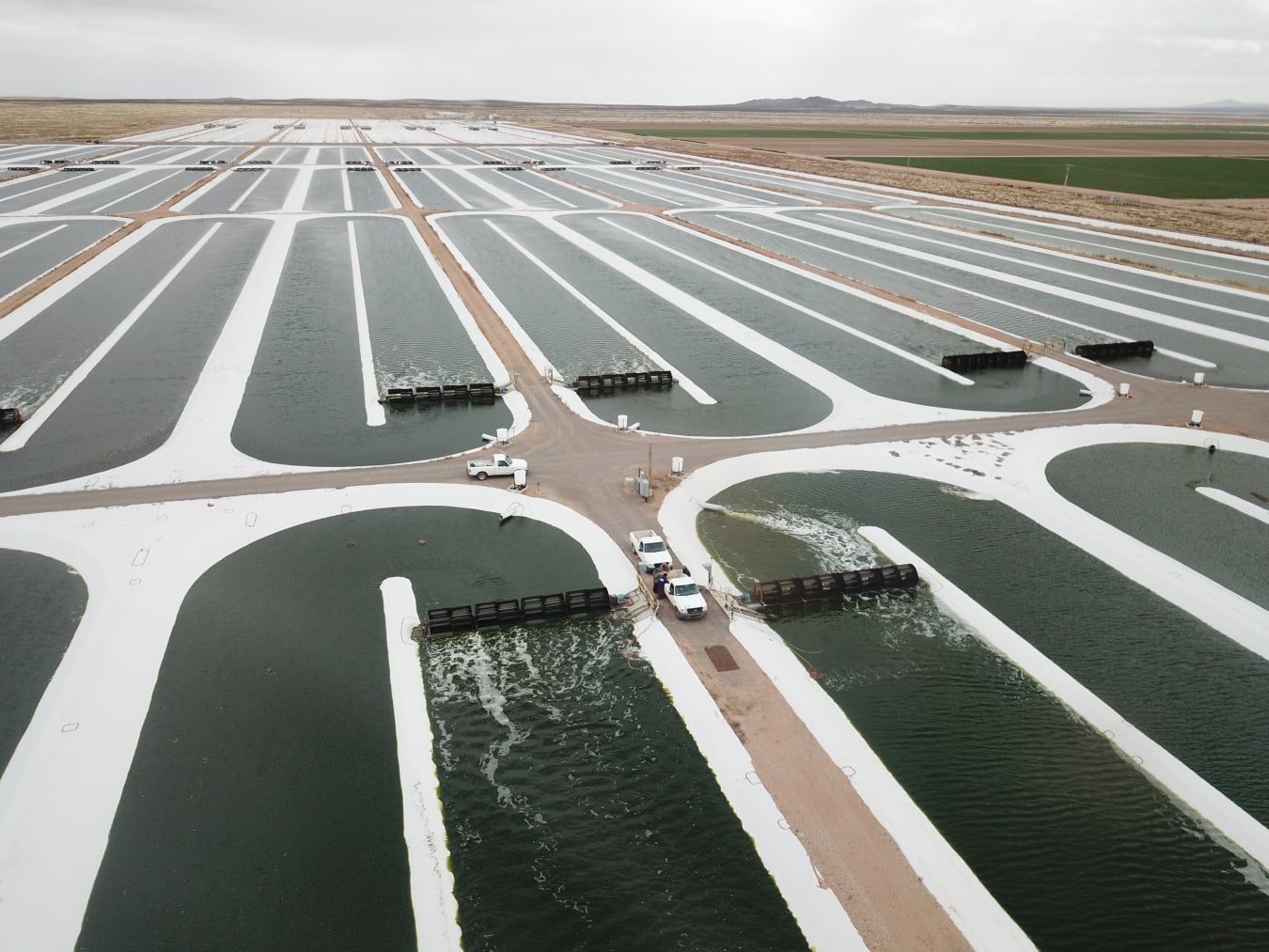
For more than a decade, ExxonMobil spent heavily on public relations campaigns showcasing its research into algae-derived biofuels, presenting the organism as an imminent low-carbon substitute for crude oil.12 Public materials published by the company in 2018 declared that ExxonMobil anticipated producing 10,000 barrels of algae biofuel per day by 2025.12 Deposition testimony included in the unsealed Massachusetts court filings shows company researchers recognized the commercial targets were unachievable long before the public announcement went out.12 An Exxon scientist directly involved with the project testified under oath that the projected output figure was completely impossible to achieve, noting that he had warned internal colleagues about the insurmountable physical limitations before the corporate statement was published.12 When questioned directly about the accuracy of the 2018 corporate press release, the scientist stated that every clause in the document was patently false.12
The deposition excerpts describe a persistent divide between corporate marketing representations and bench-level research outcomes. The same Exxon researcher revealed that an internal technical development on algae cultivation, which corporate communicators publicly advertised as a research breakthrough, was known among research personnel to be an unviable dead end.12 ExxonMobil eventually shut down its funded algae biofuels research program without reaching commercial production.12 Yet while the program remained active, marketing analytics prepared for corporate executives designated promotional spots centered on algae research as top-performing advertisements. A corporate slide deck from 2017 characterized campaigns featuring algae and alternative technologies as all-around winners with the public, allowing the oil producer to present a forward-looking image while capital spending remained dedicated to fossil extraction.12
Engineers questioned carbon capture marketing
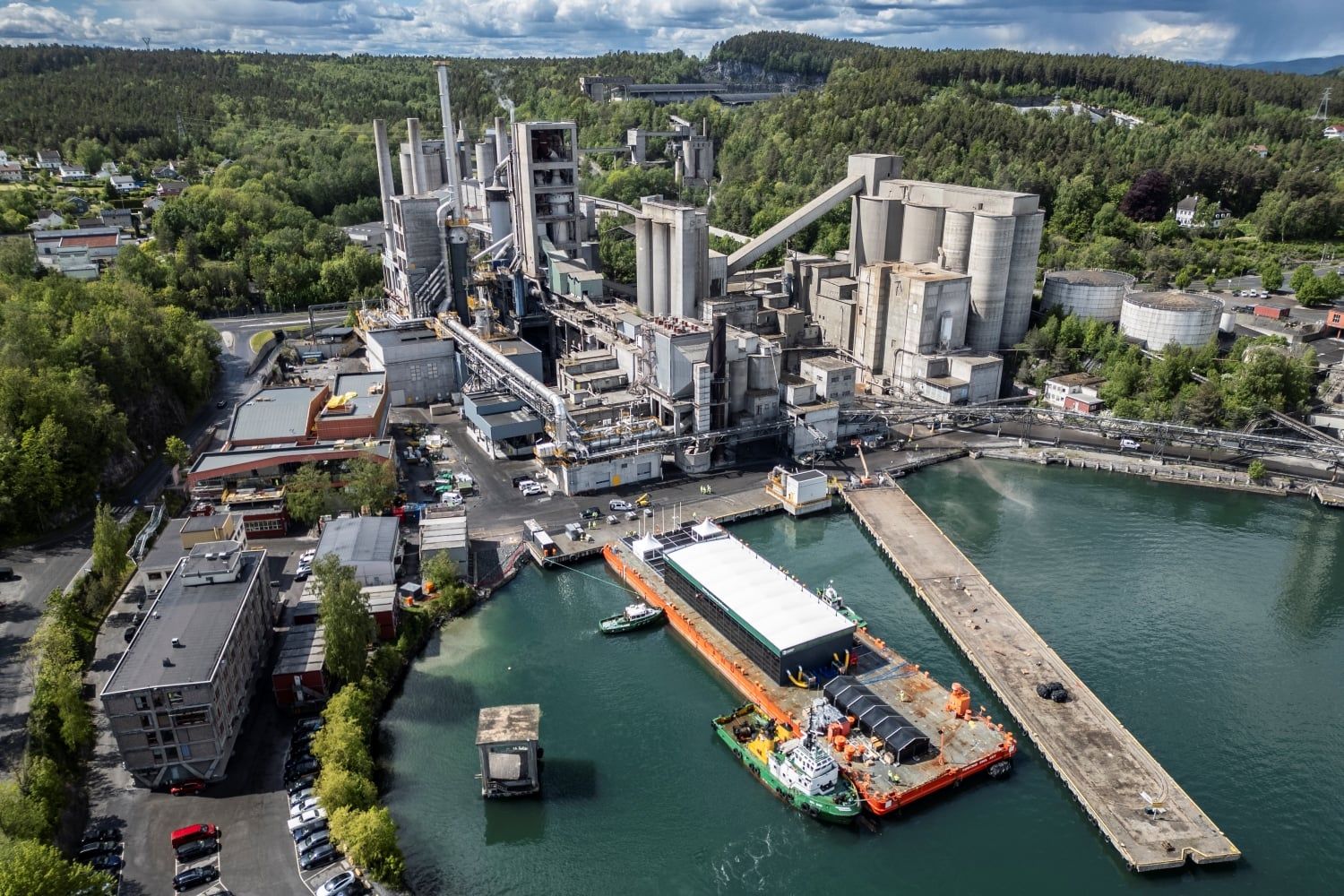
ExxonMobil transitioned its climate messaging toward carbon capture and storage technologies, positioning itself as an established sector leader capable of sequestering industrial emissions. Internal technical presentations unsealed in the Massachusetts litigation show staff researchers repeatedly identified steep technical and structural barriers to scaling carbon capture.12 A 2014 internal analysis examining the company's carbon capture portfolio highlighted severe economic headwinds, recording that commercial deployment would demand massive capital investment, absent market-based regulatory incentives.12 The presentation calculated that achieving meaningful climate mitigation would necessitate an ultimate carbon storage injection rate comparable to total global oil and gas production.12
Three years later, corporate promotional initiatives generated friction with technical staff tasked with presenting the technology to consumers. In 2017, an Exxon researcher asked to participate in a promotional advertisement touting corporate leadership in carbon capture voiced strong personal hesitation to colleagues.12 The scientist noted that existing corporate operations were confined to routine gas processing facilities, where carbon dioxide was extracted from raw methane streams and reinjected into producing formations to maximize fossil recovery. The researcher warned colleagues that standard gas sweetening had nothing to do with emerging carbon capture systems designed to abate emissions from power generation and heavy manufacturing plants.12 The scientist eventually filmed an advertisement describing baseline experimental research, insisting on omitting corporate claims of market leadership.12
Corporate messaging strategies continued to prioritize investor perception through the following decade. An internal strategy deck from 2021 prepared for an advertising campaign directed at political and financial leaders outlined a direct goal: persuading target audiences that ExxonMobil is committed to helping solve climate change.12 The materials sought to persuade investors that carbon capture infrastructure plays an indispensable part in facilitating energy transitions.12 Among the featured initiatives was a multi-billion-dollar industrial capture hub proposed for the Houston ship channel, a high-profile concept that corporate leadership subsequently stopped promoting in public investor materials.12
The evolution of industry coordination
The unsealed court record includes documentation showing how Exxon collaborated with peer energy producers to shape public regulatory debates through trade organizations. A newly disclosed corporate memorandum summarizing a 1997 session of the American Petroleum Institute climate steering group outlined plans to counter international treaty discussions ahead of the Kyoto Protocol negotiations.12 Meeting participants recommended that the trade association continue questioning the empirical foundations of climate science while highlighting the societal economic burdens of mitigation policies.12 Internal strategy notes emphasized building targeted public messaging campaigns around arguments proven by opinion polling to resonate most effectively with retail consumers, while urging trade representatives to resist regulatory compromises.12
The 1997 records show that Exxon supported external free-market advocacy groups to influence policy discussions without direct corporate branding.12 The memo recorded corporate plans to fund a project led by legal scholar Jonathan Adler, who then worked at the Competitive Enterprise Institute. Exxon requested that Adler narrow his project to focus specifically on the costs of climate policy for individual households and industrial competitiveness.12 API also coordinated with the American Enterprise Institute to convene seminars around economists' statements to deter regulatory interventions.12 In later statements, Adler stated that his research at the Competitive Enterprise Institute reflected independent institutional principles rather than corporate direction, noting that think tanks routinely accepted financial support from donors who shared free-market philosophies.12 Adler subsequently authored an amicus brief supporting local government plaintiffs in separate climate litigation, arguing their state common-law claims were not preempted by federal statutes.12
Legal battles over disclosure expand across state courts
The unsealed technical files arrive during an intensifying national legal conflict over oil industry liability for climate adaptation costs. Local governments across the country have filed lawsuits alleging fossil fuel producers concealed product hazards while passing catastrophic infrastructure costs to taxpayers. Municipal and county officials point to domestic disaster costs that exceeded $100 billion in four of the past five years.12 During the first six months of the current operating year, ExxonMobil generated nearly $19 billion in corporate earnings.12 The legal pressure has reached the highest appellate benches: the Supreme Court of the United States recently heard arguments from ExxonMobil and Suncor Energy seeking to block a climate liability claim brought by the city and county of Boulder, Colorado, a threshold jurisdictional ruling that could affect dozens of pending municipal cases.12
Advocacy groups and legal researchers argue that internal files from state proceedings demonstrate why oil companies seek to derail claims before discovery proceeds. Aaron Regunberg, director of climate accountability at the non-profit organization Public Citizen, said the unsealed documents reveal why energy producers fight aggressively to halt municipal actions, asserting that the public has seen only an initial fraction of internal corporate records.12 Geoffrey Supran, an associate professor at the University of Miami who studies energy communications, characterized the unsealed records as a unified operating manual detailing how corporate management weaponized expert research and alternative energy campaigns to protect underlying fossil investments.12
In Massachusetts Superior Court, litigation over evidentiary production remains contentious. In separate open-records proceedings arising from the corporate defense, ExxonMobil counsel Jack Pirozzolo argued that state authorities failed to disclose whether government agencies adhered to vehicle emission statutes enacted under a 2008 environmental law.4 During procedural hearings before Superior Court Judge Robert Gordon, the court expressed sharp irritation with discovery delays, pressing private defense counsel and state attorney Cory Flashner on protracted deadlines. While ExxonMobil attempted to challenge state enforcement actions, the Commonwealth continues to press for broader discovery of corporate sustainability presentations. Even as ExxonMobil maintains public commitments to lower-emission technologies, corporate planning documents show the company intends to expand fossil fuel production more than 15 percent by 2030.12
What this rests on
42 sentences trace to 4 sources.
-
1
DH
Derek Harrison Document · insideclimatenews.org · 7 Oct 2026 New Documents Add to Evidence in Climate Deception Case Against ExxonMobil See the source
-
2
C
climatecrisis247.com Third-party reporting · climatecrisis247.com · 9 Oct 2026 New Documents Add to Evidence in Climate Deception Case Against ExxonMobil See the source
-
3
SC
Sabin Center for Climate Change Law Third-party reporting · climatecasechart.com Commonwealth v. Exxon Mobil Corp. - The Climate Litigation Database See the source
-
4
L
legalnewsline.com Third-party reporting · legalnewsline.com ‘We are nowhere’: Exxon’s fight against climate change hypocrisy See the source