Deloitte Cyprus backdated records to shield Roman Abramovich's assets
Leaked corporate files show the accountancy firm altered audit trails to erase luxury yachts, mansions, and bank interest from public scrutiny.
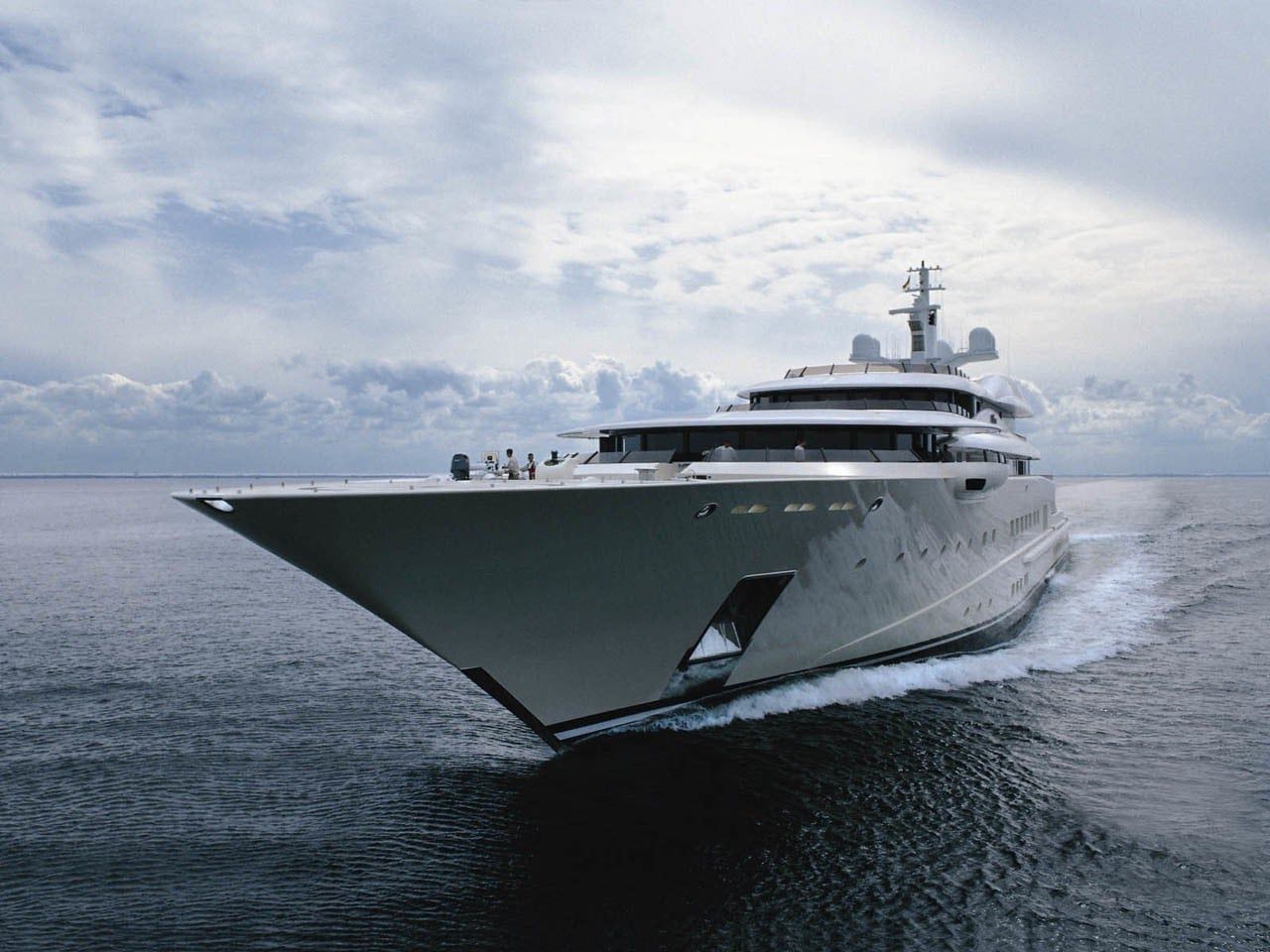
When the government of Cyprus enacted new corporate disclosure laws in the mid-2000s, the accounting firm Deloitte Cyprus faced an immediate accounting problem for its wealthiest client.12 Amiscan Investments, a local holding company owned by Russian oligarch Roman Abramovich, held $672 million in luxury property on its draft books for 2003.13 The ledger listed a country mansion in West Sussex, an apartment in London, an estate on the French Riviera, private jets, and a fleet of vessels that included the $147.5 million superyacht Pelorus.13 Under the new transparency mandate, those holdings were set to become public record.12
Instead of filing the accounts as drafted, advisers restructured the company.14 Leaked corporate documents show that advisers drew up an agreement in 2006 to transfer 19 subsidiary companies holding the assets from Amiscan to Kelvedon Worldwide, an entity registered in the British Virgin Islands, where public disclosure rules did not apply.42 The paperwork was backdated by three years to January 4, 2003, creating the appearance that the assets had been removed before the accounting period closed.14 Deloitte Cyprus audited the documents, deemed them adequate, and signed off on the revised 2003 financial statements in December 2006.14 On paper, the yachts, estates, and aircraft vanished, leaving Amiscan with just $75,000 in assets.14
Rewriting corporate ledgers in Limassol
The files, drawn from thousands of internal emails and financial records from the Limassol-based corporate services provider MeritServus, show that backdating transactions was a repeated practice used to shield Abramovich's wealth.13 MeritServus operated as a division of Deloitte Cyprus until 2005, when it was spun off as an independent business under Demetris Ioannides, who had served as chairman of Deloitte Cyprus for nearly two decades.123 After the separation, Deloitte Cyprus and MeritServus continued to collaborate closely to administer Abramovich's offshore network, managing dozens of entities held through a Cyprus trust.13
More than 1,000 corporate records were given earlier timestamps between 1999 and 2013, creating retroactive trails of contracts, payment orders, and resolutions across more than 100 offshore companies.3 Deloitte Cyprus repeatedly certified these financial statements as providing a true and fair view of the companies' positions, relying on agreements its staff had helped review or assemble.32
Lord Prem Sikka, emeritus professor of accounting at the University of Essex, described the practice of misrepresenting transaction dates as unacceptable under standard auditing rules.31 He said that companies are legally required to publish true and fair accounts, adding that misrepresenting dates represents a violation of a statutory duty and termed the conduct scandalous.13
Andrew Mitchell KC, a London financial crime barrister who reviewed the documentation, reached a similar conclusion regarding the manufactured paper trails.13 He said that the material demonstrated how professionals proved willing to bend and break professional rules and the law, stating that they appeared willing to stop at nothing when creating documentation.13
The passive income scheme
The paper shuffling went beyond concealing luxury real estate and vessels.13 It was also deployed to avoid tax on massive cash balances generated by Abramovich's Russian industrial holdings.12 In 2003, Abramovich sold a 20 percent stake in Russian oil company Sibneft to Yukos for $3 billion.24 Roughly $2 billion of that windfall sat in bank accounts held by Kravin Investments, a Cyprus company set up for Abramovich in 1999.12
The cash accumulated substantial interest, reaching around $1.8 billion in total deposits by the end of 2003.2 In the first six months of 2005 alone, Kravin earned $10 million in interest income.2 Under Cypriot tax rules and new legislation targeting passive investment returns, foreign-owned companies faced a 15 percent tax charge on that interest income, which meant millions of dollars in tax liabilities were due to Cypriot authorities.21
Internal correspondence shows that advisers held meetings in Moscow and exchanged plans throughout 2005 to eliminate the past tax liabilities.21 Antonis Taliotis, then a tax partner at Deloitte Cyprus, and Demetris Ioannides discussed altering the accounting records for 2003 and 2004.12 MeritServus then produced backdated agreements and letters asserting that Kravin had paid the Sibneft sales proceeds as an interim dividend to its British Virgin Islands parent, Kelvedon Worldwide, in May 2003.23
Under this legal arrangement, Kravin claimed it was merely holding and managing the funds as an agent or trustee on behalf of the British Virgin Islands entity.13 Deloitte Cyprus advised that changes would be required across Kravin's bank account balances, profit and loss statements, and interest income records.1 MeritServus compiled retroactive management reports for 2004 and 2005 to sustain the claim.23 When Kravin eventually submitted audited financial statements for 2005, it declared only about $15,000 in total tax contributions for 2004 and 2005.24 Nicos Charalambous, a partner at Deloitte Cyprus, signed the audit report confirming that the accounts gave a true and fair view.2
Mitchell characterized the Kravin tax reduction structure as a straightforward and blatant maneuver to protect assets from legitimate taxation that would otherwise have applied.13 He noted that if similar conduct had taken place in England involving millions of pounds, revenue authorities would consider criminal prosecution.13
Alex Cobham, chief executive of the Tax Justice Network, argued that the deliberate creation of false documentary evidence to support an untrue position presented to revenue authorities falls squarely within the definition of tax evasion.23 He observed that accounting firms are supposed to serve as the parties upon whom authorities and investors rely to ensure figures are straight.2

Erasing a ten billion dollar portfolio
A third restructuring erased an entire investment holding company.13 Electus Investments, a Cyprus entity, sat near the apex of Abramovich's corporate network and held assets exceeding $10 billion, including his residual Russian business interests.13 When faced with the 2003 disclosure regulations, advisers could not route its shares upward because Electus was already the top holding entity.3
Deloitte had previously reserved an identical corporate name in the British Virgin Islands, incorporating Electus Investments Ltd there in November 2003.3 In 2006, advisers arranged to substitute the British Virgin Islands company for the Cyprus company.13 MeritServus drafted agreements backdated to November 20, 2003, transferring beneficial ownership of the $10 billion portfolio to the Caribbean entity.14 When the accounts for the Cypriot Electus entity were made public, its declared balance sheet showed assets of roughly $145,000.14
The decade-long relationship between Abramovich and his Cypriot advisers concluded only after Russia launched its full-scale invasion of Ukraine in 2022, prompting the British government and the European Union to impose individual sanctions on Abramovich as an associate of Vladimir Putin.13 The British government subsequently sanctioned MeritServus and Demetris Ioannides in 2023, alleging the creation of obscure offshore structures used to hide nearly $1 billion in Abramovich's assets.24
MeritServus closed following subsequent public disclosures, and the Institute of Certified Public Accountants of Cyprus revoked its operating licenses.21 Meritservus Secretaries Limited and two former executives currently face charges in a Cypriot court over an alleged failure to pay more than €26 million in taxes tied to a yacht management company formerly connected to Abramovich.4
Attorneys representing Abramovich stated that he denied all allegations of tax evasion or improper concealment of assets.12 They said that Abramovich was not involved in the day-to-day operations of the corporate entities and maintained that there was no evidence he directed, knew about, or authorized the backdating or falsification of any documents.12 His legal team maintained that his companies properly relied on advice from established professional firms, including Deloitte.24
Deloitte Cyprus said that it acts in compliance with applicable laws, declining to address specific transactions on the grounds that the records were more than 20 years old and no longer accessible.2 Through his lawyers, Ioannides declined to comment, citing ill health.24 Eugene Tenenbaum, a former director of Abramovich's UK management company Millhouse Capital, also denied through counsel that he had participated in, authorized, or known of improper backdating, asserting that transactions could legitimately be documented after their agreement and that he had relied on professional advice.32
What this rests on
54 sentences trace to 4 sources.
-
1
BN
BBC News Document · bbc.com · 12 Oct 2026 Deloitte helped in falsifying documents to evade tax on Abramovich’s wealth, BBC finds See the source
-
2
O
occrp.org Third-party reporting · occrp.org Deloitte’s Cyprus Office Helped Abramovich Firms Relocate Billions in Assets in Apparent Bid to Sidestep Tax and Transparency See the source
-
3
T
thebureauinvestigates.com Third-party reporting · thebureauinvestigates.com · 12 Oct 2026 Deloitte helped Abramovich hide $10bn by faking documents | TBIJ See the source
-
4
C
cyprus-mail.com Third-party reporting · cyprus-mail.com · 12 Oct 2026 Deloitte Cyprus accused of helping hide Abramovich’s billions See the source