Austan Goolsbee warns AI demand threatens broader inflation
The Chicago Fed president says surging spending on data centers, power, and construction risks turning sectoral price pressures into persistent economic overheating.
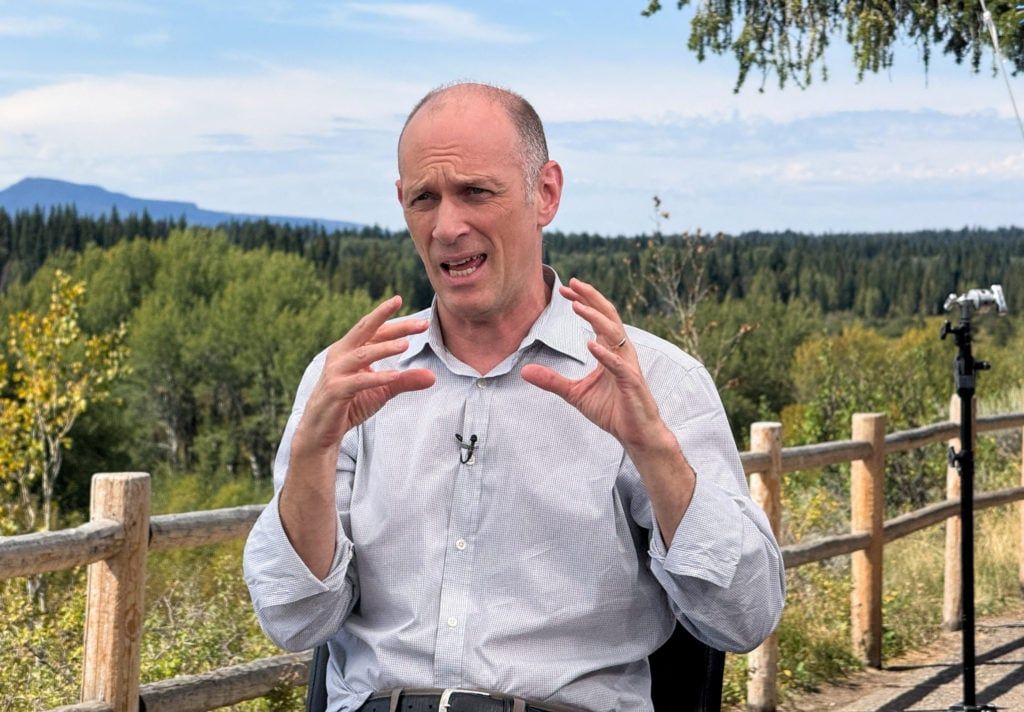
Federal Reserve Bank of Chicago President Austan Goolsbee warned that massive capital investments poured into artificial intelligence infrastructure are beginning to spill out of the technology sector, threatening to ignite wider inflation across the American economy.12
Speaking on economic conditions as central bank officials weigh interest rate decisions, Goolsbee said the scale of corporate spending on data centers, electrical equipment, and real estate risks creating broad macroeconomic overheating rather than isolated price increases in specialized components.13
"Prices are going up in spaces that are not just components in data centers and the directly adjacent industries," Goolsbee said.1 "I'm getting increasingly nervous that that's just straight, old-fashioned overheating demand."12
The warning lands as policymakers try to decipher why consumer price inflation has remained stubborn, recording an annual rate of 3.4% in August ahead of fresh autumn price releases.1 While central bankers have spent months evaluating how much recent price pressure stems from geopolitical oil shocks and lingering supply-chain disruptions, Goolsbee pointed to relentless commercial demand generated by technology companies racing to build AI systems.1
Traditional supply disruptions, such as sudden spikes in crude petroleum or temporary import tariffs, tend to dissipate once logistical channels clear or market supply adjusts. Overheated aggregate demand behaves differently, establishing persistent pricing momentum that can embed itself into wages, corporate contracts, and consumer expectations.
Spillover beyond the server rack
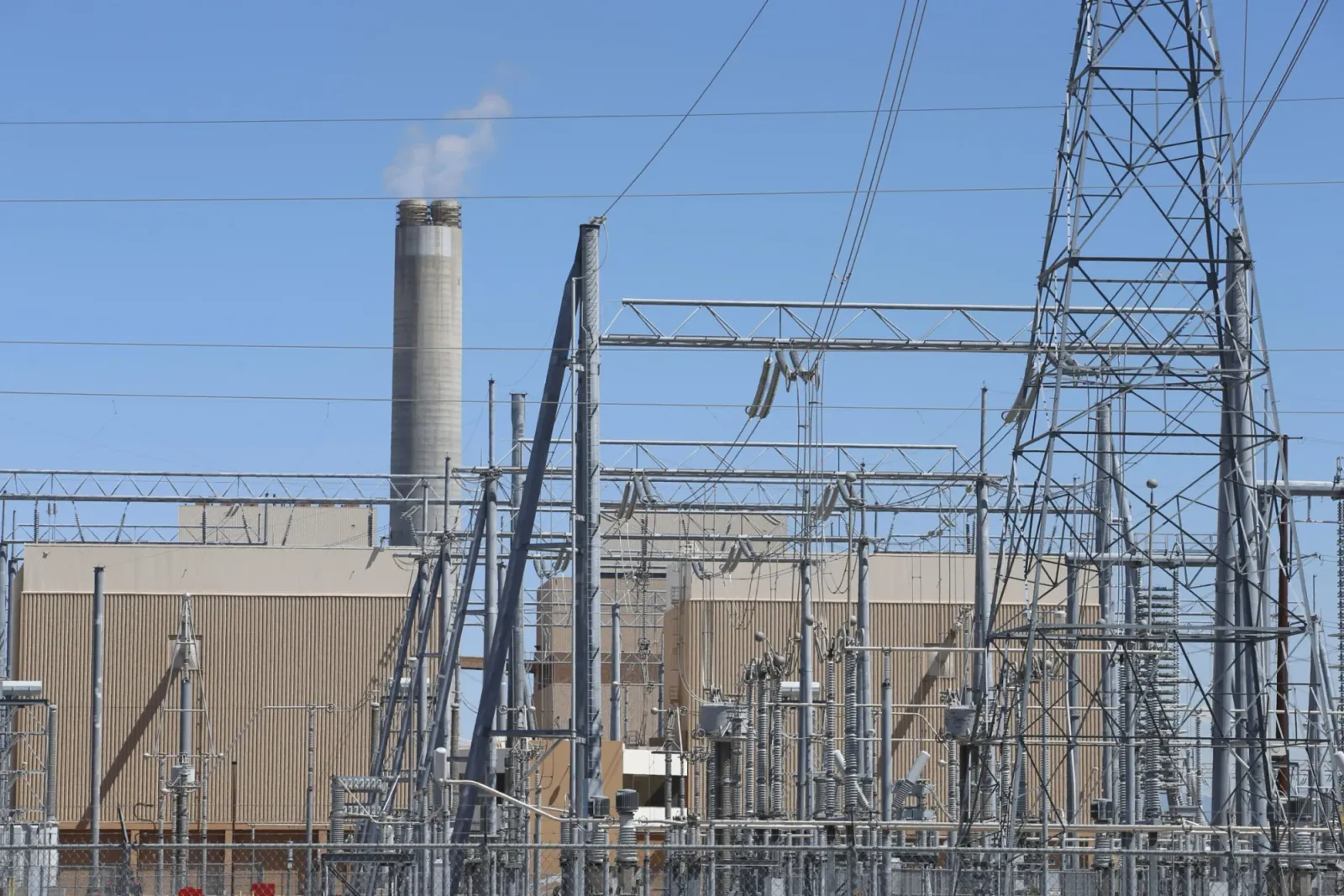
The immediate physical requirements of computing facilities have created acute bottlenecks across basic industrial sectors. Prices for utility-scale electricity, commercial real estate, industrial water access, structural construction, and electrical hardware have climbed sharply over the past year.12
Those cost pressures have not yet filtered directly into everyday retail goods, such as supermarket staples or consumer services, but central bank officials are tracking whether the massive capital inflows flowing to technology vendors, landowners, and specialized building trades begin circulating through secondary markets.1
Goolsbee recalled a recent listening tour in downstate Illinois, where meetings with the Illinois Manufacturers Association, researchers at the University of Illinois, and local industrial executives revealed uniform anxiety over escalating input expenses.1
"Everybody's got a concern about cost, about prices," Goolsbee said. "There's nothing about 'demand is not there.' So it sounded very much like overheating and/but a lot of it is competition for factors, resources, et cetera, competing against the data centers."1
In practical terms, traditional manufacturing firms and civic infrastructure projects find themselves outbid for basic labor and materials. Goolsbee noted that regional operators reported acute shortages of skilled electrical workers and extended lead times for critical grid apparatus, with wait times reaching up to one year for specific electrical components redirected to regional computing hubs.
"The cost of construction is crazy because we can't get any electricians," Goolsbee said, summarizing the feedback from local businesses.1 "We got a one-year waiting list for all these different kind of electrical component parts, and that's because of the data centers."1
A debate over sectoral shifts
Goolsbee's assessment highlights an emerging policy disagreement within the Federal Reserve over how monetary authorities should interpret technology-driven price pressures. If high spending reflects merely a reallocation of economic resources, with capital moving into computing while cooling elsewhere, monetary tightening could penalize uninvolved sectors without slowing tech firms.
Fed Governor Lisa Cook articulated that counterpoint in public remarks, cautioning against aggressive rate reactions to what might prove to be localized industrial realignments.1 Cook noted that the boom appeared to represent a shift in demand toward technology sectors rather than an expansion in economy-wide demand, warning that attempting to suppress sector-specific demand with interest rate hikes could be a policy mistake.
Goolsbee acknowledged that distinction, noting that if data center construction rises while activity elsewhere contracts, the development amounts to a structural reallocation rather than an aggregate economic strain. Yet the speed with which costs are jumping into unrelated categories has altered his view of the risk profile.
"To the extent that data centers are up and everything else is down, that's not aggregate overheating," Goolsbee said.1 "That's a change in the relative composition. And you can see why it's going to agitate people, but that's slightly different than overheating. All of that said, this is starting to feel like aggregate overheating, that the AI data center cost increases are jumping out of its lane."1
He cautioned that if investment expenditures accelerate gross domestic product beyond its sustainable potential, the resulting spillover into general services will require monetary intervention rather than regulatory forbearance.
"If inflation remains persistent, then I think it's clear what the Fed has to do," Goolsbee said.12
Echoes of the 1990s buildout
To put the current investment wave into historical perspective, Goolsbee drew parallels to the late 1990s, when the commercialization of the internet triggered enormous capital deployments and rapid equity market appreciation.
During that era, Federal Reserve Chairman Alan Greenspan famously held interest rates steady during the middle of the decade, deducing that unmeasured productivity gains were keeping inflation subdued despite rapid economic expansion.1 By the end of the decade, however, the Federal Open Market Committee initiated aggressive rate increases as business investment surged and the labor market tightened.1
Goolsbee rejected simplistic narratives surrounding that cycle, pointing out that historical Fed transcripts show officials were responding to concrete signs of macroeconomic strain rather than intentionally popping an asset bubble.
He noted that modern technology booms run the risk of significant capital misallocation if actual enterprise demand fails to match speculative projections, drawing a comparison to early telecommunications investments:
Now, Rohan, you're not old enough. You don't remember it, but if you back up, if you're older than dirt like me, you'll remember we had an experience with the internet that they were building out the infrastructure premised on growth rates of 20% per year. And when the growth rate came in, well, it's only going to be 7% per year, that's still a pretty strong growth rate, but they were massively overbuilt. And so we kind of had this overhang. That's slightly different than... Finding out the fundamentals are different is slightly different than just a old-fashioned bubble in my view.1
The eventual resolution of speculative booms, Goolsbee observed, depends on how much financial leverage underwrites the underlying assets. While equity-financed expansions absorb losses through market repricing, heavily leveraged corporate balance sheets can trigger severe financial dislocation if project revenues underperform expectations.
The labor question and workplace adjustment
Beyond capital goods and physical commodities, the economic debate surrounding artificial intelligence centers on its eventual effect on the workforce. While some industry technologists have predicted catastrophic employment displacement, Goolsbee expressed deep skepticism toward claims that automated systems will render human workers obsolete on a massive scale.
Addressing external forecasts, including a McKinsey study estimating that roughly 16 million American workers, or 10% of the domestic labor pool, could need to transition to new occupations due to automation, Goolsbee pointed to centuries of technological transition.13
He characterized dire predictions of universal job destruction as modern variations of the lump of labor fallacy, the mistaken economic premise that the total quantity of work required by society remains fixed over time.
"If you asked me to take the over under on will the unemployment rate be 40% in 10 years, I'm taking the under," Goolsbee said.1 "In a way, I feel like the technology people make more Draconian forecasts almost as a way of bragging about how good their technology is."1
Bureau of Labor Statistics data shows that the average American worker holds 13 different jobs by age 50, reflecting an economic structure where individuals routinely adapt skills as legacy industries decline and novel fields emerge.1 Goolsbee noted that previous general-purpose technologies, including electric power grids, telephonic networks, and personal computing, restructured the workforce over decades without generating permanent mass unemployment.
"It took a long time for those to work their way through the economy," Goolsbee said.1 "And if they don't happen in a two-year period, we adjust."1
In the immediate term, the domestic labor market continues to present an unusual posture. The national unemployment rate hovers slightly above 4%, displaying what Goolsbee described as a puzzling pattern of low hiring paired with low employee firing, an equilibrium typically associated with corporate uncertainty that cannot persist indefinitely.1
Monetary policy limits
The central bank faces a structural challenge in addressing tech-driven demand: the largest corporate spenders are largely insulated from the Fed's traditional policy mechanisms. Technology conglomerates like Alphabet and Meta hold substantial cash reserves and generate immense advertising revenue, allowing them to fund billions in capital expenditures without relying heavily on debt markets.1
When these firms do issue corporate bonds, their operating margins easily absorb higher borrowing costs. Higher policy rates therefore risk depressing residential housing, small business credit, and industrial manufacturing while leaving corporate data center budgets largely intact.
Some market indicators suggest investor scrutiny may be growing independently of central bank policy. Investment bank data showed that the issuance of debt instruments tied specifically to artificial intelligence projects declined in August, indicating that capital markets may impose their own discipline on corporate balance sheets.1
Goolsbee, who is slated to become a voting member of the rate-setting Federal Open Market Committee in 2027, emphasized that the central bank cannot base its mandate on optimistic projections of future productivity while current price metrics remain uncomfortably elevated.1
With services inflation accelerating and non-energy costs proving stubborn, the risk of broad spillover leaves the central bank with little room to accommodate speculative corporate spending at the expense of price stability.
The record
38 sentences trace to 3 sources.
-
1
LH
Liz Hoffman Document · semafor.com · 12 Oct 2026 Exclusive: AI is an inflation problem, Fed’s Goolsbee says See the source
-
2
P
panews.io Third-party reporting · panews.io · 13 Oct 2026 Chicago Fed President Goolsbee warns AI boom could push up US inflation, potentially affecting rate-cut path See the source
-
3
G
ground.news Third-party reporting · ground.news Goolsbee Says AI-Induced Inflation Is ‘Jumping Out of Its Lane,’ Semafor Reports See the source