GeneWEAVE built verified diagnostic system before $425 million buyout
The California diagnostic developer completed clinical trials and secured federal clearance after Roche agreed to acquire its automated bacterial testing platform.
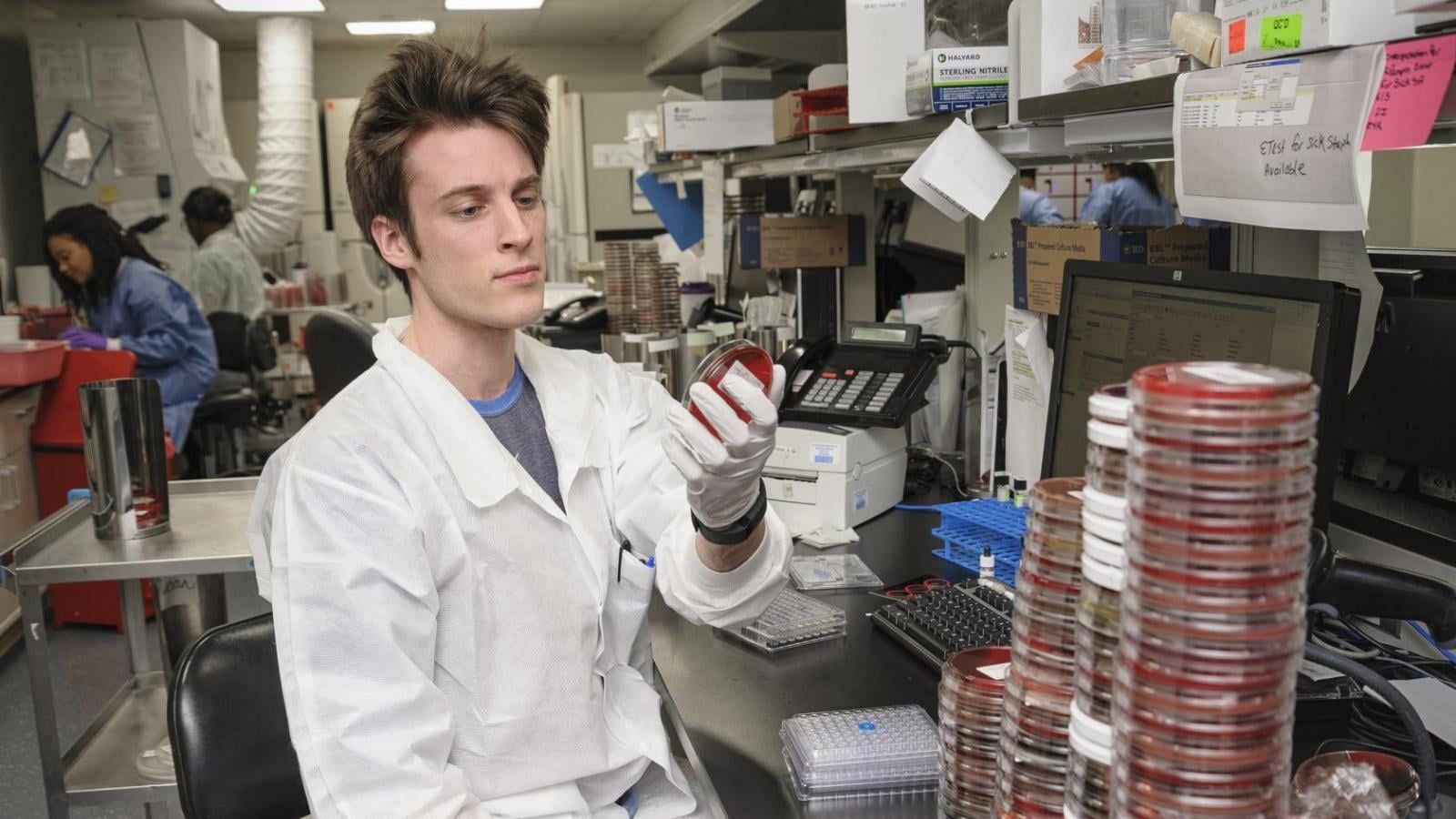
Building automated medical diagnostic hardware has long followed a structured path through laboratory testing and regulatory review. While high-profile corporate scandals drew public fascination over fraudulent claims of universal capillary blood testing, legitimate biotechnology ventures quietly built operational clinical instruments.1 These specialized businesses raised standard institutional rounds, validated hardware in multi-center clinical trials, and integrated their platforms directly into hospital microbiology networks.12
The operational reality of clinical laboratory technology requires strict adherence to biological physics and biochemical mechanics. Established diagnostics companies develop specialized systems designed for hospital pathology departments.21 Successful founders work within defined clinical workflows, addressing pathogen genetics, reagent chemistry, and automated fluidics to deliver verified diagnostic results to attending physicians.31
Institutional investment in diagnostic platforms
A broader inspection of life sciences transactions reveals an active commercial sector operating away from public view. Jackson Fordyce documented that a survey of mergers and acquisitions across specialty testing laboratories, diagnostic platforms, and medical devices yielded 62 completed acquisitions since 2003, each carrying disclosed valuations exceeding $100 million.1 These enterprises rarely build public followings or seek mainstream recognition because their equipment serves clinical laboratories directly, outside retail consumer channels.1
Federal statutory oversight heavily shapes this discreet commercial environment.1 The Food and Drug Administration enforces regulations that prohibit commercial marketing prior to official authorization.1 Consequently, developers in the diagnostic sector concentrate capital on clinical validation to meet statutory standards.1 Specialized venture capital funds back these businesses through defined development milestones, planning for acquisitions by established healthcare conglomerates that maintain existing distribution networks.1
Fordyce observed that an established pipeline of diagnostic platforms has consistently produced viable corporate transactions.1 In his assessment, commercial life sciences companies advance through incremental technical milestones that integrate with institutional healthcare delivery.1 Legitimate diagnostic startups focus on solving specific technical problems within hospital laboratories.12
The engineering of vivoDx and Smarticles
GeneWEAVE BioSciences, a clinical microbiology company founded in Los Gatos, California, provided a clear demonstration of this disciplined development model.241 Co-founded by chief technology officer Diego Rey, the enterprise designed an automated laboratory testing machine designated vivoDx.12 The engineering team designed the system alongside proprietary consumable tests to detect antibiotic-resistant bacteria directly in patient samples.12

Standard hospital workflows routinely require clinical staff to transport patient samples to external reference laboratories for microbiological culture and analysis.1 This external logistics process introduces substantial delays into hospital treatment schedules.1 In typical clinical settings, physicians often must wait days to learn the exact resistance profile of an infection, leading them to administer broad-spectrum antibiotics while awaiting laboratory findings.31
Rina Marie Doctor reported that broad-spectrum antibiotics kill a wide range of pathogens, but the treatments can also damage normal gastrointestinal flora.3 This ecological disruption increases antimicrobial resistance and creates bodily conditions conducive to secondary infections.3 GeneWEAVE aimed to progress diagnostic capability in an incremental manner that integrated with existing hospital systems, giving physicians rapid identification to prescribe targeted therapies.13
The technical foundation of the vivoDx platform rested on proprietary diagnostic chemistry that GeneWEAVE named Smarticles.12 Eugene reported in a technical overview that this class of molecular diagnostics was engineered to identify multidrug-resistant organisms and assess antibiotic susceptibility directly from clinical specimens.24 The methodology operated without the traditional requirements for specimen enrichment, culture growth, or manual sample preparation processes.24
The underlying molecular mechanism relied on targeted bioluminescent expression.1 GeneWEAVE engineered Smarticles particles to penetrate specific target bacteria and induce them to produce luciferase, an enzyme that emits measurable light.1 The automated vivoDx instrument then measures the emitted glow to determine the concentration and resistance characteristics of living bacteria present in the sample within hours.12
Commercial acquisition and clinical integration
GeneWEAVE advanced its technology through a sequence of conventional venture capital funding rounds.1 The company completed a $1 million seed financing round in 2010, followed by a $12 million Series A round in 2012 and a $12 million Series B round in 2014.1 These institutional capital infusions supported engineering development, proprietary reagent manufacturing, and multi-site clinical evaluations across the United States.21
In August 2015, Swiss healthcare corporation Roche entered into a definitive agreement to acquire GeneWEAVE.234 Anke Geipel-Kern reported that under the terms of the transaction, Roche agreed to pay GeneWEAVE shareholders $190 million in upfront cash, alongside up to $235 million in contingent milestone payments tied to specific product achievements.421 Once the transaction closed, Roche integrated the business into Roche Molecular Diagnostics.24
The transaction aligned with broader strategic initiatives for the Swiss pharmaceutical manufacturer.3 In the 1990s, Roche experienced diminished commercial returns in antimicrobial pharmaceuticals compared to other therapeutic areas, including oncology regimens.3 Despite being a historic pioneer in antibiotic manufacturing, the company faced shifting commercial priorities.3 In November 2013, Roche acquired the Swiss biotechnology company Polyphor to develop new pharmaceutical compounds against resistant bacterial strains.3 Acquiring GeneWEAVE provided automated diagnostic hardware to complement that therapeutic research.3

Corporate executives from both organizations described the acquisition as an opportunity to address urgent infectious disease challenges.34 Roland Diggelmann, then chief operating officer of Roche Diagnostics, stated that the transaction strengthened the company's microbiology portfolio against resistant bacteria.34 "With GeneWEAVE, we further strengthen our microbiology diagnostics offerings with cutting-edge technology that will aid in the fight against drug-resistant bacteria," Diggelmann said in an announcement detailing the acquisition.34 He noted that the technology could give healthcare professionals access to rapid diagnoses, leading to informed treatment choices.43
Steve Tablak, chief executive officer of GeneWEAVE, also endorsed the corporate integration.3 Tablak stated that the company welcomed continuing to develop microbiology diagnostic solutions as part of the Roche Molecular Diagnostics organization.3 Roche retained the GeneWEAVE scientific and engineering personnel to continue their development programs based on the Smarticles biochemical processes.3
Regulatory clearance and clinical reality
When Roche signed the acquisition agreement in 2015, the vivoDx platform had not yet obtained regulatory clearance from the Food and Drug Administration.1 The automated random-access system was actively undergoing clinical evaluations across multiple institutional trial sites throughout the United States.24 Instead of attempting to market an unapproved device to commercial buyers, the engineering and clinical teams gathered performance data through controlled hospital studies.12
That structured development pathway culminated in 2019, when the Food and Drug Administration granted official authorization for the cobas vivoDx MRSA test.1 The regulatory decision validated the platform for detecting methicillin-resistant Staphylococcus aureus in clinical settings.1 Securing that clearance required nine years of continuous development following the company's initial seed round, illustrating the timeline required to deliver verified clinical diagnostic hardware.
Doctor noted that modern diagnostic technologies address superbug outbreaks by equipping physicians to select precise antimicrobial therapies for specific infections.3 By identifying pathogen resistance profiles directly from specimens, automated hospital testing platforms reduce reliance on empirical broad-spectrum treatments, directly supporting institutional antibiotic stewardship programs.32
Technical discipline over promotional spectacle
The commercial trajectory of GeneWEAVE illustrates how legitimate diagnostic hardware reaches clinical adoption. Industry observers have contrasted this rigorous approach with promotional startup efforts that prioritized public-relations campaigns over verifiable engineering.1 Fordyce described Elizabeth Holmes as an entrepreneur focused on public speaking and stage presentations, contrasting that persona with technical teams that build functioning diagnostic machines within regulatory constraints.
Functional laboratory devices succeed by resolving specific, measurable biological problems within established clinical environments.1 GeneWEAVE focused its resources on the mechanics of bacterial luciferase expression, automated optical detection, and clinical specimen handling.12 That sustained engineering discipline enabled the company to achieve institutional venture backing, complete a corporate buyout, and deliver cleared diagnostic hardware to clinical laboratories.1
The record
57 sentences trace to 4 sources.
-
1
JF
Jackson Fordyce Document · tbpn.substack.com · 19 Oct 2026 It’s Not That Hard to Build a Real Theranos 2.0 See the source
-
2
D
dcatvci.org Third-party reporting · dcatvci.org · 14 Aug 2015 Roche To Acquire Molecular Diagnostics Company GeneWeave - DCAT Value Chain Insights See the source
-
3
TT
Tech Times Third-party reporting · techtimes.com · 14 Aug 2015 Roche Purchases GeneWEAVE Diagnostics Firm In $425 Million Deal See the source
-
4
PW
PROCESS Worldwide Third-party reporting · process-worldwide.com · 14 Aug 2015 Roche to Finish the Gene Weave Deal See the source