Google Search drops to 49.7% of Alphabet sales
Cloud revenue surged 103% to $30.7 billion during the third quarter, while capital spending jumped to $51.4 billion.
A milestone for the core engine
Google Search generated $63.4 billion during the third quarter of 2026, dropping below half of Alphabet's total intake for the first time on record.12 The search business expanded 12 percent year over year, but faster expansion across enterprise software and infrastructure compressed its revenue share to a historic low.12 Across the previous 31 quarters, search consistently delivered between 52.8 percent and 62 percent of overall company sales.1
Total revenue for the parent company climbed 25 percent from a year earlier to $127.6 billion, reaching what chief executive Sundar Pichai described as a half-trillion-dollar annual run rate.234 Yet the core advertising machine showed clear signs of deceleration, slowing from 17 percent growth in the second quarter and 19 percent in the first.2 The quarter marked the company's first top-and-bottom-line earnings miss in nearly four years, triggering an after-hours stock retreat of more than 10 percent that erased over $280 billion in equity value.52
Infrastructure growth offsets advertising drag
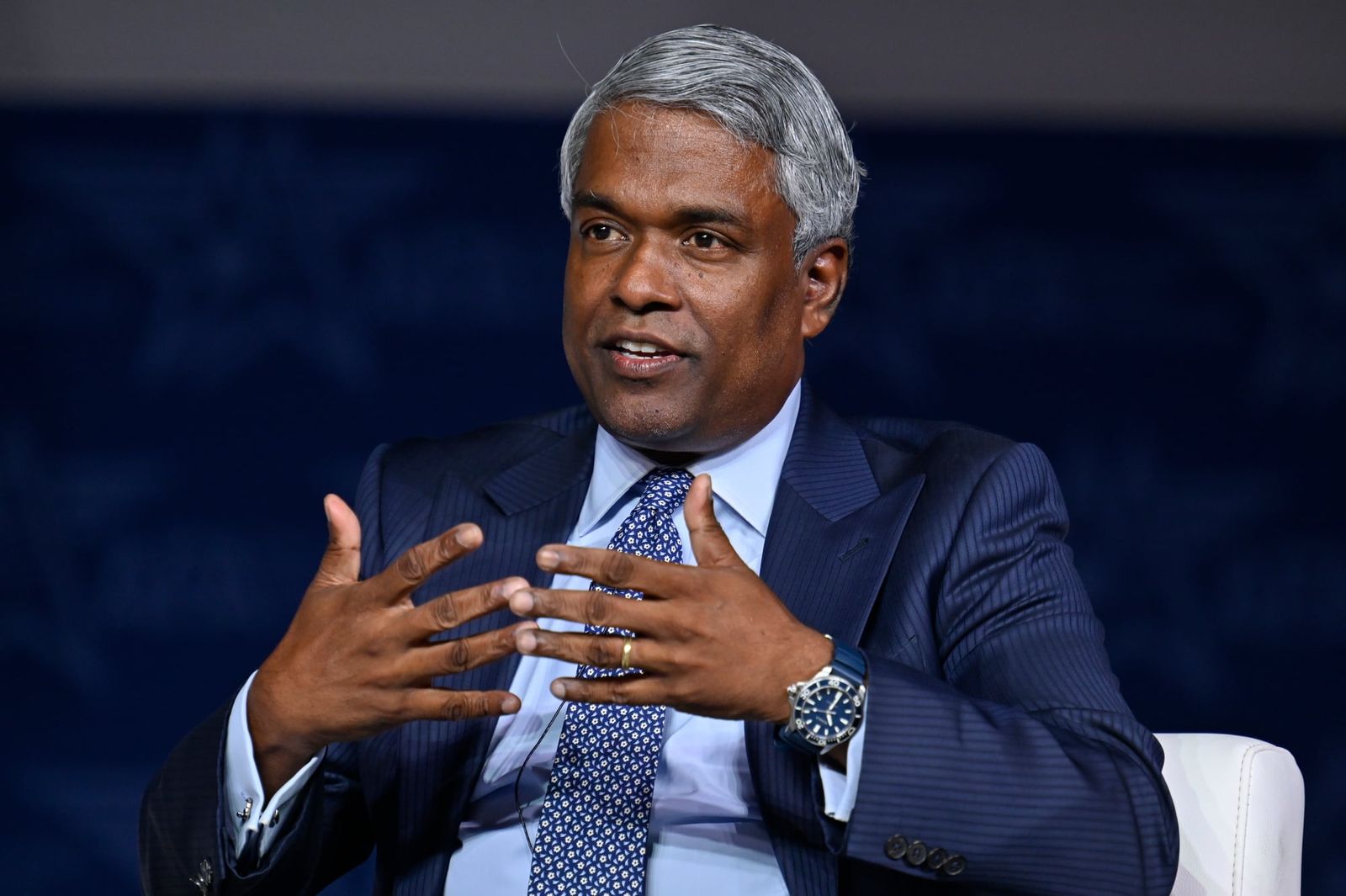
The rebalancing of Alphabet's top line reflects the rapid ascent of Google Cloud, which brought in $30.7 billion compared to $15.2 billion in the prior-year period.13 Cloud operations now represent 24.1 percent of Alphabet's aggregate revenue, up from just 4.4 percent in late 2018.1 Thomas Kurian, the chief executive of Google Cloud, credited the surge to broad commercial uptake, stating that the division is seeing extraordinary demand and strong growth from both AI labs, capital markets, financial service institutions, and enterprises.5
The unit's operating margin widened to 36.2 percent during the quarter, easing lingering investor concern that enterprise software profitability had crested earlier in the year.2 Outside of cloud, the company's non-search units collected $33.5 billion, led by $14.3 billion from subscriptions, platforms, and devices, alongside $11.2 billion in YouTube advertising.3 Google Network generated $7.5 billion, while the experimental Other Bets division took in $372 million while generating an operating loss of $2.04 billion.3
Cash flow pressures and accelerating outlays
Despite cloud momentum, the capital requirements needed to sustain high-density computing are transforming Alphabet's balance sheet. Capital expenditures reached $51.4 billion for the three-month period, more than double the $24 billion recorded a year earlier. Chief financial officer Anat Ashkenazi affirmed that full-year outlays will hit $200 billion in 2026 before increasing significantly in 2027, where annual expenditures are projected to top $300 billion.25
That aggressive hardware buildout drove free cash flow into negative territory at negative $9.1 billion, down from negative $5.9 billion in the second quarter.25 Alphabet carried long-term debt of $125.1 billion at the end of September, a sharp increase from $21.6 billion 12 months prior.5 Net income fell to $26.17 billion from $34.98 billion a year ago, weighed down by an $8.7 billion paper loss on equity investments that reduced earnings by 55 cents per share.25

Aptus Capital Advisors head of equity David Wagner observed that cloud performed as intended, arguing that the underlying issue centered on search and fears of artificial intelligence cannibalizing the legacy advertising franchise.2 Jefferies analyst Brent Thill noted that cloud was the lone operational division to exceed expectations, pointing out that peer units fell short of internal targets.5 Independent analyst Luke Lango contended that the market reaction reflected Alphabet funding infrastructure with shareholder capital rather than operational cash, framing the drawdown as an expenditure dispute rather than an absence of commercial appetite.2
Consumer scale and frontier deployments
In response to slowing search revenue, Alphabet leadership pointed to rising user volume and product integration. Pichai told analysts that query volume growth across the search platform hit its highest year-over-year rate in five years, driven by multimodal inputs and longer conversational queries.45 The Gemini consumer application surpassed one billion active users, which the company designated as the fastest-growing software rollout in its corporate history.43 Model application programming interfaces processed nearly 32 billion tokens per minute across first-party deployments, quadrupling throughput compared to the third quarter of 2025.43
The company also disclosed that YouTube Music and Premium passed 150 million subscribers globally, while autonomous vehicle subsidiary Waymo logged more than 300 million commercial driverless miles across 15 metropolitan markets.3 Even with consumer uptake across these adjacent lines, search advertising remains the foundation funding Alphabet's transformation into an infrastructure supplier.
The record
23 sentences trace to 5 sources.
-
1
K
kadoa.com Document · kadoa.com · 29 Oct 2026 For the first time ever, Google Search is less than 50% of Alphabet's revenue See the source
-
2
F
Fortune Third-party reporting · fortune.com · 28 Oct 2026 Alphabet’s Google Cloud revenue doubles to $31 billion as cash flow stays deep red | Fortune See the source
-
3
9
9to5Google Third-party reporting · 9to5google.com · 28 Oct 2026 Alphabet reports Q3 2026 revenue of $127.6 billion See the source
-
4
G
Google Third-party reporting · blog.google · 28 Oct 2026 Q3 2026 earnings call: Remarks from our CEO See the source
-
5
C
CNBC Third-party reporting · cnbc.com · 28 Oct 2026 Alphabet sinks 10% as it holds 2026 capex unchanged, expects significant increase in 2027 See the source