Decentralized crypto deposits shadow traditional government debt markets
Yields in decentralized lending pools rise and fall with the supply of sovereign debt, revealing that digital cash alternatives remain tethered to conventional safe assets.
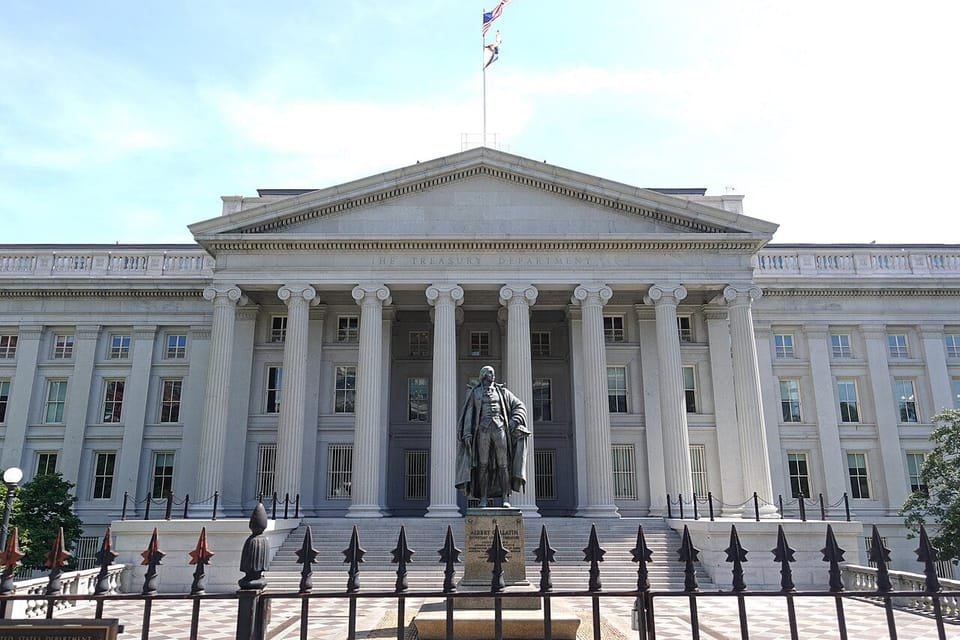
Investors throughout financial history have paid a measurable premium for certainty. In conventional markets, institutions accept lower yields on sovereign debt because those instruments guarantee immediate liquidity without the risk of sudden losses. In digital asset trading, where asset valuations fluctuate rapidly, market participants seek similar shelters to park capital between transactions. That demand has turned stablecoin deposits into an essential source of liquidity, functioning as digital cash substitutes across automated venues.
Understanding how investors value that convenience is central to determining whether digital lending protocols provide genuine financial stability. A trader holding cryptocurrency must first exchange volatile tokens for a dollar-pegged stablecoin to protect purchasing power. To earn a return while keeping those funds deployable, the trader deposits the tokens into decentralized lending pools. These pools act as digital money markets. When conventional sovereign debt becomes scarcer, the broader premium on liquidity expands, lifting the convenience value of digital substitutes. Conversely, when sovereign yields rise or token security is questioned, that convenience premium shrinks.
In a working paper distributed on July 1, 2026, researchers Murillo Campello, Angela Gallo, Lira Mota, and Tammaro Terracciano examined this mechanism across decentralized platforms. The authors reported that the premium on stablecoin deposits co-moves with the Treasury premium, which measures the convenience value attached to United States government debt.1 According to the study, increases in Treasury supply reduce this stablecoin premium, while drops in perceived safety and liquidity, such as de-pegging events or hacker attacks, also compress it.1
Why do digital asset markets demand safe instruments?
Investors in cryptocurrency markets require liquid, price-stable instruments to store value and settle transactions without exiting into conventional bank accounts. Moving funds between blockchains and commercial banks creates settlement delays and administrative friction. Stablecoins address this friction by operating as digital currencies that transfer across networks without financial intermediaries. Campello, Gallo, Mota, and Terracciano found that investors treat stablecoin deposits as money-like instruments that are borderless and permissionless.1 By placing tokens in decentralized lending pools, holders earn interest while maintaining rapid access to liquidity.
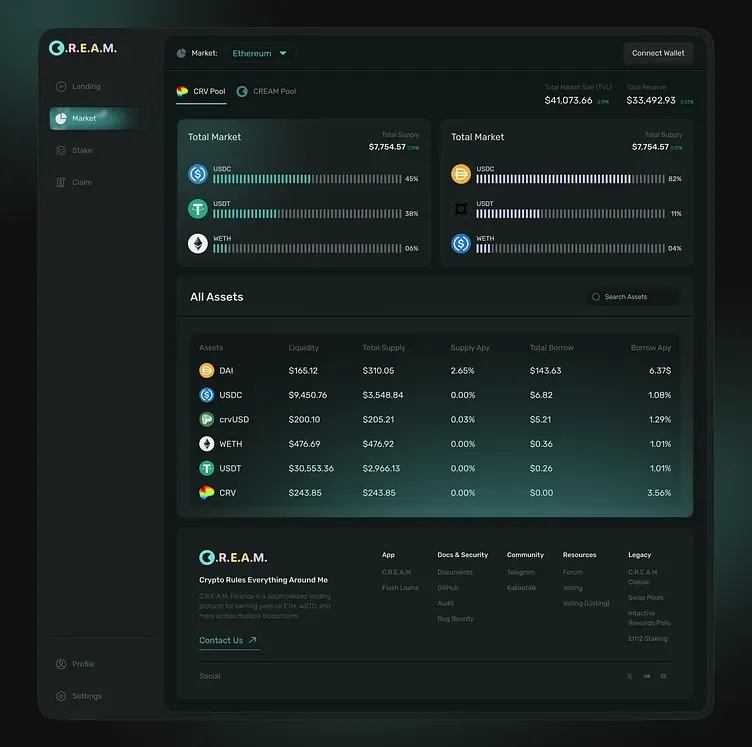
Yet these instruments carry distinct vulnerabilities. Unlike insured commercial bank deposits, stablecoins depend on market confidence and private reserve backing. The authors observed that while market participants value the liquidity services of these tokens, they treat them as fragile private safe assets that remain susceptible to sudden runs when confidence erodes.1 Tammaro told Primary that "Stablecoin deposits are not different from other private safe assets," adding that "The differences lie in what makes them vulnerable."
How does government debt influence decentralized lending?
Fluctuations in the supply and pricing of sovereign government bonds directly affect the returns investors demand on stablecoin deposits in decentralized finance protocols.1 To study this relationship, the authors developed a theoretical model featuring a representative investor who allocates liquidity between traditional safe assets, such as money market fund shares, and stablecoin deposits in lending pools.1 In this framework, public debt and private digital tokens compete to satisfy an investor's overall demand for liquidity and safety.1
This framework produces direct connections between sovereign finance and digital protocols. The authors reported that the stablecoin deposit premium co-moves with the Treasury premium when investors value the safety and liquidity services of stablecoins.1 Furthermore, the paper established that increases in Treasury supply reduce the stablecoin deposit premium.1 When government debt issuance expands, sovereign safe assets become more accessible, which reduces the relative advantage of holding private tokens in decentralized pools.1
Tammaro explained the economic mechanism driving this alignment in response to questions from Primary. If both stablecoin deposits and money market funds provide liquidity and safety, their convenience yields align because intermediaries adjust returns. When the Treasury premium increases, money market funds face lower yields on their holdings, prompting investors to shift portfolios between conventional and digital instruments until returns converge. Tammaro noted that "even in the digital space, to craft something considered safe and liquid by investors, you still need treasuries."
What causes stablecoin deposit premiums to fall?
Sharp declines in perceived security, including protocol exploits or tokens slipping from their dollar pegs, quickly erode the premium investors place on holding stablecoin deposits.1 When risks emerge, depositors demand higher yields to compensate for potential losses, reducing the premium they were previously willing to forgo for convenience.
The authors tested these model predictions against empirical market evidence.1 Using granular data from hundreds of decentralized finance pools spanning multiple protocols, tokens, and blockchains, the researchers found evidence supporting their three core predictions.1 The data confirmed that drops in the perceived safety and liquidity of stablecoin deposits, caused by de-pegs or hacker attacks, systematically reduce their premium.1 Tammaro told Primary that when measuring the impact of exploits, the researchers analyze the weeks of the attacks to capture market dynamics, because evaluating isolated protocols would fail to capture the panic that spreads across interconnected venues. Tammaro added that established venues like Aave and Compound offer stronger safety and liquidity services due to developed oracle frameworks, elaborate liquidation mechanisms, and longer track records.
The study provides an empirical analysis of historical pool data and theoretical modeling. These observations reflect historical conditions within the analyzed protocols and do not forecast future market stability under untested regulatory environments. The model assumes frictionless portfolio rebalancing across digital and traditional boundaries, an assumption that real-world capital controls and exchange outages can disrupt. As an academic working paper distributed through research repositories, the study describes theoretical mechanisms and historical empirical patterns that have not yet undergone formal journal peer review.
These findings show that decentralized finance remains tethered to sovereign debt markets despite operating on independent technical infrastructure. Even without centralized intermediaries, the pricing of digital liquidity reflects the supply and cost of traditional government debt. As fiscal authorities adjust sovereign debt issuance and digital asset regulations evolve, the interaction between public safe assets and private tokens will dictate how decentralized lending platforms handle macroeconomic stress.
The record
16 sentences trace to 1 source and 1 contributor.
- 1 Demand for Safety in the Crypto Ecosystem Not published online
- 2 Contribution — Tammaro Terracciano 13 statements added to this article
Article history
-
Published 3 Nov 2026, 13:07Assembled by the Primary desk from 1 source · 1 contributor · 16 cited sentences
-
Tammaro Terracciano
- Go to the sentence: The authors reported that the premium on stablecoin deposits co-moves with the Treasury premium, which measures the convenience value attached to United States government debt.
- Go to the sentence: According to the study, increases in Treasury supply reduce this stablecoin premium, while drops in perceived safety and liquidity, such as de-pegging events or hacker attacks, also compress it.
- Go to the sentence: The authors observed that while market participants value the liquidity services of these tokens, they treat them as fragile private safe assets that remain susceptible to sudden runs when confidence erodes.
- Go to the sentence: Tammaro told Primary that "Stablecoin deposits are not different from other private safe assets," adding that "The differences lie in what makes them vulnerable."
- Go to the sentence: Fluctuations in the supply and pricing of sovereign government bonds directly affect the returns investors demand on stablecoin deposits in decentralized finance protocols.
- Go to the sentence: In this framework, public debt and private digital tokens compete to satisfy an investor's overall demand for liquidity and safety.
- Go to the sentence: The authors reported that the stablecoin deposit premium co-moves with the Treasury premium when investors value the safety and liquidity services of stablecoins.
- Go to the sentence: Furthermore, the paper established that increases in Treasury supply reduce the stablecoin deposit premium.
- Go to the sentence: When government debt issuance expands, sovereign safe assets become more accessible, which reduces the relative advantage of holding private tokens in decentralized pools.
- Go to the sentence: Tammaro noted that "even in the digital space, to craft something considered safe and liquid by investors, you still need treasuries."
- Go to the sentence: Sharp declines in perceived security, including protocol exploits or tokens slipping from their dollar pegs, quickly erode the premium investors place on holding stablecoin deposits.
- Go to the sentence: Using granular data from hundreds of decentralized finance pools spanning multiple protocols, tokens, and blockchains, the researchers found evidence supporting their three core predictions.
- Go to the sentence: The data confirmed that drops in the perceived safety and liquidity of stablecoin deposits, caused by de-pegs or hacker attacks, systematically reduce their premium.