Tesla will wind down Cybertruck assembly in Texas
The automaker plans to reallocate factory capacity around mid-2027 to expand autonomous Cybercab production following steep delivery declines.

Tesla plans to halt production of its stainless steel pickup at the Austin facility, closing out an experimental vehicle that struggled with weak commercial demand and strict safety standards overseas.12
Chief executive Elon Musk announced on social media that Cybertruck assembly will wind down around mid-2027 to accommodate manufacturing of the company's autonomous Cybercab model.132 Tesla currently manufactures the pickup exclusively at its facility outside Austin, Texas, alongside the Model Y and the Cybercab.21 While Musk did not state whether production could shift to another plant, the Texas factory is the only company facility equipped to build the truck's specialized components.12
In response to a social media user who described the wind-down as an "end of an era," Musk called the pickup the "best vehicle Tesla has ever made" and added that "the Cybertruck fleet will be around for a long time."12 The announcement curtails an initiative that once stood at the center of Tesla's light-truck strategy.12 When the vehicle debuted in 2019, Musk predicted annual sales would reach 250,000 units once assembly matured.123
Customer deliveries began in late 2023, but sales volumes never approached initial projections.12 Industry estimates from Cox Automotive indicated that Tesla delivered 20,237 Cybertrucks in the United States last year, representing a 48 percent drop from 38,965 units in 2024.21 Deliveries fell an additional 28 percent through the end of September this year.3 Musk's aerospace manufacturer, SpaceX, provided an artificial boost to commercial figures last year by spending $131 million to purchase the trucks at full retail price, according to a corporate filing.2
"It doesn't make sense to keep it going when it's not meeting its targets," said former Aston Martin chief executive Andy Palmer.1 "Every rational auto guy would say the same."1 Palmer noted that while ending the model amounts to a rounding error on Tesla's balance sheet, the underlying sales data made discontinuation inevitable.1
Foreign regulatory barriers further restricted commercial prospects.1 Its angular body and stainless steel panels conflicted with European pedestrian impact regulations, preventing broad regulatory clearance in regions where battery electric adoption runs highest.1 "Anywhere where you have crash regulation that takes into account pedestrian impact, that Cybertruck won't go, can't go," Palmer said.1 Automotive analyst Felipe Munoz noted that battery-powered pickups have struggled across the American market, explaining that rival automakers also failed to find deep buyer demand for electric utility trucks.1
Mechanical reliability issues and safety investigations created persistent headwinds throughout the vehicle's production run.2 The 2024 Cybertruck was the subject of 11 voluntary safety recalls logged by the National Highway Traffic Safety Administration.2 The agency documented problems ranging from accelerator pedals that could become trapped and cause unintended acceleration to power inverter defects and software errors capable of triggering sudden drive power loss.2 Retail pricing also alienated prospective buyers after the company failed to deliver an entry model under $40,000, with early production units selling for double that baseline.3
Spencer Penn, a former Tesla executive who now leads the procurement software firm LightSource, said the truck represented an unusual bet in a challenging market segment.3 "A really controversial vehicle unveiled by a controversial individual into a market where none of the electric trucks have been able to really capture demand," Penn said.3 Penn observed that although high-risk product development drives company innovation, some bets fail to deliver commercial traction.3
Public perceptions of the truck also grew entangled with political controversy after Musk became a major financial backer of Donald Trump and took a leadership role in federal administrative reduction efforts.23 Dealerships and charging stations faced sporadic vandalism, while drivers reported hostile public reactions.32 Cybertruck owner Ross Blankenship said he purchased the vehicle out of personal fascination with advanced truck engineering and regretted watching the design become a divisive political lightning rod.3
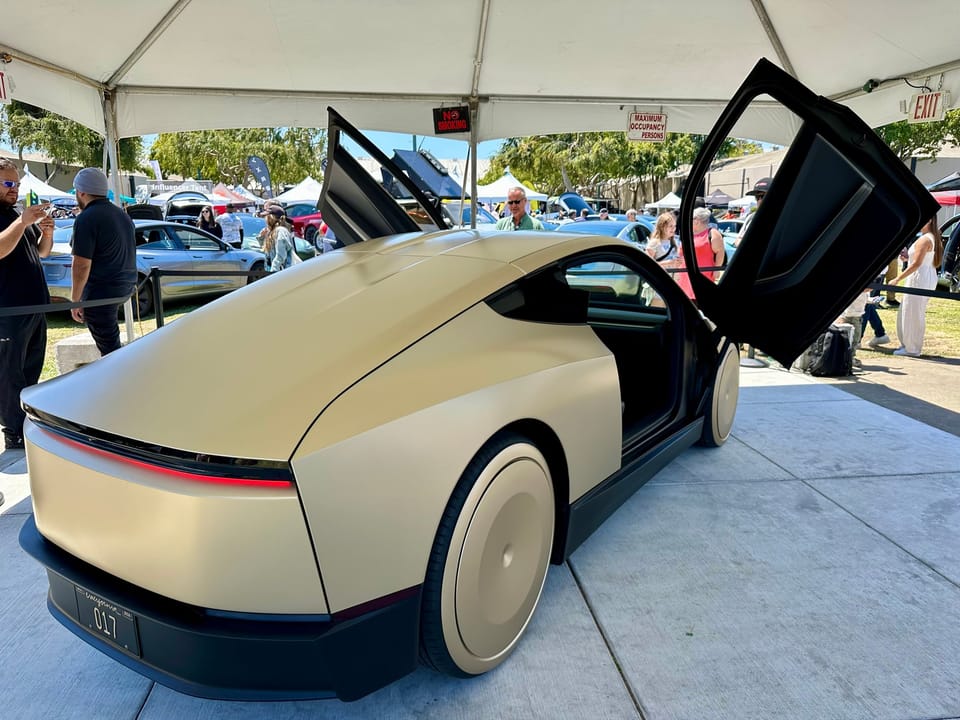
Tesla has pivoted manufacturing priorities toward dedicated autonomous vehicles.31 The company began offering paid passenger trips in Austin using a small fleet of two-seat Cybercabs, which feature butterfly doors without steering wheels or physical pedals.12 Federal auto safety regulators continue to question whether Tesla has properly self-certified the Cybercab to prove compliance with motor vehicle standards.1 Cybertruck lead engineer Wes Morrill framed the transition as technological inheritance, writing on social media that the vehicle was an "incredible technology development platform and lives on through Cybercab."1
The record
32 sentences trace to 3 sources.
-
1
NN
 NBC News
Document
· nbcnews.com · 6 Nov 2026
Tesla to wind down Cybertruck production after years of poor sales in few markets
See the source
-
2
C
 CNBC
Third-party reporting
· cnbc.com · 6 Nov 2026
Tesla to wind down Cybertruck production in Texas next year to ramp Cybercab, Musk says
See the source
- 3 Tesla to wind down Cybertruck production after poor sales and waning interest See the source