Ad auction turbulence turns product feed testing into a statistical gamble
Testing digital catalog changes across volatile advertising auctions produces misleading margin gains unless software accounts for daily fluctuations, delayed purchases and catalog-wide performance trade-offs.

Digital advertising auctions change every hour. A product title that wins clicks on Tuesday morning can stumble by Friday afternoon as rival merchant bids fluctuate, daily advertising budgets reset and shopper browsing patterns shift. In commercial product feeds, where thousands of inventory listings compete across retail networks and search engines, slight margins in performance often seem persuasive in an ordinary spreadsheet even when they stem from sheer auction variance. Acting on those superficial gaps can prompt a company to alter tens of thousands of catalog listings under the false belief that an experiment succeeded.
Retail catalogs encounter distinct mathematical hurdles during split testing. In standard website experimentation, testing software directs visitors between two layout versions at the exact same moment. E-commerce product feeds behave differently because every listing must run through external bidding algorithms and competitive advertising auctions. Within those auctions, day-to-day variance from consumer purchasing intent, budget pacing and competitor bids routinely overwhelms subtle distinctions between two product descriptions or photographs.
Feedoptimise, an e-commerce feed management company, announced on September 16, 2026, that it upgraded its A/B Testing Suite with a statistical significance decision engine designed to solve this auction problem.12 According to the company, the updated software directly ingests item-level performance reports from external advertising and retail systems, recalculates outcome probabilities, and enforces strict operational guardrails before declaring an experiment successful.12
Why do standard product feed experiments mislead retailers?
Standard e-commerce feed tests mislead retailers because normal auction fluctuations easily mimic genuine consumer preference. The announcement noted that an advertising auction shifts with the day of the week, competitor bidding strategies, budget pacing, and seasonality.12 Under these turbulent conditions, the company stated that a 4 percent difference in click-through rate between two product title formats carries no genuine statistical signal for most inventories.12 Nevertheless, marketing teams routinely treat small percentage gaps as meaningful evidence and roll out untested changes to 40,000 product stock-keeping units.12
A single summary metric also hides what actually occurred over the course of an experiment. The company explained that a headline figure such as an 8 percent improvement describes only what took place during the test window, offering minimal certainty about how the adjustment will perform across an entire catalog over longer periods.12 If a single product experiences an unusual sales spike early in the week, an aggregate metric will rise even if every other product suffered under the new wording. Advertisers who evaluate their experiments using only top-level averages risk making widespread alterations that depress catalog revenue.
Conversion lag further complicates commercial retail measurement. Shoppers frequently click on a product advertisement days before completing a transaction. If a split test concludes immediately after an ad campaign ends, the final days of the testing window will record full advertising expenses and clicks while missing the delayed purchases that arrive later. Feedoptimise reported that its system addresses this timing issue by holding the final several days of collected data out of the decision sample until delayed sales can register.1
Marcin Rosinski told Primary that the software holds out the most recent seven days by default to capture those delayed transactions.2 Rosinski explained that this holdout duration sits on top of the 14-day minimum test duration rather than replacing it. Retailers set this parameter per experiment based on known buying patterns, and merchants can raise the holdout for considered purchases or set it to zero for instant digital sales.
How does the decision engine evaluate uncertainty?
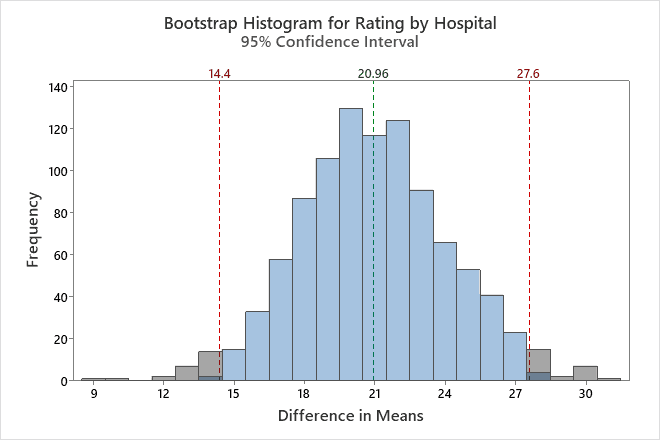
The upgraded decision engine determines a winner by resampling daily advertising data thousands of times to establish a range of probable outcomes rather than relying on a static figure.1 According to the announcement, the platform runs these iterative mathematical checks to identify the boundaries of how far a performance metric could realistically swing.12 The company stated that an experiment qualifies as an outright winner only when that calculated range remains above zero from end to end.12 If the range stretches from negative territory into positive gains, the platform labels the 8 percent lift as inconclusive.12
Rosinski told Primary that the engine applies a percentile bootstrap over daily aggregated observations. During each iteration, the software samples daily records with replacement, recomputes the primary metric for each variant and logs the relative lift. Rosinski explained that deriving a 95 percent confidence interval from the resulting lift distribution avoids treating individual clicks or auction impressions as independent observations.
The platform also maps these calculated ranges across a daily visual timeline. Feedoptimise explained that tracking daily boundaries allows an analyst to observe whether an experiment is stabilizing or continuing to swing unpredictably, which prevents teams from ending tests prematurely after a single lucky day.12 To support this stability check, the default software rules require tests to run for at least 14 days.1 The company stated that merchants can modify these testing thresholds to match their specific traffic volumes and inventory sizes.1
Rosinski noted that the two-week timeframe represents a minimum observation window rather than a promise that data will be conclusive. He explained that low-traffic inventories or niche product groups frequently require several additional weeks to clear required volume gates. The system additionally requires minimum volumes of impressions, clicks, and sales evaluated on each test variant independently rather than combined into an aggregate pool.1
According to Rosinski, report-level defaults require 5,000 impressions, 300 clicks and 30 conversions on both original and tested variants.2 Individual item gates require 1,000 impressions, 100 clicks and 10 conversions on each side.2 Rosinski described these levels as conservative engineering choices that merchants can tune for specific catalog traffic.
How do operational guardrails prevent harmful trade-offs?
Operational guardrails prevent harmful trade-offs by evaluating secondary business metrics alongside the primary test objective. The company reported that the suite monitors return on ad spend, conversion rates, and cost per click during every experiment.12 If an alternative title format generates an influx of additional clicks but causes overall sales to drop, the system flags the experiment with a guardrail failed verdict.1 In total, the suite features nine potential verdicts, seven of which actively decline to declare a winner when data remains ambiguous or incomplete.12
Rosinski told Primary that four default guardrails compare the tested listing against the original listing using relative percentage changes. These default rules trigger if return on advertising spend drops by more than 5 percent, if conversion rate drops by more than 10 percent, if cost per click increases by more than 15 percent, or if value per click falls by more than 10 percent. Rosinski explained that these checks exclusively block tested variants from winning, ensuring that a tested change cannot degrade overall account profitability.2

Rosinski described an early development case where a merchant initiated a storewide clearance sale midway through a live feed test. The resulting price reductions created an artificial surge in conversion volume that resembled a winning variant while having nothing to do with the feed adjustment. The drop in return on ad spend and value per click tripped the software guardrails, which prevented the system from declaring an incorrect victory.
How do merchants apply test outcomes safely?
Through a dedicated product decisions interface, the software scores each individual product stock-keeping unit independently and identifies the specific threshold that generated its verdict.12 The announcement explained that catalog-wide summaries frequently conceal the specific items that benefited from a change alongside the items that suffered.12 This granular scoring permits merchants to roll out modified titles exclusively to the products that demonstrated verified gains while leaving underperforming items untouched.12
Operational safety controls govern how these approved updates reach active sales channels. Feedoptimise noted that winning values do not push directly into live shopping channels.12 Instead, winning values are written to an Override Sheet inside the Feedoptimise platform (https://www.feedoptimise.com/integrations/overrides) after the merchant creates a snapshot and reviews a dry-run preview. The override can then be applied to the live feed. Merchants retain the ability to examine historical rollouts and reverse applied changes if downstream channel behavior shifts unexpectedly.12
According to Feedoptimise, clients frequently use automated tools within the platform to generate product titles, draft descriptions, fill missing attributes, clean supplier photographs, and reposition items in custom digital scenes.12 Because generating automated creative assets requires minimal expense, merchants face the challenge of proving whether generated media outperforms existing listings. By routing automated text and imagery through the decision engine and connecting those tests to native sales reporting, merchants can measure real commercial performance before publishing updates across their broader catalog.
What limitations remain in automated feed testing?
Statistical decision engines cannot eliminate external macroeconomic disruptions or sudden consumer demand shifts that occur outside the testing window. The software analyzes historic performance data imported from platforms such as Google Ads, Google Analytics, Google Merchant Center, Facebook, Shopify, WooCommerce, Magento, and Centra.12 If consumer buying habits transform abruptly due to unseasonal weather or sudden competitor discounting, past test confidence intervals cannot guarantee future catalog performance. The engine functions as a risk-reduction tool for internal catalog adjustments rather than an absolute predictor of commercial success.
Rotational testing introduces specific environmental vulnerabilities when compared with duplicate testing. Rosinski explained to Primary that tests alternating variants sequentially over time can attribute external changes to the product listing if a promotional campaign, budget adjustment or seasonal spike aligns with a rotation boundary. In contrast, simultaneous testing with duplicated product identifiers exposes both variants to identical day-to-day auction conditions.2 Furthermore, catalogs with scarce transaction volume will inevitably trigger inconclusive verdicts, reflecting the statistical reality that sparse conversion data cannot support mathematical certainty.
What changes for commercial retail teams?
This software upgrade reflects a broader shift toward rigorous statistical validation within everyday catalog management. For years, digital marketing teams evaluated feed modifications by comparing raw spreadsheet figures and adopting changes whenever an experimental metric showed a marginal advantage over a baseline. In modern automated ad auctions, implementing false winners across large inventories imposes substantial cumulative costs on advertising efficiency.
By incorporating automated statistical thresholds and guardrail metrics directly into feed management workflows, merchants can isolate genuine consumer responses from auction noise. Rather than forcing marketers to become trained statisticians or export raw numbers into custom data models, automated decision engines formalize experimental discipline inside daily catalog management. The end result allows retail brands to test new marketing ideas, refine automated content, and protect profit margins against random auction volatility.
The record
44 sentences trace to 2 sources and 1 contributor.
-
1
F
 Feedoptimise
Press release
· einpresswire.com · 16 Sep 2026
Feedoptimise Upgrades Its Product Feed A/B Testing Suite With a Statistical Significance Decision Engine
See the source
- 2 Statistically Significant A/B Testing for Product Feeds See the source
- 3 Contribution — Marcin Rosinski 25 statements added to this article
Other consulted pages1 page
feedoptimise.com3 pages
marcomeurope.com1 page
Article history
-
Published 23 Nov 2026, 16:43Assembled by the Primary desk from 2 sources · 1 contributor · 44 cited sentences
-
Marcin Rosinski, report-level defaults require 5
- Go to the sentence: Feedoptimise reported that its system addresses this timing issue by holding the final several days of collected data out of the decision sample until delayed sales can register.
- Go to the sentence: Marcin Rosinski told Primary that the software holds out the most recent seven days by default to capture those delayed transactions.
- Go to the sentence: Rosinski explained that this holdout duration sits on top of the 14-day minimum test duration rather than replacing it.
- Go to the sentence: Retailers set this parameter per experiment based on known buying patterns, and merchants can raise the holdout for considered purchases or set it to zero for instant digital sales.
- Go to the sentence: The upgraded decision engine determines a winner by resampling daily advertising data thousands of times to establish a range of probable outcomes rather than relying on a static figure.
- Go to the sentence: Rosinski told Primary that the engine applies a percentile bootstrap over daily aggregated observations.
- Go to the sentence: During each iteration, the software samples daily records with replacement, recomputes the primary metric for each variant and logs the relative lift.
- Go to the sentence: Rosinski explained that deriving a 95 percent confidence interval from the resulting lift distribution avoids treating individual clicks or auction impressions as independent observations.
- Go to the sentence: To support this stability check, the default software rules require tests to run for at least 14 days.
- Go to the sentence: The company stated that merchants can modify these testing thresholds to match their specific traffic volumes and inventory sizes.
- Go to the sentence: Rosinski noted that the two-week timeframe represents a minimum observation window rather than a promise that data will be conclusive.
- Go to the sentence: He explained that low-traffic inventories or niche product groups frequently require several additional weeks to clear required volume gates.
- Go to the sentence: The system additionally requires minimum volumes of impressions, clicks, and sales evaluated on each test variant independently rather than combined into an aggregate pool.
- Go to the sentence: According to Rosinski, report-level defaults require 5,000 impressions, 300 clicks and 30 conversions on both original and tested variants.
- Go to the sentence: Individual item gates require 1,000 impressions, 100 clicks and 10 conversions on each side.
- Go to the sentence: Rosinski described these levels as conservative engineering choices that merchants can tune for specific catalog traffic.
- Go to the sentence: If an alternative title format generates an influx of additional clicks but causes overall sales to drop, the system flags the experiment with a guardrail failed verdict.
- Go to the sentence: Rosinski told Primary that four default guardrails compare the tested listing against the original listing using relative percentage changes.
- Go to the sentence: These default rules trigger if return on advertising spend drops by more than 5 percent, if conversion rate drops by more than 10 percent, if cost per click increases by more than 15 percent, or if value per click falls by more than 10 percent.
- Go to the sentence: Rosinski explained that these checks exclusively block tested variants from winning, ensuring that a tested change cannot degrade overall account profitability.
- Go to the sentence: Rosinski described an early development case where a merchant initiated a storewide clearance sale midway through a live feed test.
- Go to the sentence: The resulting price reductions created an artificial surge in conversion volume that resembled a winning variant while having nothing to do with the feed adjustment.
- Go to the sentence: The drop in return on ad spend and value per click tripped the software guardrails, which prevented the system from declaring an incorrect victory.
- Go to the sentence: Rosinski explained to Primary that tests alternating variants sequentially over time can attribute external changes to the product listing if a promotional campaign, budget adjustment or seasonal spike aligns with a rotation boundary.
- Go to the sentence: In contrast, simultaneous testing with duplicated product identifiers exposes both variants to identical day-to-day auction conditions.