Florida ransomware recovery executive faces federal wire fraud charges
Prosecutors say the RansomwareHelp co-founder promised proprietary mathematical decryption while secretly buying keys from extortionists and marking up the price.

A federal grand jury in Rhode Island has indicted Juan Ricardo Palacio Escobar, the 52-year-old co-founder and chief technology officer of the Florida data recovery firm RansomwareHelp, on three counts of wire fraud.123 Court records show the indictment followed an undercover sting operation by the Federal Bureau of Investigation, which caught the executive negotiating decryptor prices with an undercover federal persona while billing a mock victim company inflated fees for proprietary technical recovery services that were never performed.31
For roughly six years, RansomwareHelp presented itself to corporate victims of extortion malware as an elite engineering team capable of breaking modern cryptographic locks through mathematics alone.32 The firm's public marketing urged victims to refuse extortion demands, claiming a proprietary suite of algorithms delivered complete system recovery without sending money to criminals.31 In federal charging documents, prosecutors alleged that the enterprise was built on a routine deception: Palacio bought keys directly from extortionists, billed clients more than double what he paid, and funneled the profits into real estate acquisitions across Florida.14
The promise of mathematical recovery
Founded around 2020, RansomwareHelp operated out of Florida and targeted commercial enterprises disabled by file-encrypting malware.31 Its public website urged clients, "Do not pay the ransom!," asserting that extortion victims had no practical need to surrender to criminal syndicates. In promotional material displayed across its web presence, the business claimed its diagnostic tools could restore 100 percent of servers and corporate databases to their original condition.
"Our cryptography experts use proprietary tools and algorithms to achieve 100% data recovery, all backed by a success rate of over 99%," the company claimed in published marketing materials.34 The firm told the public it possessed over 28 years of combined technical experience and deployed a dedicated roster of 80 specialists across reverse engineering, cryptographic analysis, and digital forensics.35 Central to that pitch was an explicit ethical guarantee: "We never promote, intermediate or pay ransom to threat actors on behalf of our clients."32
Federal prosecutors stated that the reality inside the company contradicted every line of that marketing pledge.1 According to the indictment returned in the U.S. District Court for the District of Rhode Island, Palacio operated the business as a covert brokerage.31 When desperate corporate system administrators contacted the company for emergency assistance, the executive allegedly established clandestine communication channels with the underlying ransomware gangs, acquired the official decryption tools at a discount, and presented the resulting keys to clients as the fruits of exhaustive computational reverse engineering.34
An undercover trap in two acts
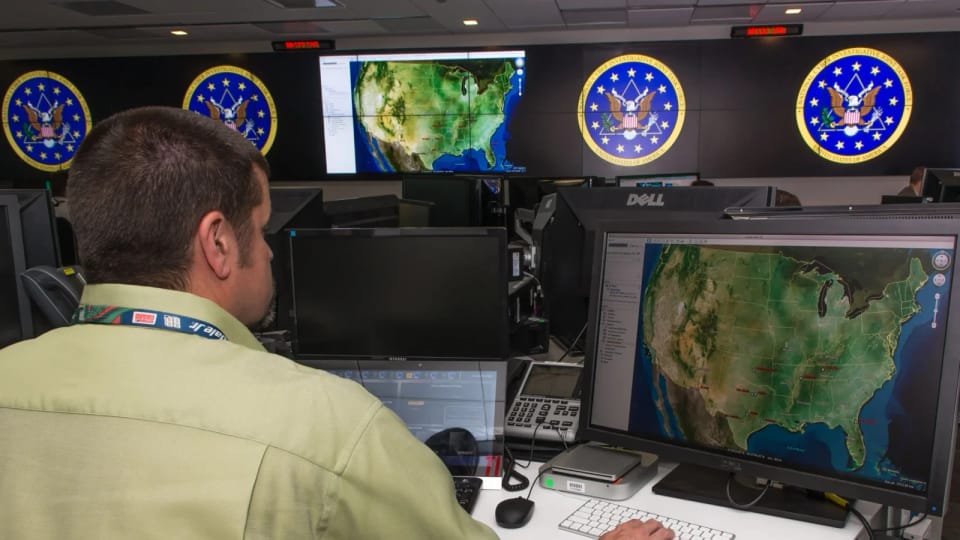
The federal investigation culminated in a June 2026 sting operation designed by the FBI to test Palacio's operation from both ends of an extortion negotiation.13 Undercover federal agents created a controlled scenario by adopting dual fictitious identities: one group of operatives posed as the administrative staff of a compromised commercial victim seeking help, while a separate unit of agents operated a synthetic ransomware gang that claimed credit for the attack.32
When the undercover victim firm approached RansomwareHelp with a fabricated ransom note, company representatives repeated their standard policy, assuring the simulated client that the firm never negotiated with threat actors or settled ransoms on behalf of victims.34 Almost immediately after delivering that reassurance, Palacio reached out to the fictitious ransomware portal established by the bureau, requesting the lowest possible settlement price for the necessary decryptor software.32 The undercover agents operating the extortion persona initially quoted a price of 0.2 bitcoin, valued at approximately $13,000 at the time of the transaction.32
Within 48 hours of receiving that figure, Palacio returned to the mock victim organization with an official diagnostic assessment.3 He informed the undercover agents that the company's technical evaluation had succeeded, quoting a required fee of $13,260 to execute the algorithmic decryption.31 The executive then returned to the synthetic extortion gang, haggling aggressively to lower the purchase price of the key.3 Records cited in court filings show Palacio asked the gang to reduce its demand to $4,000 in cryptocurrency.3
The two sides ultimately settled on a purchase price of approximately $6,000 in bitcoin.31 Palacio then finalized the bill presented to the undercover victim firm at $16,010, which combined a mandatory $2,750 diagnostic fee with the full recovery fee of $13,260.32 Investigators documented that the company retained the spread of more than $7,000 between what was paid to the simulated extortionists and what was extracted from the victim, while misrepresenting the entire mechanism of the data restoration.13
Remote access and missing ransom notes
The mechanics documented in the federal indictment mirrored earlier complaints from commercial cybersecurity specialists who encountered RansomwareHelp during real-world network intrusions.3 In March 2024, a small accounting firm suffered a severe intrusion by the LockBit ransomware syndicate, locking both internal operating files and client records.32 Paul Ihme, co-founder of the incident response firm Soteria, evaluated the recovery proposals RansomwareHelp delivered to the victim firm.32
RansomwareHelp presented the accounting business with a recovery contract demanding $438,880.32 To justify that price, the company claimed the recovery required extensive infrastructure work, citing the "professional configuration of forensic servers" alongside dedicated engineering hours spent calibrating decryption scripts through eight distinct six-hour computational processing cycles.3 The proposal claimed the recovery process harnessed "510 preconfigured forensic servers of the maximum quantitative capacity located in different parts of the world," asserting that programmers would inject extracted cryptographic codes using distributed brute-force routines.32
Ihme noted that the technical details presented in the formal pitch were nonsensical on their face.32 The proposal promised the capability to unscramble six distinct types of encryption, yet the documentation supported that claim by listing standard, irreversible password hashing algorithms like SHA-256.3 Ihme pointed out that true mathematical decryption of standard modern ransomware encryption without a private key remains impossible across modern distributed computing environments.
"If it were really true these guys could decrypt any ransomware out there, this guy would be a billionaire," Ihme said, explaining that the business focused on corporate victims that lacked dedicated technical guidance and faced existential business failure.3 "They were going after people who don't have any technical knowledge, are desperate, and don't have anyone advising them about how any of this stuff works."3

To carry out its diagnostic evaluation, RansomwareHelp demanded unrestricted administrative access to the victim's network using AnyDesk remote desktop software.3 When Soteria personnel later conducted an independent forensic audit of the compromised servers, they noticed a peculiar absence: nearly every copy of the plain-text ransom notes left across the network by LockBit had vanished.3 Attackers typically drop copies of their instructional notes on every encrypted volume to guarantee the victim finds payment instructions.3 In this instance, Soteria recovered a single surviving note from an unindexed backup snapshot.3
When investigators followed the unique identifier in that surviving note to LockBit's darknet negotiation portal, they discovered that an unauthorized party had already been chatting with the extortionists for several days.3 Ihme determined that RansomwareHelp used its remote AnyDesk access to scour and delete the attacker notes from the network, preventing the client from discovering the direct communication link and learning the true ransom demand. Transcripts from the portal showed RansomwareHelp representatives begging LockBit operators to keep their communications concealed from the accounting firm, even as LockBit administrators threatened to raise their price by $100,000 for every day the talks dragged out.3
The accounting firm terminated its discussions with RansomwareHelp and hired an established incident response practice, settling the incident for roughly half of the $438,880 fee RansomwareHelp had demanded.2 "The victim told us, 'If we don't get this data back, our business is over'," Ihme recalled.3
Federal crackdown on data recovery middlemen
Federal authorities arrested Palacio in Las Vegas on Oct. 22, 2026, subsequently transferring him to Rhode Island to face the grand jury indictment.1 The U.S. Attorney's Office for the District of Rhode Island confirmed that the court granted Palacio pretrial release under strict supervisory conditions on Nov. 20, 2026.1 If convicted on all three counts of wire fraud, the executive faces a statutory maximum penalty of 20 years in federal prison for each count.14
The prosecution of Palacio fits into a broader enforcement initiative by the Department of Justice targeting fraudulent intermediaries within the ransomware remediation industry.32 As corporate ransom payments have climbed into millions of dollars, federal investigators have increasingly scrutinized specialized response firms that position themselves as neutral technical advisers while operating secret side agreements with criminal cartels.
In a related federal case, prosecutors brought wire fraud and conspiracy charges against Zohar Pinhasi, the 50-year-old chief executive officer of MonsterCloud.32 Charging documents in that matter alleged that Pinhasi promised customers technical remediation without ransom payments, but secretly delivered $8 million to ransomware groups while collecting $19 million in client fees.32 In July 2026, federal judges sentenced Angelo Martino, a 41-year-old incident negotiator from Florida, to 70 months in prison after prosecutors proved he conspired directly with the BlackCat extortion group, passing confidential intelligence regarding his clients' financial limits to help hackers maximize their payouts.32
Joint advisory notices published by the FBI and the Cybersecurity and Infrastructure Security Agency continue to caution commercial organizations against paying ransoms, noting that financial settlements provide zero guarantee that corrupted systems will be recovered or that stolen files will not be disclosed.1 When organizations turn to third-party recovery vendors to navigate operational crises, federal prosecutors have signaled that intermediaries who misrepresent their methods and camouflage illicit transactions will face criminal scrutiny identical to the syndicates they claim to combat.
The record
52 sentences trace to 5 sources.
- 1 RansomwareHelp co-founder faces wire-fraud indictment See the source
- 2 Co-Founder of See the source
- 3 CTO of 'RansomwareHelp' Indicted for Wire Fraud See the source
-
4
T
 techcrunch.com
Third-party reporting
· techcrunch.com · 25 Nov 2026
DOJ accuses former cyber executive of defrauding ransomware victims by secretly paying hackers | TechCrunch
See the source
- 5 Krebs on Security – In-depth security news and investigation See the source