Meta claims $50,000 for each book sold by former executive
Sarah Wynn-Williams challenged an arbitration gag order in federal court after facing contract penalties over her corporate memoir.
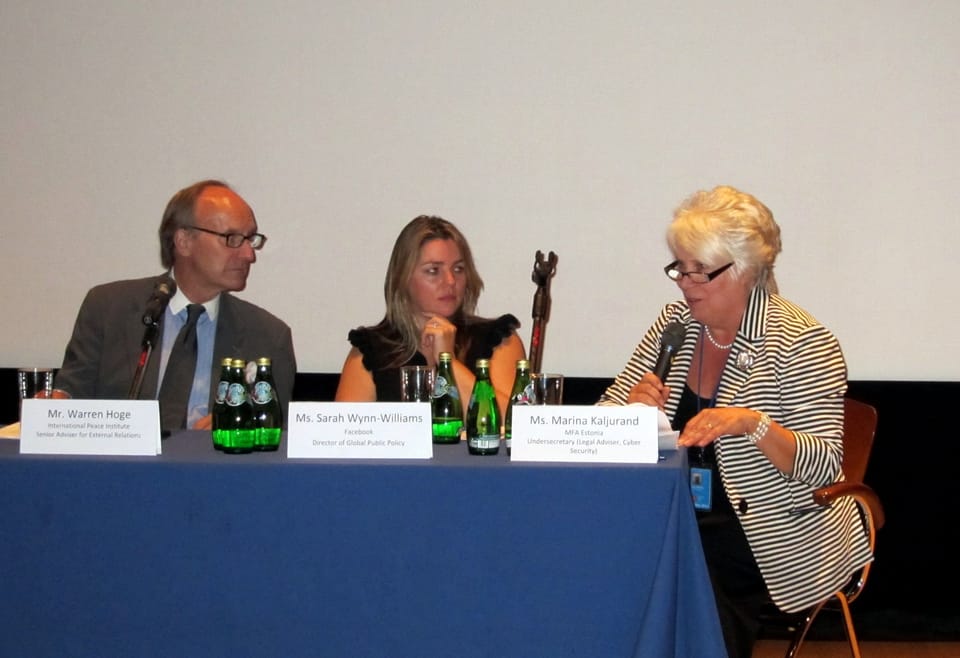
Meta Platforms is seeking damages of $50,000 for every copy sold of a memoir written by its former director of global public policy, Sarah Wynn-Williams, asserting that each individual sale constitutes an independent breach of her post-employment severance agreement.1 The social media conglomerate initiated emergency arbitration proceedings to stop promotion of the book, titled Careless People: A Story of Where I Used to Work, upon its release in March 2025.1 Rather than pursuing a civil claim for defamation in open court, the company turned to private arbitration to enforce contractual non-disparagement and confidentiality clauses, creating potential liabilities that compound with every reader who purchases the text.1
Wynn-Williams spent seven years at Facebook after her appointment in 2011, coordinating interactions with foreign heads of state and shaping government relations across developing regions on three continents before leaving the company in 2017.1 Her memoir documents her eventual estrangement from the business, tracing a trajectory from early idealism to what she described as an organization assisting harmful actors across the globe.1 The book details allegations of a discriminatory workplace environment, setting out accounts of gender-based bias and workplace sexual harassment among managerial staff.1 Following publication, the volume reached the top position on commercial bestseller lists in the United States and the United Kingdom.1
Arbitration sanctions and federal litigation
Meta moved immediately to restrict public discussion of the material, securing an emergency order from an arbitrator that prohibited Wynn-Williams from speaking publicly about her former employer or participating in promotional events for the title.1 Company representatives characterized the memoir as a combination of stale assertions, previously reported corporate details, and untrue accusations directed at corporate executives.1 Because the enforcement action operates through contract law rather than libel litigation, the legal mechanism does not require a finding that any passage in the book is false.1 Instead, the proceedings hinge entirely on whether the act of publishing disparaging accounts violates the restrictive covenants contained in her severance contract.1
The dispute expanded beyond closed-door arbitration on June 25, 2026, when Wynn-Williams filed a complaint against Meta Platforms in the United States District Court for the Northern District of California.21 Represented by the employment law firm Katz Banks, the action was assigned to United States Magistrate Judge Kandis A. Westmore under docket number 3:26-cv-06341.2 In the federal filing, Wynn-Williams requested judicial relief to vacate the arbitrator's temporary gag order, alleging that the company engaged in coercive surveillance and infringed upon her constitutional protections under the First Amendment by seeking to conceal workplace conditions and internal misconduct.12
Meta defended the arbitration process and rejected the federal challenge in a formal statement, asserting that the litigation represents an effort to bypass contractual obligations to generate book sales.1 The company maintained that an arbitrator had already determined the publication breached the settlement terms Wynn-Williams signed when she accepted a severance payout.1 Meta further argued that Wynn-Williams had forfeited any legal grounds to contest arbitral authority, noting that she had actively participated in the administrative hearings, sought formal relief, lodged counterclaims, and submitted the underlying disputes to the arbitrator for determination.1
Enforced silence on the festival stage
The operational reach of the gag order became visible in May 2025 during an appearance at the Hay literary festival in Wales.1 Appearing alongside Columbia University legal scholar Tim Wu and British reporter Carole Cadwalladr for a panel examining institutional censorship and corporate authority, Wynn-Williams remained seated in complete silence on stage pursuant to strict legal guidance from her counsel. While Wu and Cadwalladr discussed tech policy and legal restrictions, the author did not speak. Despite her total verbal silence during the event, Meta subsequently petitioned the arbitrator to levy supplementary penalties against her, asserting that her physical presence on the panel breached the speech restriction.1
Ravi Naik, the legal director of the data rights agency AWO Legal who serves as legal counsel to Wynn-Williams in the United Kingdom, criticized the process as an institutional maneuver designed to suppress an adverse witness without public accountability.1 Naik said Meta relied on an unaccountable private forum to silence a corporate whistleblower without the constitutional protections guaranteed in civil courts.1 Naik pointed out that the sanctions were imposed without an independent judicial officer, without an open trial, and without any legal determination that the published material contained factual falsehoods.1 He characterized the action as a private arrangement between an arbitrator and one of the largest multinational entities in the world, stating that the corporate campaign against his client must cease.1
The architecture of non-disclosure agreements
In an address prepared for the annual Orwell lecture, Wynn-Williams examined the structural mechanics of non-disclosure agreements, known as NDAs, and corporate lawfare, comparing contemporary commercial secrecy to the historical concepts of narrative deletion described in George Orwell's Nineteen Eighty-Four.1 Wynn-Williams argued that the dominant authority in modern technology relies on suppressing divergent records rather than debating historical facts.1 In her analysis, the objective of corporate litigation is not necessarily to prevail in an intellectual contest, but to eliminate documentary receipts and contestable standards of fact until dissent lacks evidentiary footing.1
Wynn-Williams observed that while truth serves as an absolute legal defense against allegations of libel, truth functions as the very definition of the contractual breach under a standard non-disclosure agreement.1 She argued that departure contracts are systematically presented to employees at moments of acute personal insecurity, when individuals face mortgage commitments and sudden unemployment while contemplating personal belongings packed into cardboard boxes.1 Under these economic conditions, non-disclosure provisions are executed by entry-level personnel, content moderators, contract gig workers, and administrative assistants who lack the capital necessary to challenge institutional legal budgets.1
The economic disparity between corporate legal divisions and individual personnel creates an asymmetric environment where a single worker confronts an entire complex of corporate attorneys, Wynn-Williams said in her lecture.1 She noted that companies do not need to initiate litigation against every dissenting employee to maintain organizational secrecy.1 By pursuing aggressive, high-profile enforcement against a single prominent individual, an enterprise demonstrates the financial consequences of speaking out, prompting the broader workforce to calculate the personal risks and enforce self-censorship without the need for state intervention.1

Parallels in public accountability and artificial intelligence
Examining recent accountability investigations across the entertainment industry, Wynn-Williams observed that contractual silence agreements had previously been deployed to conceal conduct concerning public figures such as Russell Brand and David Walliams.1 Brand was ultimately convicted of offenses, while Walliams faced public allegations of improper conduct, which Walliams denied while rejecting any wrongdoing.1 Wynn-Williams noted that public disclosures and regulatory scrutiny in those matters occurred only after the commercial stature and professional influence of the accused figures had already diminished, suggesting that powerful corporate institutions enjoy extended periods of operational impunity while public warnings are actively delayed.1
Wynn-Williams extended her critique of contractual secrecy to the emerging sector of advanced artificial intelligence, or AI.1 Recalling Orwell's October 1945 essay on the political implications of atomic weaponry, she argued that the political distribution of power corresponds directly to the complexity and cost of decisive technologies.1 Whereas inexpensive tools decentralize authority among ordinary citizens, complex systems requiring billions of dollars in specialized infrastructure concentrate control within a small circle of commercial enterprises.1 Advanced artificial intelligence development remains confined to a minimal number of well-funded firms concentrated primarily across two nations, insulated by substantial computational and financial barriers.1
This technical concentration elevates the importance of insider disclosures, Wynn-Williams argued, because external bodies including parliaments, judicial courts, and the independent press remain stationed outside corporate facilities.1 Two years prior to her address, a coalition of current and former technical staff from major artificial intelligence laboratories, including OpenAI and Google DeepMind, issued an open statement petitioning for a legal right to warn the public.1 That collective appeal requested an industry-wide ban on non-disparagement agreements, the elimination of punitive confidentiality provisions, the establishment of anonymous reporting systems, and enforceable safeguards against management retaliation, with several contributors withholding their signatures publicly due to fear of professional retribution.1
The personal weight of permanent litigation
Wynn-Williams warned that the integration of experimental artificial intelligence tools into high-consequence state operations, including military command structures and nuclear weapons apparatuses, makes the legal suppression of technical staff dangerous to public safety.1 Because complex software systems frequently exhibit unexpected behaviors and unpredicted functional errors, she argued that researchers and engineers must retain legal freedom to notify regulatory bodies and the public when system operations malfunction, rather than being bound by commercial secrecy agreements executed during employment onboarding or severance negotiations.1
Addressing her daily existence under the arbitration gag order, Wynn-Williams described the psychological impact of ongoing corporate surveillance and legal threats as an experience comparable to institutional thought policing.1 She stated that living under continuous court restrictions leads individuals to rehearse spoken statements in advance, to evaluate whether specific vocabulary choices will provoke formal legal correspondence from corporate counsel, and to internalize behavioral censorship.1 Wynn-Williams acknowledged experiencing persistent anxiety regarding the prospect of personal financial ruin and bankruptcy resulting from Meta's ongoing damages claims, concluding that contractual silencing mechanisms can only succeed if external observers allow suppressed accounts to vanish from public memory.1
The record
47 sentences trace to 2 sources.
-
1
TG
 The Guardian
Document
· theguardian.com · 27 Nov 2026
‘I am scared’: Careless People author Sarah Wynn-Williams on living under a gag order - and why it’s time to speak out against big tech
See the source
-
2
L
 Law360
Third-party reporting
· law360.com · 28 Nov 2026
Wynn-Williams v. Meta Platforms, Inc.
See the source