Anne Carson wins 2026 Nobel Prize in literature
The Swedish Academy awarded the Canadian poet 12 million kronor for experimental work reshaping classical Greek traditions into modern forms.
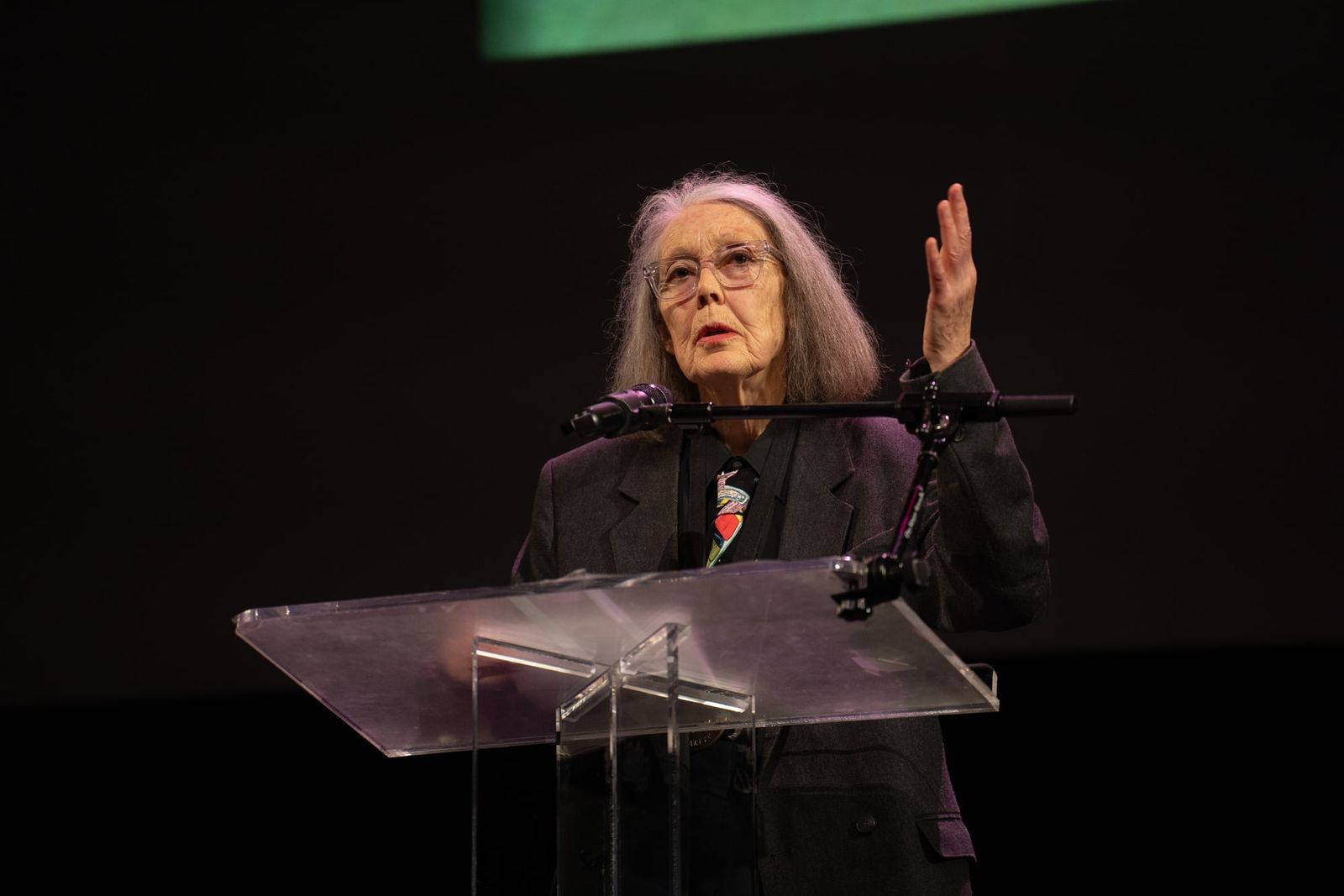
The Swedish Academy selected Canadian poet and essayist Anne Carson for the Nobel Prize in literature on Thursday, honoring four decades of genre-crossing writing rooted in classical antiquity.123 In its citation, the academy praised Carson for what it described as a bold and inventive body of work that has established new forms for contemporary literature while remaining in playful dialogue with the classical tradition.14
Carson learned of the decision while staying in Iceland, where academy officials reached her by telephone shortly before the formal announcement in Stockholm.2 Ingrid Carlberg, the permanent secretary of the Swedish Academy, stated that Carson was surprised and very happy to receive the news.2 In a recorded exchange following the notification, Carson said that she had already begun planning ways to give away the prize funds, advising readers seeking an entry point into her books to start in the middle.4
The award carries a financial purse of 12 million Swedish kronor, roughly equivalent to $1.2 million, and will be presented at an official ceremony in Stockholm on December 10.23 Carson succeeds Hungarian novelist Laszlo Krasznahorkai, who took the honor in 2025, and South Korean writer Han Kang, who received the prize in 2024.23 With Thursday's decision, Carson became the 19th woman to win the literature prize across 119 presentations since the foundation established the honors in 1901.43
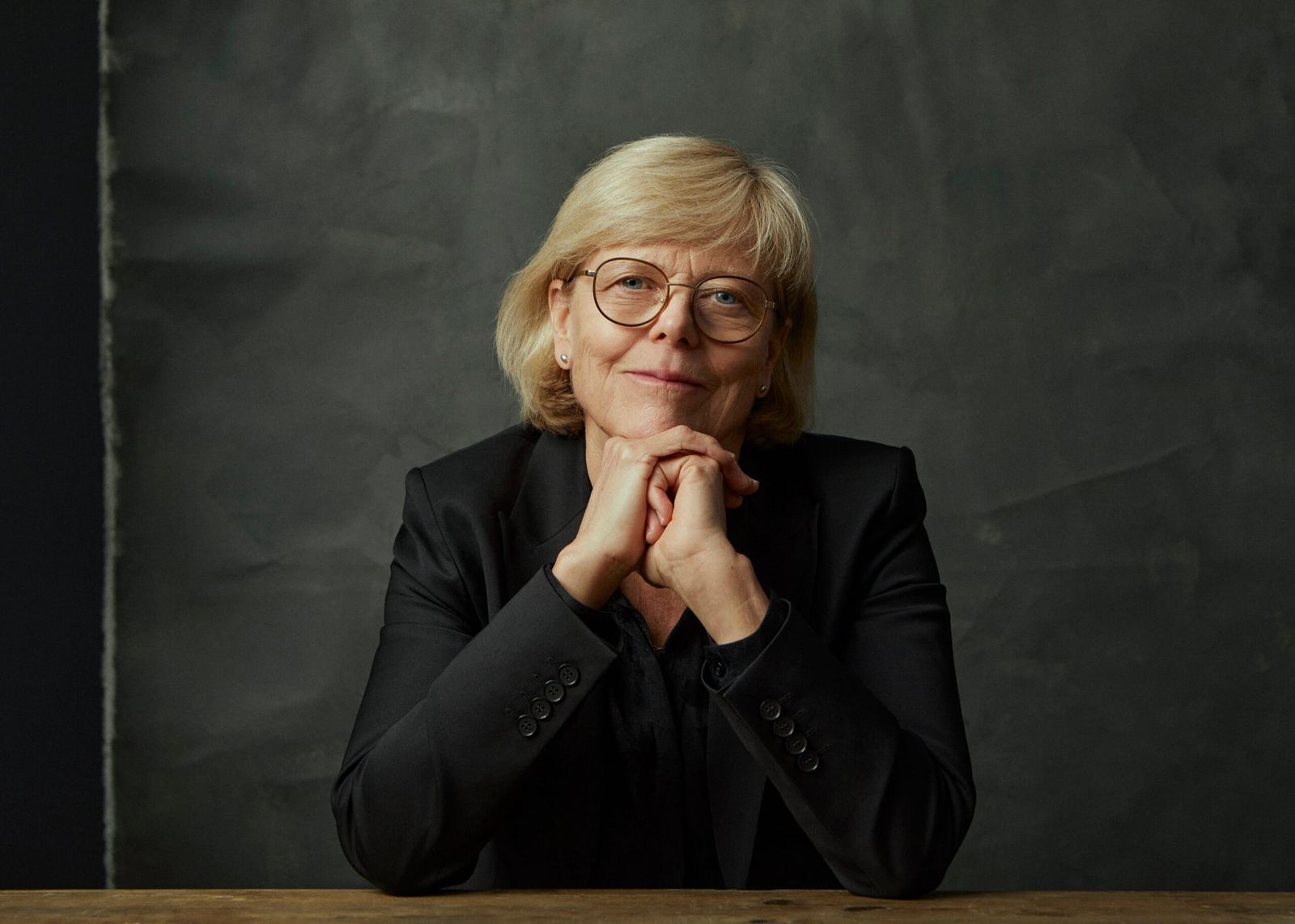
Anders Olsson, who chairs the Nobel Committee for Literature, situated Carson's critical standing in her union of technical philological research and lyric invention.2 Olsson said her literary output has centered on the meeting point between the philologist's obsession with words and the poet's pursuit of fresh meaning.24 Committee member Steve Sem-Sandberg added during the proceedings that Carson possessed a style so distinctive that few peers would attempt to replicate it.4
Born in Toronto in 1950, Carson grew up moving across several Canadian towns before discovering ancient Greek literature in secondary school.132 A Latin teacher offered her private instruction in ancient Greek during lunch breaks, initiating a scholarly focus that guided her university studies.23 She completed a doctorate in classics at the University of Toronto in 1981 and went on to teach classics, comparative literature, and creative writing at institutions including McGill University, Princeton University, and the University of Michigan.23
Carson published her first major volume of scholarship and prose, Eros the Bittersweet, in 1986.13 The text examined physical desire and ancient Greek thought, establishing an intellectual template that influenced poets, classicists, and screenwriters.13 Over the subsequent decades, she completed direct translations of ancient authors including Euripides, Sappho, and Sophocles, while simultaneously dismantling conventional boundaries dividing poetry, literary criticism, and dramatic performance.2 In an interview discussing her craft, Carson observed that ancient Greek seemed different because it felt like being in the morning of language, noting that ancient writers were inventing modes of thought while creating vocabulary that later cultures built upon across thousands of years.5
Her widely read 1998 verse novel, Autobiography of Red, took inspiration from fragments by the ancient Greek poet Stesichorus.12 The narrative refashioned the myth of Geryon, a red-winged monster slain by Herakles, into a modern coming-of-age account centered on an alienated young man experiencing teenage heartbreak and sexual desire.12 In 2013, Carson returned to those characters with the sequel volume Red Doc>.21
Her structural experimentation expanded further with subsequent projects. The Beauty of the Husband, published in 2001 with the subtitle A Fictional Essay in 29 Tangos, mapped the disintegration of a marriage through 29 sections that each opened with lines from John Keats.2 The book earned Carson the TS Eliot Prize in 2001, making her the first woman to win the British poetry honor.12 She published Men in the Off Hours that same year, gathering verse essays and epitaphs to secure the inaugural Griffin Poetry Prize.12
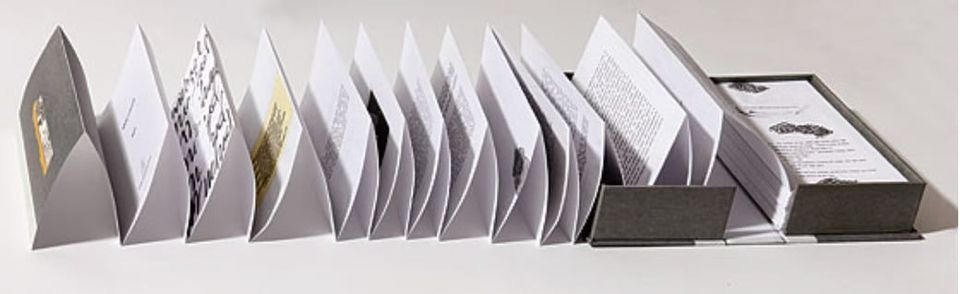
When her brother Michael died, Carson channeled that bereavement into Nox, a 2010 publication constructed as an accordion-fold box containing scanned reproductions of letters, collages, photographs, and verse.12 The project incorporated an elegy by the Roman poet Catullus mourning his own brother, treating the book as a sculptural artifact as well as an act of memory.2 Later titles sustained that formal flexibility. Decreation combined essays with poetry and an opera libretto, while the 2016 collection Float arrived as unnumbered pamphlets meant to be read in arbitrary sequences.5
Carson, who disclosed a diagnosis of Parkinson's disease in 2024, published Wrong Norma that same year, collecting 25 pieces of poetic prose paired with her original visual art.32 The volume became a finalist for the National Book Award for Poetry and secured the National Book Critics Circle Award in 2025.2 Author Susan Sontag once described Carson as one of the few contemporary English-language writers whose work she bought automatically across any journal appearance.1
The Stockholm ceremony in December will place Carson among a select roster of North American poets recognized by the Swedish Academy, alongside Louise Glück and Bob Dylan.13 For Carson, whose scholarship treats ancient fragments as active participants in modern thought, the award marks international recognition of a career dedicated to treating the etymology of ancient words as a living engine for contemporary literature.42
What this rests on
32 sentences trace to 5 sources.
-
1
TG
The Guardian Document · theguardian.com · 8 Oct 2026 Anne Carson wins Nobel prize in literature 2026 See the source
-
2
TN
The National Third-party reporting · thenationalnews.com · 8 Oct 2026 Why Anne Carson won the 2026 Nobel Prize in Literature | The National See the source
-
3
DW
Deutsche Welle Third-party reporting · dw.com · 8 Oct 2026 Nobel Prize in literature goes to Canada's Anne Carson See the source
-
4
N
nobelprize.org Third-party reporting · nobelprize.org · 8 Oct 2026 Official homepage of the Nobel Prize See the source
-
5
TT
TPR Texas Public Radio Third-party reporting · npr.org · 8 Oct 2026 Poet and essayist Anne Carson wins 2026 Nobel Prize in literature See the source