Navi Pillay wins 2026 Nobel Peace Prize
The Norwegian Nobel Committee recognized the South African jurist for expanding international law, prosecuting genocide, and defending the rules-based global order.
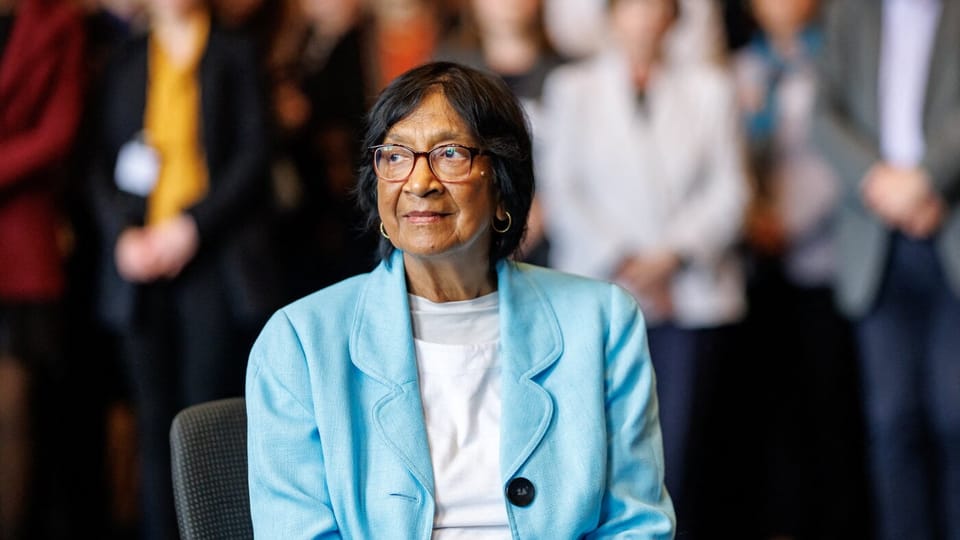
The Norwegian Nobel Committee awarded the 2026 Nobel Peace Prize to South African jurist Navanethem "Navi" Pillay on October 9, 2026, honoring her lifelong career prosecuting genocide, developing humanitarian norms, and defending international legal institutions.12 The decision, announced in Oslo, highlighted Pillay's trajectory from defending anti-apartheid leaders in South Africa to presiding over landmark international war crimes tribunals.12
Announcing the honor, Norwegian Nobel Committee Chair Jørgen Watne Frydnes called Pillay "one of the most courageous and important legal experts of our time."2 Frydnes noted that a consistent thread connected her early representation of political prisoners under apartheid to her judicial leadership across the major international court cases of recent decades.21
The 2026 award marks the 125th anniversary of the Nobel Peace Prize, which was first presented in 1901.12 This year's selection emerged from a field of 287 nominations encompassing individuals and organizations, and carries an award sum of 12 million Swedish kronor, or roughly $1.2 million.2
A legal career forged under apartheid
Born in Durban in 1941 into a family of Indian Tamil descent, Pillay built her early career against structural discrimination, segregation, and exclusion under the apartheid regime.12 She became the first woman of color to open a legal practice in South Africa's Natal province.2 In that practice, she defended anti-apartheid activists facing state repression.21
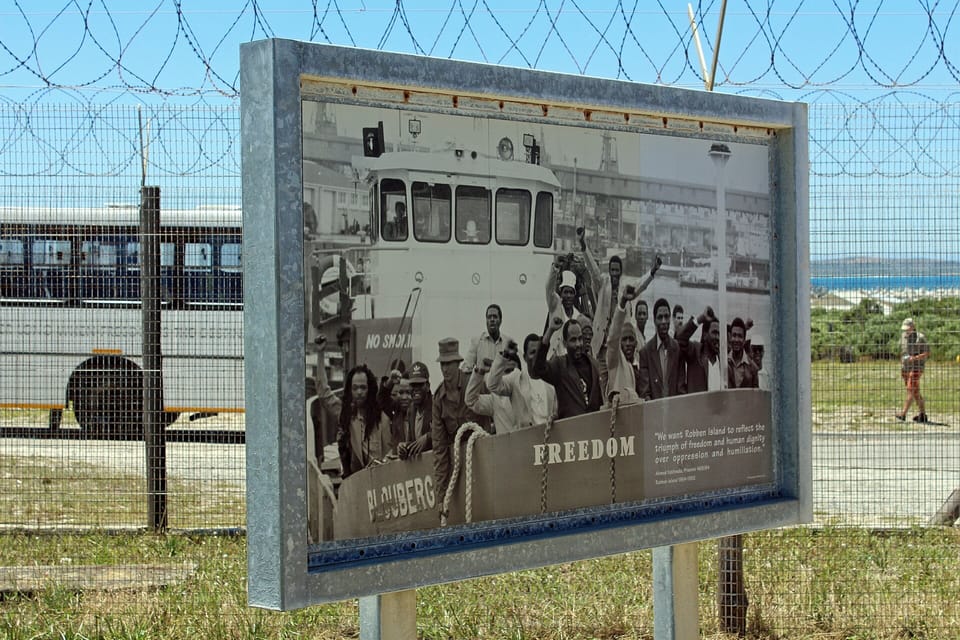
In 1973, Pillay successfully sued the South African government to establish that political prisoners held on Robben Island, including Nelson Mandela, possessed a legal right to representation.2 Her advocacy exposed the mechanics of detention and created vital procedural protections for anti-apartheid organizers during decades of state suppression.
Following the formal end of apartheid governance in 1994, Pillay was appointed a judge of the High Court of South Africa in 1995.21 The appointment reflected the emergence of South Africa's post-apartheid constitutional order, establishing a legal framework based on equal rights and universal human dignity.
Setting precedents at international tribunals
Pillay moved onto the global stage shortly after her High Court appointment when she joined the International Criminal Tribunal for Rwanda.21 During her tenure in Arusha, Tanzania, she presided over trials that redefined international humanitarian jurisprudence.
At the Rwanda tribunal, Pillay was instrumental in establishing that rape and sexual violence could constitute acts of genocide as well as crimes against humanity.12 That decision marked the first time an international court formally recognized systematic sexual assault as an instrument of genocidal destruction. In the same proceeding, Pillay contributed to another legal breakthrough: securing a conviction for incitement to commit genocide based purely on the dissemination of propaganda.13
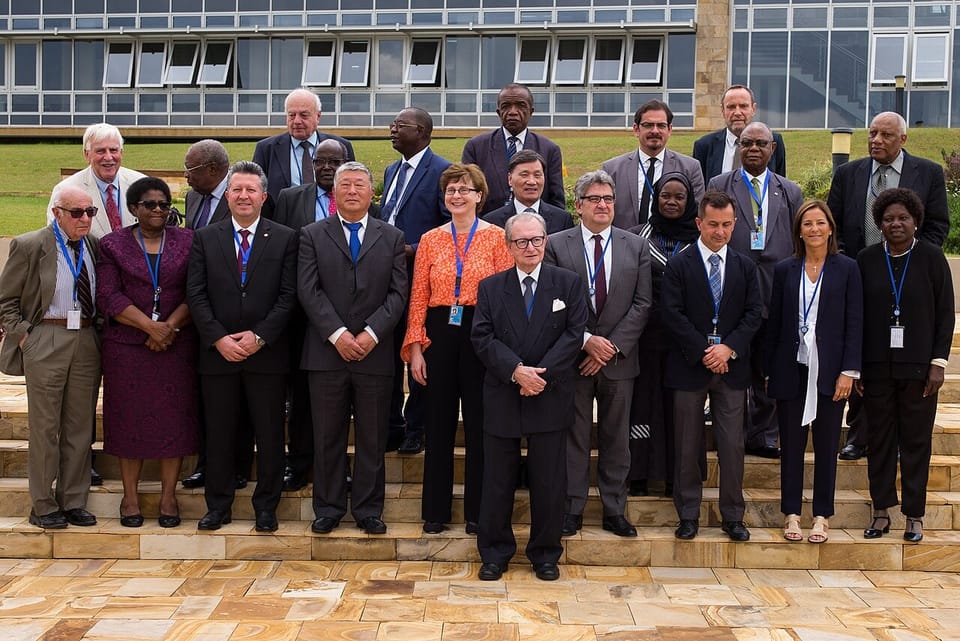
Pillay subsequently served as a judge at the International Criminal Court from 2003 to 2012.21 Her work in The Hague helped formulate the procedural foundations and normative standards of the permanent tribunal during its foundational decade. From 2008 to 2014, she served as the United Nations High Commissioner for Human Rights, directing monitoring operations and human rights advocacy worldwide.21
Her judicial duties have continued in recent years. Pillay currently serves as an ad hoc judge on the International Court of Justice in the case examining allegations of genocide brought against Myanmar.14 Until recently, she chaired the United Nations Independent International Commission of Inquiry on the Occupied Palestinian Territory, which released findings concluding that Israel had committed genocide in Gaza.21
Defending international courts under pressure
The Nobel Committee framed Pillay's award as a defense of the international rules-based system during a period of mounting hostility toward multilateral courts. In its formal citation, the committee stated that the system of international law faces severe strain as institutions confront political intimidation and sanction threats.14
Frydnes warned that the erosion of legal frameworks threatens global stability.12 "This is a message that international law and its institutions are the cornerstone of a more peaceful world," Frydnes said regarding the award decision.2
The committee observed that throughout modern history, lasting peace has required adherence to binding legal principles over naked balances of power.14 In its announcement, the committee noted that while major powers have often evaded legal accountability, international treaties and judicial mechanisms remain the indispensable foundation for preventing armed violence.14
Pillay received news of the award while attending the Nuremberg Forum legal conference in Germany.2 Speaking to colleagues and reporters, the 85-year-old jurist dedicated the recognition to survivors of mass atrocities and practitioners working in international justice systems.2
"We are living through an era when international law and human rights are under significant political attack," Pillay said at the gathering.2 She emphasized that the legal architecture created to protect vulnerable populations requires active defense against geopolitical encroachment.
Global reaction and diplomatic friction
Pillay's recognition drew immediate domestic and international reactions reflecting current geopolitical divisions. In South Africa, political leaders celebrated her accomplishment.2 South African President Cyril Ramaphosa and United Nations High Commissioner for Human Rights Volker Türk issued public statements praising the award.2
South Africa's ambassador to Washington, Roelf Meyer, highlighted the historical milestone of the decision.2 "Congratulations to her, she's the fifth South African to achieve the Nobel Prize," Meyer said, observing that Pillay is the first South African woman to receive the Peace Prize.2 She joins previous South African laureates Chief Albert Luthuli, Archbishop Desmond Tutu, Nelson Mandela, and F.W. de Klerk.2
The award also elicited sharp condemnation.2 Israel's Foreign Ministry published a statement on X condemning the committee's decision, alleging that honoring Pillay rewarded hatred against Israel following her leadership of the United Nations inquiry into military operations in Gaza.2
The Nobel announcement arrived amid escalating diplomatic tensions surrounding international tribunals. Hours after the Nobel announcement, the United States imposed financial sanctions targeting the International Criminal Court.2 Announcing the sanctions, United States Secretary of State Marco Rubio stated that the measure aimed to restrict transactions with the court and constrain its operational capabilities.2
United States pressure on the tribunal had previously included sanctions against senior personnel, including several judges and its former chief prosecutor.2 The measures followed international investigations concerning military personnel conduct in Afghanistan and the court's issuance of arrest warrants for Israeli Prime Minister Benjamin Netanyahu and former Defense Minister Yoav Gallant regarding actions in Gaza.2
Neither the United States nor Israel belongs to the International Criminal Court, and officials in Washington have maintained that tribunal actions infringe upon sovereign governance.2 The Nobel Committee emphasized that its selection affirmed the necessity of safeguarding jurists who maintain legal boundaries during political conflict.14
The legacy of legal institutionalism
In connecting Pillay's award to Alfred Nobel's original 1895 testament, the committee argued that her contributions advance the peaceful settlement of disputes by fortifying international judicial bodies.13 The citation observed that modern international tribunals embody the institutional mechanism through which nations resolve existential conflicts without resort to war.
Pillay's career demonstrates the concrete consequences of international legal instruments when applied with professional rigor. Through decades of adjudication, she established binding accountability for individual leaders and expanded protections for civilian populations trapped in organized violence.
By selecting a veteran jurist who has spent six decades inside courtrooms, the Nobel Committee placed institutional legal process at the center of peace building. The award emphasizes that international order depends not on transient diplomatic arrangements, but on enduring statutory mechanisms that enforce accountability equally across all sovereign states.
The record
40 sentences trace to 4 sources.
- 1 Nobel Peace Prize for 2026 to Navanethem "NAVI" Pillay See the source
-
2
N
 NPR
Third-party reporting
· npr.org · 9 Oct 2026
South African human rights lawyer Navi Pillay wins the Nobel Peace Prize
See the source
- 3 Nobel Peace Prize 2026 See the source
- 4 Nobel Peace Prize 2026 See the source