US created Nuclear Regulatory Commission 30 years after Hiroshima
Early records show debates over technological extinction and governance mirrored modern artificial intelligence arguments decades before catastrophic wartime deployment forced federal action.
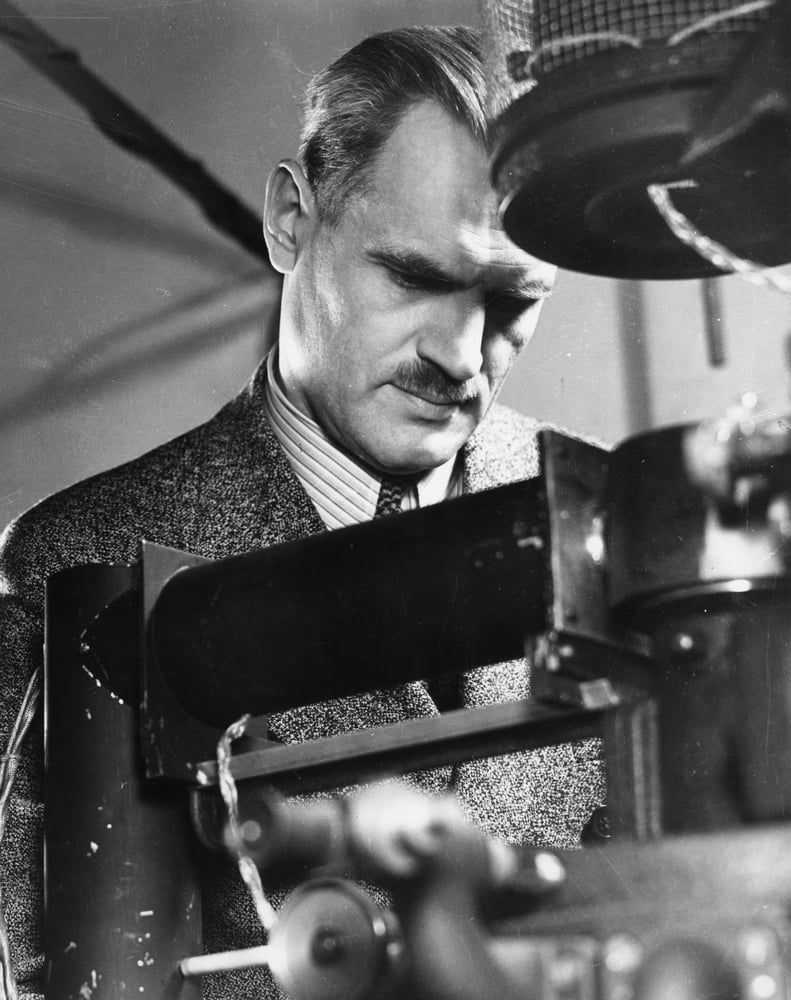
In 1941, physicist Arthur H. Compton stood before an audience in Omaha, Nebraska, to deliver a lecture on the emerging possibilities of sub-atomic energy.1 The potential of the technology was so breathtaking that even those who knew most about it were somewhat uncertain, and a little awed, according to contemporary accounts of the event. At the time, governments had not determined how the physical processes functioned, nor had political leaders decided whether state authorities should intervene to manage the consequences.1
The rhetoric surrounding modern artificial intelligence often treats existential risk as an unprecedented development in industrial history. Yet archival records from the early decades of the twentieth century show that public debates over atomic energy followed an almost identical trajectory.1 Long before the destruction of Hiroshima and Nagasaki in August 1945, the international scientific community divided into familiar factions of apocalyptic doom, commercial optimism, and appeals for regulatory restraint.1
Early warnings and mechanical metaphors
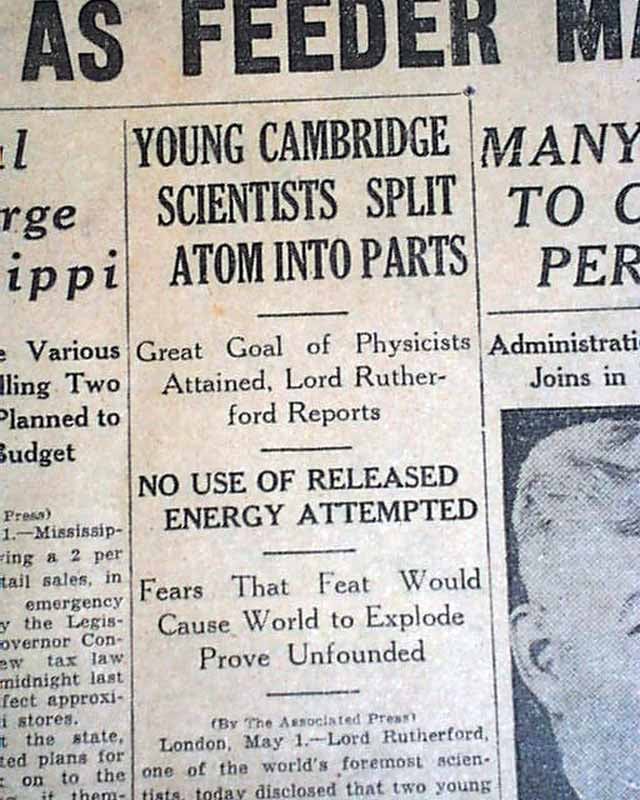
The earliest public anxieties over atomic power emerged alongside the first laboratory demonstrations of atomic structure. In 1919, British physicist Sir Oliver Lodge addressed a scientific gathering in Britain with an explicit warning about the destructive concentration of sub-atomic force.1 Lodge observed that an ounce of matter contained enough atomic energy to destroy an entire continent, expressing his hope that wise authorities would maintain control over the mechanism rather than permitting malicious forces to direct it.1 That same year, physicist Ernest Rutherford achieved the first artificial splitting of the atom, giving experimental weight to theoretical speculation that had circulated since H.G. Wells introduced the term atomic bomb in a 1914 speculative novel.1
By the 1920s, the prospect of weaponized atomic energy had entered popular political and technical commentary. In 1921, an English baron publicly voiced apprehension that future conflicts would be conducted remotely by an operator pressing a button from an office desk.1 Skeptics pushed back against the severity of those forecasts during the same period. Nikola Tesla, then 64 years old, dismissed the assumption that releasing sub-atomic power would necessarily prove lethal, arguing in an interview that even if atomic energy could be liberated for military combat, catastrophic lethality did not automatically follow.1
Popular media increasingly sought mechanical analogies to convey the scale of the energy under examination. A syndicated feature distributed to American newspapers in 1925 asked whether science dared to release the power of the atom, outlining fears that uncontrolled energy might destroy the world.1 The feature juxtaposed that warning with the image of an express locomotive, then the benchmark of industrial mechanical power, comparing atomic release to a runaway train.1 To make the theoretical density tangible, the analysis calculated that the atomic energy locked inside a single drop of water held enough power to run 500 locomotives for an hour.1
The fission breakthrough and panic containment
Scientific optimism resurfaced during the interwar years as researchers attempted to isolate commercial applications. In 1931, Compton announced he was actively studying the controlled release of atomic power, asserting in a public statement that practical mastery of the process could generate a radical change in human civilization.1 That technical optimism reflected a widespread assumption within research institutions that a foundational industrial transformation was approaching.1
That detached tone shifted abruptly toward panic containment at the end of the decade. In 1939, laboratory teams on both sides of the Atlantic Ocean independently confirmed nuclear fission by splitting the uranium atom and measuring the resulting release of energy.1 The confirmation immediately forced researchers into public relations management, as anxiety spread regarding the destructive potential of laboratory experiments.1
Physicists sought to suppress public panic over the possibility of the earth being obliterated by experimental research, directing blame at speculative fiction writers for fostering catastrophic expectations.1 Scientific bulletins published at the time noted that researchers feared widespread public backlash.1 To reassure civilian observers, laboratory leaders argued that the chain reactions necessary to release destructive energy could never occur by accidental chain reaction, insisting the phenomenon required deliberate, direct intent inside a controlled laboratory environment.1

Wartime deployment and the regulatory lag
The detonation of atomic weapons over Japanese cities in August 1945 demolished those reassurances and created the modern non-proliferation debate.1 President Harry Truman acknowledged the gravity of the weapon, stating that researchers had produced a monster capable of wiping out civilization, while urging strict safeguards around the underlying scientific secrets.1 The deployment followed private resistance from several project scientists, who had actively lobbied against dropping the bomb and had submitted proposals for international control regimes prior to the strikes.1
Immediate postwar commentary reflected severe fractures over international governance.1 In the months following the bombings, an Australian scientific speaker insisted to a local audience that civilians had no need to fear atomic power.1 Conversely, a historian addressing a Missouri civic club warned that civilization faced potential destruction by an accident or by a small political group organized around totalitarian ideals, proposing that all technical atomic documentation be transferred immediately to United Nations oversight.1
Despite urgent warnings, institutional oversight evolved at an extraordinarily slow pace. The United States did not establish the Nuclear Regulatory Commission until 1975, exactly 30 years after the Hiroshima detonation, when Congress created an independent civilian watchdog to oversee domestic reactors.1 Multilateral governance proved similarly fragmented.1 Binding international arms treaties took decades to negotiate, and several foundational pacts have since eroded. The final bilateral treaty capping strategic arsenals between the United States and Russia, the New START agreement, expired in February without a replacement framework, leaving the two primary nuclear arsenals unconstrained for the first time since 1972.1
The limits of the atomic comparison
Contemporary discussions surrounding artificial intelligence frequently reference the Manhattan Project as a model for catastrophic risk mitigation. Yet policy analysts point to fundamental technical divergences between the two technologies that complicate any direct governance transfer. Nuclear policy analyst Ankit Panda noted in February that physical fissile materials, such as enriched uranium and plutonium, possess distinct physical signatures that make them relatively straightforward to count, track, and restrict across international borders.1 By contrast, computational infrastructure and algorithmic model weights are far harder to monitor, inspect, or contain through traditional state inspections.1
Panda also questioned whether artificial intelligence will ever experience a singular, decisive event analogous to the atomic bombings of 1945.1 Rather than producing a sudden shock that compels unified international treaties, the proliferation of machine learning systems may unfold more like the historical diffusion of electrical grids or commercial aviation. Under that trajectory, systemic impacts alter military strategy, geopolitical competition, and economic stability gradually across decades, denying policymakers the singular catastrophic catalyst that historically forced regulatory action.1
What this rests on
33 sentences trace to 1 source.
-
1
JC
J.D. Capelouto Document · semafor.com · 18 Sep 2026 View: Fears about technology causing extinction are not unprecedented See the source