Qatar lost $24 billion in LNG sales as Gulf mediators face direct strikes
Attacks on tankers and severe power cuts push Doha, Muscat, and Islamabad to pursue urgent talks in New York.
When United Nations delegates gathered in New York this week, the three governments pushing hardest to broker a settlement between Washington and Tehran were carrying their own direct battle scars.12 Oman, Pakistan, and Qatar have spent months operating as diplomatic intermediaries, yet each state has absorbed mounting commercial disruption and military pressure since hostilities escalated in late February.13
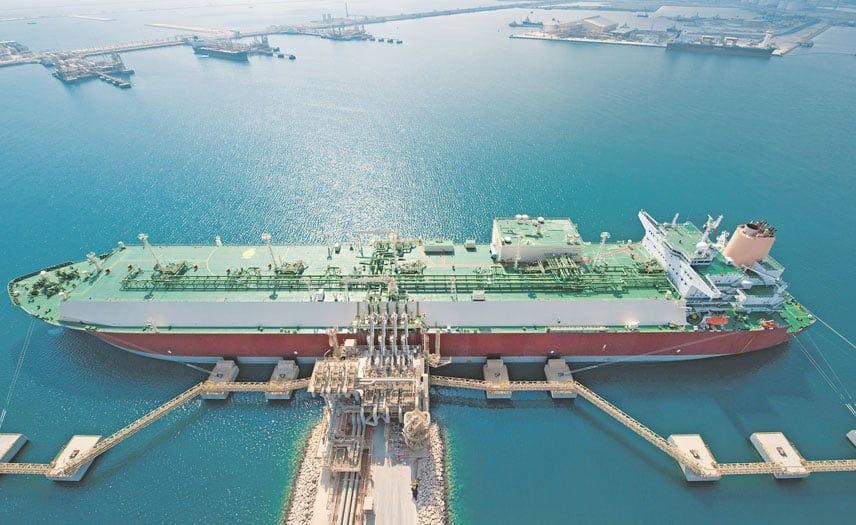
The economic stakes are concentrated most heavily in Doha.1 Qatar exported roughly one-fifth of the world's liquefied natural gas before the outbreak of the war, moving the entire volume through the narrow passage of the Strait of Hormuz.142 Iranian forces effectively closed the waterway in March, stranding tankers and cutting the foundation of Qatar's public revenue.12
Shipments collapsed almost entirely over the spring and summer.54 Qatar exported only 18 cargoes during the first six months of the conflict, representing a decline of about 96 percent compared to the 509 cargoes dispatched during the same window a year earlier.5 Those lost deliveries cost Doha an estimated $24 billion in revenue.5
Commercial shipping companies have attempted costly workarounds outside the waterway. In August, three maritime energy shipments loaded in Qatar and the United Arab Emirates conducted ship-to-ship transfers off the coasts of Oman and the Emirates before sailing onward to Asian buyers.54 Two of the operations involved vessels previously hit or caught in maritime incidents.
The QatarEnergy-operated vessel Al Rekayyat, struck by an Iranian projectile in early July while exiting through the southern Omani corridor near Limah, transferred its super-chilled gas cargo to another Qatari tanker named Tembek off the Emirati coast.53 That replacement vessel subsequently hauled the fuel to India.5 Another carrier, GasLog Shanghai, conducted an emergency offshore cargo transfer to GasLog Savannah near Oman after sustaining damage while leaving the strait in late July.5

Such transfers require specialist cryogenic equipment, protective fenders, and tugboats to keep the commodity at minus 162 degrees Celsius, adding more than $1 million and up to 35 hours of transit time to each voyage.5 Ras Laffan Industrial City, the export complex responsible for Qatari shipments, was designed to turn around between 140 and 150 tankers every month rather than support offshore emergency operations.5 The government in Doha has refused to construct alternative pipeline bypasses, leaving its economic future entirely tethered to the waterway.15
Physical strikes have underscored the country's immediate exposure. Both Qatar and Oman have absorbed Iranian missile and drone attacks.1 The direct threat to local facilities has transformed diplomatic engagement from a strategic posture into an existential shield.
"In the case of Qatar, so much is at stake for them," said Alex Vatanka, a senior fellow at the Middle East Institute.1 "Their wealth, their future, everything is tied to the physical location where they're located. The Qataris want to continue being mediators not because they like the Iranians, not because they give the Iranians a pass or forgive them — it's because they don't have an option."1
Diplomats gathered in New York confirmed that the volatility on the ground continues to imperil talks.1 Qatari Prime Minister Sheikh Mohammed bin Abdulrahman Al Thani said that daily incidents are altering the direction of negotiations between Washington and Tehran.1 He observed that intermediaries are still operating without an overarching diplomatic roadmap to halt the violence.1
The disruption has spread into South Asia, where Pakistan depends on Qatari fuel to keep its power grid functioning.12 Long-term commercial contracts with Qatari projects account for 7.5 million tonnes of Pakistan's 8.4 million tonnes of contracted annual imports.2 When Iranian forces shut maritime access to Ras Laffan, Pakistani import volumes dropped 68 percent month-on-month in March.2

The abrupt cutoff forced Pakistani grid operators to expand rolling electricity blackouts across major cities and raise coal-fired electricity generation to roughly 30 percent of the national power mix.21 Gas supplies to domestic industry dried up quickly.2 Sui Northern Gas Pipelines declared force majeure on industrial deliveries through early August, forcing Agritech to halt operations at its 433,000-tonne annual urea plant and threatening fertilizer output ahead of key planting cycles.2
Purchasing emergency replacements on the open spot market has pushed Pakistan's fragile public finances to the limit.21 The country suffered double-digit inflation that touched a record high of 38 percent in 2023, leaving state buyers with low credit ratings and thin treasury reserves.2 While Islamabad managed to buy an emergency spot cargo at $21.88 per million British thermal units in mid-July, sustained purchases at elevated rates remain fiscally impossible.2
Regional security dynamics have piled additional pressure onto Pakistani leaders. Islamabad maintains a mutual defense agreement with Saudi Arabia, creating persistent concern among domestic officials that missile and drone operations launched by Yemen's Houthi movement could drag Pakistani forces into broader combat.12 Meanwhile, slowing economic activity across the Persian Gulf has begun to squeeze remittance payments sent home by Pakistani expatriate workers.12
Rabia Akhtar, dean of the faculty of social sciences at the University of Lahore, said that staying on the sidelines carries intolerable costs for Islamabad.1 She noted that regional geographic proximity deprives Pakistan of any true protection, forcing the government to draw on its established diplomatic relationships in Washington and Tehran to push for an immediate cessation of hostilities.1
Oman faces a different set of hazards. While its crude oil and gas exports have continued to flow from terminals located outside the Persian Gulf, Muscat has had to weather both Iranian strikes and aggressive diplomatic ultimatums from the United States.1 President Donald Trump warned that the administration would strike Omani territory if Muscat obstructed American geopolitical objectives.1 Concurrently, the White House dispatched an official Treasury delegation to pressure Oman to suspend flights operated by Iranian carrier Mahan Air and sever remaining banking conduits.1
Regional legal scholars point out that this shared exposure provides the mediation effort with rare leverage and urgency. Talal Abdulla Al-Emadi, an energy law professor at Qatar University, said that commercial and security self-interest does not compromise the neutrality of the mediators.1 Instead, he argued, having substantial physical assets and revenue on the line makes a negotiated settlement an immediate domestic necessity for all three capitals.1
What this rests on
40 sentences trace to 5 sources.
-
1
LM
Lauren Morganbesser Document · semafor.com · 22 Sep 2026 Iran war’s peacemakers also have skin in the game See the source
-
2
CF
Center for Strategic and International Studies Third-party reporting · csis.org Pakistan’s LNG Imports Under Pressure: Impacts of the Strait of Hormuz’s Closure and Pakistan’s Diplomatic Response See the source
-
3
E
energypolicy.columbia.edu Third-party reporting · energypolicy.columbia.edu · 8 Jul 2026 Live Updates: Iran and the Conflict in the Middle East - Center on Global Energy Policy at Columbia University SIPA | CGEP % See the source
-
4
G
gcaptain.com Third-party reporting · gcaptain.com · 18 Sep 2026 More LNG Getting Through Hormuz as Producers Push for Transits See the source
-
5
E
euronews.com Third-party reporting · euronews.com · 8 Sep 2026 Qatar and UAE test ways to keep LNG moving outside Hormuz See the source