Pezeshkian rejects US demands to surrender nuclear program
Speaking at the United Nations, Iran's president offered negotiations while Washington weighed strikes and regional mediators pushed to reopen the Strait of Hormuz.
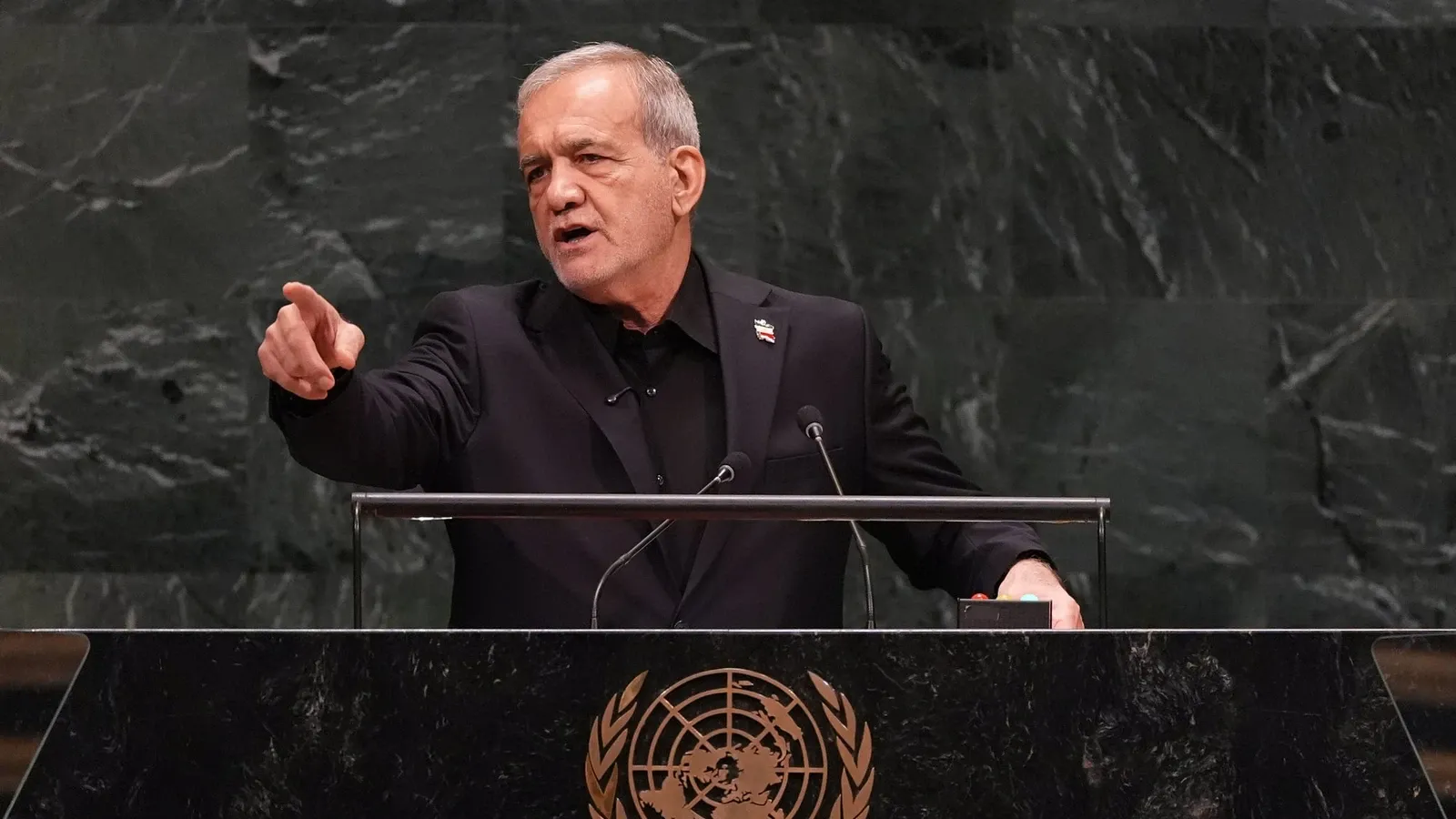
Iranian President Masoud Pezeshkian told the United Nations General Assembly on Wednesday that Tehran is open to discussions to end the regional war, while insisting the country will not surrender its nuclear program or yield to American threats.12
Addressing the 81st high-level opening session in New York, Pezeshkian rejected demands that Tehran dismantle its atomic infrastructure under military pressure.21 The appearance followed remarks from US President Donald Trump, who told the assembly a day earlier that he was weighing whether to pursue a diplomatic settlement or annihilate the Islamic Republic.21
Pezeshkian described Iran's military actions as defensive and argued that economic sanctions would fail to force concessions from Tehran.2 He said Iran would never bow its head or bend at the knee, adding that the country is not afraid of fighting.2

The speech unfolded during a fragile pause in the conflict that began in February when the United States and Israel launched joint military strikes.2 While a 60-day ceasefire took effect in April, it collapsed in July without producing a formal diplomatic accord or returning the region to full-scale combat.2 In response to the February attacks, Iran shut the Strait of Hormuz, an arterial passage that previously handled a quarter of global oil supplies, and has since permitted only partial commercial transit.2
Disputed diplomacy in New York
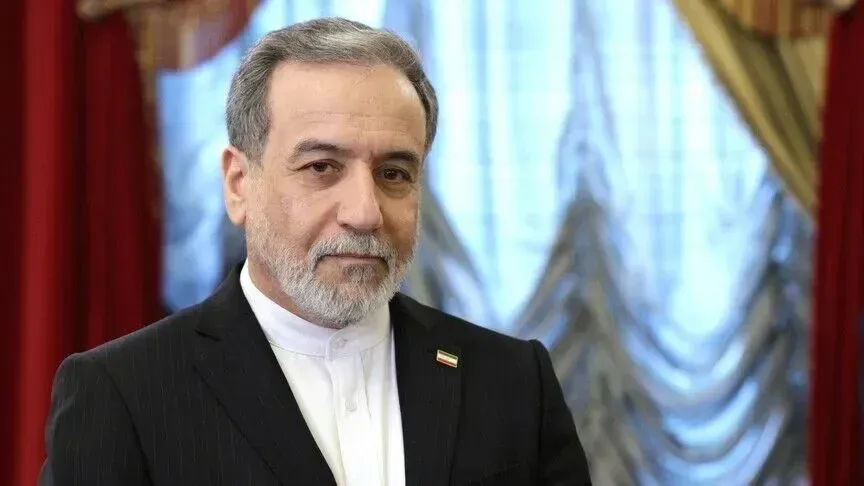
Despite the combative speeches, direct and indirect contacts continued behind closed doors in Manhattan.3 US envoys Steve Witkoff and Jared Kushner held a three-hour meeting with an Iranian delegation that included Foreign Minister Abbas Araghchi.3 Trump described the session as very good, telling regional leaders that considerable momentum existed to end the fighting.3
Iranian officials confirmed the encounter occurred at American insistence, though accounts diverged on its duration.32 Iranian Foreign Ministry spokesperson Esmaeil Baqaei described two hours of Qatari-mediated discussions on the sidelines of the assembly, stating that Tehran had laid out specific conditions for any settlement.2
Those terms center on the maritime choke point.3 Iranian diplomats signaled that Tehran could reopen the Strait of Hormuz within seven days if the United States halts naval blockade operations against Iranian ports, lifts economic penalties, and unfreezes restricted financial assets.32 Meanwhile, Iran's parliament advanced legislation permitting authorities to seize 20 percent of cargo or cargo value from commercial ships deemed to have violated transit regulations.3
Escalation warnings and domestic pressure
The White House has maintained an uncompromising public stance on Iran's nuclear infrastructure.2 US Secretary of State Marco Rubio told reporters in New York that Iran could never possess a nuclear weapon, warning that continued regional proxy activity or atomic advancement would trigger expanded sanctions, military options, or both.2
Military figures in Tehran issued parallel warnings against renewed strikes.3 Islamic Revolutionary Guard Corps spokesperson Hossein Mohebbi said Iranian forces were prepared for an extended conflict, warning that further attacks would be met with new weaponry and strikes on different targets.43 During discussions with regional leaders, Trump cautioned that the United States could target Pickaxe Mountain if military activity resumed at the facility.3
The confrontation carries political complications for both administrations.13 Trump has faced growing domestic scrutiny as the conflict drags on, with several Republican candidates releasing campaign advertisements critical of the war.1 At the same time, the administration has appeared reluctant to press China's leadership to curtail Iranian trade or impose sanctions on Chinese financial institutions that facilitate Iranian transactions.15
In Tehran, hardline lawmakers have increased pressure on Pezeshkian, with some legislators floating legislative proposals to withdraw from the Treaty on the Non-Proliferation of Nuclear Weapons.3 Pezeshkian nevertheless maintained that dialogue remains possible, arguing that security cannot be achieved through expanded warfare.2
What this rests on
26 sentences trace to 5 sources.
-
1
BR
Brendan Ruberry Document · semafor.com · 23 Sep 2026 Iran’s president says the country won’t ‘bow’ to the US See the source
-
2
JT
Jewish Telegraphic Agency Third-party reporting · jta.org · 23 Sep 2026 Iran won’t bow to military action or sanctions and will retain nuclear program, country’s president tells UNGA - Jewish Telegraphic Agency See the source
-
3
II
Iran International Third-party reporting · iranintl.com · 22 Sep 2026 Trump sees ‘momentum’ for Iran deal after New York meetings See the source
-
4
FN
Fox News Third-party reporting · foxnews.com · 21 Sep 2026 Trump weighs next move in Iran war as Tehran threatens new weapons See the source
-
5
W
washingtonexaminer.com Third-party reporting · washingtonexaminer.com · 15 Sep 2026 Trump wants Iran to fold — Xi Jinping won't allow it. Here’s his missing move See the source