Brazilians vote as 150 million cast ballots in presidential race
Incumbent Luiz Inacio Lula da Silva faces Senator Flavio Bolsonaro after a campaign shaped by tariff disputes and regional security initiatives.
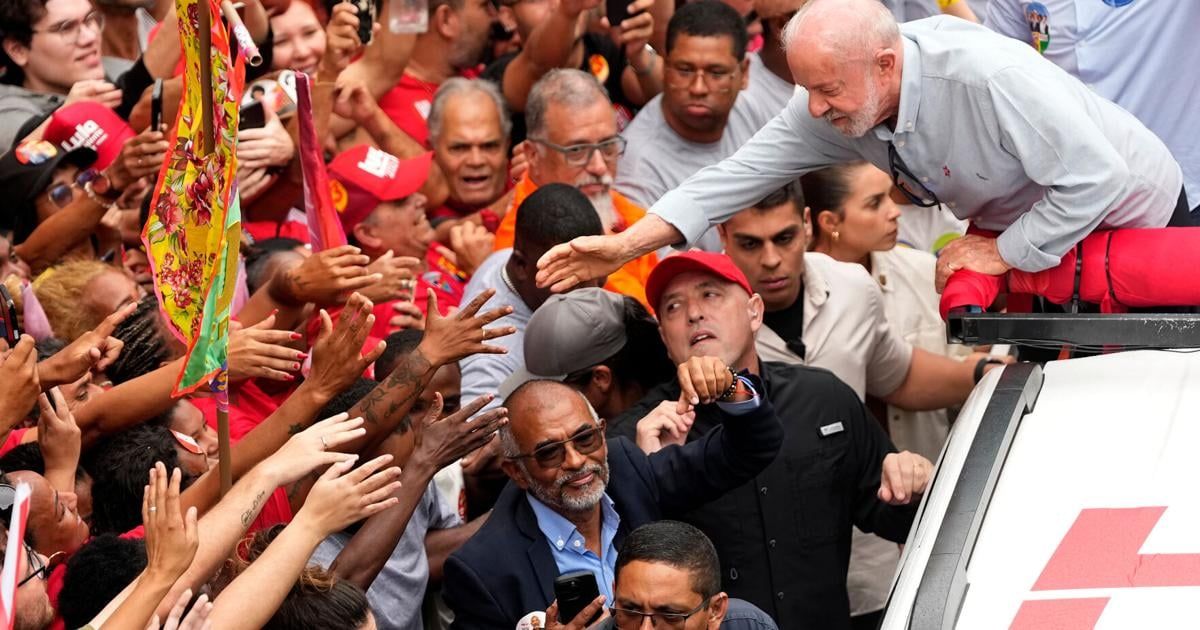
More than 150 million Brazilians cast ballots Sunday in a presidential election that stands to redefine the governance of Latin America's largest economy.12 The contest pits incumbent President Luiz Inacio Lula da Silva against Senator Flavio Bolsonaro, the eldest son of the former president, following a campaign dominated by sharp disputes over national sovereignty and foreign alignment.21
If neither contender secures more than 50 percent of the valid votes, the election will move to a runoff scheduled for October 25.2 The ballot marks the country's first national presidential contest since supporters of former President Jair Bolsonaro breached government headquarters in Brasilia in January 2023.2 Jair Bolsonaro was sentenced in 2025 to 27 years in prison on charges of plotting a military coup and remains under house arrest, prompting his son to pledge an amnesty or pardon for those convicted in connection with the unrest.2
The race presents two starkly divergent models for managing commercial ties and geopolitical pressure. Lula, an 80-year-old leader seeking a fourth term in office, has positioned the defense of domestic democratic institutions at the core of his reelection bid.21 In an address to the United Nations General Assembly in September 2026, Lula voiced concern over outside efforts to sway the outcome of the vote, asserting that the country would not allow foreign actors to undermine the popular will.2
Tensions between Brasilia and Washington escalated after the United States imposed tariffs reaching 50 percent on multiple Brazilian product lines last year.3 In response to unilateral trade penalties, Brazil's National Congress passed the Economic Reciprocity Law unanimously in 2025, granting executive authority to retaliate against foreign duties.4 The statutory measure codified an assertive sovereigntist posture that crosscuts standard party affiliations in Brasilia.
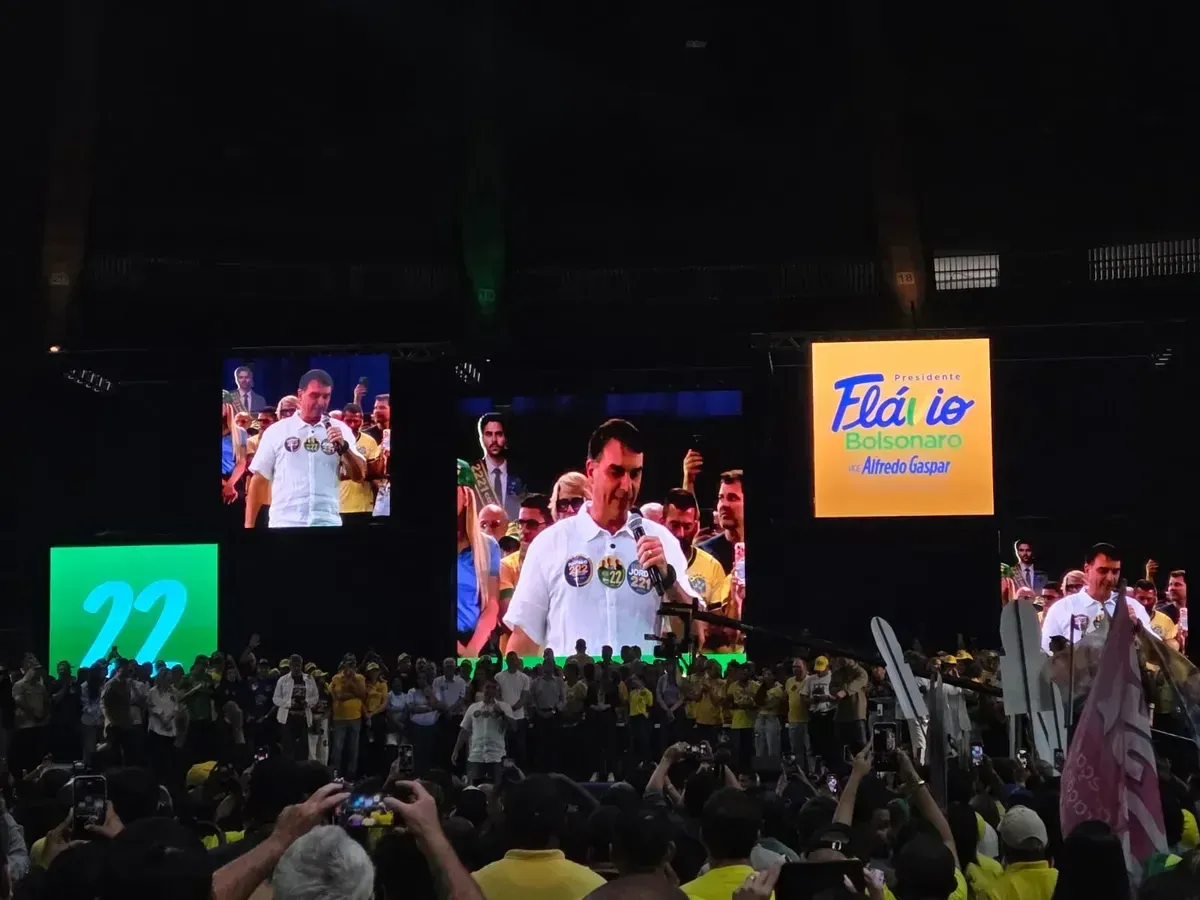
Flavio Bolsonaro has pursued an alternative strategy focused on restoring close bilateral relations with the White House. The conservative candidate has pledged to align Brazil with the Shield of the Americas, a regional anti-crime initiative proposed by the Trump administration that Lula refused to enter.23 Bolsonaro also released a 12-point domestic security plan in June, proposing to designate organized criminal groups as narcoterrorist organizations and construct maximum-security penal facilities inspired by El Salvador's prison network.2
Public security remains an urgent priority for Brazilian voters, with a September survey indicating that 28 percent of respondents viewed violence as the nation's leading crisis.2 That concern has intensified as criminal syndicates expanded operations across state boundaries. In December 2025, authorities arrested the president of Rio de Janeiro's state assembly over suspected connections to Red Command, one of the country's most powerful crime cartels.2
Despite ideological friction with the United States, commercial realities constrain any wholesale pivot by either candidate. China has served as Brazil's largest trading partner since 2009, creating economic dependencies that no incoming administration can readily discard.42 Bilateral commerce between Brazil and China hit a record $171 billion in 2025, representing 7.5 percent of Brazilian gross domestic product, compared to $83 billion in trade with the United States.4 China purchased $100 billion of Brazilian commodities in 2025, roughly 28 percent of the country's total exports, while the United States purchased $37.6 billion.4
Trade patterns shifted further during the opening months of 2026. Brazilian exports to the United States dropped 12.2 percent in the first half of the year, while shipments to China expanded by nearly 20 percent.4 Even as Flavio Bolsonaro has expressed an ambition to seek a formal free trade agreement with Washington, his published campaign platform maintains that Brazil must sustain pragmatic commercial relations with Beijing.32
The next president will oversee critical infrastructure decisions that intersect with superpower competition, including deep-water port concessions, satellite network licenses, and critical mineral extraction. While Lula has advanced de-dollarization mechanisms and settled bilateral transactions directly in native currencies with Chinese partners, Bolsonaro has voiced reservations regarding non-Western financial clearing systems.3 The outcome of Sunday's vote will determine how Latin America's primary agricultural power negotiates those competing demands.
What this rests on
19 sentences trace to 4 sources.
-
1
BR
Brendan Ruberry Document · semafor.com · 4 Oct 2026 Brazilians vote in election that could reshape US ties See the source
-
2
CO
Council on Foreign Relations Third-party reporting · cfr.org · 2 Oct 2026 Brazil’s 2026 Election: What to Know and What’s at Stake | Council on Foreign Relations See the source
-
3
FP
Foreign Policy Third-party reporting · foreignpolicy.com · 21 Sep 2026 How Flávio Bolsonaro Sees the World See the source
-
4
Q
quincyinst.org Third-party reporting · quincyinst.org · 24 Sep 2026 Structural Misalignment and the Limits of Pressure: Trump and Brazil’s 2026 Election See the source