Sudden foreign aid cuts dismantled essential health services across three continents
Abrupt halts to international assistance severed reproductive care, HIV treatments, and community clinics in Nepal, Kenya, and Colombia, according to an assessment of practitioner surveys and interviews published in BMJ Public Health.

Modern public health systems in low- and middle-income nations often rely on a fragile equilibrium of international assistance, where clinical operations depend on steady cash flows from overseas donors. When foreign governments supply regular capital, health workers can distribute daily medications, conduct routine maternal examinations, and sustain outreach networks for marginalized communities. If that financial pipeline closes overnight, community clinics frequently shutter within weeks, leaving patients stranded without basic medicines or professional care.
The chain connecting foreign aid to individual patients follows a clear sequence. International donor agencies disburse grants to national health ministries and non-governmental organizations. Those organizations use the funding to rent clinic space, purchase pharmaceutical shipments, and pay the monthly salaries of doctors, nurses, and community outreach staff. Frontline workers then deliver contraceptive supplies, prenatal screenings, and antiviral treatments directly to local residents. If the originating donor suddenly halts grant payments, organizations run out of operational cash, supply deliveries cease, healthcare workers go unpaid, and patients immediately lose access to vital medical services.
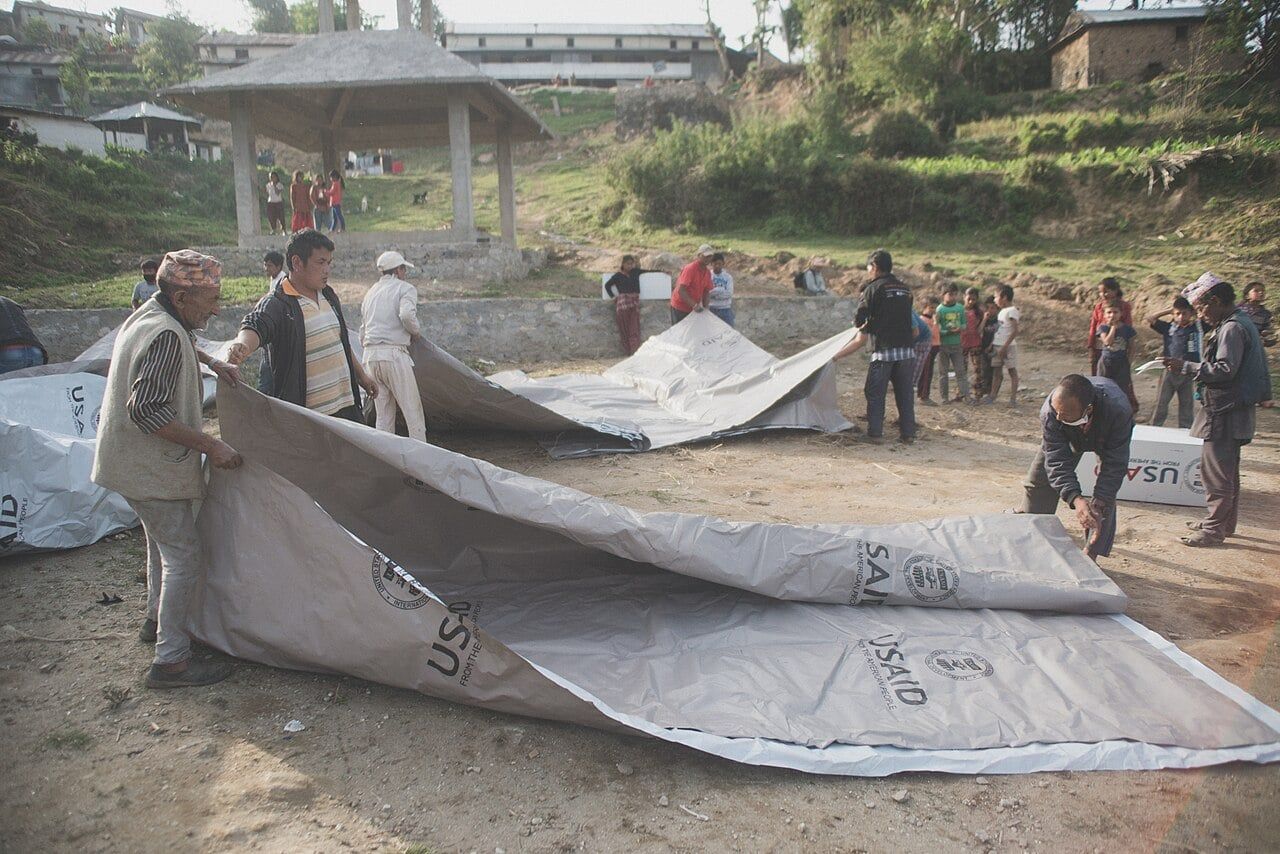
A rapid assessment published in the journal BMJ Public Health by researchers at the Columbia University Mailman School of Public Health documented how this sequence played out across three continents in 2025.1 In January 2025, the Trump administration announced a 90-day freeze on all United States government foreign aid, which subsequently became a permanent shutdown of the United States Agency for International Development in July 2025.1 Lead author Sarah Branoff and colleagues examined the consequences of that sudden funding cessation by tracking healthcare disruptions across Nepal, Kenya, and Colombia.1

How did the funding freeze dismantle community healthcare?
The sudden withdrawal of United States foreign assistance triggered immediate service breakdowns across maternal care, reproductive health, and chronic infection management.1 In the paper published in BMJ Public Health, first author Sarah Branoff, a research assistant at Columbia Mailman's Heilbrunn Department of Population and Family Health, and co-authors reported that the abrupt policy shift interrupted sexual and reproductive health and rights services while halting critical access to HIV treatment.1 Clinical referral networks collapsed as secondary care facilities lost the funds needed to accept transfers from primary clinics, stranding patients who required specialized interventions.1
These structural failures rippled through vulnerable communities and healthcare staff. The study documented a severe mental health crisis that affected both patients facing sudden treatment cutoffs and clinical workers who were confronting immediate personal financial ruin.1 Margins of safety deteriorated rapidly for populations that already experienced social discrimination, notably sex workers, migrants, people living with HIV, and LGBTQ+ communities.1 The authors reported that survey participants and interviewees widely anticipated substantial reversals in longstanding health gains that had taken decades of international investment to achieve.1
What evidence did the researchers gather across three continents?
Researchers evaluated operational breakdowns during the initial months of the funding freeze by interviewing 53 healthcare stakeholders and surveying 98 global health practitioners across Nepal, Kenya, and Colombia.1 The investigative team, led by Columbia University Mailman School of Public Health in collaboration with local organizations, selected the 53 interview participants from non-governmental organization leaders, clinicians, community health workers, government officials, and humanitarian actors based on their direct or indirect roles in health programs funded by the United States government.1 The complementary survey of 98 global health practitioners gathered standardized assessments of clinical disruptions in real time.1
The investigation brought together academic researchers and local policy specialists from each affected region.1 Senior author Sara E. Casey, an associate professor of population and family health at Columbia Mailman, contributed alongside Thoai D. Ngo, Sarah Engebretsen, and Claire Greene.1 They collaborated with Julia Kosgei and Livia Merlim from a policy and strategy group in Kenya, Anand Tamang, Achala Shrestha, and Jyotsna Tamang from the Center for Research on Environment Health and Population Activities in Nepal, and Camilo Ramirez at HIAS Colombia.1 Anand Tamang reported that grassroots non-governmental organizations in Nepal suffered especially devastating consequences because smaller community clinics lacked alternative funding sources.1
What can the study show, and what remains unknown?
The findings provide rapid qualitative and survey-based documentation of immediate operational crises, without measuring long-term patient morbidity or mortality across an exhaustive global census.1 The investigation captured conditions during the early months following the January 2025 freeze, relying on the direct testimonies of 53 interviewees and responses from 98 surveyed practitioners in three specific countries.1 Because the authors designed the project as a rapid assessment of health system shocks, the study does not measure exact changes in regional disease transmission rates or quantify long-term death tolls. The authors stated that the investigation received no specific grant from any funding agency across the public, commercial, or not-for-profit sectors, and the investigators declared no conflicts of interest.1
To prevent similar vulnerabilities in the future, the study's authors outlined structural reforms aimed at insulating community medicine from unilateral donor decisions.1 The researchers called for diversified and resilient global health financing mechanisms, stronger domestic preparedness within recipient countries, and human rights-based frameworks for essential medical delivery.1 They also urged the global health community to establish rapid-response research mechanisms and localization strategies, shifting resources and management to local healthcare institutions to protect essential services against future political disruptions.1
What this rests on
22 sentences trace to 1 source.
-
1
S
scientificinquirer Document · scientificinquirer.com · 6 Oct 2026 Study spotlights human toll of abrupt U.S. foreign aid cuts See the source