Judge questions paid Truth Social access to White House posts
A federal court weighs whether charging up to $100,000 monthly for early presidential statements violates constitutional protections.
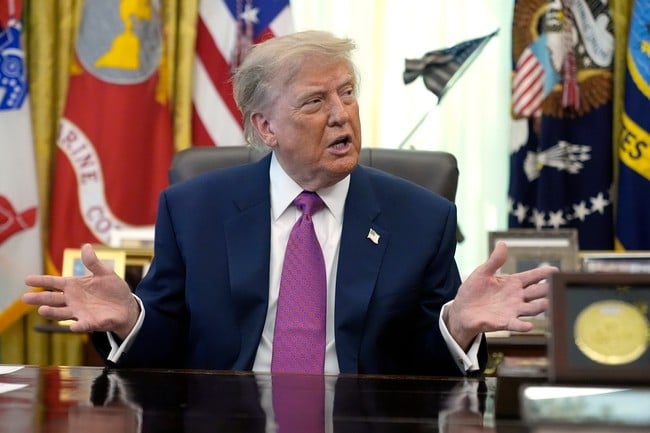
A federal judge in Manhattan is weighing whether Donald Trump can charge commercial subscribers up to $100,000 a month for early technical access to official government statements published on Truth Social.12
The dispute centers on Truth API, an enterprise data interface launched in August 2026 by Trump Media & Technology Group.34 The service delivers a direct, low-latency feed of posts from the platform's 10 most popular accounts, including Trump, Vice President JD Vance, FBI Director Kash Patel, and the White House.3 High-frequency trading firms pay $60,000 to $100,000 monthly to receive these posts milliseconds ahead of the public web interface.43
In a hearing in U.S. District Court for the Southern District of New York, Judge J. Paul Oetken challenged arguments from the Department of Justice that the paid service represents an ordinary commercial practice.21 Non-profit news publishers The Intercept and the Freedom of the Press Foundation are seeking a preliminary injunction to halt the arrangement, arguing that monetizing priority access to presidential announcements creates unconstitutional tiers of public information.43
The mechanics of early access
Trump Media announced Truth API on August 1, 2026, pitching the feed as a commercial tool for organizations vulnerable to delayed information.34 By the company's account, market-moving announcements often appear first on Trump's personal social media account, including military strikes, ceasefires, agency leadership changes, tariff policies, and domestic regulations.41
Subscribers paying $100,000 per month, or $60,000 per month under a three-year contract, receive an automated data pipeline that pushes posts into their trading or newsroom systems.35 In an August earnings call, Trump Media interim chief executive Kevin McGurn told investors that the company had signed more than 10 customer agreements, primarily with algorithmic trading firms seeking low-latency feeds.43 McGurn also stated that the firm was in discussions with cloud computing vendors, large language model developers, and major news organizations.41
For algorithmic trading desks, the commercial value lies in technical timing. The API pushes text to subscribers approximately 50 milliseconds before it appears on the standard Truth Social interface or through automated scrapers.25 During oral arguments, Oetken questioned whether that margin caused concrete harm to the working press, noting that 50 milliseconds represents a negligible delay to any human reader.21
Plaintiffs countered that the advantage extends beyond human perception into technical news gathering. In court, attorney David Schulz argued that the platform'ter delays make it harder for journalists to alert audiences before financial markets react.21 When automated feeds process presidential statements instantly, traders can reposition capital before ordinary readers or independent reporters know an announcement occurred.42
Archiving and web scraping barriers
Beyond latency, the lawsuit challenges structural barriers that prevent the public from reviewing deleted or edited posts.45 Nikhel Sus, chief counsel for Citizens for Responsibility and Ethics in Washington, which represents the news organizations alongside the Media Freedom & Information Access Clinic at Yale Law School, pointed out that Trump regularly removes posts after publishing them.13
According to the plaintiffs, Trump Media's terms of service and technical restrictions deliberately disrupt third-party web scrapers.54 That policy leaves Truth API as the only reliable pipeline for maintaining real-time archives of deleted statements.14 McGurn told investors in August that the platform intended to create friction for external parties attempting to access the data without paying for commercial subscriptions.4
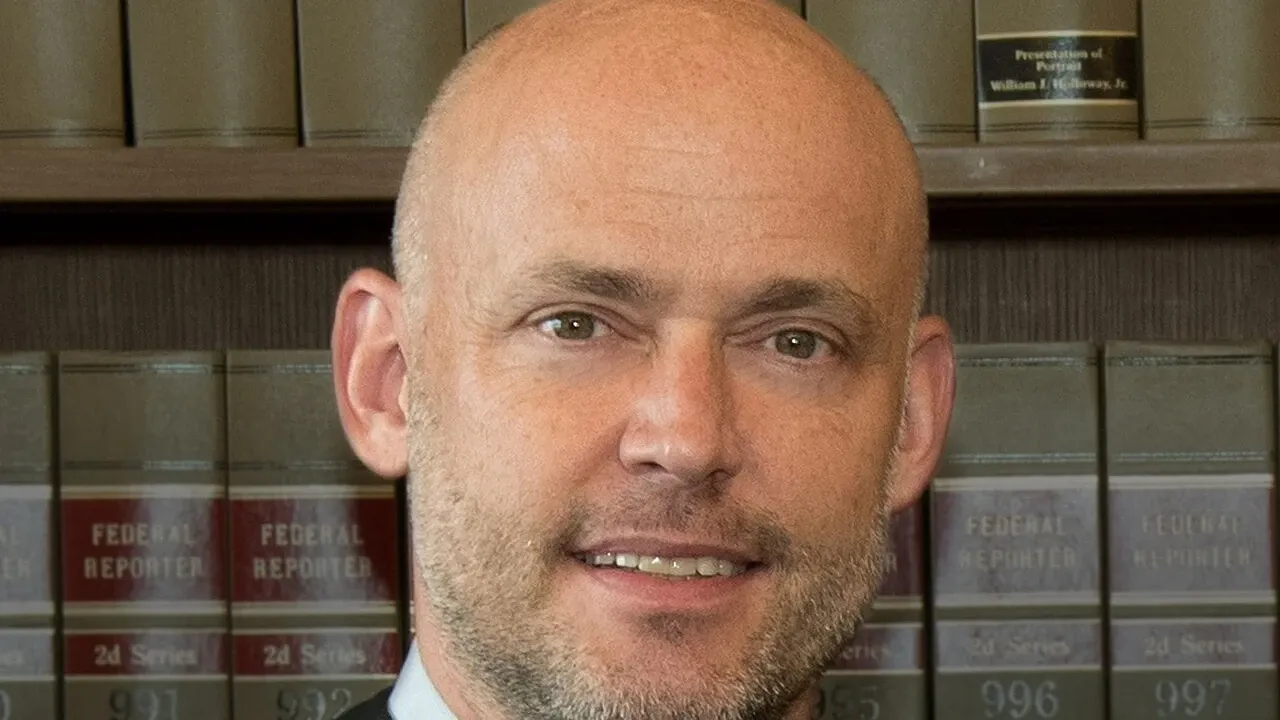
Sus argued that this restriction deepens the disparity between large institutions and non-profit watchdogs. Without direct access to the machine-readable feed, outside observers face significant delays when documenting official policy reversals, executive actions, or sudden administrative dismissals.
The Electronic Frontier Foundation, which filed an amicus brief supporting the preliminary injunction, argued that the government cannot impose financial barriers on access to official pronouncements.6 David Greene, civil liberties director at the Electronic Frontier Foundation, wrote that conditioning equal access to public officials' public statements on substantial monthly fees fails basic constitutional standards.
The administration's defense
Arguing for the administration, Department of Justice civil attorney Brantley Mayers urged the court to separate Trump's public duties from Trump Media's commercial operations.12 Mayers described the pricing model as a standard private business decision made by the corporate entity, rather than state action directed by the White House.12
Mayers likened Trump's social media feed to Franklin D. Roosevelt's radio fireside chats and John F. Kennedy's televised press conferences, contending that presidents have always used emerging media technologies to communicate directly with citizens.21 Mayers argued that early radio broadcasts also carried economic barriers to entry because some households in the 1930s could not afford receivers.1
Oetken rejected that historical comparison from the bench, asking whether Roosevelt ever charged citizens money to hear his broadcasts.1 The judge noted that the corporate structure creates an unusual, symbiotic relationship between the sitting president and a publicly traded company that trades on his office.21
Trump remains the majority shareholder and primary stakeholder in Trump Media & Technology Group.12 During the second quarter of 2026, the company reported $1.7 million in revenue and a net loss of $238.1 million, including $190.4 million in non-cash losses related to digital assets and equity securities.4 The company's corporate filings indicate that data licensing through Truth API is intended to provide an ongoing stream of cash revenue.43
Mayers maintained that the plaintiffs have presented no evidence showing Trump personally ordered or directed the creation of the API pricing structure.21 Without proof of personal involvement in setting the commercial tiers, Mayers argued, the court cannot find unlawful state action.
Constitutional stakes and pending ruling
The plaintiffs base their claims on the First and Fifth Amendments, as well as the Presidential Records Act.14 Their filings assert that the Fifth Amendment bars the government from charging unreasonable sums that do not offset actual administrative costs, and that the First Amendment guarantees equal access to public presidential statements.14
Attorney David Schulz told the court that the administration has outsourced the White House press office to a private corporation without articulating any legitimate government interest in prioritizing wealthy subscribers over other members of the public.2
Oetken did not issue a ruling from the bench at the close of arguments. The judge reserved decision and promised a written order on the requested preliminary injunction in the coming weeks.15 If granted, an injunction could bar White House officials from posting government announcements exclusively on Truth Social while the paid feed remains active.45
What this rests on
37 sentences trace to 6 sources.
-
1
AB
Ashley Belanger Document · arstechnica.com · 8 Oct 2026 Judge weighs if Trump can charge $100K for early access to Truth Social posts See the source
-
2
TW
The Washington Sun Third-party reporting · washingtonsun.com · 7 Oct 2026 Judge Weighs Whether to Block Some Trump Truth Social Posts See the source
-
3
T
techjournal.org Third-party reporting · techjournal.org · 8 Sep 2026 Truth Social API Lawsuit Seeks to Block Paid Early Access See the source
-
4
AT
-
5
X
x.com Third-party reporting · x.com Inner City Press (@innercitypress) on X See the source
-
6
E
eff.org Third-party reporting · eff.org EFF to Court: Trump's Use of Truth Social's Pay-To-See-Posts-First Scheme Violates Americans' 1st Amendment Equal Access Rights See the source