Federal execution broadcast plan stirs debate over public violence
Proposals to televise a military firing squad and viral zoo footage force fresh scrutiny on digital exposure to graphic deaths.

A contentious debate over the public display of violent deaths has intensified following federal proposals in Washington to broadcast a military execution and the online circulation of fatal animal attack footage in Britain. The converging episodes have renewed scrutiny from legal scholars and ethicists over psychological damage, state transparency, and human dignity in digital media.
The Pentagon plans to carry out the federal execution of former Army Major Nidal Hasan by firing squad in December, accompanied by a public live broadcast.12 Hasan received a death sentence for the 2009 mass shooting at Fort Hood that killed 13 unarmed soldiers.21 If executed by firing squad, the procedure would mark the first military capital punishment by that method since World War II and the first publicly visible federal execution in 90 years.1
Defense Secretary Pete Hegseth defended the live broadcast during an appearance on the streaming network Real America's Voice, arguing that public visibility reinforces deterrence.1 “People need to understand that there’s serious consequences for these types of things,” Hegseth said.21
Critics across international organizations and domestic legal bodies have strongly condemned the proposal. The United Nations human rights office warned that broadcasting the event would be “tantamount to a public execution and would breach the absolute prohibition of torture”.2 Kyinzom Dhongdue of Amnesty International similarly opposed the plan, arguing that “turning a state-sanctioned killing into a public spectacle only compounds the cruelty of the death penalty.”2
In Australia, politicians from opposing parties united against the broadcast. One Nation member Barnaby Joyce and Australian Greens member Sarah Hanson-Young both condemned the streaming plan on human dignity grounds.2
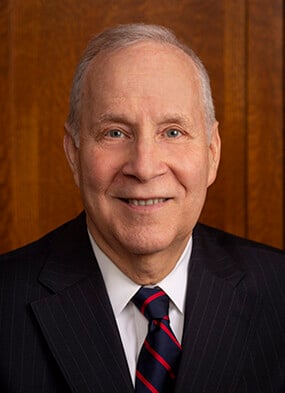
Eugene Fidell, a military law specialist and visiting lecturer at Yale Law School, rejected the administration's deterrence claims.1 Fidell argued that the delta between standard deterrence and public broadcast deterrence is zero.1 An execution is intended to be a formal and solemn act of the state, Fidell noted, warning that turning the event into a public broadcast amounts to “execution porn” and aligns the country with authoritarian regimes that conduct public spectacles, including North Korea, Iran, and the Taliban administration in Afghanistan.
Fidell also pointed to an administrative discrepancy in federal detention rules. Department of Justice standards enforced by the Bureau of Prisons strictly prohibit recording or broadcasting executions in civilian federal penitentiaries, while military regulations do not explicitly address the practice.1 Fidell observed that while Hasan could challenge the live broadcast as cruel and unusual punishment under the Eighth Amendment of the United States Constitution, no lawsuit has been filed.
Viral footage and privacy boundaries
The controversy surrounding the planned execution coincides with the rapid dissemination of footage depicting a deadly animal attack in the United Kingdom. On October 10, 2026, 20-year-old William Chapman died after climbing into the tiger enclosure at Yorkshire Wildlife Park near Doncaster.34 Emergency personnel from the Yorkshire Ambulance Service were dispatched to the park at 1:33 pm, but Chapman was pronounced dead at the scene shortly after 1:30 pm.53
South Yorkshire Police confirmed that Chapman had visited the 150-acre conservation facility alone.3 Eyewitness Ella Ford observed Chapman wearing headphones and pacing on a raised 300-meter walkway in the Land of the Tigers habitat minutes before he climbed over security barriers.3 Chapman entered the enclosure and approached Altai, a five-year-old male Amur tiger weighing roughly 200 kilograms, or 31 stone.34 Altai had transferred to the Doncaster facility in February 2025 from Dyreparken zoo in Norway under the European Endangered Species Programme to join resident female tiger Tschuna.43
Cellular phone footage recorded from the viewing platform and videos posted from Chapman's own social media accounts circulated rapidly across digital platforms, including Facebook.24 British police urged the public not to share recordings of the mauling, yet clips continued to spread.2 Former United States President Donald Trump posted a video clip showing the tiger biting Chapman to 13 million followers on Truth Social, appending the phrase, “Don’t ever mess with nature!”6
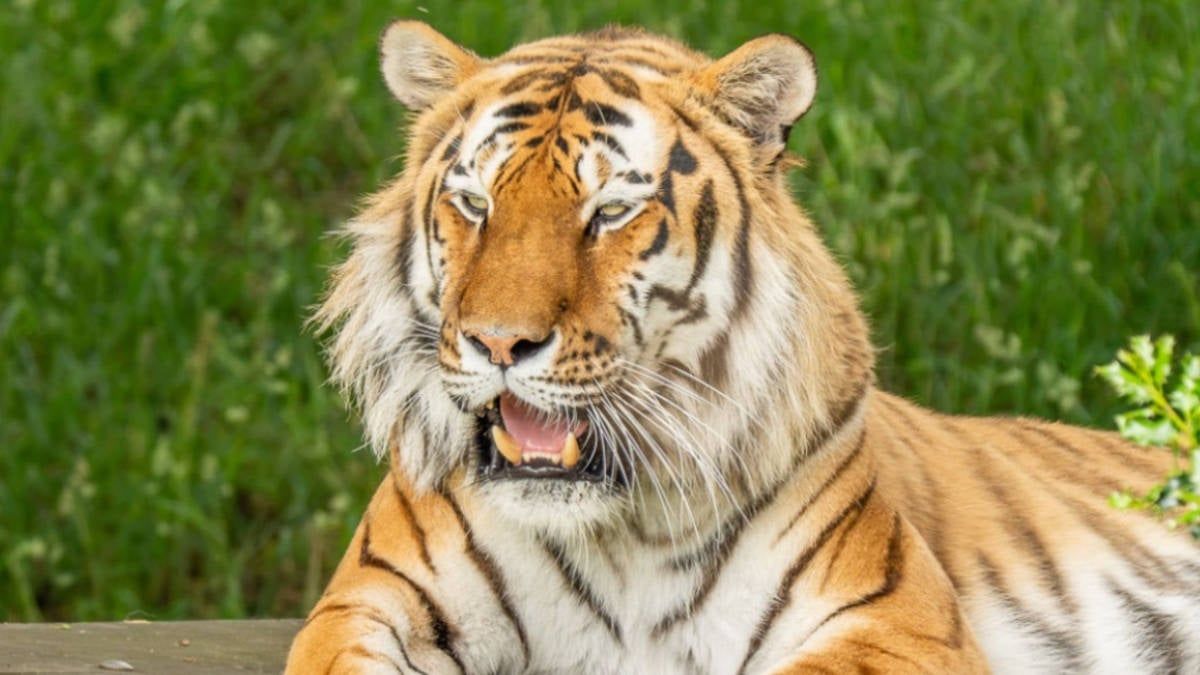
Chapman's family issued a statement describing him as a “bright, warm and engaging young man” who had “suffered from significant mental illness” and had received strong medication. As a child actor trained at the Jackie Palmer Stage School in High Wycombe, Chapman had appeared in the television drama May Contain Nuts alongside Shirley Henderson and in the documentary series True Stories.63 City of Doncaster Council executive director of place Dan Swaine confirmed that the local authority initiated a formal health and safety investigation alongside police and regional health agencies. Park officials stated that Altai would not be euthanized.43
Ethical duties and the cost of spectacle
Philosopher Jacqueline Boaks, an ethicist at the Curtin Centre for Applied Ethics at Curtin University, analyzed the broader dilemma of broadcasting violent deaths in a paper published through Science 2.0.2 Boaks identified two core ethical categories governing graphic footage: the psychological harm inflicted on viewers and the violation of personal dignity.
Documented medical research shows that exposure to extreme violence carries substantial emotional tolls. Professional content moderators tasked with screening and filtering violent online material experience elevated rates of post-traumatic stress disorder.2 Studies also reveal that children exposed to graphic violence online experience adverse outcomes ranging from intense emotional upset to measurable increases in aggressive behavior.2 Repeated exposure to violence as a visual commodity degrades empathy and compassion, civic virtues that classical philosophers such as Aristotle regarded as essential for societal health.2
The dignity concerns rest on philosophical frameworks originating with Immanuel Kant, who maintained that human beings possess intrinsic worth.2 Kantian ethics holds that exploiting a person's death as public spectacle violates fundamental rights by treating a human life merely as a means to an end.2 Even passive viewing driven by curiosity disregards an individual's reasonable interest in privacy during their final moments.2
Boaks evaluated three potential arguments that proponents advance to justify distributing violent imagery: historical duty to bear witness, governmental transparency, and deterrence. Bearing witness motivated the public release of photographic evidence from concentration camps following World War II, where exposure served to verify atrocities and prevent historical denial.2 The same moral imperative often applies to natural disaster documentation, such as severe flood disasters in Nepal where citizens were swept away.2
Boaks concluded that neither the tiger enclosure incident nor the federal execution qualifies under the standard of bearing witness. While citizens possess a legitimate interest in monitoring sovereign power exercised in their name, that oversight requires verified civilian witnesses rather than an open public telecast.2 With empirical evidence for deterrence lacking, Boaks argued that the moral burden ultimately shifts to individual digital consumers to refuse violent spectacle and respect human privacy.
The record
32 sentences trace to 6 sources.
-
1
N
NPR Third-party reporting · npr.org · 12 Oct 2026 Yale Law expert on Hegseth's plans to livestream execution See the source
-
2
S2
Science 2.0 Document · science20.com · 13 Oct 2026 Bearing Witness: Why It Might Be Ethical To Watch A Mass Murderer's Execution See the source
-
3
DM
Daily Mirror Third-party reporting · mirror.co.uk · 13 Oct 2026 Tiger attack victim was a former child actor - latest See the source
-
4
BN
BBC News Third-party reporting · bbc.co.uk · 12 Oct 2026 Yorkshire Wildlife Park fatal tiger attack - what we know so far See the source
-
5
DE
Daily Express US Third-party reporting · the-express.com · 11 Oct 2026 Man dies after being attacked by tiger at Wildlife Park - World News - News - Daily Express US See the source
-
6
TI
The Independent Third-party reporting · independent.co.uk · 13 Oct 2026 Yorkshire tiger latest: Family pay tribute to ‘warm and engaging’ man killed in zoo See the source