Trump FDA nominee helped draft scientific case to cut childhood vaccines
Heidi Overton built agency consensus to trim CDC universal shots to 11 before Senate confirmation stalled.
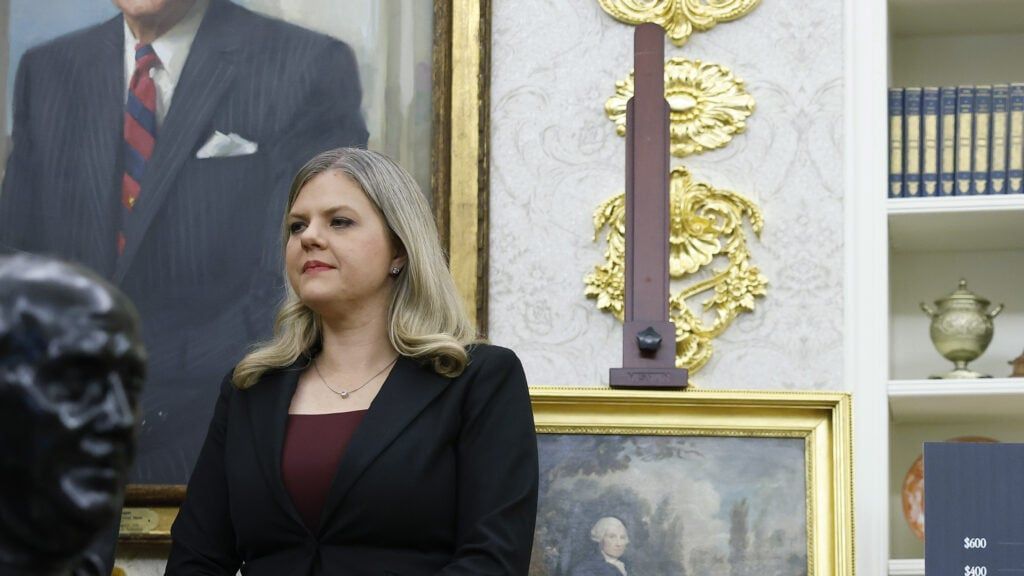
Heidi Overton, President Donald Trump's nominee to lead the Food and Drug Administration, played a central role in driving the administration's initiative to narrow the federal schedule of recommended childhood immunizations.1 Working as an aide on the White House Domestic Policy Council, Overton helped draft and edit the scientific justification used to underpin cutting the universal childhood vaccine recommendations from 17 to 11 diseases in January.12
Her extensive behind-the-scenes involvement stands in contrast to the focus of her Senate confirmation hearing in September, when lawmakers pressed her on whether she would resist anti-vaccine influences within the executive branch.1 If confirmed by the Senate, Overton would take charge of the agency responsible for regulating vaccine safety and efficacy after helping execute the most significant rollback of American childhood immunization guidance in decades.1
Throughout the autumn of 2025, Overton worked to build consensus across federal health agencies around shrinking the universal vaccine schedule.1 She convened and attended planning sessions with top administration health officials, including Health and Human Services Secretary Robert F. Kennedy Jr., then-FDA Commissioner Marty Makary, Medicare and Medicaid administrator Mehmet Oz, National Institutes of Health Director Jay Bhattacharya, and senior HHS official Stefanie Spear.1
A former senior administration official described Overton as driving the entire initiative, adding that Kennedy supported the policy push.1 When Trump nominated Overton in August, prominent figures in the Make America Healthy Again movement objected, arguing that she was too close to pharmaceutical manufacturers and favored maintaining a broader vaccination schedule. A former senior official disputed that characterization, stating that the narrative suggesting Overton opposed Kennedy on immunization policy was incorrect.1
Colleagues within the administration described her actions as the fulfillment of White House policy responsibilities rather than a personal crusade.1 A separate administration official observed that the White House operates on a top-down structure, noting that because Overton served as the primary point of contact on multiple health portfolios, observers often misconstrued her official assignments as expressions of personal motivation.1
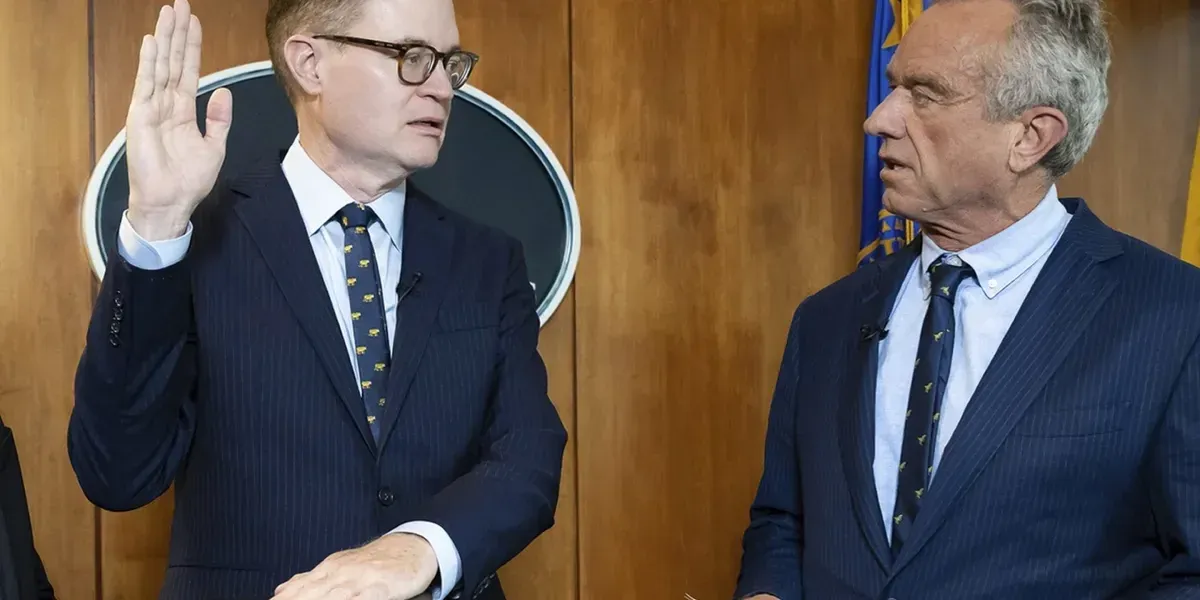
An HHS official familiar with the drafting process stated that Overton was tasked with translating the president's priorities into a formal document suitable for distribution across executive agencies.1 Trump had repeatedly voiced an intent to revisit childhood immunization policy, citing concerns regarding potential complications.1 The HHS official explained that someone needed to assemble the disparate strands from various officials into a coherent framework representing the administration's goals, adding confidence that the initiative was not something Overton would have initiated on her own.1
The administrative effort initially gained momentum around an international model. Kennedy prepared to formally endorse Denmark's national pediatric schedule, which recommends vaccination against 10 diseases for all children, as an option for American parents.12 However, a planned December press conference to announce the change was abruptly canceled.1 Before the public announcement could occur, HHS attorneys warned senior leadership that the proposed policy lacked sufficient supporting evidence and faced serious legal vulnerability in federal court.1
The formal policy shift arrived weeks later. On January 5, former Health Deputy Secretary and then-acting CDC Director Jim O'Neill signed an official decision memo adopting a revised childhood immunization schedule.1 The document relied on an evidentiary assessment prepared by Martin Kulldorff, an HHS adviser, and Tracy Beth Høeg, who was then serving as acting director of the FDA Center for Drug Evaluation and Research.1
The revised guidance sharply split the standard American pediatric schedule into distinct tiers.2 Under the revised framework, the Centers for Disease Control and Prevention maintained universal recommendations for 11 diseases: measles, mumps, rubella, polio, pertussis, tetanus, diphtheria, Haemophilus influenzae type B, pneumococcal disease, human papillomavirus, and varicella.2 The schedule also trimmed the recommended regimen for HPV to a single dose, down from the two or three doses previously advised.2
Six immunizations previously recommended universally were restricted to children deemed at elevated risk of infection: respiratory syncytial virus, hepatitis A, hepatitis B, dengue, and two vaccines protecting against bacterial meningitis, MenACWY and MenB.2 A third classification, designated for shared clinical decision-making between parents and doctors, encompassed rotavirus, influenza, COVID-19, meningococcal disease, hepatitis A, and hepatitis B.2
The policy transformation provoked immediate resistance across the medical community.2 The American Academy of Pediatrics refused to align its clinical guidance with the revised federal schedule, characterizing the changes as dangerous and unnecessary.2 AAP president Andrew Racine criticized the reliance on European models, noting that Denmark possesses a distinct population scale, healthcare infrastructure, and epidemiological risk profile compared to the United States.2
Legal resistance followed swiftly. The American Academy of Pediatrics challenged the revised schedule in federal court, arguing that the administration had bypassed established statutory standards and administrative procedures.12 In March, a federal judge granted an injunction, placing the revised schedule on hold while litigation proceeded.1
Other public health leaders voiced severe concern about the erosion of immunization coverage. Michael Osterholm, director of the University of Minnesota Center for Infectious Disease Research and Policy, condemned the decision to eliminate longstanding recommendations without public discussion or transparent scientific review.2 Leaders at the Infectious Diseases Society of America warned that dismantling established guidance threatened public health gains, pointing out that an ongoing domestic measles outbreak had caused two pediatric deaths in 2025, marking the first American measles fatalities in more than a decade.2
Overton faced scrutiny over her administrative record when she appeared before the Senate Committee on Health, Education, Labor and Pensions on September 24, 2026.31 Committee Chairman Bill Cassidy, a Republican physician from Louisiana, questioned her willingness to maintain professional independence under presidential pressure.1 Cassidy asked what she would do if the president directed her to take an action violating public assurances on safety and efficacy.1 Overton testified that she would provide him with her best professional advice.1
When questioned by Cassidy regarding the baseline reliability of licensed pharmaceuticals, Overton affirmed that every vaccine currently on the domestic commercial market remains safe and effective under established regulatory standards.1 Yet lawmakers pressed further into her record. Cassidy had previously criticized an executive order in August seeking to separate the combined measles, mumps, and rubella vaccine into individual components, describing her participation in that directive as nearly disqualifying.1
Democratic Senator Lisa Blunt Rochester of Delaware questioned Overton directly on whether she viewed splintering the MMR vaccine or reducing childhood immunizations as sound medical policy.1 Overton declined to endorse or reject the policies on clinical grounds, explaining that her responsibility in her executive branch capacity was to execute presidential directives and present options for executive decision.1
The Senate committee concluded its pre-recess business without holding a vote on whether to report Overton's nomination to the full floor.1 Her confirmation now awaits consideration during the post-election lame-duck legislative session, leaving the leadership of the nation's primary consumer safety agency tied to a contested overhaul of childhood preventive medicine.1
The record
40 sentences trace to 3 sources.
-
1
DL
David Lim Document · semafor.com · 15 Oct 2026 Exclusive: Trump FDA nominee played key role in overhaul of childhood vaccine policy See the source
-
2
P
pharmaphorum.com Third-party reporting · pharmaphorum.com CDC cuts recommended childhood jabs from 17 to 11 See the source
-
3
H
help.senate.gov Official record · help.senate.gov Nomination of Heidi Overton to be Commissioner of Food and Drugs | The U.S. Senate Committee on Health, Education, Labor & Pensions See the source