Hegseth bans military personnel from trading on prediction markets
The directive threatens criminal prosecution under military law after wagers leaked operational signals and compromised decision-making.
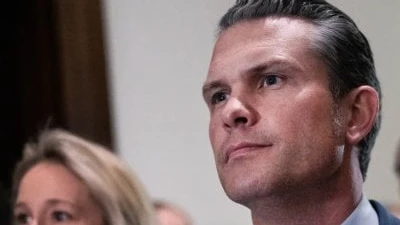
Defense Secretary Pete Hegseth issued an order barring all defense and military personnel from using nonpublic information to place wagers on commercial prediction markets.12 The directive warns that financial positions on military operations create intelligence signals that foreign adversaries can track to anticipate American movements, targets, and operational schedules.12
The policy applies to all financial platforms, including traditional betting services and event-contract exchanges such as Polymarket and Kalshi.1 Hegseth addressed the instructions to senior Pentagon leadership, combatant command commanders, and directors of Defense Department field activities.1 Under the rules, defense staff cannot execute transactions informed by nonpublic information, regardless of whether that information carries a formal security classification.1
The directive established that service members and civilian employees who violate the restriction face administrative discipline and potential criminal prosecution under the Uniform Code of Military Justice and federal law.1 Hegseth argued that market activity by defense insiders generates visible data trails that hostile services actively aggregate to compromise operational security.12
Our enemies watch movements in these markets. When an American Service member, intelligence professional, or other Department civilian engages in a financial transaction on a military outcome, they create a signal. That signal can be aggregated, correlated, and exploited by hostile foreign intelligence services to anticipate our movements, targets, and timing. The lives of our Service members often depend on the enemy not knowing what is coming. The men and women who carry our flag into harm's way deserve a Force that protects them, not one that exposes them to the enemy for personal gain.12
The Pentagon action followed several high-profile incidents involving defense wagering. In April, authorities arrested a US Army soldier who was charged with using confidential military details to place $410,000 in bets on Polymarket concerning the capture date of Venezuelan President Nicolás Maduro.1 An August review by the Anti-Corruption Data Collective identified 152 suspicious crypto wallets that placed speculative wagers on defense topics, generating combined winnings of $8 million.1
Beyond operational leaks, Hegseth warned that holding financial stakes in operational outcomes introduces direct conflicts of interest into mission planning and analysis.1 A logistician with money riding on a strike date acquires a personal financial interest in that date, Hegseth wrote in the memo, while an intelligence analyst holding a financial contract develops a commercial stake in that outcome.1

The Pentagon prohibition arrives amid broader scrutiny of wagering by government staff on sensitive geopolitical developments. Earlier this year, a cluster of newly registered accounts on Polymarket placed precisely timed wagers on whether Washington and Tehran would negotiate a ceasefire, executing the trades shortly before an announcement of the deal and securing hundreds of thousands of dollars in profit.1 The episode prompted internal warnings to executive branch staff prohibiting the use of nonpublic material on commercial wagering platforms.1 In a separate incident, an aide responsible for operating teleprompters earned $100,000 on Kalshi by trading contracts on the phrasing of prepared presidential remarks.1
Major prediction exchanges maintain formal platform rules barring insider trading among their account holders.1 However, enforcement by private exchanges has relied primarily on freezing accounts and banning violators from their order books, whereas military and federal criminal statutes carry prison time and dishonorable discharge.
Prediction platforms have expanded rapidly within the United States under federal regulatory oversight from the Commodity Futures Trading Commission.12 The federal government has resisted state-level attempts to restrict event wagering, contending that state gambling statutes are preempted by federal commodities law.12 Federal courts have issued conflicting opinions on whether state gaming authorities retain the legal power to regulate event betting, prompting state officials to petition the Supreme Court to preserve their authority to enforce local gambling laws.1
The record
23 sentences trace to 2 sources.
-
1
JB
Jon Brodkin Document · arstechnica.com · 23 Oct 2026 Hegseth warns prediction market bets warp military judgment, endanger troops See the source
-
2
AO