Court filings reveal 120 federal agents monitored Minnesota activists
Discovery records show Homeland Security Investigations deployed undercover operatives, drones, and counterterrorism tools to track immigration protesters across multiple states.

Federal prosecutors preparing a conspiracy trial against 15 Twin Cities residents have disclosed thousands of internal records documenting an undercover surveillance campaign run by Homeland Security Investigations.12 The operation mobilized more than 120 agents, including 11 undercover operatives, to track community members organizing against federal immigration crackdowns across the upper Midwest.13 Defense attorneys obtained the material through court discovery filings in Minneapolis, where the defendants face felony charges for monitoring immigration authorities during enforcement surges.14
The surveillance operation relied on an undercover funding program known as Operation Keyhole, established by the agency in Saint Paul in December 2008.1 While created to investigate narcotics trafficking, child sexual exploitation, financial offenses, and counter-proliferation across five Midwestern states, personnel repurposed the mechanism to finance probes into local political opposition.1 Discovery records indicate Keyhole was underwriting six active undercover investigations as of June 2026, including Project Whipple Shield and Operation Puppet Master, the twin initiatives directed at community groups in the Twin Cities.1
Repurposed counterterrorism authorities
The domestic surveillance initiatives operated under National Security Presidential Memorandum 7, a directive signed by President Donald Trump following the assassination of political activist Charlie Kirk in September 2025.13 The memorandum instructed federal law enforcement agencies to deploy available resources against organizations and individuals critical of the administration.12 In Minnesota, Homeland Security Investigations invoked those expanded authorities to initiate Project Whipple Shield in February 2026, focusing on allegations that community networks were stalking, assaulting, or publishing personal details about federal personnel.15
Court filings show the agency brought in investigators from across the country, pulling personnel from financial fraud squads, human trafficking task forces, and specialized tactical teams.1 Case records identify Los Angeles based special agent Robert Kurtz III, who concentrates on financial fraud, alongside Ryan Ribner, an agent involved in earlier prosecutions of Southern California residents who confronted border enforcement teams.1 Special Operations Group supervisor Tim Gerber, who previously led an investigation into former television host Don Lemon, directed an enforcement squad in the Minneapolis inquiries.1
Investigators made extensive use of administrative summonses and Patriot Act authorities typically restricted to national security and international money laundering cases.1 Under the Treasury Department 314(a) process, investigators requested bank transaction data for 29 subjects on March 31, 2026.1 Agency emails show that records gathered through these requests included financial files concerning the Service Employees International Union, which Minnesota agents forwarded to colleagues in California.16
Infiltration of community spaces
Undercover operatives assigned to Operation Keyhole infiltrated civilian spaces across the Minneapolis area, attending know-your-rights sessions, martial arts practices, community forums, and marches.13 Operatives also entered houses of worship. In February 2026, an undercover officer attended a gathering of immigration activists at Prince of Peace Lutheran Church in Roseville, where the operative copied vehicle license plate numbers from the parking lot and generated background dossiers on attendees.65

The Rev. Steve Sylvester, the interim pastor at Prince of Peace, addressed the church congregation from the altar after the discovery filings became public. He said the undercover presence felt completely out of place and inappropriate.6 At University Baptist Church in Minneapolis, an undercover agent wore a concealed audio wire while attending a community self-defense class held in the facility in May 2026.6 Interim pastor Cody Sanders said he felt surprise and anger upon learning of the recording, expressing concern that such government surveillance breeds widespread civilian suspicion.6
Surveillance also extended into commercial and civic venues. In January 2026, an undercover operative attended a gathering at La Doña Cerveceria, a local brewery in Minneapolis. Sergio Manancero, the general manager of the brewery, said organizers held a lawful meeting to plan immigration protests, noting that while government surveillance was unwelcome, agency personnel witnessed firsthand that no illicit activity took place.6 Other filings show an undercover agent attended an event at a Minneapolis public library, learned of a planned demonstration outside a hotel housing federal personnel, and offered to build items for physical confrontations while claiming he did not mind serving jail time.56
Digital tracking and aerial surveillance
Federal investigators paired physical infiltration with forensic data collection. When local organizers created an automated license plate lookup tool hosted on the Fly.io public cloud platform to monitor enforcement vehicles, agents examined server logs, DNS records, and Stripe registration details.1 Even though the associated Stripe account never processed a monetary transaction, agents used the card fingerprint, registration IP addresses, and secure shell session records to trace the developer.1 Agents cross-referenced those technical identifiers with Minnesota state vehicle registries and commercial records from the Thomson Reuters CLEAR database, assembling a dossier containing Social Security summaries, home addresses, phone numbers, and co-owned assets.1
The agency also intercepted roughly 15 terabytes of communications from private Signal messaging channels used by community networks.1 Activists had established encrypted communication channels, neighborhood dispatch systems, and homebuilt vehicle registries during Operation Metro Surge, a winter enforcement push by the administration.12 In discovery documents, prosecutors argued that alerting residents to the movements of federal vehicles constituted a criminal conspiracy to impede law enforcement officers.12 Defense lawyers countered that citizens were exercising basic First Amendment liberties to record government conduct.15
Customs and Border Protection deployed unarmed MQ-9 Reaper drones over the Minneapolis metropolitan area to record the movements of organizers.13 Federal teams recorded and cataloged license plates outside protest venues, activist conferences, and meeting spaces. Defense attorney Kevin Riach, who represents defendant Isaac Sant, said the heavy charges brought by prosecutors did not reflect the peaceful conduct of the defendants, pointing out that his client had participated in public speaking appearances rather than criminal plots.1
Surveillance across state lines
Court records demonstrate that the Minnesota investigation expanded into a multistate operation. Federal investigators followed members of the activist collective Crimethinc as they conducted an educational tour across the country, tracking presentations in Seattle, Washington, Ann Arbor, Michigan, and Chicago, Illinois.4
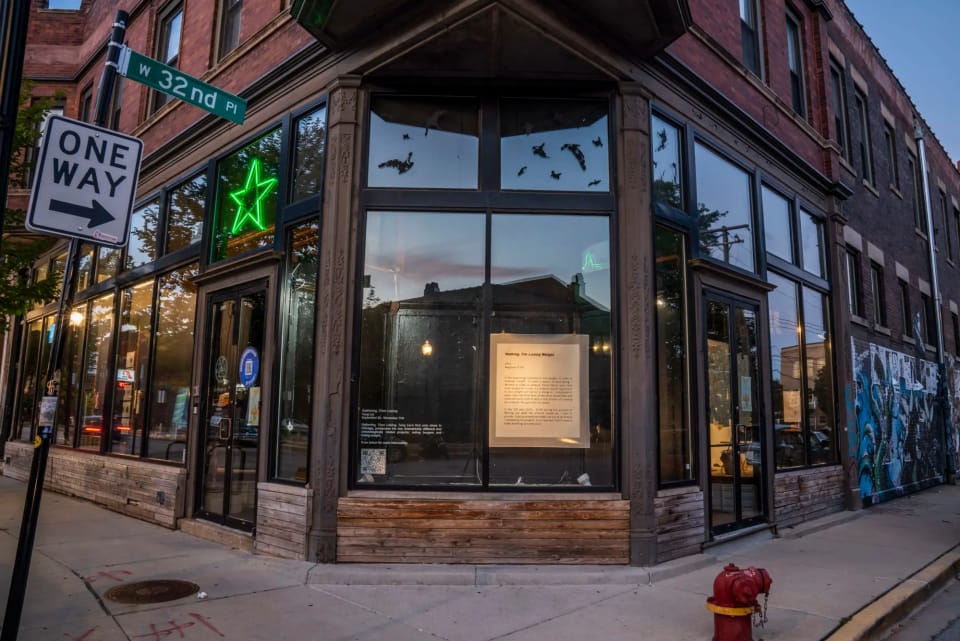
In Chicago, a municipal and federal task force monitored an April 2, 2026 public gathering at Co-Prosperity, an art gallery in the Bridgeport neighborhood.4 The surveillance contingent consisted of 14 officers, including eight federal agents from Homeland Security Investigations and six local police officers from municipal departments in Chicago, Aurora, Downers Grove, and county sheriff offices.4 Officer Mike Xu of Downers Grove transported an undercover Aurora police officer to the gallery.4 Once the local officer confirmed the venue was conducting no entrance security screenings, an undercover federal operative entered the space with an audio wire.4
The undercover operative broadcast audio of the presentation for an hour until the transmission failed.4 Recordings were subsequently uploaded and delivered to federal financial supervisor Kenneth Popovits in Minneapolis.4 Outside the gallery, task force members logged 219 parked automobiles and used automated license plate readers to identify attendees.4 Chicago police detective Nick Nunez filed requests for municipal surveillance camera footage overlooking the street.4 Remarks delivered by defendant Callum Robinet at the Chicago event were later cited as overt acts in the federal conspiracy indictment in Minnesota.4
Ed Yohnka, a spokesman for the American Civil Liberties Union of Illinois, said no one should face surveillance for participating in constitutionally protected speech or gathering to critique federal policies.4 In response to inquiries, Chicago police stated that the department did not submit First Amendment notifications to departmental leadership because the joint task force characterized the mission as criminal enforcement rather than immigration policing.4
Constitutional objections and historical parallels
The disclosure of the surveillance apparatus has provoked sharp legal criticism from civil liberties groups and state officials. Minnesota Attorney General Keith Ellison described the monitoring of peaceful assemblies, labor unions, and religious congregations as an alarming abuse of federal authority.5 Ellison said the administration was using federal resources to prosecute political opponents after enforcement operations resulted in civilian deaths during the winter crackdown.5
The enforcement campaign in the Twin Cities had previously escalated into deadly violence. Federal personnel fatally shot two United States citizens, Renee Good and Alex Pretti, during separate confrontations earlier in 2026.34 A third civilian, Julio César Sosa-Celis, survived gunshot wounds inflicted by an immigration agent. Defense filings noted that grand jury presentations included flowcharts connecting 18 local organizations to the alleged conspiracy, including bicycle collectives, local teachers unions, and the state federation of the AFL-CIO.65 Bernie Burnham, president of the Minnesota AFL-CIO, condemned the prosecutorial theories as a return to McCarthyism.6
Legal analysts have likened the scale of the surveillance apparatus to historical federal domestic intelligence operations. Mike German, a retired FBI special agent who previously conducted undercover counterterrorism cases, said the modern data aggregation tools deployed by the agency exceed previous domestic monitoring initiatives.12 The secret CIA investigation into the anti-war movement during the Vietnam War, known as Operation MH/Chaos, employed 42 officers at its peak, according to historical accounts by former intelligence officer Frank Rafalko.13 By contrast, court filings in the Minneapolis case show more than 60 agents dedicated specifically to the Minnesota 15 investigation.1
Aaron Terr, director of public advocacy at the Foundation for Individual Rights and Expression, said the government conduct threatens to deter civic participation by treating routine associational ties as evidence of criminal conspiracy.6 Rachel Levinson-Waldman, director of the Liberty and National Security Program at the Brennan Center for Justice, said the breadth of the operations departs from long-standing procedural guidelines enacted after historical surveillance abuses.6 As pretrial proceedings advance in federal court, defense counsel continue to seek dismissal of the conspiracy indictments, arguing that the surveillance methods violated constitutional protections.
The record
53 sentences trace to 6 sources.
-
1
W
 WIRED
Document
· wired.com · 28 Oct 2026
ICE Is Running One of the Largest Anti-Left Surveillance Operations in US History
See the source
- 2 ICE Is Functioning As The New COINTELPRO, Report Finds See the source
- 3 'Minnesota 15' Case Reveals Largest US Government Spying on Left Since COINTELPRO | Common Dreams See the source
-
4
W
wired.com
Third-party reporting
· wired.com
Chicago-Area Cops Helped HSI Spy on Minnesota Anti-ICE Activists
See the source
- 5 ICE surveillance: MN attorney general responds to undercover operations See the source
-
6
MP
 Michigan Public
Third-party reporting
· npr.org · 25 Aug 2026
Churches, libraries and breweries: Inside DHS' covert surveillance operation
See the source