FAA halted flights after router flooded air traffic network
Federal officials traced the disruption to legacy network equipment in El Dorado as airlines canceled more than 12,000 flights.
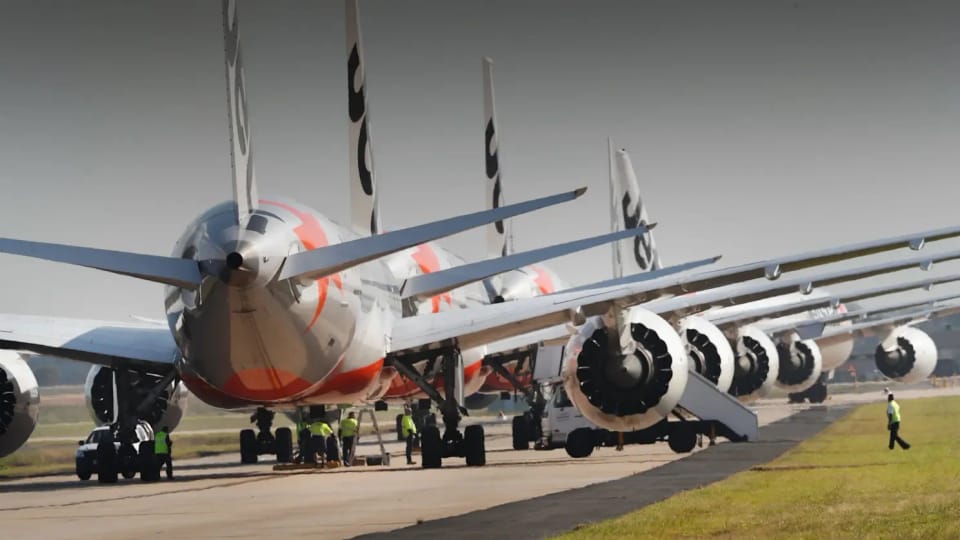
A single replacement router installed at a remote aviation communications facility in El Dorado, Arkansas, flooded federal telecommunications networks with connection requests, forcing the Federal Aviation Administration to order a nationwide ground stop.12
The stoppage began on a Friday afternoon at approximately 3:30 p.m. Eastern time and lasted more than four hours, halting departures across the country.13 Federal officials confirmed that approximately 3,500 airborne aircraft landed safely under controller guidance before departures resumed late that evening.13 The disruption rippled across airline schedules through the weekend, leading commercial carriers and private operators to cancel approximately 12,462 flights.1
The technical breakdown took place during routine hardware work conducted by federal contractor L3Harris, which has been under contract to convert obsolete copper communications wiring into modern fiber optic links.45 According to the agency, legacy infrastructure became unstable when connection traffic began flooding the telecommunications network at a rate of 1,000 connection attempts every four to five seconds.13 Technicians traced the abnormal data surge to two primary points: the radio site in El Dorado, where the new router was being deployed, and a secondary radar facility in Amarillo, Texas.1

The resulting instability spread across 17 of the 22 Air Route Traffic Control Centers that direct high-altitude flights across the United States, as well as multiple terminal radar approach control facilities.13 Technicians stabilized the network by blocking traffic from the two originating locations and disabling the broadcasting function on approximately 60 similar routers across the system.
Federal investigators isolated the disruption to legacy network hardware, specifically Cisco 600 series routers manufactured between 2001 and 2006.3 Officials confirmed there was no indication of a cyberattack, an external actor, or any malfunction related to artificial intelligence software.143 The incident represented only the second nationwide ground stop since September 11, 2001, following a January 2023 disruption triggered by corrupted database files in the agency's hazard notification system.43
Transportation Secretary Sean Duffy said federal investigators were determining whether the malfunction resulted from installation error by the contractor or a defective hardware component.43
"This was an FAA system that didn't meet the moment. Our contractor didn't meet the moment. Or the equipment didn't meet the moment and cause the outages," Duffy said at a media briefing following the breakdown.53

In a public statement, L3Harris said it had completed more than 70 percent of the copper-to-fiber conversions across the national airspace system and confirmed it was assisting federal investigators to determine the exact circumstances that led to the stoppage.43
The disruption quickly reignited a political battle in Washington over the pace and funding of aviation modernization.3 In July 2025, Congress approved $12.5 billion to modernize the nation's aging air traffic control equipment.43 Following the shutdown, the White House increased its request for air traffic control modernization funding to $30 billion, with Duffy arguing that decades of deferred upgrades had left the agency dependent on outmoded systems.
Congressional leaders overseeing transportation expressed skepticism toward the new spending request. Representative Rick Larsen, the ranking member of the House Committee on Transportation and Infrastructure, and Representative Andre Carson, the ranking member of the Subcommittee on Aviation, noted in a joint statement that the administration had spent only $1 billion of the $12.5 billion previously approved by Congress, stating that federal agencies must account for existing modernization funds before lawmakers approve additional spending.
Aviation officials said recovery across commercial flight networks continued through the weekend as airlines repositioned displaced aircraft and flight crews, with schedules returning toward normal operational capacity ahead of Monday morning travel.1
The record
20 sentences trace to 5 sources.
- 1 Nationwide Ground Stop: Questions and Answers | Federal Aviation Administration See the source
-
2
BR
 Brendan Ruberry
Document
· semafor.com · 15 Nov 2026
Faulty router, aging infrastructure blamed in US flight stoppage
See the source
-
3
CN
 CBS News
Third-party reporting
· cbsnews.com · 14 Nov 2026
Airline schedules returning to normal after nationwide ground stop, FAA says. Here
See the source
-
4
N
 NPR
Third-party reporting
· npr.org · 14 Nov 2026
FAA blames Friday's ground stop on 'equipment issue' during telecoms network upgrade
See the source
-
5
W
WFAE
Third-party reporting
· npr.org · 14 Nov 2026
Maintenance gone awry caused nation-wide ground stop, says Transportation Secretary
See the source