Gaza municipal teams divert water well fuel to pump sewage
Stormwater mixed with wastewater flooded thousands of shelters in Al Maghazi as tight fuel restrictions forced engineers to halt drinking pumps.
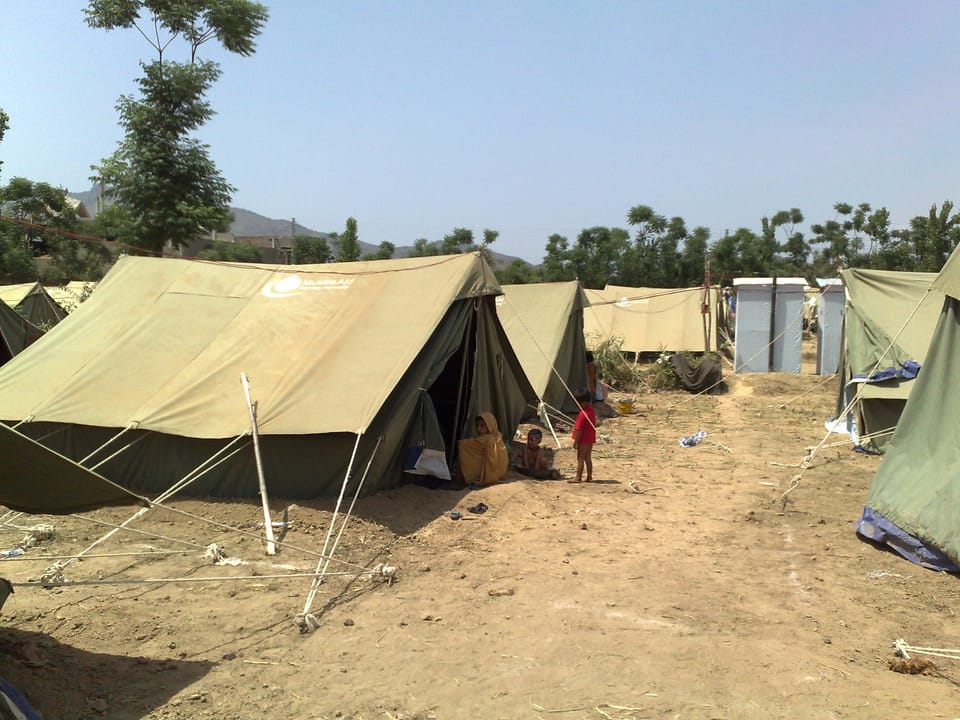
Municipal crews in the Al Maghazi refugee camp are shutting down drinking water wells to run drainage pumps after winter downpours flooded thousands of displacement shelters with sewage-tainted stormwater.12
With no dedicated fuel reserves allocated for storm response, engineers have had to reassign diesel earmarked for potable water extraction.21 The trade-off leaves displaced families without clean tap water while workers attempt to prevent cesspools from engulfing low-lying tent encampments across the central Gaza Strip.
"The diesel we use for these pumps comes from the allocation for the wells that are supposed to pump water," said Imad Abdel Jawad, a municipal engineer in Al Maghazi.12 He noted that the existing supply of fuel was already insufficient before the rains arrived, forcing local authorities to ration generator runtime between water extraction and flood control.12
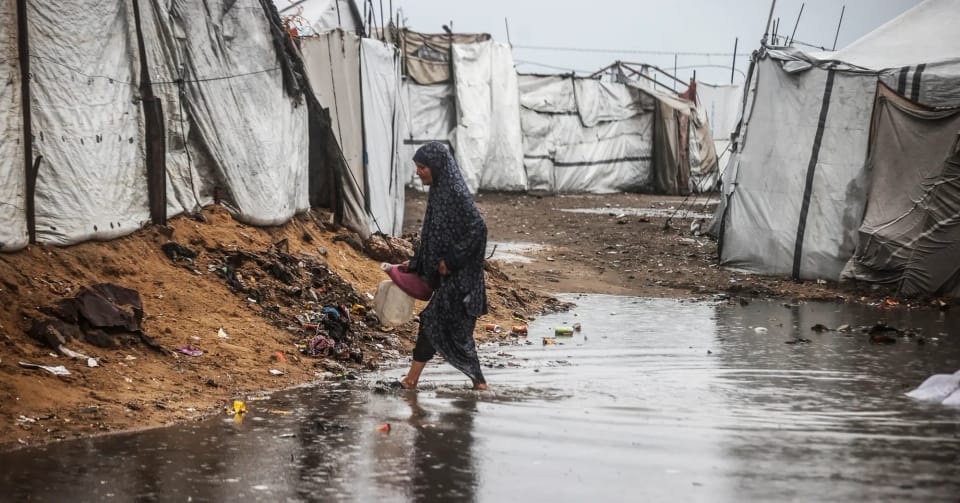
Rainstorms swept across the territory on November 7 and 8, submerging five displacement sites located in the northern and western sections of Al Maghazi.12 In several encampments erected on low ground lacking natural drainage outlets, standing water reached depths between 30 and 40 centimeters, soaking the interiors of makeshift shelters.21
Drainage grids overwhelmed by broken covers
The flooding exposed severe physical damage across the municipal drainage network. Israeli bombardment cracked and dislodged sewage manhole covers across Al Maghazi, while other iron fittings deteriorated or were stolen.12 Open manholes allowed thousands of gallons of surface runoff to pour directly into subterranean pipes designed only for household wastewater.12
"The sewage networks become unable to accommodate the quantities of sewage in addition to the rainwater that leaks into the manholes because the covers are missing," Jawad said.12 The resulting back pressure forced raw sewage back up to the surface, contaminating the mud around residential tents.
Replacement covers cannot be found in local markets, and raw materials to cast new lids remain scarce and costly.12 Faced with a depleted operating budget, camp administrators chose to protect fresh water machinery rather than mend the storm drainage grid. "I consider spending money on maintaining wells or maintaining generators to operate water wells a higher priority than allocating some of that money to maintaining sewage manhole covers," Jawad said.12
The engineering team lacks earth-moving equipment and dump trucks to deposit gravel or dry soil around waterlogged tents.12 Municipalities must clear mud and dig channels by hand or wait for mobile dewatering units to arrive from regional utilities.
Shelters submerged and families exposed
The initial 12 hours of the downpour flooded at least 70,000 tents across Gaza, according to the Government Media Office.12 The United Nations Office for the Coordination of Humanitarian Affairs estimated that 1.4 million people, representing roughly 65 percent of the territory's population, were living in tents or temporary shelters when the storm struck.34
In Al Maghazi, Hanan Saied, 46, sheltered with her seven children inside a structure assembled from cracked mud walls and plastic roof sheeting.12 Runoff breached the perimeter on the first evening of the storm.
"The house flooded, and stones and mud fell on us," Saied said.12 "The bedding was soaked, and the children’s clothes were soaked."12 Her children scooped water out with buckets while her eldest son attempted emergency roof repairs.12 Saied spent the night holding her daughter Sara, who suffers from asthma, in an effort to keep the child dry and warm.12
Winter conditions present acute medical hazards for chronic respiratory patients. Saied explained that her daughter experiences frequent asthma flare-ups during cold periods, but the household possesses neither an electric nebulizer nor municipal power to operate medical equipment.12
Physical destruction from months of military operations left civilian housing exceptionally vulnerable to winter storms. An assessment conducted in April by the European Union, the United Nations, and the World Bank determined that more than 371,888 housing units had sustained damage or destruction, leaving roughly 1.9 million people internally displaced.12
Import controls stall mechanical repairs
Municipal departments across Gaza report that maintenance operations have stalled because critical mechanical components cannot enter the territory. An OCHA report published on November 5 noted that Israeli authorities continued to enforce strict import restrictions on engine oil, industrial lubricants, mechanical spare parts, and replacement generators.12
Pumping stations that handle both floodwater and raw sewage had suffered recurrent mechanical failures prior to the November storm.12 According to United Nations assessments, durable power supplies cannot be restored without Israeli clearance to import solar equipment, reconnect electrical feeder lines, and restart the central power plant in Gaza.12
On November 8, the official account representing Israel on X, managed by the Ministry of Foreign Affairs, posted a message stating that Israel does not control the weather.12 The post did not address the situation in Gaza.12 The Israel Defense Forces did not respond to requests for comment regarding restrictions on equipment and spare parts needed for flood mitigation and sewer repairs.12
Displacement sites across northern and southern districts reported similar breakdowns. At Sheikh Radwan Lagoon in Gaza City, water levels rose by nearly 1.5 meters during the storm.5 Dewatering pumps struggled to contain the combined volume of rain and sewage overflowing from broken collector mains, creating risks of a wider breach into adjacent residential neighborhoods.53
Clinics register surges in child infections
Contaminated floodwaters and falling temperatures produced an immediate spike in pediatric illness across central Gaza camps. Medical personnel at the United Nations Relief and Works Agency clinic in Al Maghazi recorded rising admissions for intestinal and pulmonary conditions within hours of the storm.12
Dr Asma Saleh, a general practitioner at the UNRWA facility, said the clinic treats approximately 120 pediatric patients daily.12 Her team identified roughly 22 daily cases of influenza-like illness through symptomatic evaluation and 13 daily cases of acute gastroenteritis among children.12
"The inhumane living conditions, collapse of infrastructure, the flowing streets contaminated with sewage, and the shortage of medical supplies are all factors that profoundly impact the health care system in Gaza," Saleh said.12
Epidemiological monitoring indicates broader communicable disease trends across the territory. Between late September and late October, health agencies tracked 294 probable cases of viral meningitis and 119 probable cases of bacterial meningitis, with more than two-thirds concentrated in the Gaza governorate.5 Infants under one year old accounted for 77 percent of 202 individually documented cases.5 Health evaluators attributed the pattern to cramped emergency shelters, raw wastewater exposure, and contaminated drinking supplies.5
Treating routine illnesses has grown difficult as pharmaceutical inventories collapse. Gaza health authorities reported that 42 percent of essential medications reached zero-stock levels during October.5 Clinics face critical shortages of antipyretics, oral antibiotics, and intravenous pediatric fluids, while basic diagnostic reagents remain depleted.35
Storm casualties across coastal encampments
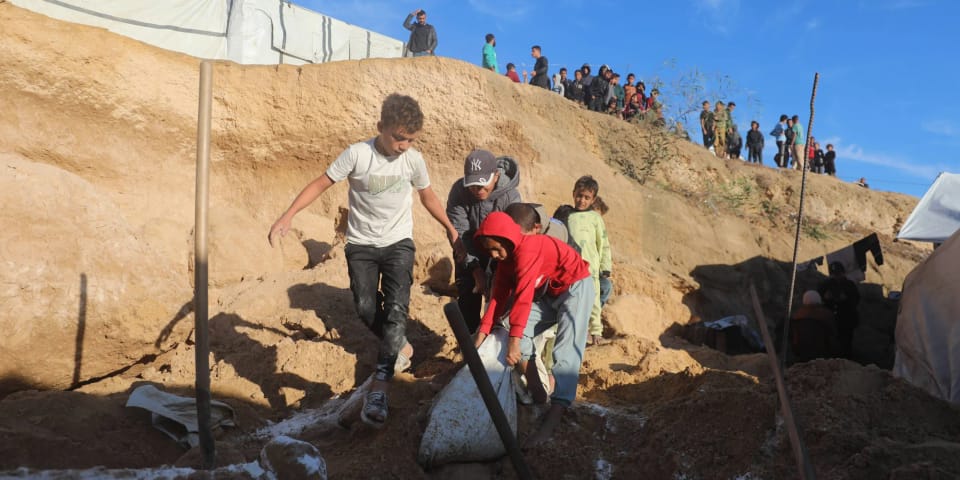
The November storm also caused fatal structural collapses in unstable coastal terrain. At the Al Berka Reservoir west of Deir Al Balah, a rain-saturated sand dune gave way and collapsed onto a cluster of tents, killing five displaced people, including three children and two women, according to local emergency responders.34 An infant drowned in a separate incident when floodwaters inundated an encampment.34
Civil defense teams received 2,166 distress calls during the initial two days of the storm, largely from families trapped by rising water or structural failures.34 Rescue crews managed to answer only 218 calls, citing flooded roads, fuel shortages, and a deficit of vacuum trucks.34
Aid agencies have accumulated emergency stocks outside the borders, but logistical barriers prevent their delivery. More than 150,000 tents purchased by humanitarian groups remain staged in neighboring countries, including 117,000 tents stored in Al-Arish by the Egyptian Relief Committee.34 Inside Gaza, existing relief inventories of tarpaulins, winter clothing, and bedding are virtually exhausted, leaving municipal crews to manage subsequent winter storms with diverted fuel and compromised pumps.34
The record
44 sentences trace to 5 sources.
-
1
W
 WIRED
Document
· wired.com · 14 Nov 2026
Floods Force Gaza to Choose Between Clean Water and Pumping Out Sewage
See the source
- 2 Gaza Floods Are Forcing a Choice Between Pumping Out Sewage and Pumping Water See the source
- 3 Humanitarian Situation Report: Heavy Rains in the Gaza Strip | 8 November 2026 | United Nations Office for the Coordination of Humanitarian Affairs - Occupied Palestinian Territory See the source
- 4 Children among the dead as heavy rains flood tents and shelters in Gaza See the source
- 5 Humanitarian Situation Report | 13 November 2026 | United Nations Office for the Coordination of Humanitarian Affairs - Occupied Palestinian Territory See the source