Rights groups urge Sixth Circuit to require plate reader warrants
The appeal challenges warrantless searches of Flock and ELSAG camera databases that helped Cleveland police identify and arrest a robbery suspect.
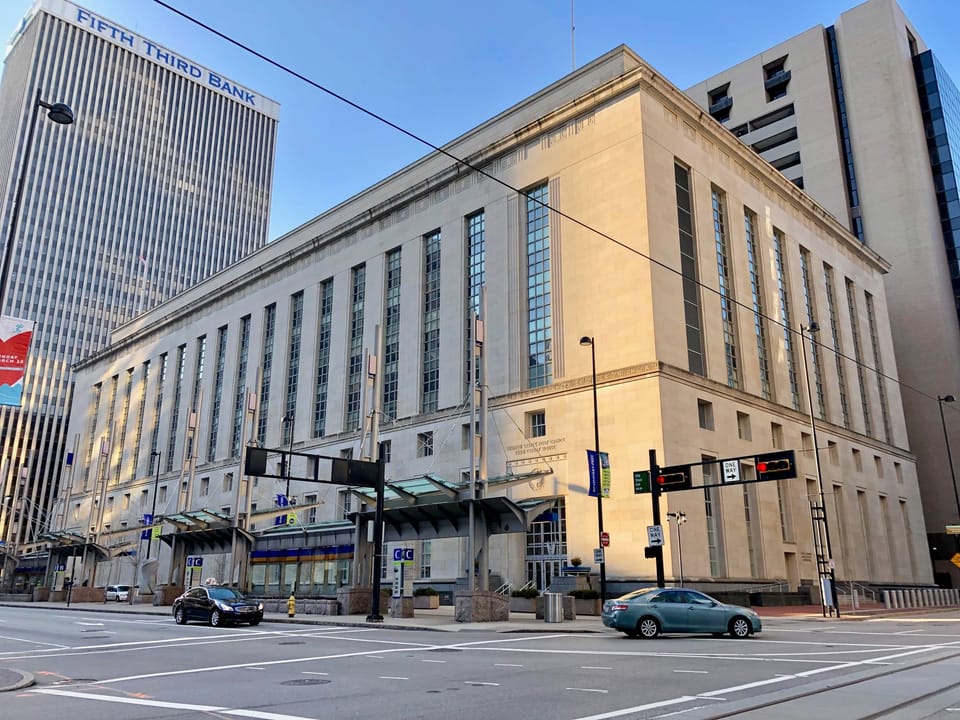
Challenging vehicle tracking in Cleveland
Two civil liberties organizations have asked a federal appeals court to establish a warrant requirement for automated license plate reader databases.1 The Electronic Frontier Foundation, known as EFF, joined with the American Civil Liberties Union, or ACLU, to file an amicus brief in the Sixth Circuit Court of Appeals in United States v. Sturdivant.1 The case examines whether police officers may conduct open-ended searches across networked camera systems without first obtaining judicial authorization.1
The underlying criminal prosecution originated from an investigation into a series of robberies in and around Cleveland, Ohio.1 Surveillance camera footage from the crime scenes allowed police investigators to identify the make, model, and color of the robber's car, but the recordings did not capture a visible license plate number.1 Rather than seeking a search warrant from a judge, officers conducted broad searches across two commercial automated license plate reader databases operated by Flock and ELSAG.1 Those automated queries revealed that a car registered to the defendant had travelled near the locations of the robberies, which eventually enabled police to make an arrest.1

The dispute over public movement
After being charged, the defendant filed a motion to suppress the location records gathered by the automated license plate reader network.1 The federal district court presiding over the case denied the suppression motion.1 In its decision, the district court ruled that the defendant had no reasonable expectation of privacy in his license plate number because any member of the public could view the exterior of a vehicle traveling on municipal streets.1 Because passersby could see the car, the court concluded that the driver possessed no Fourth Amendment interest against government tracking of his vehicle across public spaces.1
In their brief to the Sixth Circuit, the advocacy groups argued that automated cameras cannot be equated with an ordinary witness glancing at a vehicle on the street.1 Writing on behalf of EFF, attorney Andrew Crocker argued that automated license plate readers give law enforcement "a virtual time machine to view suspects', or anyone else's, past movements (and much more) with just the click of a button."12 The groups told the court that persistent logging transforms routine travel records into a comprehensive historical ledger of personal movement.
A growing legal conflict across federal courts
The amicus filing in Ohio builds on an established campaign against warrantless tracking technology.1 EFF previously challenged automated vehicle logging in direct lawsuits filed against municipal programs in San Jose, California and throughout Wisconsin.1 Those lawsuits asserted that continuous location logging exposes sensitive patterns of personal association, religious attendance, and medical care.

Judicial skepticism regarding automated license plate surveillance has expanded in recent months. A federal district court held that automated license plate reader networks represent a "form of indiscriminate mass surveillance" capable of violating the Fourth Amendment.1 The rights organizations are urging the Sixth Circuit to adopt a similar interpretation, reverse the district court ruling in the Cleveland case, and declare that searching automated vehicle location databases constitutes a Fourth Amendment search that demands a warrant supported by probable cause.1
Expanding digital dragnets and location privacy
The dispute lands as privacy advocates contest multiple forms of bulk data gathering by domestic law enforcement. Commercial camera companies have rapidly expanded roadside networks across American cities, photographing passing vehicles and archiving the dates, timestamps, and locations of daily travel.3 Public advocacy materials from EFF describe how these private databases quietly turn public roads into surveillance checkpoints where vehicles are cataloged regardless of whether an occupant is suspected of a crime.3
Civil liberties litigators have targeted parallel surveillance techniques in other federal appellate jurisdictions. In United States v. Spurlock before the Ninth Circuit Court of Appeals, EFF and the ACLU challenged reverse location tower dump warrants, which direct wireless carriers to surrender connection records for every mobile phone detected near a cell tower during a given timeframe.2 In both disputes, litigators maintain that allowing officers to comb through historical location archives without individualized suspicion eviscerates constitutional protections against general warrants.
The record
20 sentences trace to 3 sources.
- 1 We're Asking an Appeals Court to Require a Warrant for ALPR Searches See the source
- 2 Privacy See the source
- 3 Our Work See the source