Escaped and released captive pigs drive rapid invasion across central Brazil
Escapes from commercial and clandestine breeding operations have pushed feral swine into every municipality in Mato Grosso do Sul, establishing persistent populations along agricultural river networks.
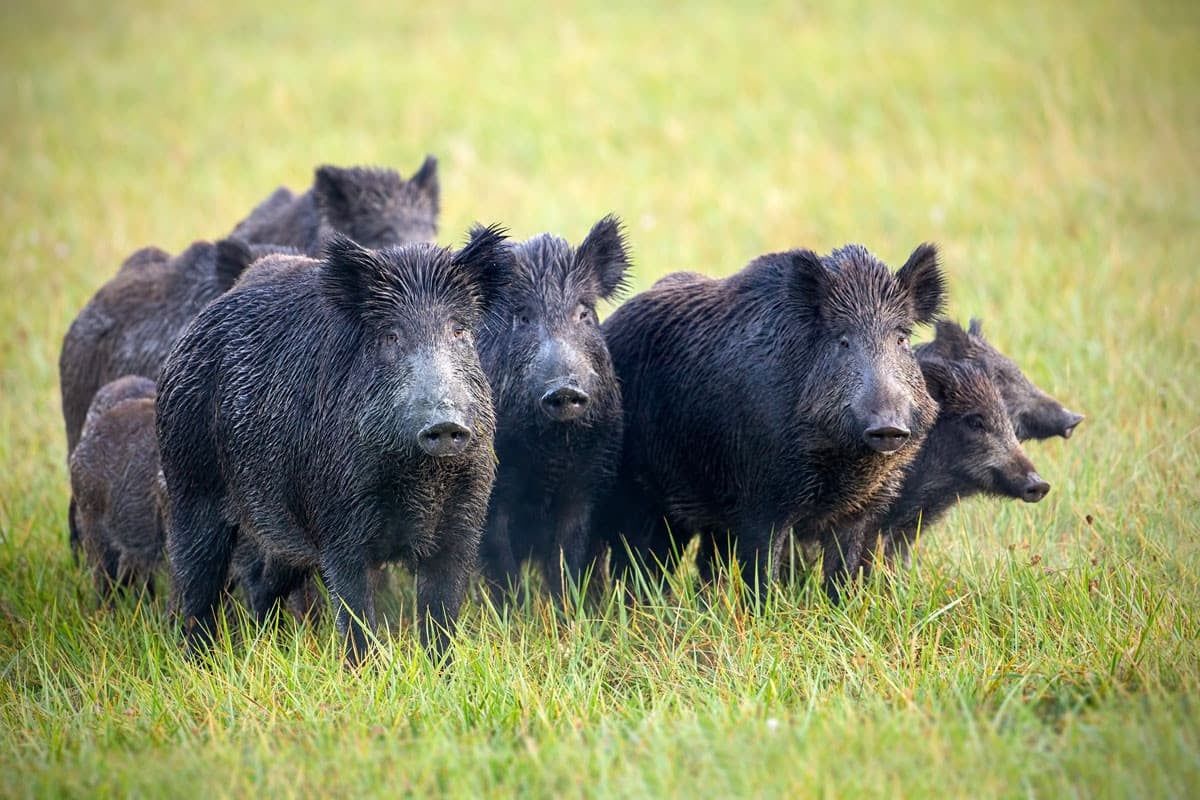
When a large domesticated mammal breaks out of confinement and establishes breeding groups in the wild, the surrounding habitat determines whether it perishes or becomes an ecological disruptor. Large omnivores with flexible diets and high reproductive rates can alter entire river basins and woodland communities once an initial breeding core takes root. If new escapees continually replenish those wild groups, a localized farm nuisance can turn into a statewide ecological disruption.
The threat becomes acute when foreign lineages enter regions already inhabited by specialized native wildlife. In tropical South America, where indigenous mammals rely on seasonal forest fruits and undisturbed soil, an aggressive generalist can quickly alter food webs, damage agricultural harvests, and displace native species that occupy similar ecological roles. Feral pigs also dig and wallow across sensitive soils, which reduces native plant diversity, accelerates erosion, and helps non-native weeds disperse into natural vegetation.1
For a wild population to establish itself and sweep across an entire territory, a straightforward sequence of events must occur. First, human activity introduces breeding animals into a region, housing them in enclosures or smallholdings. Second, animals escape through poor fencing or face deliberate release into the surrounding brush. Third, those escapees need reliable food, cover, and water to survive and multiply, moving along natural travel routes like stream banks and tree corridors. Finally, continuous new arrivals from working pens maintain the genetic pool and bolster numbers, allowing dispersing herds to outcompete native foragers. A study posted on the preprint server bioRxiv by Wagner Fischer, a researcher affiliated with the Brazilian Institute for Information in Science and Technology and the Federal University of Mato Grosso do Sul, and colleagues Raquel de Faria Godoi Silva and Antonio Conceição Paranhos Filho reconstructs how that sequence of events unfolded across central Brazil.2
How did captive swine establish wild herds across Mato Grosso do Sul?
Escaped and released captive animals supplied the critical numbers that allowed feral swine, known scientifically as Sus scrofa, to spread from 29 municipalities to all 79 municipalities in Mato Grosso do Sul between 2007 and 2017.32 In 2007, the species was present in 36.7 percent of the state's municipalities, before expanding to all of them over the following decade.32 The researchers measured propagule pressure through the number and distribution of breeding operations and the total breeding stock per municipality, adult males and females summed across operations, identifying at least 247 operations across 59 municipalities during that 10-year window.3 Propagule pressure describes the quantity and frequency of individual organisms introduced into a foreign environment. Many of these sites were informal or clandestine facilities breeding Eurasian wild boar and its hybrids with domestic pigs, known locally as javaporcos.32
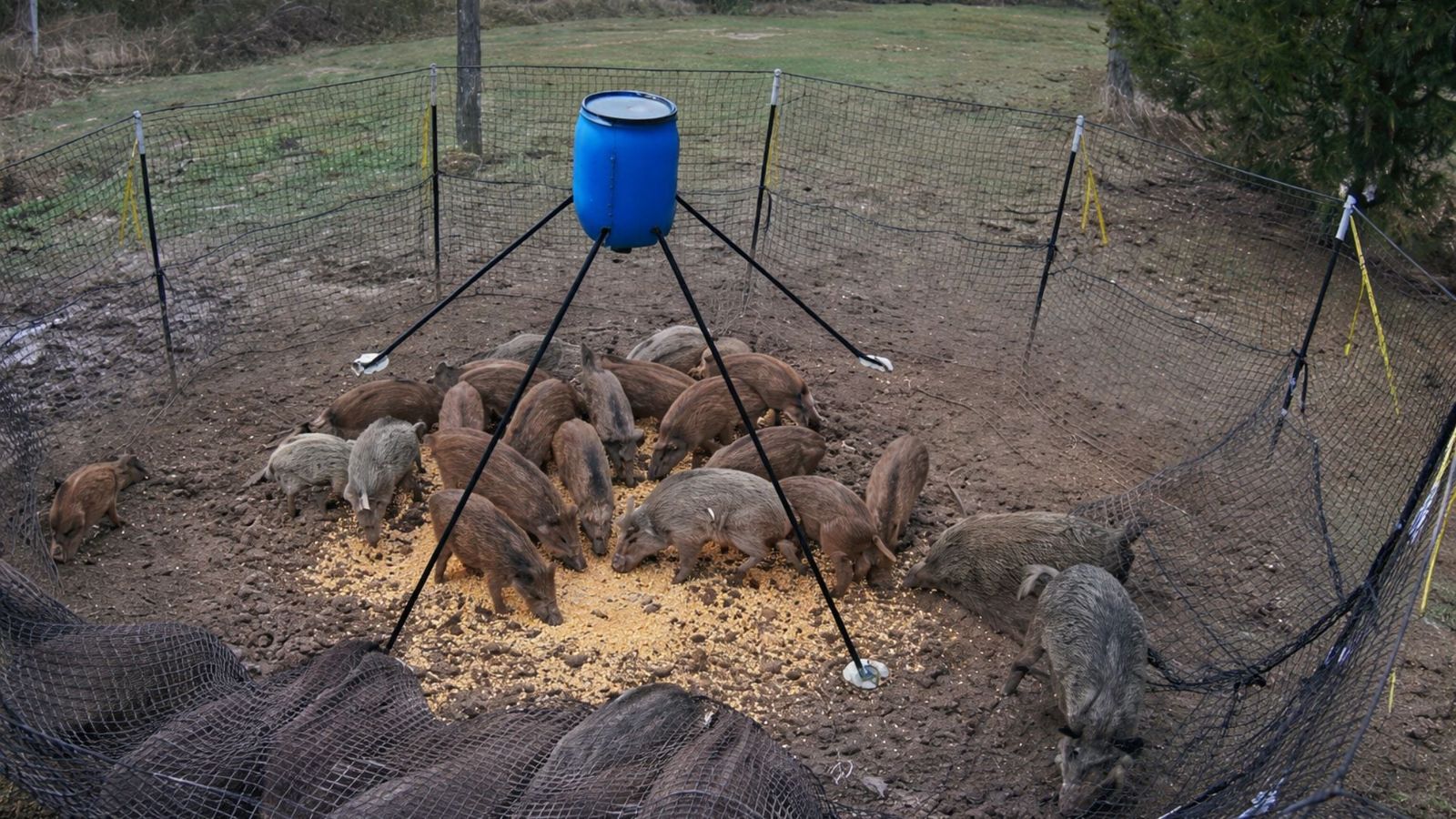
Municipalities with the largest declared breeding stocks, adult males and females summed across operations, were also among the first where wild populations became established, with the invasion reaching neighboring municipalities within the same five-year interval.3 Fischer told Primary that this pattern provides key evidence for human-driven introduction, explaining that "the spatial pattern of breeding centers lined up closely with the earliest wild detections" across datasets gathered from independent administrative records and rural surveys.contributed
Fischer clarified that the breeding census relied on the database of the state animal-health monitoring program, which annually registers livestock across rural holdings using standardized questionnaires.contributed Because these property filings are self-declared by owners, Fischer noted that the research team treated the tally of 247 operations as "a conservative minimum rather than a complete census."contributed The historical data, compiled anonymously between 2008 and 2016, showed that areas with the highest declared adult breeding stocks were also where early wild population clusters were recorded.contributed
The spread did not occur in isolation, as the newly arriving hybrid herds encountered an older, long-established feral pig lineage known as porco-monteiro that had lived wild in the Pantanal wetland for generations, creating an unusual overlapping zone of two separate non-native strains.32 Descended from domestic pigs that escaped more than 200 years ago, porco-monteiro populations represent an earlier wave of invasion that preceded modern wild boar introductions.1 Fischer explained in response to questions from Primary that although both lineages belong to the same species, the current dataset cannot yet determine whether they compete, interbreed, or partition the habitat.contributed The field records confirm broad spatial overlap, but resolving behavioral competition or hybridization in the Pantanal "would require genetic sampling and direct field observation, which were beyond the scope of this study," Fischer said.contributed
Which landscapes helped the herds spread so quickly?
Vast agricultural fields interlinked by natural stream vegetation provided both abundant food and concealed travel pathways for the dispersing animals. By 2017, wild populations occupied an estimated 3.2 million hectares of occupied territory, representing 8.85 percent of the total land territory of Mato Grosso do Sul.32 The researchers analyzed land-cover patterns and found that the highest detection frequencies and occupancy were concentrated in productive croplands cultivated with soybean, maize, sorghum, and sugarcane.32
Fischer told Primary that this 3.2-million-hectare figure is an extent-of-occupancy calculation derived from standardized hexagonal grid units of 1,600 hectares, or 16 square kilometers, mapped across the territory.contributed The metric reflects the combined area of municipalities containing confirmed detections by 2017, and Fischer explained that it does not measure uniform animal density across every hectare.contributed
Moisture and ground cover determined where the herds stayed. Areas featuring exposed soil, cultivated grains, and water-associated riverside vegetation showed the highest rates of swine detection.32 Rivers and wooded drainage margins functioned as travel lanes, giving the animals sheltered passages through which they moved between crop fields while foraging on agricultural waste and commercial plants.3 Dense networks of riparian forests allowed herds to find daytime shelter, wallowing spots, and thermal refuge before venturing out to feed on nearby crops.
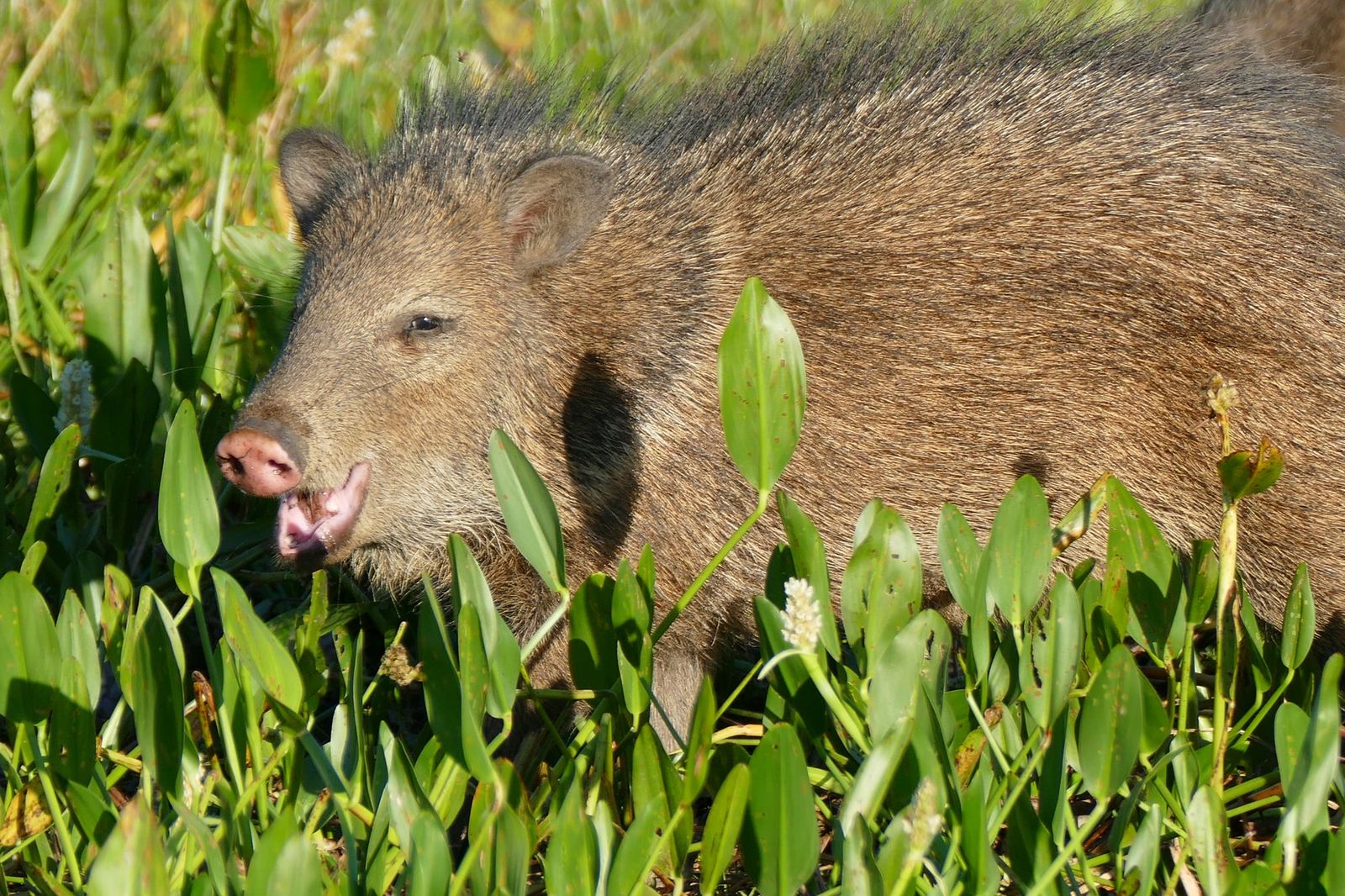
As feral swine settled into these farming mosaics, native peccaries showed uneven reactions to the new competition. Records compiled in the study indicated that collared peccaries, or Pecari tajacu, were more strongly associated with heavily invaded landscapes, while white-lipped peccaries, or Tayassu pecari, exhibited differing shifts in local coexistence patterns.3 Fischer noted that camera traps recorded invasive pigs aggressively displacing white-lipped peccaries during feeding encounters in crop fields and riparian forests.contributed While white-lipped peccaries move across extensive ranges in large bands and can adjust their foraging grounds, collared peccaries rely tightly on the same agricultural margins and riparian cover favored by invasive swine, intensifying direct resource pressure.contributed
What do these estimates reveal about future herd growth?
The statistical models developed in the research represent broad population reconstructions and carrying-capacity estimates based on historical detection frequency and landscape suitability, differing from direct physical counts of individual animals. The authors calculated a conservative baseline statewide population of 11,850 to 47,400 wild swine in Mato Grosso do Sul as of 2017, but their theoretical models suggested that optimal environmental conditions could push total carrying capacity past 500,000 animals.32 Fischer told Primary that this upper figure represents a "theoretical saturation ceiling under optimal conditions, not a prediction of current population size."contributed Because invasive swine face few natural predators and exhibit high disease tolerance in central Brazil, Fischer observed that local populations will continue expanding toward carrying capacity within productive crop regions unless coordinated human control intervenes.contributed
Because the work relies on historical municipal detection records and reported enclosure locations, it cannot pinpoint the exact survival rates of individual litters or provide real-time counts for individual farms. The projections assume that the regional agricultural landscape remains broadly stable over the modeled period and do not account for the interannual variability of the Pantanal flood pulses or for major regulatory shifts in land use. The findings come from a preprint that has been posted online and has not yet completed formal peer review by independent scientists.52
If the identified relationships between captive enclosures and wild populations hold true across other farming states, ecological management will require strict containment and oversight of commercial breeding facilities alongside reactive culling in the field. Without systematic monitoring of informal pens and agricultural travel corridors, the continuous influx of new animals will sustain wild herds indefinitely across South America's most productive agricultural and ecological zones.
What this rests on
28 sentences trace to 4 sources and 1 contributor.
-
1
P
perspectecolconserv.com Third-party reporting · perspectecolconserv.com Current distribution of invasive feral pigs in Brazil: economic impacts and ecological uncertainty | Perspectives in Ecology and Conservation See the source
-
2
B
biorxiv.org Paper · biorxiv.org Feral Pig Invasion Dynamics in Central Brazil: Human-Driven Introduction, Landscape Drivers, and Ecological Consequences Preprint · may not have been peer reviewed See the source
-
3
FW
- 4 Contribution — Wagner 17 statements added to this article
-
5
B
Article history
-
Published 17 Sep 2026, 12:55Assembled by the Primary desk from 4 sources · 1 contributor · 28 cited sentences
-
Wagner
- Go to the sentence: The researchers measured propagule pressure through the number and distribution of breeding operations and the total breeding stock per municipality, adult males and females summed across operations, identifying at least 247 operations across 59 municipalities during that 10-year window.
- Go to the sentence: Municipalities with the largest declared breeding stocks, adult males and females summed across operations, were also among the first where wild populations became established, with the invasion reaching neighboring municipalities within the same five-year interval.
- Go to the sentence: Fischer told Primary that this pattern provides key evidence for human-driven introduction, explaining that "the spatial pattern of breeding centers lined up closely with the earliest wild detections" across datasets gathered from independent administrative records and rural surveys.
- Go to the sentence: Fischer clarified that the breeding census relied on the database of the state animal-health monitoring program, which annually registers livestock across rural holdings using standardized questionnaires.
- Go to the sentence: Because these property filings are self-declared by owners, Fischer noted that the research team treated the tally of 247 operations as "a conservative minimum rather than a complete census."
- Go to the sentence: The historical data, compiled anonymously between 2008 and 2016, showed that areas with the highest declared adult breeding stocks were also where early wild population clusters were recorded.
- Go to the sentence: Descended from domestic pigs that escaped more than 200 years ago, porco-monteiro populations represent an earlier wave of invasion that preceded modern wild boar introductions.
- Go to the sentence: Fischer explained in response to questions from Primary that although both lineages belong to the same species, the current dataset cannot yet determine whether they compete, interbreed, or partition the habitat.
- Go to the sentence: The field records confirm broad spatial overlap, but resolving behavioral competition or hybridization in the Pantanal "would require genetic sampling and direct field observation, which were beyond the scope of this study," Fischer said.
- Go to the sentence: Fischer told Primary that this 3.2-million-hectare figure is an extent-of-occupancy calculation derived from standardized hexagonal grid units of 1,600 hectares, or 16 square kilometers, mapped across the territory.
- Go to the sentence: The metric reflects the combined area of municipalities containing confirmed detections by 2017, and Fischer explained that it does not measure uniform animal density across every hectare.
- Go to the sentence: Rivers and wooded drainage margins functioned as travel lanes, giving the animals sheltered passages through which they moved between crop fields while foraging on agricultural waste and commercial plants.
- Go to the sentence: Records compiled in the study indicated that collared peccaries, or Pecari tajacu, were more strongly associated with heavily invaded landscapes, while white-lipped peccaries, or Tayassu pecari, exhibited differing shifts in local coexistence patterns.
- Go to the sentence: Fischer noted that camera traps recorded invasive pigs aggressively displacing white-lipped peccaries during feeding encounters in crop fields and riparian forests.
- Go to the sentence: While white-lipped peccaries move across extensive ranges in large bands and can adjust their foraging grounds, collared peccaries rely tightly on the same agricultural margins and riparian cover favored by invasive swine, intensifying direct resource pressure.
- Go to the sentence: Fischer told Primary that this upper figure represents a "theoretical saturation ceiling under optimal conditions, not a prediction of current population size."
- Go to the sentence: Because invasive swine face few natural predators and exhibit high disease tolerance in central Brazil, Fischer observed that local populations will continue expanding toward carrying capacity within productive crop regions unless coordinated human control intervenes.